
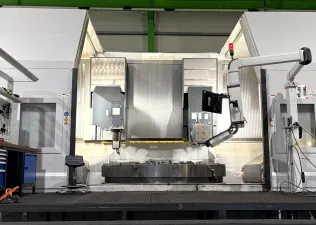
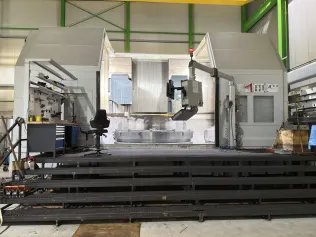
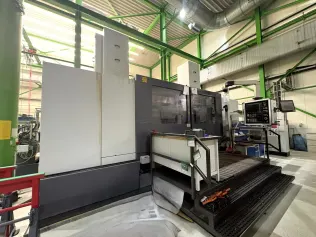
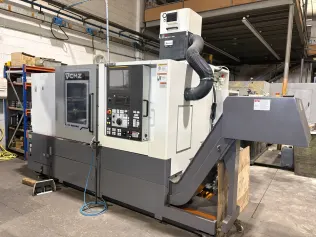
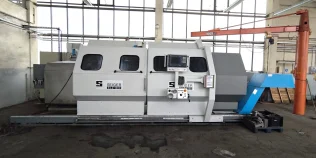
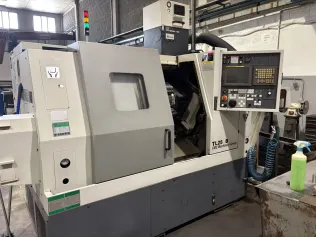
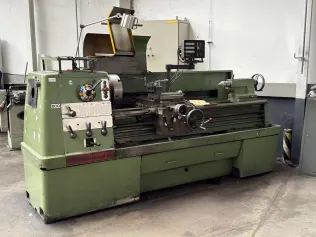
 This item is sold
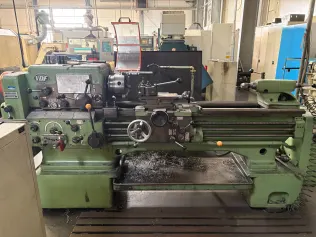 This item is sold
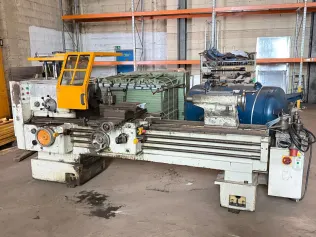 This item is sold
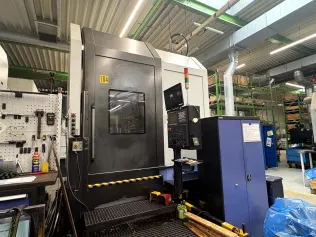 This item is sold
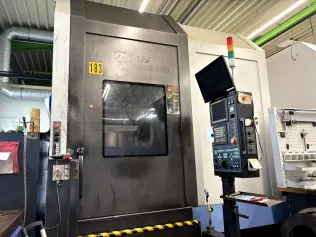 This item is sold
1. What Is a Lathe?
A lathe is a machine tool used to machine rotationally symmetric metal parts and, alongside the milling machine, one of the most important types of metalworking machinery. It represents an evolution from traditional manual turning methods to high-precision machine systems.
Metal lathes come in many types and sizes, from compact machines used in mechanical workshops to heavy industrial machines capable of machining large, complex parts.
2. Benefits of Investing in Used Lathes
Used lathes are now chosen by many European factories looking to expand machining capacity without waiting 6-12 months for a new machine to be delivered. At 40-60% lower cost and typically delivered in 2-4 weeks, they cut lead time dramatically compared with ordering new.
Lower Initial Investment Cost: A used lathe typically costs only around 30-60% of a comparable new machine, freeing up budget for tooling, accessories, and support equipment.
Optimized Capital Turnover and ROI: Lower upfront cost shortens payback time, and since the machine has already passed through most of its depreciation, its asset value stays more stable over its service life.
Shorter Lead Time: Used machines are typically available on the market right away, letting a business get up and running quickly instead of facing the long build-and-delivery times of a new machine.
Reasonable Maintenance and Parts Cost: For purely mechanical machines (Manual or Turret), replacement parts are always available at competitive prices. For older CNC machines, even though electronic component replacement can run a bit higher, a purchase price 40-70% below a new machine keeps total cost of ownership (TCO) over 10 years significantly lower - typically by 25-45% - based on ReMach's hands-on experience closing deals across the DACH market.
Easy to Operate and Train On: Older-generation machines have familiar interfaces and layouts, helping technicians get up to speed faster, cutting training time, and getting the machine into production sooner.
3. Risks to Avoid When Buying a Used Lathe
Below are the most common issues we encounter when sourcing and inspecting lathes from European factories - so you can avoid the most costly mistakes:
Ballscrew Wear: On older CNC machines, a worn ballscrew is the number one cause of lost accuracy. Request an inspection report showing backlash, or a Ballbar test run, before buying.
Encoder/Servo Failure: Faulty electronics rarely show up in photos or a short video. Request a continuous run of at least 30 minutes and check the alarm log on the control screen.
Control System Mismatch: Machines running older Siemens 810D or Fanuc 0-series controls can be hard to find technicians for. Confirm the source of technical support before deciding.
Parts Shortage for Specialty Machines: Turret lathes and other less common specialty lathes can be harder to source parts for. ReMach always confirms parts availability before signing a contract.
Underestimated Shipping Cost: A VTL or other heavy-duty lathe may need a specialized truck and a high-capacity crane. Total logistics can run 10-20% of the machine price - budget for this from the start.
4. Types of Lathes
Below are the most common lathe categories, classified by construction, automation level, and application range in modern mechanical production.
Machine Type | Operating Skill Level | Suitable Production Volume | Used Price (Estimate) | Main Industries |
Manual Centre Lathe | Manual | Single-part / small batch | €2,000-20,000 | Repair, toolroom |
Turret Lathe | Semi-automatic | Small-medium batch | €3,000-25,000 | Automotive, general engineering |
Cycle-Controlled Lathe | Semi-automatic | Single-part to medium batch | €8,000-40,000 | Tooling, energy |
CNC Lathe | CNC (G-code) | Batch production | €10,000-60,000 | Automotive, aerospace |
CNC Turning Center | Multi-axis CNC | Complex batch production | €20,000-120,000 | Aerospace, medical |
Vertical Lathe (VTL) | CNC / manual | Large parts | €15,000-150,000 | Energy, shipbuilding |
Used Manual Centre Lathes (Engine Lathe)
A manual centre lathe, also called an engine lathe, is the most basic and common type of lathe. The workpiece is clamped in a chuck or held between centers. Every control action, spindle speed, feed rate, thread cutting, is performed by the operator through hand levers and handwheels.
Unlike dedicated machines, the manual centre lathe has a versatile design that handles many operations: external turning, facing, drilling, boring, threading, parting off, tapping, and knurling.
1. Advantages and Limitations of Used Manual Centre Lathes
Advantages | Limitations |
|
|
2. Practical Applications of Used Manual Centre Lathes
Toolroom Production: Machining mould components, fixtures, and tooling in small quantities.
Spare Parts Manufacturing: Producing shafts, bushings, bolts, flanges, and other rotationally symmetric components.
Diverse Industries: Widely used across automotive, aerospace, oil & gas, energy, and machine building.
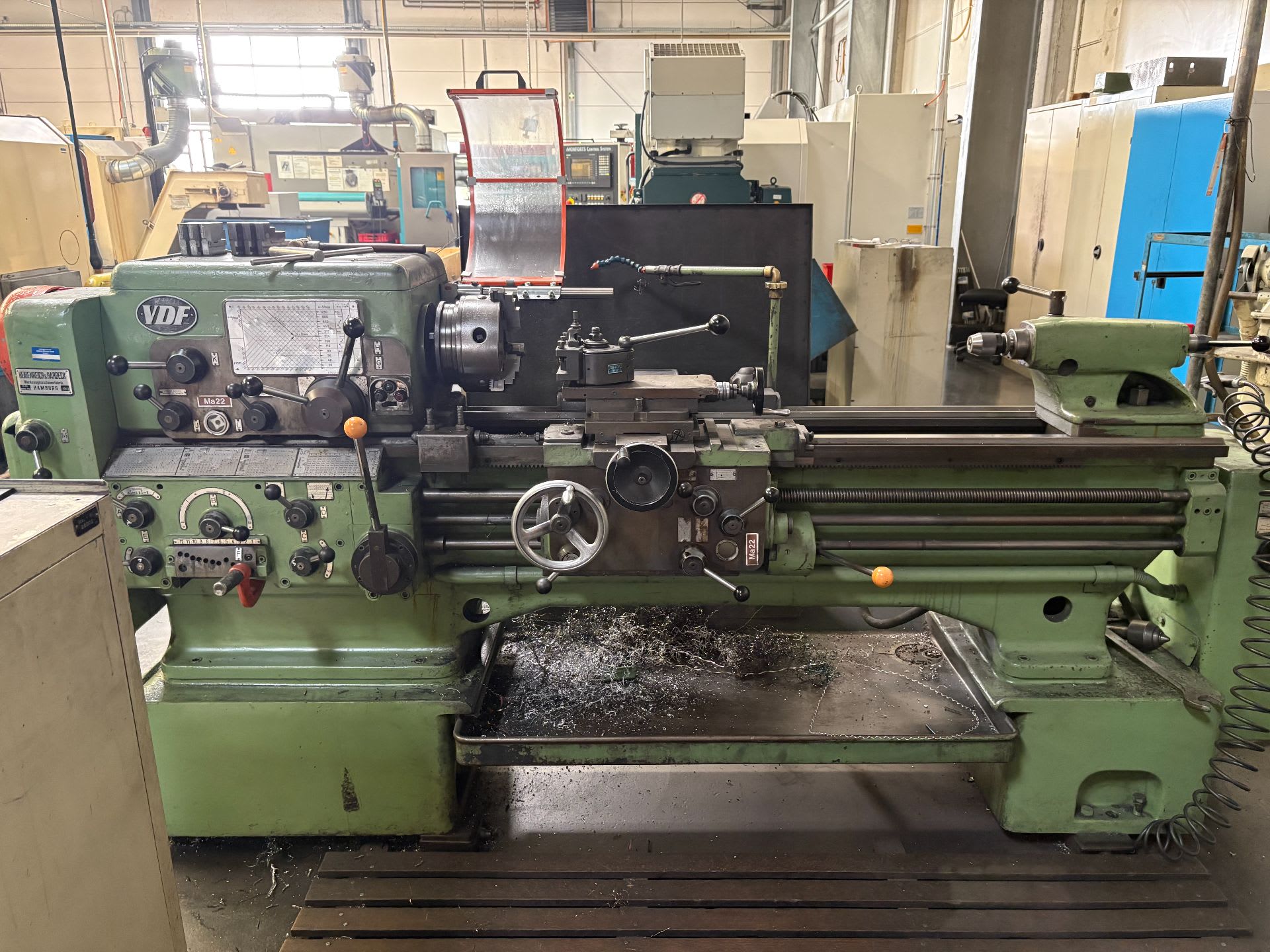
The open design shows the main components of a conventional lathe: the chuck, tool carriage, and tailstock
>>> Browse all Used Centre Lathes available at ReMach.
Used Turret Lathes (Capstan Lathe)
A turret lathe is a metal-turning machine developed from the manual centre lathe, purpose-built for batch-producing identical, interchangeable parts. Its key difference from a centre lathe is that the tailstock is replaced by a rotating turret head, a tool holder that can index and position multiple tools.
This machine group has two main variants:
Capstan Lathe (or ram-type): the turret is mounted on a sliding ram with short travel, built for fast machining of small parts
Turret Lathe (or saddle-type): the turret is mounted on a larger saddle with longer travel, suited to medium and longer parts.
When buying used, it's important to distinguish between the two to match your production needs.
1. Advantages and Limitations of Used Turret Lathes
Advantages | Limitations |
|
|
2. Practical Applications of Used Turret Lathes
Batch Production of Mechanical Parts Such As: bolts, screws, nuts, threaded rods, bushings, and small shafts
Automotive: machining engine components and vehicle parts
Aerospace: producing high-precision structural and engine components
Medical: machining device components requiring high precision and stability
Industrial Equipment: parts for construction machinery and energy systems
Defense: producing mechanical components for weapons and specialized equipment
Watchmaking & Precision Engineering: machining small parts with tight tolerance requirements
Used Cycle-Controlled Lathes
A cycle-controlled lathe is a technology positioned between a traditional manual lathe and a full CNC lathe. It serves applications that fall between manual toolroom lathes and CNC turning centers on a batch-production floor. The machine can run with electronic assistance, and many models also allow fully manual operation with handwheels.
In simple terms: it's a manual lathe upgraded with a digital readout (DRO) and cycle control - the operator enters diameter and length values, and the machine automatically runs roughing and finishing passes through a built-in cycle. Unlike a CNC machine, there's no need to learn G-code; you just enter the drawing dimensions and the machine runs. It's a great fit for shops with skilled machinists who want higher productivity without complex programming.
1. Advantages and Limitations of Used Cycle-Controlled Lathes
Advantages | Limitations |
|
|
2. Applications of Used Cycle-Controlled Lathes
Well suited to single-part and small-batch work with frequent product changeovers
Used in making moulds, fixtures, and precision tooling
Machining complex or large parts requiring multiple operations in a single setup
Used in the energy, environmental, and industrial equipment sectors
Serving high-precision medical part machining
Used for repair, maintenance, and replacement part fabrication
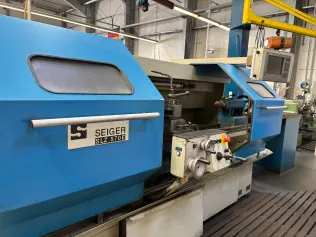
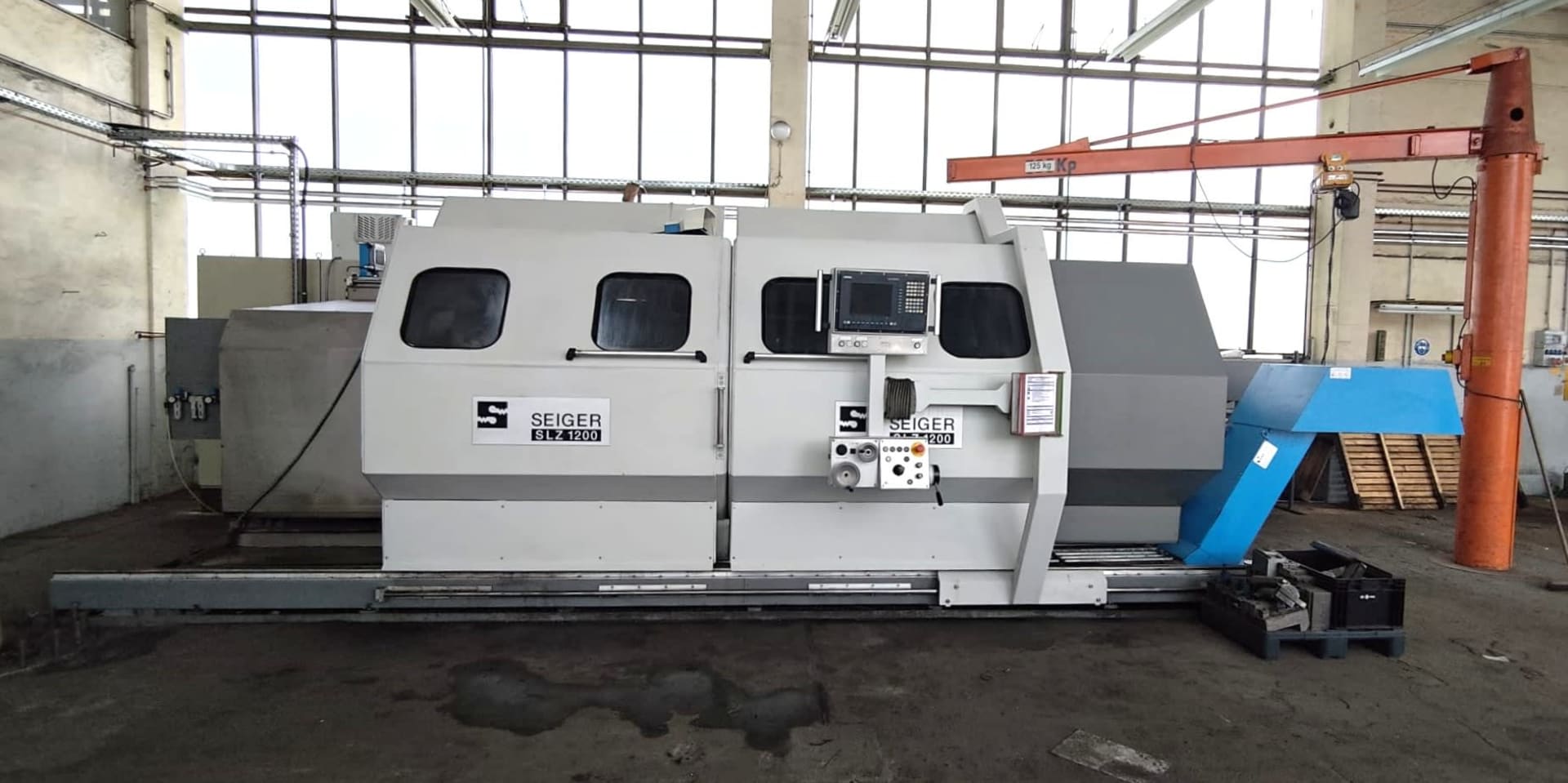
One cycle-controlled lathe from ReMach's catalogue is the Seiger SLZ 1200 x 3000 heavy-duty lathe. Built in 2000, it comes with a Siemens Sinumerik 810D cycle control (teach-in), a 3,000 mm distance between centres, a swing-over-bed diameter of 1,200 mm, and a weight of approx. 18,500 kg. At ReMach, every used cycle-controlled lathe is thoroughly checked for control system function, machining accuracy, operating condition, and component health before handover.
>>> For the latest list, please contact ReMach or browse the Used Cycle-Controlled Lathes category directly.
Used CNC Lathes
A CNC lathe (Computer Numerical Control lathe) is an automated metal-turning machine controlled by a computer system. Unlike a manual lathe, every action on a CNC lathe is executed through a software program, automating the machining process and reducing dependence on operator skill.
1. Advantages and Limitations of Used CNC Lathes
Advantages | Limitations |
|
|
2. Practical Applications of Used CNC Lathes
Automotive: machining crankshafts, drive shafts, pistons, and other engine components
Aerospace: producing structural and engine components requiring very high precision
Medical: manufacturing surgical instruments, implants, and precision medical components
Oil & Gas and Energy: machining valves, piping, and large drilling equipment
Mass Production: screws, bolts, bushings, and electronic components
Defense: mechanical components for weapons and military equipment
Mould and Fixture Making: moulds, jigs, and cutting tools
Industrial Equipment: components for construction machinery and production lines
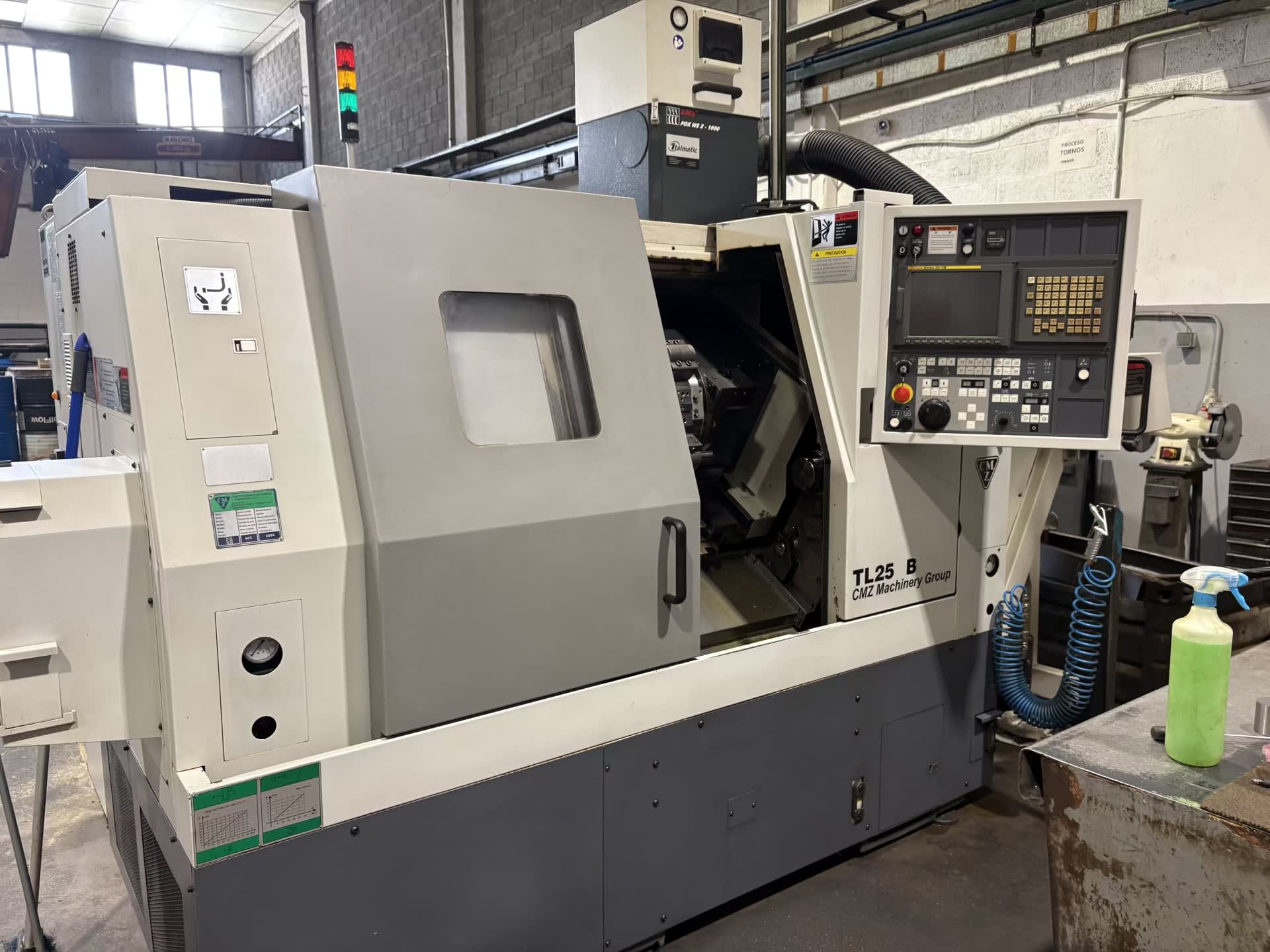
The tool turret holds multiple turning tools and enables automatic tool changes during the programmed machining sequence
>>> Browse all Used CNC Lathes available at ReMach.
Used CNC Turning Centers
A CNC turning center is a major evolution of the CNC lathe, often described as “the next step up from a lathe.” Where a basic CNC lathe only handles pure turning operations (X and Z axes), a CNC turning center adds complex machining features such as milling, drilling, tapping, and engraving on the same machine. This comes from live tooling, independently rotating cutting tools that let it perform machining-center-style operations on top of standard turning.
1. Advantages and Limitations of Used CNC Turning Centers
Advantages | Limitations |
|
|
2. Practical Applications of Used CNC Turning Centers
Aerospace: machining engine and airframe components with very tight tolerances and complex geometries
Medical: manufacturing surgical instruments, implants, and precision medical components
Automotive: machining crankshafts, camshafts, gearboxes, and highly complex engine components
Oil & Gas and Energy: manufacturing valves, fittings, and high-pressure components
Industrial Equipment: machining highly complex machinery and production equipment components
Electronics: producing small parts and components requiring high precision
>>> Browse all Used CNC Turning & Milling Centres available at ReMach.
Used Vertical Lathes (Vertical Turret Lathe – VTL)
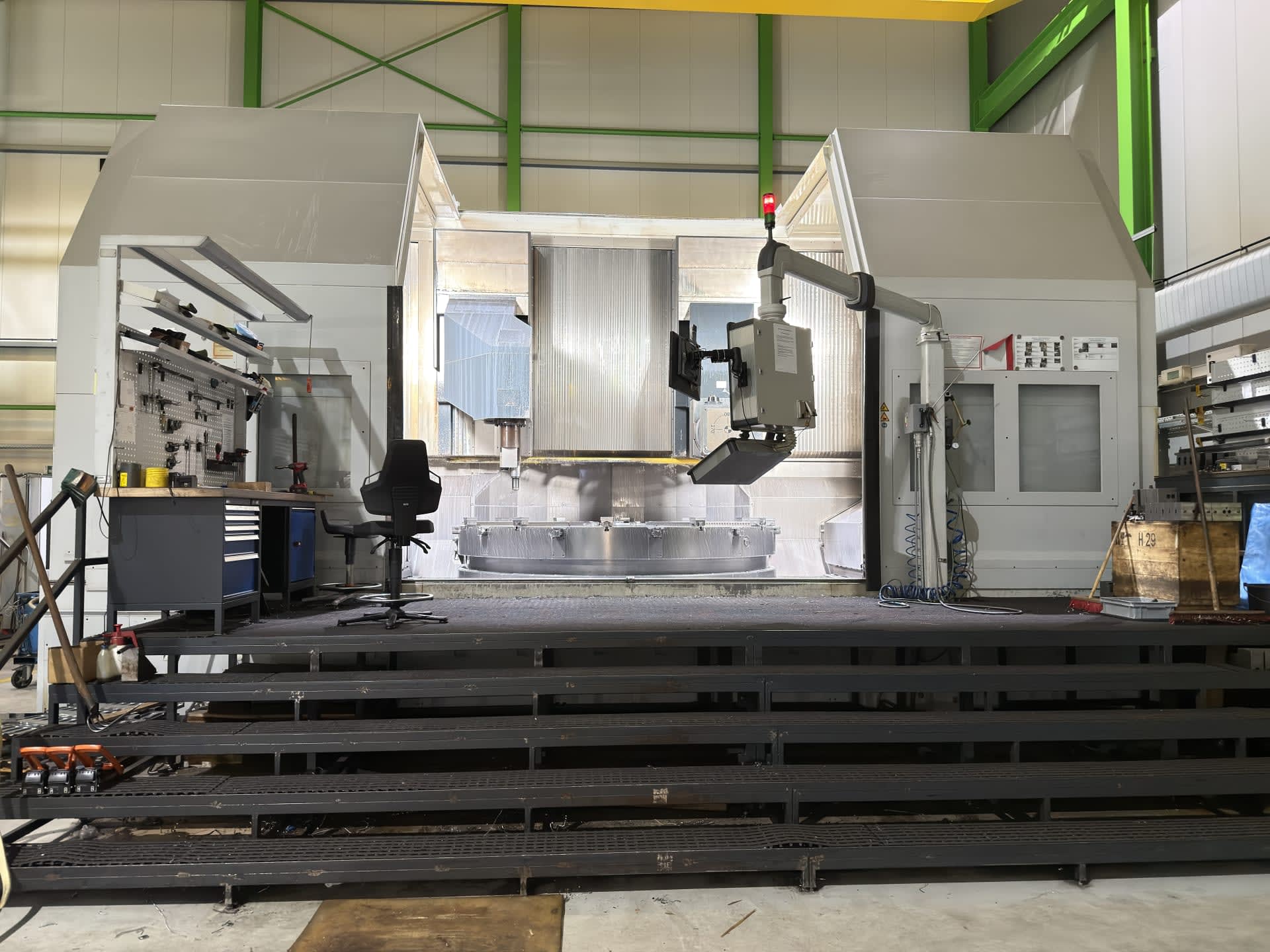
A vertical lathe, commonly called a VTL (Vertical Turret Lathe) or VBM (Vertical Boring Mill), has its spindle mounted vertically, a fundamentally different layout from a traditional horizontal lathe. Instead of clamping the workpiece between centers, the part sits on a horizontal rotary table that turns about a vertical axis. The tool turret moves horizontally (X-axis) and vertically (Z-axis) to perform machining operations.
1. Advantages and Limitations of Used Vertical Lathes
Advantages | Limitations |
|
|
2. Practical Applications of Used Vertical Lathes
Aerospace: machining turbines, engine components, and large airframe structures
Energy: producing components for wind turbines and power plant equipment
Oil & Gas: machining valves, flanges, pressure vessels, and drilling equipment
Automotive: producing brake discs, wheels, pump housings, and large drivetrain components
Shipbuilding and Heavy Equipment: machining large machine components and mining equipment
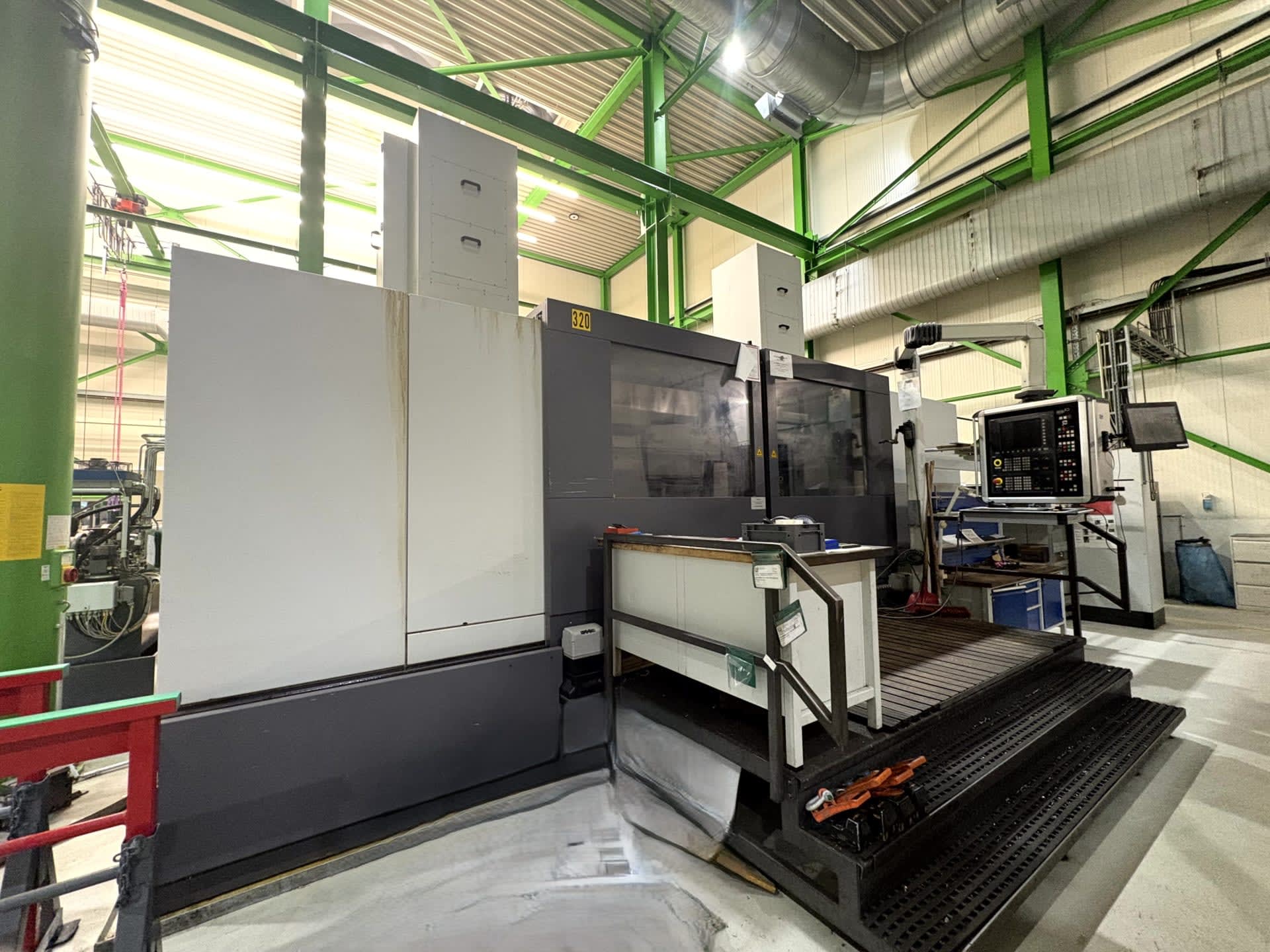
On vertical lathes, the workpiece rests on a horizontal rotary table, facilitating the loading of large, heavy components
>>> Browse all Used Vertical Lathes available at ReMach.
5. Trusted Lathe Brands
Below are trusted lathe brands from around the world, well regarded for accuracy, durability, and applicability across many industrial sectors.
HEYLIGENSTAEDT (Germany): A German brand with over 145 years of experience, specializing in heavy-duty lathes for medium to large parts. Known for high durability, strong rigidity, and stable machining performance in heavy-industrial environments.
Seiger (Germany): Seiger specializes in cycle-controlled lathes, often custom-built to each customer's requirements. Its machines are widely used in automotive, energy, aerospace, shipbuilding, and precision engineering thanks to flexible operation and stable performance.
HEIDENREICH & HARBECK (VDF) (Germany): A traditional German lathe brand, well known for its universal lathes and screw-cutting lathes. Machines feature sturdy construction, high accuracy, and a very long service life.
DMG MORI (Germany-Japan): A leading global machine tool group, formed from GILDEMEISTER and Mori Seiki. DMG MORI stands out for modern CNC technology, multi-axis lathes, and advanced automation solutions for large-scale production.
Mazak (Japan): A pioneer in CNC technology, developing NC lathes from 1968 and machining centers from 1970. Mazak is known for high performance, strong reliability, and popular lines such as the QT series.
Okuma (Japan): A long-established machine tool manufacturer dating back to 1898. Okuma stands out for its proprietary CNC control system, high accuracy, and CNC lathe and vertical lathe lines widely used in modern industry.
6. Why Buy Used Lathes at ReMach
ReMach is an international B2B platform specializing in used machine tools, connecting buyers and sellers directly worldwide. Headquartered in Germany with an equipment network spanning Europe, ReMach provides an end-to-end solution from inspection through logistics to handover, giving businesses fast, transparent, and safe access to high-quality lathes.
Global Supply Network: Direct access to lathes sourced from Europe across brands such as DMG MORI, Mazak, Okuma, HEYLIGENSTAEDT, and VDF, all on a single platform.
Transparent Inspection, Clear Information: Every machine is assessed with full technical specifications, actual condition, and inspection photos/video published, ensuring “verified condition” before any transaction.
Full End-to-End Service: Support across the entire process, dismantling, packing, international shipping, customs clearance, and handover, minimizing risk and import processing time for customers.
Optimized Investment Cost: Helps businesses acquire high-quality lathes at significantly lower cost than new machines, improving capital efficiency and shortening payback time.
Sustainability Focus: Reusing machine tools under a “Second Life for Industrial Assets” philosophy, extending equipment lifespan, reducing resource waste, and supporting sustainable production.
Commitment to Long-Term Partnership: ReMach doesn't just supply machines, it stays engaged with customers long-term, built on transparency, trust, and sustainable growth in every transaction.
7. How to Buy a Used Lathe at ReMach
ReMach's buying process is built for transparency and a smooth business experience, helping customers search, inspect, and get a machine running quickly and safely.
Step 1 - Find the Right Machine on the Platform
Visit the lathe listing at ReMach. Here you can filter by parameters such as swing diameter, distance between centers, spindle speed, power, or control system (for CNC models), and search by brand such as DMG MORI, Mazak, Okuma, HEYLIGENSTAEDT, VDF, or Seiger. Every machine shows full specifications, photos, and condition notes, ensuring transparency under the “one-click specs, verified condition, no-surprise pricing” standard.
Step 2 - Check the Machine's Condition
Once you've chosen a machine, you can request a test-run video to assess actual operating condition. ReMach also provides a technical inspection report covering concentricity, spindle runout, and other key parameters. If needed, customers can arrange an in-person inspection at our warehouse in Germany or another storage location.
Step 3 - Get a Quote and Advice via Hotline +49 2196 7050573
ReMach provides a detailed quote covering machine price, shipping, dismantling, loading, and installation (if applicable). Our technical team advises on the best-fit solution for your production needs and budget.
Step 4 - Confirm the Purchase and Payment
Once terms are agreed, the customer confirms the purchase on the platform. ReMach provides complete payment information and invoicing support, ensuring a transparent B2B process aligned with international trade standards.
Step 5 - Dismantling, Packing, and Shipping
ReMach organizes machine dismantling and loading following a safe process. We also handle export procedures, customs documentation, and international logistics coordination to keep delivery on schedule.
Step 6 - Delivery, Installation, and Commissioning
The machine is shipped to the customer's site according to plan. ReMach can support installation and provide operating guidance as agreed. Once final checks are complete, the machine is ready for production.
8. FAQs
How Can I Tell If a Used Lathe Is Still Accurate?
Experienced technicians check four key factors: listening to the spindle at multiple speeds for abnormal noise; measuring ovality with a dial indicator, ideally under 0.02 mm; checking carriage backlash, ideally under 0.05 mm. For a CNC machine, request an inspection report such as a Ballbar or R-test along with a test-run video to assess real-world accuracy.
Can a Used Lathe Be Integrated with a Robot or Automated Conveyor?
Yes. Many used CNC lathes can be fully integrated with feeding robots and conveyors to automate production. This reduces labor, boosts throughput, and cuts downtime. Machines that have been retrofitted or had their control system upgraded are usually easier to integrate. Still, check machine footprint and technical requirements carefully before implementation.
How Are Lathes Weighing 2-3 Tonnes Shipped and Installed?
The machine is partially disassembled where needed, secured, and specially packed before shipping. Loading uses a forklift or crane rated for the load to ensure safety. It's transported by specialized truck, and cargo insurance is recommended. On arrival, the machine is leveled, foundation-mounted, and test-run before going into full operation.
Is Maintenance and Parts Replacement Expensive for a Used Lathe?
Not if you choose the right machine type. Maintenance cost is fairly low for manual lathes. For CNC machines, mechanical wear parts such as ballscrews and bearings are typically inexpensive and easy to replace. Control components from major brands like Fanuc, Siemens, or Mazak have a long service life (15-20 years), so on a properly inspected machine, ongoing costs are generally stable and manageable.
Should I Choose a Centre Lathe or a CNC Lathe for My Shop?
A centre lathe suits single-part work, repairs, and low investment budgets, but relies heavily on operator skill. A CNC lathe suits batch production, complex parts, and high-precision requirements. For small, flexible needs, choose a manual machine; for stable or high-volume production, a CNC lathe will be more efficient.
Does Buying a Used Machine from ReMach Include Installation and Training Support?
Yes. ReMach provides end-to-end support from shipping and customs clearance to on-site installation. Customers also get test-run support and basic operating guidance to get into production faster. The process is designed to reduce risk and shorten deployment time, and ReMach stays available for technical support after the sale.
Whether you choose a manual lathe, a CNC lathe, or a VTL, buying through ReMach helps your business save 40-60% on cost with equipment that's been technically inspected before delivery. With options ranging from manual lathes to CNC machines and turning centers, choosing the right machine type helps optimize production capacity and shorten payback time.
If you're looking for high-quality, inspected, ready-to-run Used Lathes, ReMach is a trusted platform to start with. Request a Consultation or call our Hotline +49 2196 7050573 and the ReMach team will help you choose the right lathe solution for your production needs.
9. Glossary
English Term | Abbreviation | Explanation |
Chuck | - | The workholding device mounted on the lathe spindle, usually with 3 or 4 jaws, that grips and rotates the workpiece during machining. |
Spindle | - | The lathe's central rotating shaft, which transmits cutting force and carries the chuck or faceplate. |
Tailstock | - | The support assembly at the end opposite the chuck, used to support long workpieces or hold a drill/boring tool. |
Carriage / Saddle | - | The assembly that travels along the machine bed (Z-axis), carrying the cutting tool and controlling depth of cut. |
Cross slide | - | The component that moves perpendicular to the workpiece axis (X-axis), controlling the machined diameter. |
Toolpost | - | The fixture that clamps the cutting tool on the carriage, either a single toolpost or a turret toolpost. |
Turret head | - | A multi-station tool head that holds several tools ready for use, allowing fast changeover between operations without re-tooling. |
Between centers | - | A workholding method using centers (a live center and a dead center) at both ends of the workpiece, ensuring high concentricity when turning long parts. |
Live center | - | A center with an internal bearing that rotates with the workpiece, used in the tailstock to reduce friction and heat when machining heavy parts or running at high speed. |
Dead center | - | A fixed, non-rotating center, typically used at low speed or with lubrication. |
Feed rate | - | The speed at which the tool moves along or across the workpiece axis, directly affecting surface roughness. |
Depth of cut | DOC | The amount of material removed in each pass, which determines machining time and cutting force. |
Threading | - | A turning operation that cuts threads on an external cylindrical surface or an internal bore, performed by synchronizing feed rate with spindle speed via the leadscrew. |
Facing | - | A turning operation that machines the end face of a workpiece flat, with the tool moving from the outer edge to the center along the X-axis. |
Boring | - | Enlarging or refining an existing hole with an internal turning tool to reach the required tolerance and surface finish. |
Live tooling | - | Powered rotating tools on a CNC turning center that allow milling, drilling, and tapping operations directly on the lathe. |
Steady rest | - | A support fixture that prevents long workpieces from vibrating or deflecting during machining. |
Runout | - | The deviation between the actual and theoretical rotation center, affecting a part's roundness and concentricity. |
DRO | Digital Readout | A display device that shows real-time tool position along the X and Z axes, helping the operator control dimensions more accurately on a manual lathe. |