
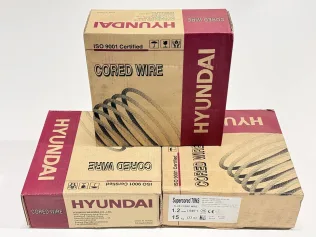
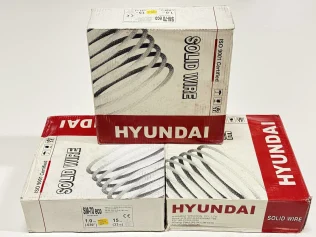
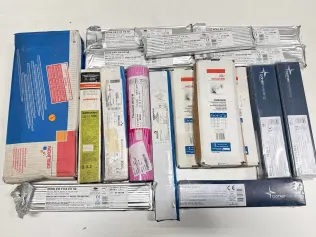
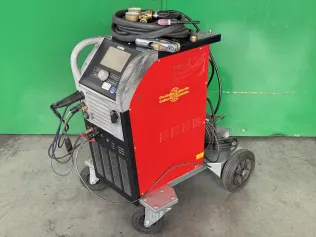
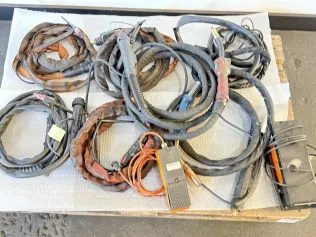
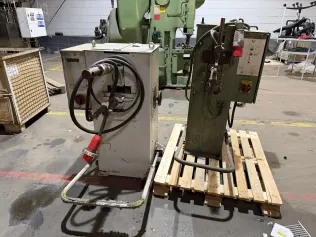
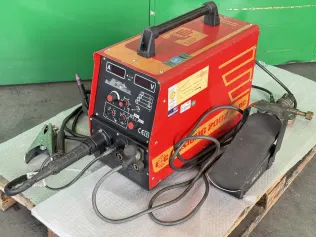
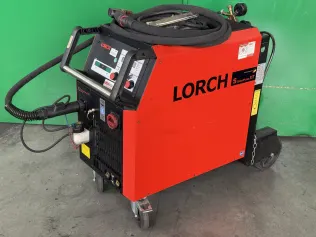
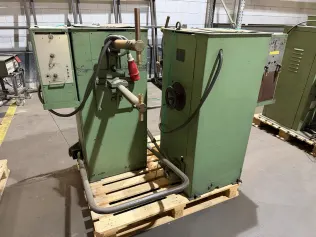
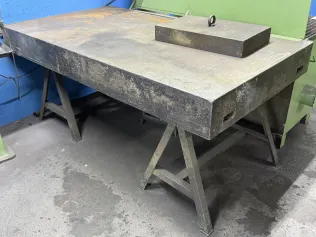
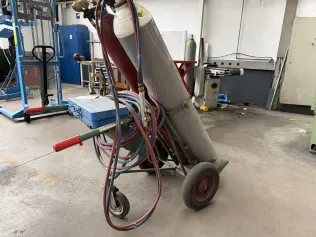
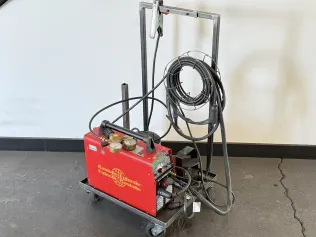
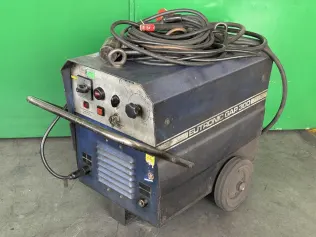
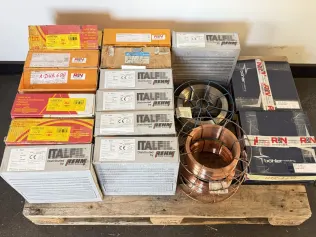
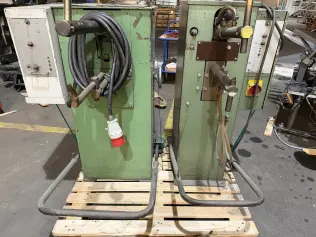
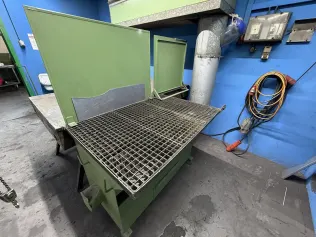
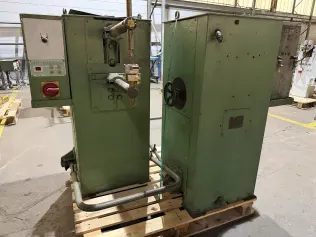
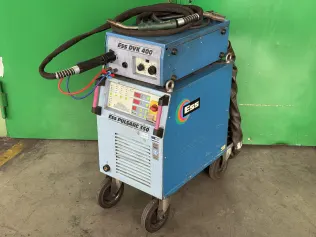
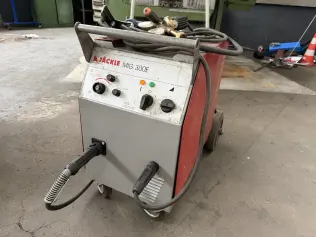
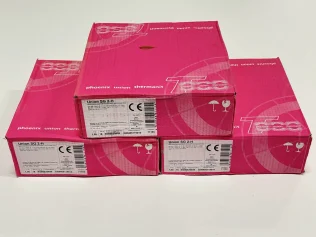
 This item is sold
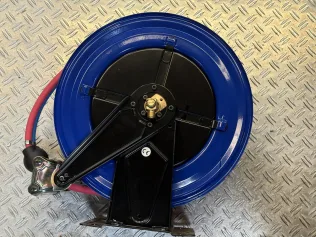 This item is sold
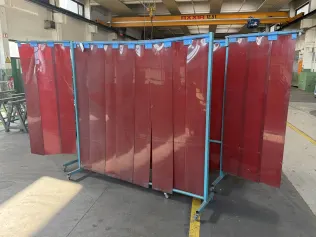 This item is sold
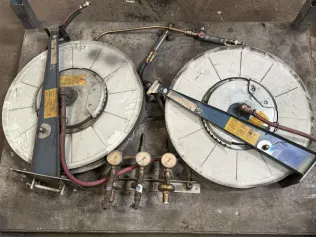 This item is sold
 This item is sold
1. What Is Welding Equipment?
Welding equipment refers to machines and tools used to permanently join workpieces together through a heating process that melts and fuses the material. Welding equipment is used mainly in metalworking, but is also widely applied in plastic welding.
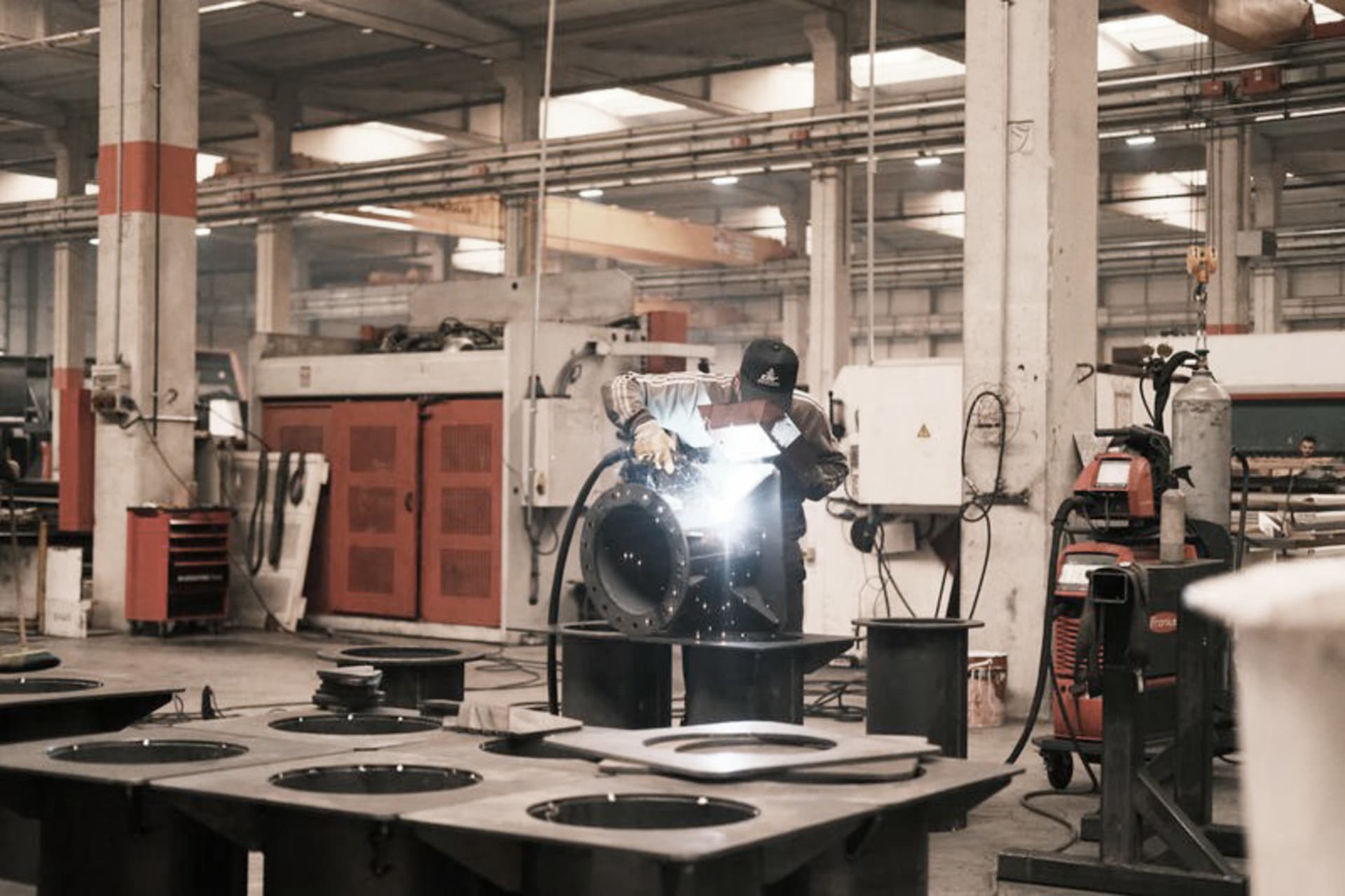
Industrial welding equipment includes a wide range of machines and tools used for joining metal, from flexible handheld welders to fixed automated systems on mass production lines. The right welding machine type is typically determined by the thickness, material of the workpiece, and production scale.
2. Benefits of Investing in Used Welding Equipment
Investing in used welding equipment significantly reduces upfront cost, especially when the equipment comes from brands such as Lincoln Electric, ESAB, or KUKA, which are known for high durability and readily available spare parts.
Lower Investment Cost: Used welding equipment is typically priced significantly lower than new machines, helping companies reduce upfront cost while still meeting production needs.
Faster Payback Period: With a lower upfront investment, companies can quickly bring equipment into operation and optimize investment efficiency.
Durability and Stable Performance: Welding equipment from trusted brands such as Lincoln Electric, Miller, ESAB, or KUKA typically features rugged construction and a long service life, and can still perform reliably if properly inspected and maintained.
A Sustainable Production Solution: Reusing equipment extends machine lifecycles, reduces resource waste, and helps lower environmental impact.
3. Risks to Avoid When Buying Used Welding Equipment
Reduced Duty Cycle: This is the most important spec of a welding power source. A new machine with a 60% duty cycle means 6 minutes of welding followed by 4 minutes of rest within every 10 minutes. A used machine with worn coils or degraded electronics may only reach 40-50% in practice. Ask the supplier to run a continuous 100%-load test for at least 20 minutes before purchase.
Worn MIG/MAG Wire Feed Mechanism: The drive rolls, liner, and contact tip directly affect arc stability. Check by running an actual welding wire test and observing the consistency of the arc.
Used Welding Robots - Check Actual Repeatability: The ±0.05 mm repeatability figure on the datasheet applies to a new machine. After years of operation, a robot's repeatability can drift to ±0.1-0.2 mm, enough to cause welding defects on precision parts. Request several consecutive cycles and measure the deviation at a fixed weld point.
Missing Software and Welding Program Backups: Used welding robots often lose program data during transport. ReMach collects and hands over control software backups together with the machine.
4. Types of Welding Equipment
Welding equipment is divided into several groups based on welding technology, design, and intended use. Each type has its own advantages, suited to different materials, machining requirements, and production scales.
Welding Type | Speed | Precision | Equipment Cost | Main Application |
Arc | Medium | Medium | Low | Steel structures |
TIG | Slow | Very high | Medium | Stainless steel, aerospace |
MIG/MAG | Fast | Medium | Low | Automotive, mass production |
Laser | Very fast | Extremely high | High | Electronics, medical |
Spot | Extremely fast | High | High | Automotive body |
Robot | 24/7 | Consistent | High | Automated production lines |
Used Arc Welding Equipment
Arc welding is a group of fusion welding methods that use heat from an electric arc to melt and join metal. According to Advanced High-Strength Steels (AHSS), this process relies on the intense heat of the electric arc to create the weld.
Thanks to its flexibility, reasonable equipment cost, and diversity of methods (from manual welding to automated welding), arc welding is now the most common group of methods in metalworking. Arc welding processes are classified by ISO under standard ISO 4063 and designated by AWS under standard AWS A3.0.
1. Advantages and Limitations of Used Arc Welding Equipment
Advantages | Limitations |
|
|
2. Practical Applications of Used Arc Welding Equipment
Fabricating steel structures for construction and heavy industry
Manufacturing piping systems and industrial pipelines
Shipbuilding and large-scale steel structures
Repairing and maintaining industrial machinery and equipment
Mass production of thin sheet metal products
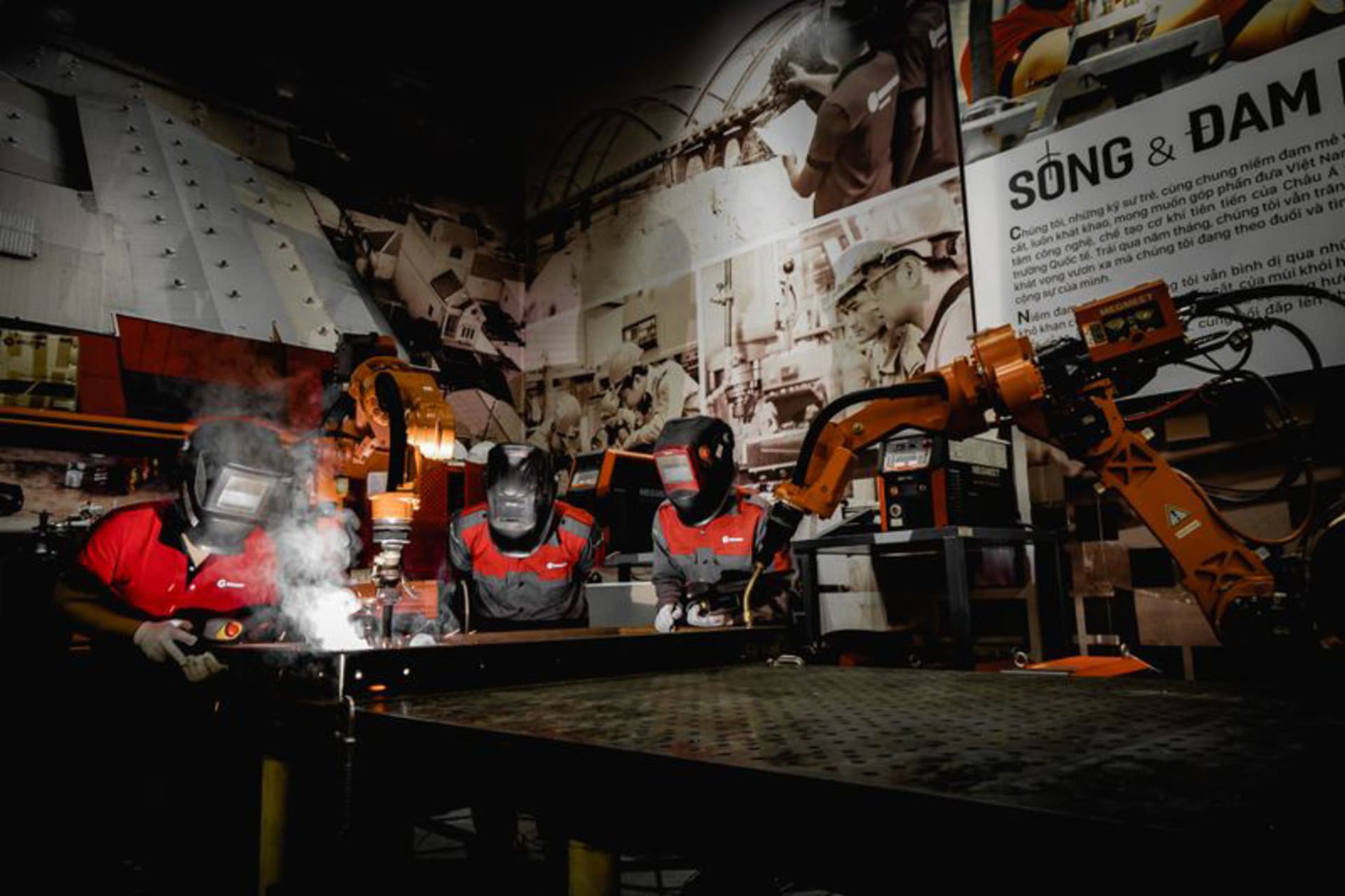
Illustrative photo of a welding workstation with welding personnel and industrial robots
Used TIG Welding Equipment
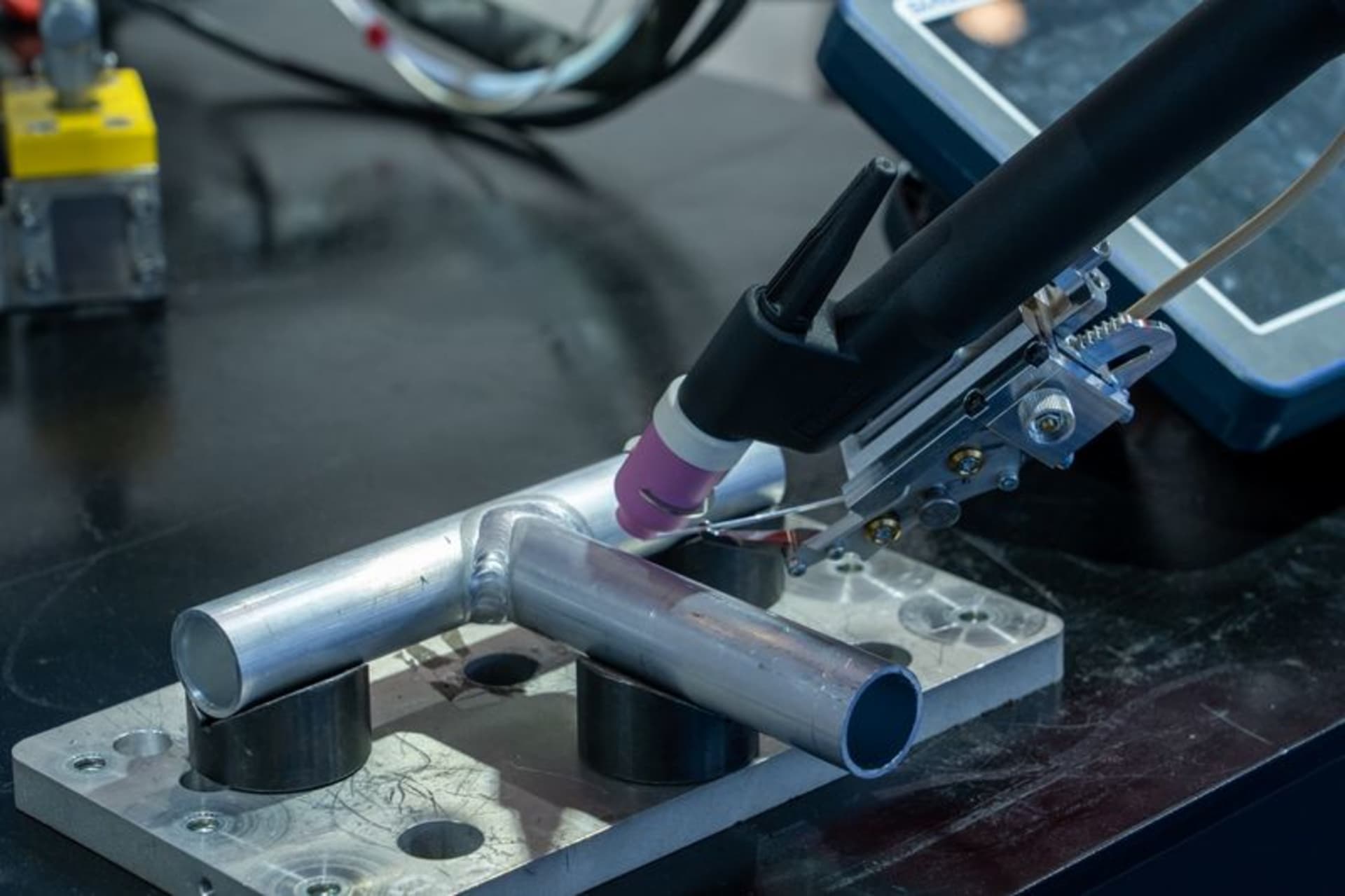
TIG welding (Tungsten Inert Gas), also known as GTAW (Gas Tungsten Arc Welding), uses a non-consumable tungsten electrode to generate the arc, while inert gas (usually argon) shields the weld area from oxidation. Filler material is fed manually or automatically. TIG welding is favored for its precise control and high weld quality.
1. Advantages and Limitations of Used TIG Welding Equipment
Advantages | Limitations |
|
|
2. Practical Applications of Used TIG Welding Equipment
Stainless steel fabrication for the food, medical, and pharmaceutical industries
Manufacturing components for the aerospace industry
Welding pressure piping systems and industrial pipelines
Producing automotive parts requiring high precision and quality
Fabricating thin metal parts and precision engineered products
Used MIG/MAG Welding Machines
MIG (Metal Inert Gas) and MAG (Metal Active Gas) welding are arc welding processes that use a continuously fed consumable wire electrode and shielding gas. The difference between MIG and MAG lies in the shielding gas used - MIG uses inert gas (argon, helium), while MAG uses active gas (CO₂ or a mixture). This is the most widely used industrial welding method in the world.
1. Advantages and Limitations of Used MIG/MAG Welding Machines
Advantages | Limitations |
|
|
2. Practical Applications of Used MIG/MAG Welding Machines
Fabricating steel structures and industrial metal products
Producing components and parts for the automotive industry
Shipbuilding and offshore steel structures
Fabricating steel piping systems and industrial welded structures
Applications in automated and mass production lines
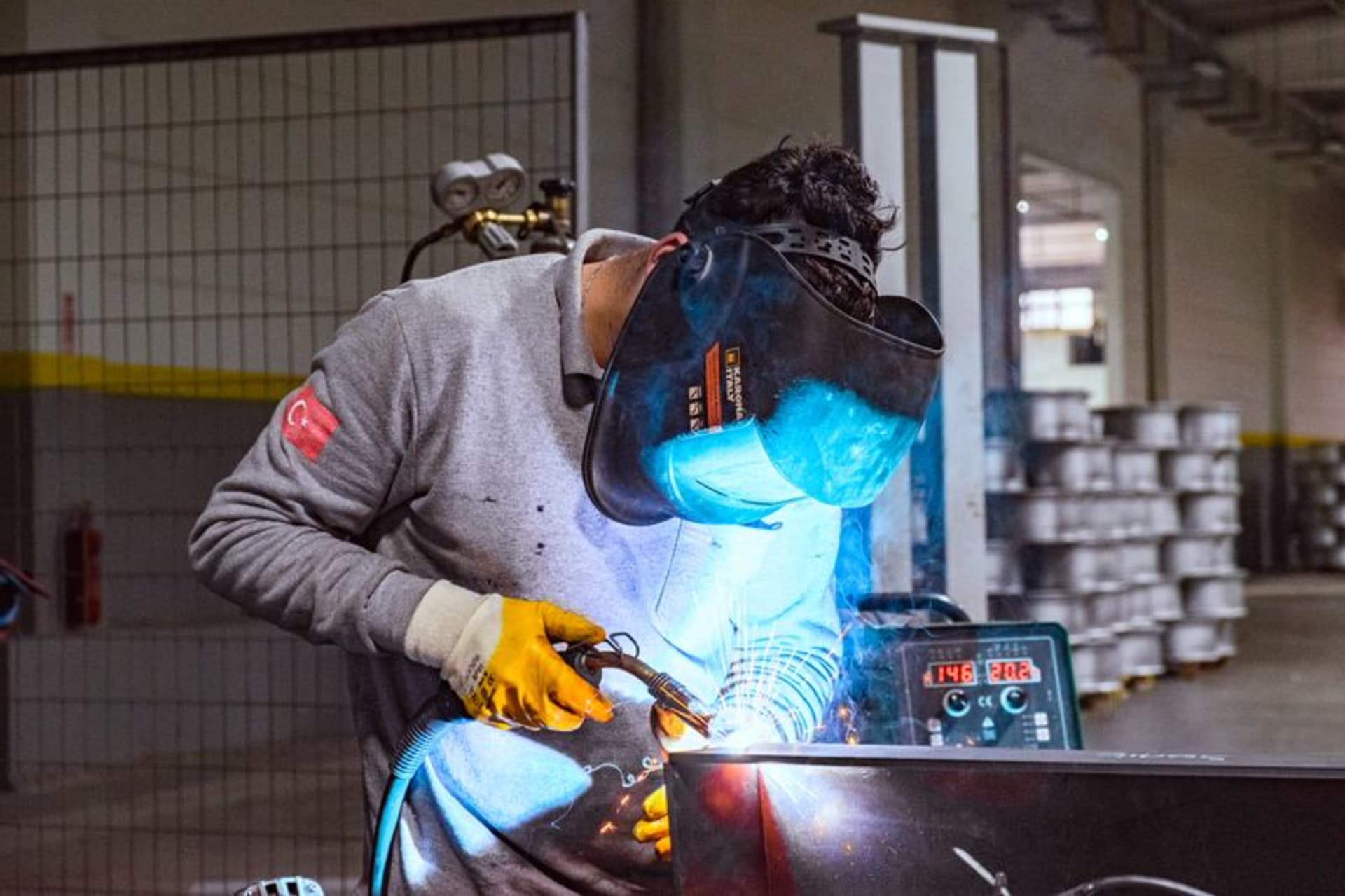
Illustrative photo of manual MIG/MAG welding on a metal component
>>> Browse all Used Welding Machines available at ReMach.
Used Laser Welding Equipment
Laser welding uses a high-intensity laser beam to melt and join materials. This technology allows extremely precise heat control, producing clean, attractive welds with a very small heat-affected zone. Thanks to the combination of the welding head's mechanical motion and the laser's optical guidance, the welding process can be automated with high precision.
1. Advantages and Limitations of Used Laser Welding Equipment
Advantages | Limitations |
|
|
2. Practical Applications of Used Laser Welding Equipment
Production in the automotive and high-tech electronics industries
Fabricating medical and pharmaceutical components requiring high precision
Applications in aerospace and the defense industry
Manufacturing batteries, energy storage devices, and emerging technologies
Fabricating parts requiring tight tolerances and high stability, especially in industries that demand sealed, clean, and aesthetically clean joints such as electronic device housings, battery casings, and medical components.
Used Resistance / Spot Welding Machines
Resistance welding is a welding method that uses heat generated by electrical resistance as a high current passes through metal parts pressed together. Spot welding - one of the simplest methods - uses a dedicated machine to join formed parts through localized molten joints at the weld point. This method uses no filler material and operates at extremely high speed.
1. Advantages and Limitations of Used Resistance / Spot Welding Machines
Advantages | Limitations |
|
|
2. Practical Applications of Used Resistance / Spot Welding Machines
Manufacturing automotive bodies
Mass production of thin sheet metal products
Household appliance and electrical goods industry
Manufacturing electronic components
Fabricating vehicle frames and sheet steel structures
Used Welding Robots
Welding robots are industrial robotic systems programmed to perform automated welding operations. They carry out repetitive welding tasks with high precision and can operate continuously 24/7 without fatigue. Welding robots can adapt to different welding types, including resistance welding and arc welding.
1. Advantages and Limitations of Used Welding Robots
Advantages | Limitations |
|
|
2. Practical Applications of Used Welding Robots
Welding lines in automotive production (spot welding, automated arc welding)
Fabricating industrial equipment and agricultural machinery
Large-scale steel structure fabrication in construction and industry
Mass production in the electronics and precision components industry
Applications in the aviation and aerospace industry
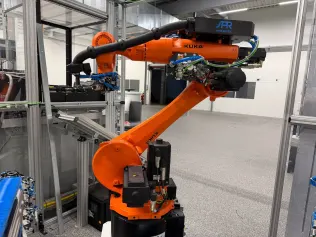
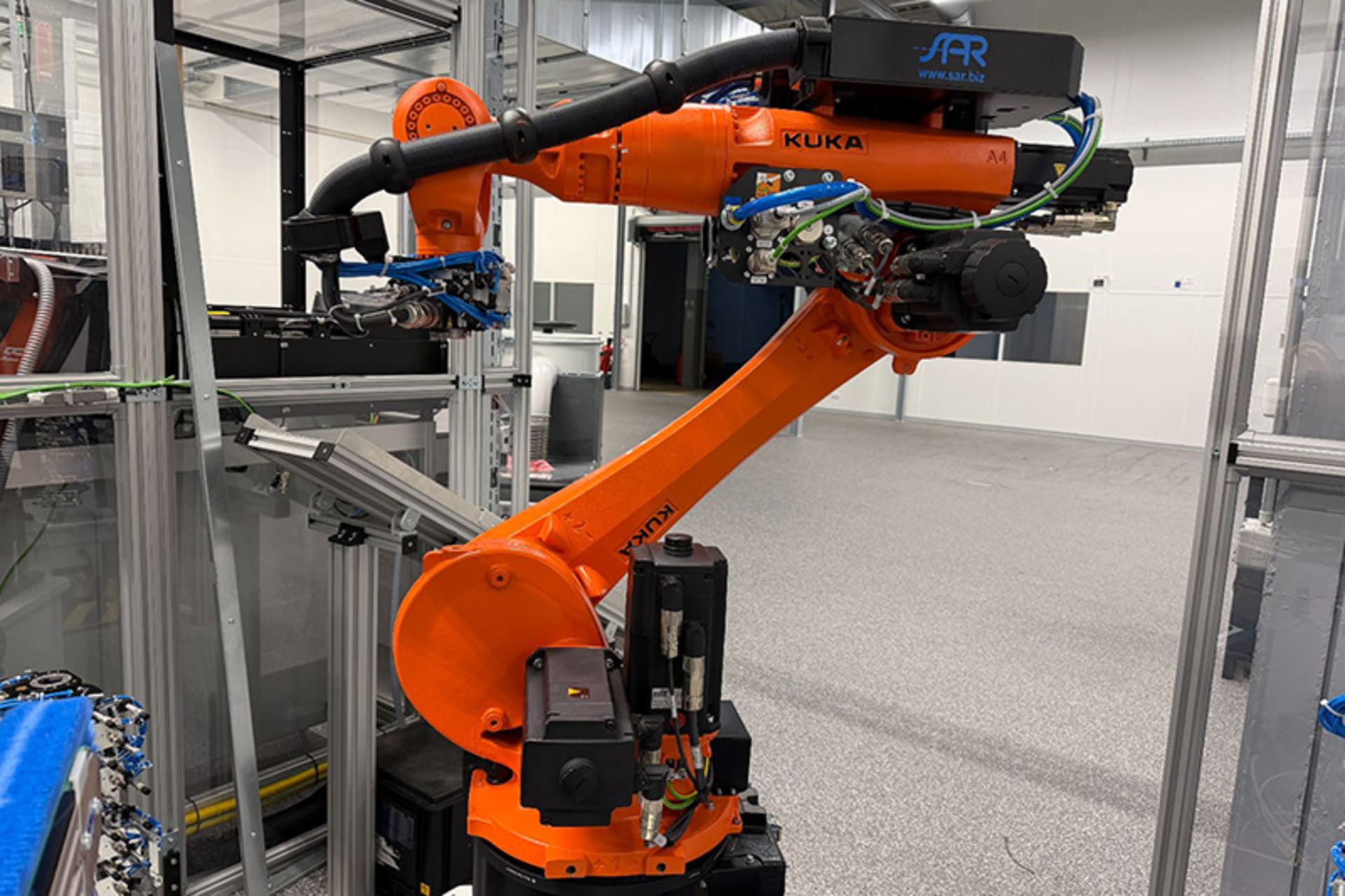
One example from ReMach's catalogue is the KUKA KR 22 R1610-2 /SEL Handling Robot (manufactured in 2021), a versatile model that can be configured for arc welding, material handling, or line automation. The robot is located in Wermelskirchen, Germany, with pricing provided upon request. Contact ReMach for guidance on selecting the right welding torch and welding accessories.
>>> Browse all Used Welding Robots available at ReMach.
5. Trusted Welding Equipment Brands
Choosing a trusted welding equipment brand helps companies ensure machining quality, operating stability, and long-term usability. Below are some brands highly regarded in the welding industry.
KUKA (Germany, 1898): KUKA is a major player in industrial automation and a pioneer in industrial robots, launching its first robot, named FAMULUS, in 1973.
FANUC (Japan, 1956): One of the world's largest industrial robot manufacturers, known for its comprehensive automation ecosystem and an extremely wide product range from light-duty to heavy-duty payloads. FANUC is strong in arc welding robots and is especially known for its “robots building robots” model.
ABB (Sweden/Switzerland, 1988): Formed from the merger of two long-established companies, ASEA and Brown Boveri, ABB is a leading brand in industrial automation and robotics. Its strength lies in arc welding robots, high durability, and stable long-term operation.
Yaskawa Motoman (Japan, 1915): One of the world's largest industrial robot manufacturers, with a highly diverse robot portfolio. Its strength lies in automotive spot-welding robots and arc welding robots with high precision and flexibility.
Lincoln Electric (USA, 1895): A long-established and trusted brand in welding, regarded as a global “welding expert.” Strong in arc welding equipment, industrial solutions, and professional welder training systems.
Miller Electric (USA, 1929): Known for innovations in portability and welding equipment performance, and a pioneer in numerous MIG technologies. Its strength lies in compact, easy-to-use machines suited to a wide range of work environments.
ESAB (Sweden, 1904): One of the world's largest manufacturers of welding materials and equipment, ESAB operates in more than 80 countries. Its strength lies in MIG/MAG welding power sources, manual welding electrodes, and automated welding solutions for heavy industry and shipbuilding.
6. Why Buy Used Welding Equipment at ReMach
ReMach is a dealer in used industrial machinery. Its machines, including welding equipment and welding robots, come directly from plant closures and liquidations in Germany and the DACH region. With a clear inspection process, transparent information, and comprehensive support services, ReMach helps companies easily access high-quality machinery at an optimized investment cost.
Advantages of Choosing Used Welding Equipment at ReMach
Diverse Machine Sources from Trusted Brands: ReMach lists used welding machines, welding robots and welding accessories from established industrial manufacturers. The brands in stock change as machines are sold, so the current listings show exactly what is available.
Transparent Technical Inspection: Each machine is listed with full details, including model, year of manufacture, technical specifications, operating condition, and real photos. Customers have a clear basis to assess machine quality before making an investment decision.
Full-Service Support from Inspection to Installation: ReMach supports the entire process, including machine inspection, dismantling, packing, international shipping, export procedures, and installation coordination, helping companies reduce risk throughout the purchasing process.
Guidance on Selecting Equipment for Specific Welding Needs: From pressure piping that requires precision TIG to automated spot-welding lines that require welding robots, ReMach's team in Germany provides direct guidance on the right specifications and available in-stock models. Contact +49 2196 7050573.
7. How to Buy Used Welding Equipment at ReMach
To choose the right used welding equipment, companies need to assess production needs, technical specifications, and machine condition. Below is the process for buying used welding equipment at ReMach, making the search and investment process simpler and more transparent.
Step 1 - Define Production Needs: Before selecting a machine, a company should clearly define its intended use, including the material to be welded, welding method, required output, operating frequency, and installation space. Correctly identifying these needs helps find the right equipment and avoid misinvestment or excess capacity.
Step 2 - Check Technical Specifications in the Listing: Customers can browse ReMach's equipment listings, which include full details on brand, model, year of manufacture, output, machine condition, and key technical specifications. Based on this data, companies can easily compare and select the right machine.
Step 3 - Request a Test Video or an On-Site Inspection: Before deciding to buy, customers can request an actual operating video from ReMach to assess the machine's condition. Customers can also visit the warehouse in person to inspect the equipment's operation, stability, and overall condition.
Step 4 - Request a Quote, Shipping & Installation: After selecting the right equipment, ReMach provides a detailed quote and advises on shipping, dismantling, and installation. A professional team supports the machine preparation process to ensure smooth commissioning.
Step 5 - Sign the Contract and Receive the Machine: Once both parties agree on the terms, ReMach finalizes the contract, handles the related procedures, and delivers the equipment as scheduled. Customers can confidently receive the machine with full information and support throughout the commissioning process.
8. FAQs
Can Used Welding Machines Be Integrated into a Smart Factory?
Yes, used welding machines can be integrated into a smart factory model if the equipment meets the technical requirements. Welding robots from KUKA, FANUC, ABB, and Yaskawa Motoman can connect to production management systems, IoT, and data monitoring. In many cases, the controller on a used machine can be upgraded to operate in sync with a modern automated line.
How Is Used Welding Equipment Weighing 10-20 Tons Transported and Installed?
Heavy industrial welding equipment must be transported using a professional process to ensure safety. The first step is surveying the machine's dimensions and weight to select the right transport vehicle and lifting equipment. The machine is then secured and protected during transport and installed by an experienced technical team.
How Can I Tell if a Used Welding Robot Is Still Accurate?
To assess the quality of a used welding robot or automated welding machine, check its operating capability, arc stability, repeatability, and the condition of key components. ReMach provides detailed technical information, supports machine inspection, and offers test-run videos to help customers assess the equipment before deciding to buy.
Should I Buy Used Industrial Welding Equipment?
Used industrial welding equipment is a sound choice for companies looking to optimize their investment budget. With the right trusted supplier, customers can still own equipment from major brands with stable performance at a significantly lower cost than new equipment. It's important to thoroughly check the machine's condition and the after-sales support policy.
Where Can I Buy a Reliable Used Welding Machine?
ReMach supplies used welding machines, welding robots and welding accessories sourced from plant closures and liquidations in Germany and the DACH region. With a technical inspection process, transparent machine information, and support from inspection through to shipping, ReMach helps companies select the right equipment and invest with confidence.
Choosing Used Welding Equipment is a solution that helps companies reduce investment cost, quickly acquire high-quality equipment, and optimize production processes. With a diverse machine catalog, transparent information, and comprehensive support services, ReMach accompanies companies throughout the process of finding the right equipment. Contact ReMach via Hotline +49 2196 7050573 for guidance on selecting the right equipment.
9. Glossary
EN Term | Abbreviation | EN Explanation |
Shielded Metal Arc Welding | SMAW | Manual stick welding using a flux-coated electrode rod - the most common and versatile method. |
Gas Metal Arc Welding | GMAW / MIG/MAG | Gas-shielded wire arc welding with continuously fed wire, offering higher productivity than SMAW. |
Gas Tungsten Arc Welding | GTAW / TIG | Uses a non-consumable tungsten electrode and argon shielding gas, producing the cleanest, highest-quality welds. |
Submerged Arc Welding | SAW | The arc is hidden beneath a layer of flux, delivering a very high deposition rate. |
Flux-Cored Arc Welding | FCAW | Flux-cored wire welding that combines the advantages of GMAW and SMAW, suited to outdoor or windy environments. |
Heat-Affected Zone | HAZ | The metal zone whose mechanical properties are altered by welding heat without melting. |
Spatter | - | Metal droplets expelled outside the weld - an important indicator for assessing a used welding machine's operating quality. |
Deposition Rate | - | The amount of metal deposited into the weld per hour (kg/h) - a key indicator of productivity. |
Duty Cycle | - | The percentage of actual operating time within a 10-minute period, e.g., 60% = 6 minutes welding, 4 minutes rest. |
Open Circuit Voltage | OCV | The welding power source's voltage before the arc is struck - affects arc-starting capability. |
Positioner / Turntable | - | Rotates the workpiece into a flat welding position, reducing distortion and improving weld quality. |
Weld Pool | - | The molten metal area formed at the weld point, which determines the weld's shape and mechanical properties. |