
1. Metal as a Material: Properties and Surface Treatment
Metal is one of the most versatile materials available, valued for how readily it can be shaped, processed, and recycled. Every type of metal can be re-smelted and transformed into new products, making it a truly sustainable raw material.
That said, metal products generally require surface treatment to maintain their appearance and withstand demanding conditions. Corrosion is the common enemy of all metals – while the rate and nature of decay varies between alloys and compositions, no metal is entirely immune. Fortunately, modern metalworking offers a wide range of machines and techniques designed to prevent or significantly delay this process.
2. Metal Surface Treatment: Finishing, Coating & Hardening
Metal surface treatment falls into three broad categories: finishing, coating, and changing substance properties. Depending on the metal type and end product, several of these processes may be applied in combination.
Finishing
Finishing refers to treating a surface before a metal product undergoes further machining or before it reaches its final form. It is the last stage that acts directly on the workpiece by removing unwanted outer layers of material. The main finishing processes are cutting, grinding, polishing and lapping, and blasting and cleaning.
Cutting
Many metal components are completed on a lathe or milling machine, after which further intervention would only degrade their material properties. For precision technical parts in particular, cutting is the definitive final step.
Grinding
Where a cutting process alone cannot achieve the required precision, a grinding machine removes outer material layers until the workpiece reaches its exact target dimensions.
Polishing and Lapping
Polishing and lapping produce a high-gloss surface finish and allow shapes to be defined to within a thousandth of a millimetre. Polishing is also an essential preparatory step before chrome-plating. Centrifugal finishers are widely used for this purpose, enabling small parts to be polished efficiently and without manual intervention.
Blasting and Cleaning
Blasting is the standard method for treating large surface areas. When an abrasive medium is used, some material loss is inevitable – but for metal surfaces damaged by corrosion, it is often the only practical way to prepare them for a new coating.
The choice of blasting medium depends on the base material. Sand, quartz, or corundum handle thick sheet metal and heavy cast parts with ease, while delicate materials such as car body panels are typically treated with sodium bicarbonate to avoid surface damage.
Beyond abrasive blasting, there are also non-abrasive methods. High-pressure water jets, for example, can strip the paint from an entire vehicle in minutes, though they require complex, specialised equipment.
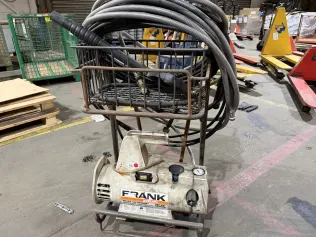
Dry-ice blasters represent the fastest-growing segment of blasting and cleaning technology. Using pellets of frozen carbon dioxide, they deliver outstanding cleaning results without causing any surface damage. Conventional rinsing systems using soap- or alcohol-based agents remain widely used as well, particularly for degreasing and paint removal.
Galvanising for a Durable Finish
Chrome-plating represents one of the most refined forms of metal surface treatment. Although galvanising equipment is relatively straightforward, the preparation process is lengthy and technically demanding. Chrome-plated components offer strong corrosion resistance and a distinctive, high-gloss appearance.
For applications where rust protection is the primary concern rather than aesthetics, zinc-coating is the most widely used galvanising method. It applies a hard, dense layer of rust-resistant zinc that prepares the surface effectively for subsequent coating processes.
Coating
Transforming a metal component into a visually appealing finished product typically requires a final surface coating step. This may involve painting systems, powder-coating machines, or adhesive application stations. Modern coating technology allows virtually any finish to be applied consistently and at high throughput.
Changing Substance Properties
Hardening processes are used to increase the durability and wear resistance of components that must withstand demanding operating conditions. A common application is the hardening of gear units. The process begins with a gear that has already been cut and ground to its final dimensions. It is then heated to red-hot temperatures and quenched in an oil bath. This hardens the outer surface while keeping the gear's core soft and flexible – producing components with abrasion-resistant surfaces that can still absorb high mechanical loads elastically.
3. Second-Hand Metal Surface Treatment Machines
Metal surface treatment machines share one notable characteristic: they are straightforward in their technical design. Whether hardening plants, grinding, polishing and lapping machines, painting and cleaning lines, or galvanising plants, operators benefit from equipment that is reliable and relatively simple to maintain.
This technical accessibility makes used machines a particularly attractive option for buyers, as they can be serviced and overhauled without specialist complexity. The rise of dry-ice blasting technology has expanded possibilities further – even heavily worn painting lines can be restored to excellent working condition with relative ease.