
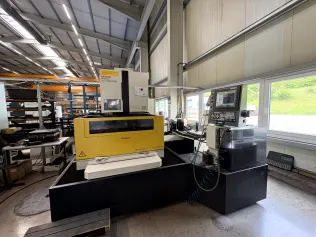
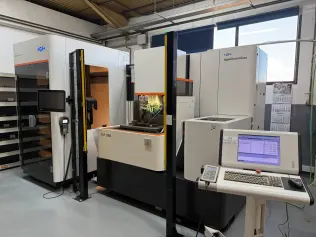
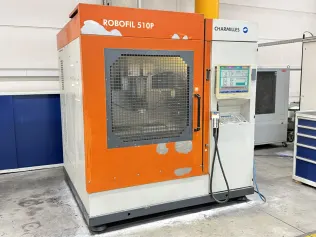
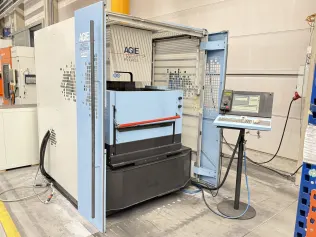
 This item is sold
1. What Is EDM Machinery?
EDM (Electrical Discharge Machining), also known as spark erosion machining, is a type of metalworking machinery that uses controlled electrical pulses to erode material, cutting or shaping electrically conductive metal parts with high precision. The operating principle is based on electrical discharge between the electrode and the workpiece in a dielectric medium, generating extremely high temperatures (up to several thousand degrees Celsius) to melt and vaporize material with micron-level accuracy.
2. Benefits of Choosing a Used EDM Machine
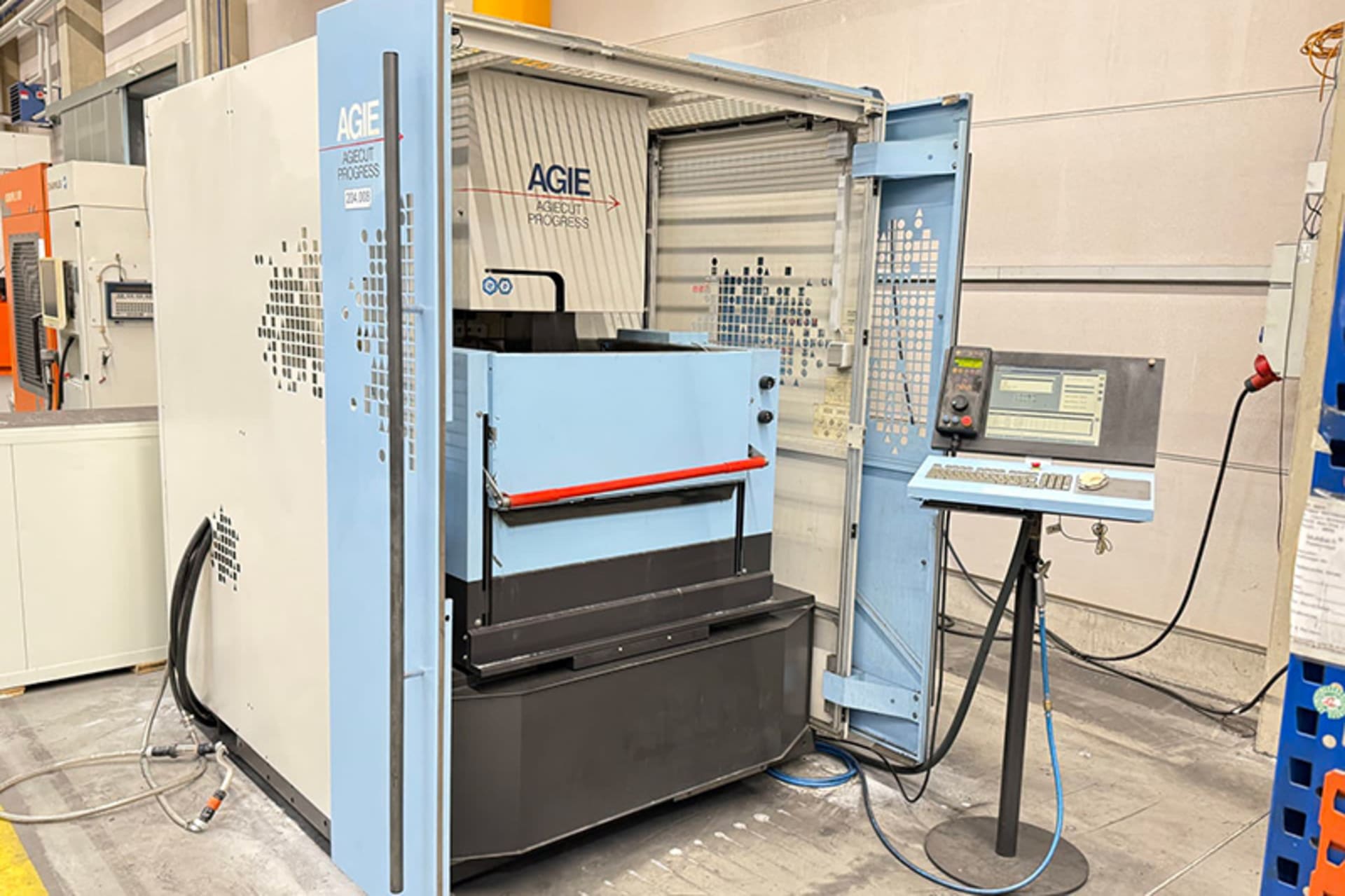
Used EDM machines from Swiss and Japanese brands such as AGIE CHARMILLES, SODICK, and MAKINO typically retain ±1-5 micron accuracy after many years of operation, at a cost of just 40-60% of a comparable new machine.
Optimized Investment Budget: Machine purchase cost is typically only around 40-60% of a comparable new machine, reducing the initial capital burden for businesses.
Guaranteed Machining Accuracy: Premium EDM machines from Switzerland and Japan feature durable construction and the ability to maintain high accuracy after many years of operation.
Modern Technology Ready: Many EDM machines built between 2005 and 2016 already feature integrated CNC control, automatic tool changing, workpiece-feeding robots, and continuous operation capability.
Faster Payback Period: A lower investment level helps businesses bring the machine into production quickly and optimize business performance.
Abundant Machine Supply in Europe: The EU market offers a wide range of high-quality used equipment, making inspection, shipping, and installation convenient.
3. Points to Note When Buying a Used EDM Machine
During the process of sourcing and inspecting EDM machines at European mould-making and precision engineering plants, the ReMach team has noticed several points that buyers often overlook:
The AWT (Auto Wire Threading) system is the most failure-prone part on a used Wire EDM machine and directly affects continuous unattended operation. A machine that cannot automatically re-thread the wire after a break means an operator must be on hand at all times. Always request an AWT test with at least 5 consecutive cycles during machine inspection.
The power supply/generator on older Agie Charmilles and Charmilles machines (pre-2005) uses proprietary circuit boards — when they fail, spare parts are hard to find and expensive. Ask directly: which boards have been replaced, whether spare boards are available, and the estimated replacement cost.
The dielectric tank and filtration system are often overlooked during machine evaluation but are costly to replace. Dirty fluid or a weak filtration system can reduce cutting speed by 15-30% and increase surface roughness. Check the conductivity of the dielectric water (Wire EDM standard is typically below 10 µS/cm) and inspect the condition of the filter resin.
The Z-axis travel on a Sinker EDM wears unevenly over time, causing axis deviation during deep machining. Request an actual measurement with a ballbar test or a standard trapezoid test cut before deciding.
4. Classification of EDM Machinery
EDM machinery is divided into several types based on machining method and practical application. Understanding each machine type helps businesses select the right equipment for their production needs, optimizing performance and investment cost.
Comparison Table: Wire EDM vs Sinker EDM vs Hole Drilling EDM:
Criteria | Wire EDM | Sinker EDM | Hole Drilling EDM |
Working Principle | A wire electrode cuts straight through the workpiece | A shaped electrode forms cavities/pockets in the workpiece | A rotating tube electrode drills deep, small holes |
Main Application | Cutting dies, punch & die, 2D/tapered profiles | Injection moulds, casting dies, complex 3D cavities | Start holes for Wire EDM, turbine cooling holes, injector nozzle holes |
Typical Size Range | Cuts workpieces up to 400 mm thick | Cavities up to 300 mm deep | Holes Ø 0.1-6 mm, up to 300 mm deep |
Accuracy | ±1-3 µm | ±2-5 µm | ±5-20 µm (hole position) |
Surface Roughness | Ra 0.05-0.4 µm | Ra 0.1-1.6 µm | Ra 1.6-3.2 µm (usually requires further finishing) |
Machining Speed | Slow (depends on thickness) | Very slow (depends on cavity volume) | Fastest of the three types (20-60 mm/min) |
Operating Cost | High (continuous wire consumption) | Medium (electrode partially reusable) | Medium (tube electrode consumption) |
Popular Brands | Agie Charmilles, Fanuc Robocut, Sodick | Agie Charmilles, Makino, Mitsubishi | Fanuc, Agie Charmilles, Mitsubishi |
Best Suited For | Precision cutting dies, tool & die, aerospace parts | Mould cavities, die-casting moulds, medical instruments | Small holes in hard materials, Wire EDM preparation |
Used Wire EDM Machines - The Leading Wire-Cutting Machine Type
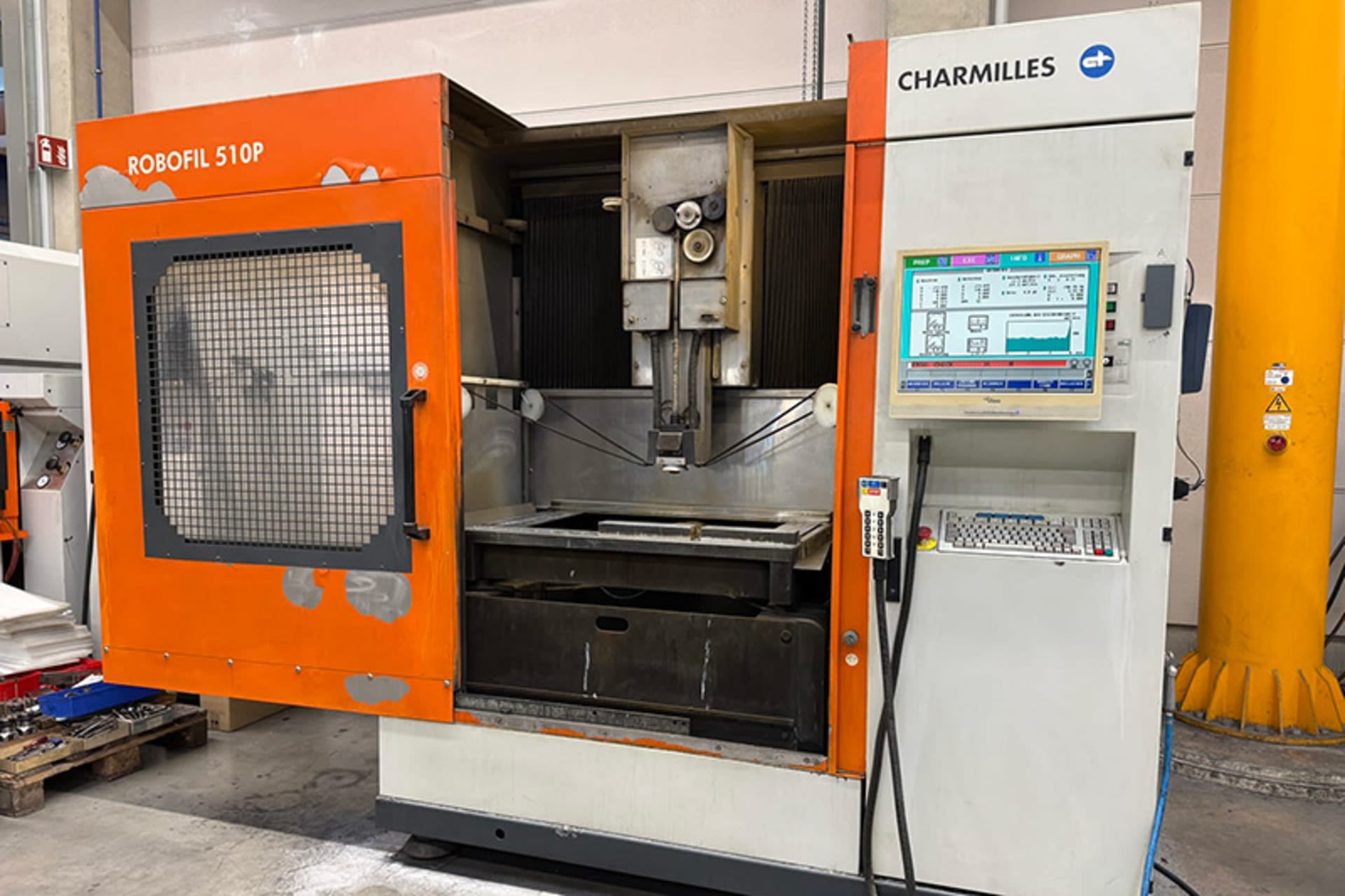
Wire EDM is a spark-erosion machining method that uses a thin wire (typically copper or brass) as the electrode to cut electrically conductive metal parts with very high precision. During operation, the wire is continuously fed from a spool, passes through a roller system to maintain stable tension, and is then guided by upper and lower guide components before being taken up for recycling.
The entire cutting process takes place in a dielectric fluid, which is sprayed at high pressure to cool the cut and flush away eroded material. Because the wire never makes direct contact with the workpiece, the finished part has a clean surface, no burrs, and minimal deformation from mechanical stress.
1. Advantages and Limitations of Used Wire EDM Machines
Advantages | Limitations |
|
|
2. Practical Applications of Used Wire EDM Machines
Precision mould making, such as injection moulds, stamping dies, and die-casting moulds.
Manufacturing aerospace components such as turbine blades and engine parts requiring high precision.
Manufacturing medical devices, including surgical instruments and implants.
Machining complex parts with narrow slots, deep holes, special profiles, or geometries difficult to achieve with conventional methods.
Manufacturing cutting dies, tooling, and standard components in the tool & die industry.
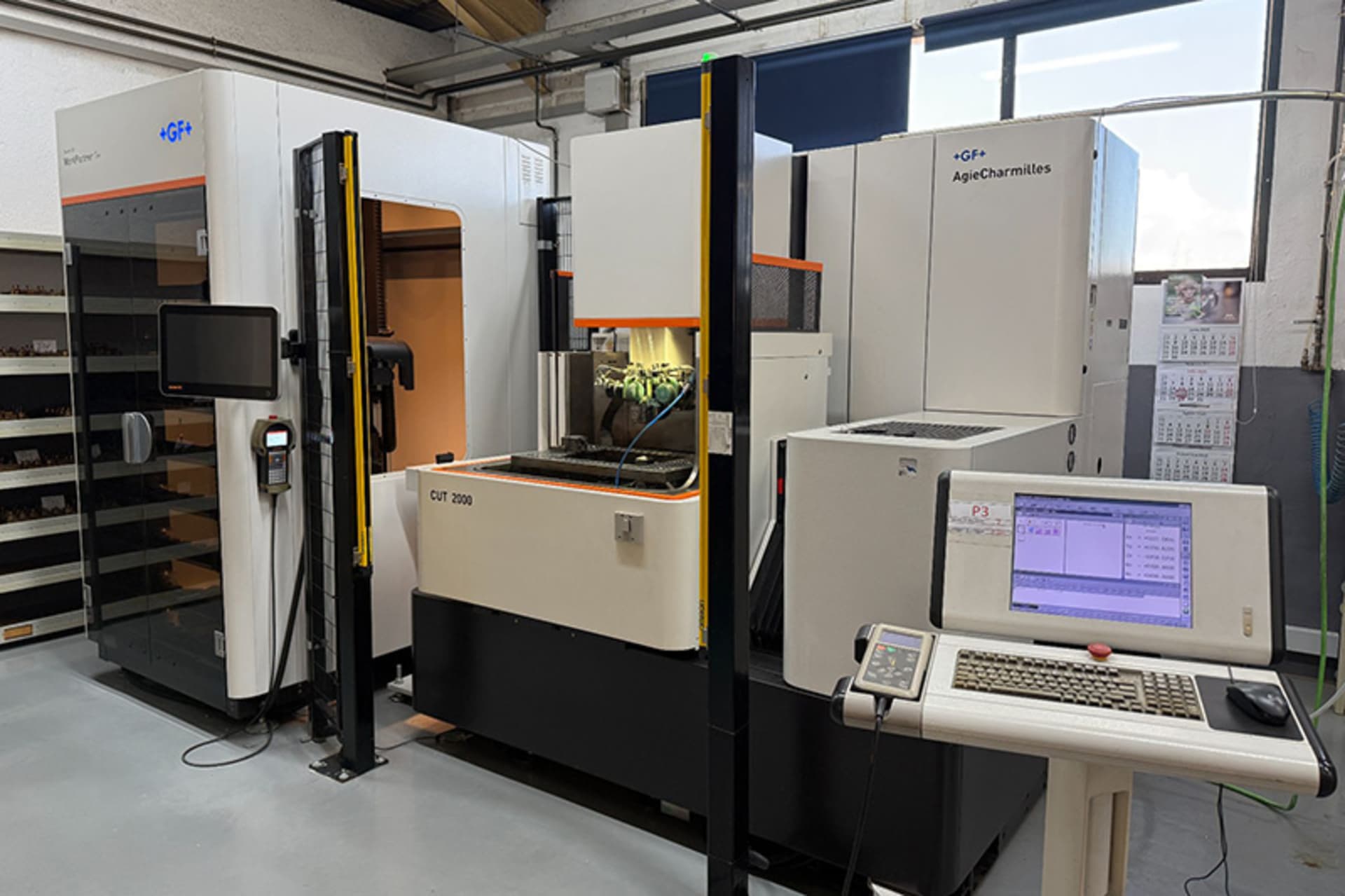
Used Wire EDM (wire-cutting) machines from ReMach's catalogue include the CHARMILLES TECHNOLOGIES ROBOFIL 510 and the AGIE AGIECUT PROGRESS 2. These Swiss-made machines are equipped with dedicated CNC control systems, high-precision cutting capability, and unattended-operation support. At ReMach, every used Wire EDM machine is thoroughly inspected for control system function, machining accuracy, operating capability, and component condition before handover.
>>> To see the latest list of used Wire EDM machines, please contact ReMach or browse the Used Wire EDM Machines category directly.
Used Sinker EDM Machines - The Die-Sinking / Ram EDM Machine Type
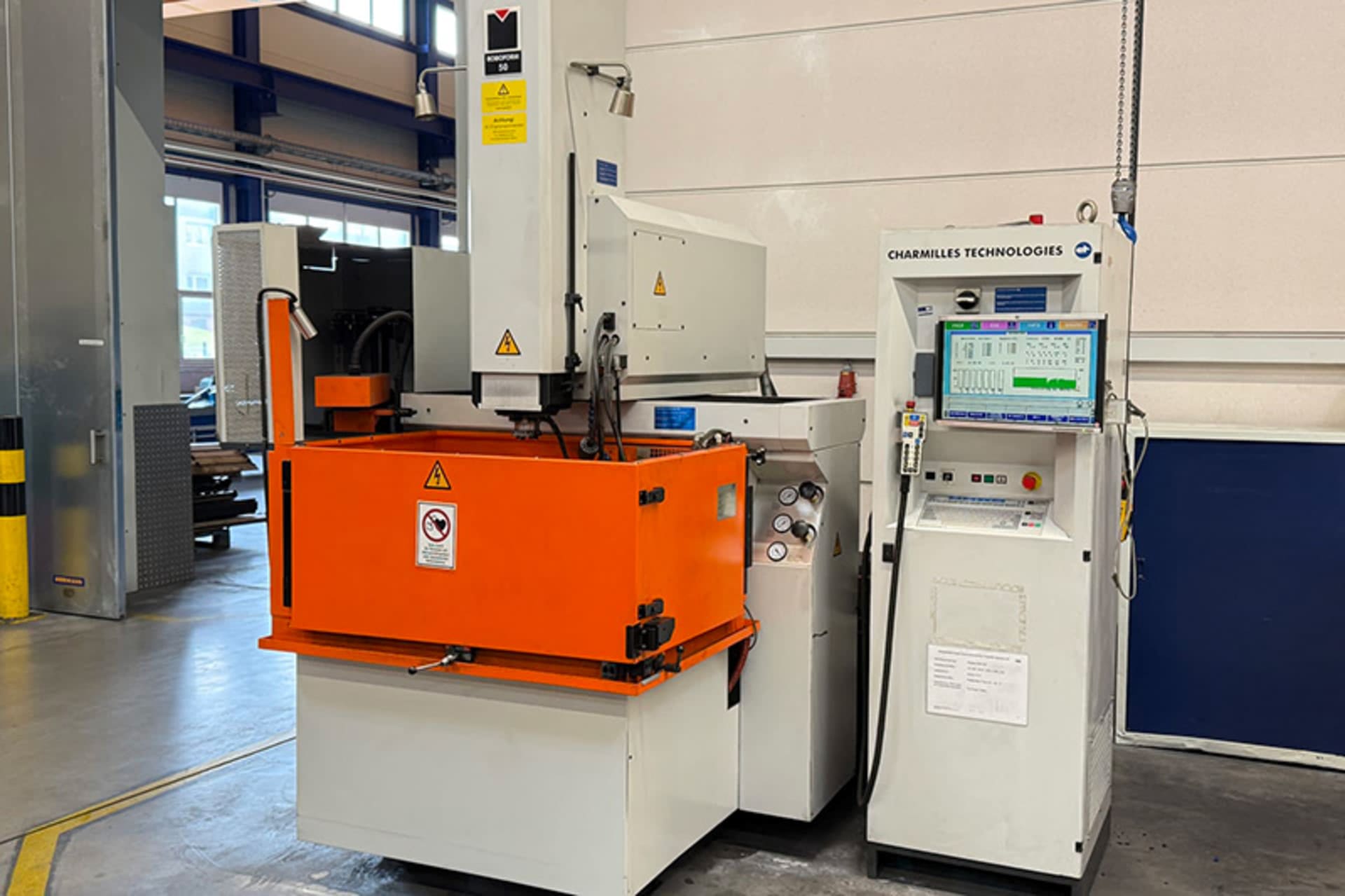
Sinker EDM (also known as Ram EDM or Die-sinking EDM) is a spark-erosion machining system that uses a shaped electrode (typically graphite, copper, or copper-tungsten (CuW) alloy for carbide machining or sharp-edged parts) to create complex-shaped cavities and mould pockets inside the workpiece. The electrode is driven into the workpiece in a dielectric medium, and electrical sparks erode the workpiece material to match the electrode's shape. Unlike Wire EDM, which cuts straight through, Sinker EDM is particularly well suited to creating mould cavities, enclosed pockets, and parts with complex 3D geometry.
1. Advantages and Limitations of Used Sinker EDM Machines
Advantages | Limitations |
|
|
2. Practical Applications of Used Sinker EDM Machines
Injection Moulds: Machining mould cavities and deep recessed features with high accuracy and a fine surface finish, meeting precision mould-making requirements.
Stamping and Casting Dies: Creating complex profiles, small angles, or features difficult to machine with conventional cutting methods.
Aerospace: Manufacturing engine components, turbine blades, and parts requiring extremely high precision and stability.
Medical Devices: Machining surgical instruments and small-sized parts requiring fine precision and a high-quality surface finish.
Cutting Tools & Engineering Components: Manufacturing parts with complex geometry, tight tolerances, and high precision requirements for assembly.
>>> To see the latest list of used Sinker EDM machines, please contact ReMach or browse the Used Sinker EDM Machines category directly.
Used EDM Hole Drilling Machines - The Micro-Hole Drilling Machine Type
EDM Hole Drilling (also known as Small Hole EDM or Fast Hole EDM) is a spark-erosion machining method that uses a thin tube electrode (typically brass or copper, 0.1 to 6 mm in diameter) rotating continuously to drill deep, small holes through hard metal materials at high speed. Dielectric fluid is pumped at high pressure through the bore of the tube electrode to cool the process and continuously flush out debris throughout machining.
What sets EDM Hole Drilling apart from the other two EDM types: drilling speed that is many times faster (up to 30-60 mm/min on hardened steel) and the ability to drill holes with a depth-to-diameter ratio of up to 300:1, something conventional mechanical drilling cannot achieve.
1. Advantages and Limitations of Used EDM Hole Drilling Machines
Advantages | Limitations |
|
|
2. Practical Applications of Used EDM Hole Drilling Machines
Creating start holes on mould workpieces to thread the wire for Wire EDM machining of complex internal profiles.
Drilling cooling holes on aircraft engine turbine blades - diameters of 0.3-1.5 mm, depths up to 100 mm, requiring extremely high positional accuracy.
Machining injector nozzle holes in the automotive and hydraulic equipment industries with tight tolerances.
Drilling vent holes on injection moulds to prevent air trapping during moulding.
Creating internal coolant channels inside cutting tools and carbide inserts.
>>> Contact ReMach to ask about EDM Hole Drilling machines currently available in our EU warehouse - many models are not publicly listed but can be discussed directly via Hotline +49 2196 7050573.
5. Trusted EDM Machinery Brands
In today's market, EDM machinery is developed by many leading brands from Switzerland and Japan, known for high precision, outstanding durability, and advanced technology. Understanding these trusted brands helps businesses easily evaluate quality and choose the right machine when investing.
AGIE CHARMILLES (Switzerland): Formed from the merger of AGIE and Charmilles, now part of GF Machining Solutions - a leading Swiss EDM technology group. The brand is known for its Wire EDM, Sinker EDM, and small-hole EDM lines, integrating precision controls, CAD/CAM, and automation solutions.
CHARMILLES TECHNOLOGIES (Switzerland): Founded in 1952 in Geneva, Switzerland, Charmilles was one of the pioneering brands to bring EDM technology into industrial production starting in 1954. Charmilles is renowned for its ROBOFIL (Wire EDM) and ROBOFORM (Sinker EDM) lines, meeting the demands of high-precision machining.
MITSUBISHI EDM (Japan): Part of the Mitsubishi Electric group, a brand known for high-speed EDM technology, the ability to machine hard materials such as carbide and Inconel, and stable operation in continuous production.
SODICK (Japan): Founded in 1976 in Yokohama, Sodick was the first company in the world to apply linear motor technology to EDM machines (1998), eliminating mechanical friction entirely and achieving extremely high positional repeatability, well suited to mould making and aerospace applications requiring tight tolerances.
FANUC (Japan): Japan's number-one automation brand. The ROBOCUT line is one of the few machine types on the market with a fully integrated CNC-servo-power supply trio developed 100% in-house by FANUC. This gives the machine maximum stability, continuous operation capability, and the lowest maintenance cost among used machine types, while software upgrades or circuit board replacements are also easier thanks to the widespread FANUC ecosystem.
MAKINO (Japan): A world-leading machine tool brand. Newer Makino models (from 2010 onward) are equipped with Hyper i control, which optimizes cutting speed and extends electrode wire life. Older models still retain good thermal stability thanks to Makino's characteristic monoblock machine body construction.
6. Why Choose to Buy Used EDM Machinery at ReMach
ReMach offers a used EDM machine investment solution built on transparency, quality, and cost optimization. Equipment is sourced from reputable suppliers and technically inspected before handover, giving businesses easy access to high-precision EDM technology at a reasonable investment level.
Machines Available in Stock - Inspect Before You Buy: ReMach maintains a machine warehouse network across Europe with a wide range of Used EDM Machinery from brands such as AGIE CHARMILLES, Charmilles, Mitsubishi, Sodick, and FANUC. Customers can inspect actual condition, watch a test run, or request technician support for evaluation before deciding.
Clear Technical Inspection - Ensuring Operating Performance: Every EDM machine at ReMach is inspected on key components, including the CNC system, power supply/generator, machine axes, dielectric tank, cooling system, and actual machining capability. This process gives customers a clear picture of equipment condition and reduces risk when buying used machinery.
Optimized Budget - Improved Investment Efficiency: At ReMach, the cost advantage comes from sourcing and distributing machines directly from suppliers in Europe, without commercial intermediaries. This allows direct control from selection and inspection through to handover, while eliminating unnecessary middleman costs. As a result, businesses gain access to high-quality equipment at a more optimized price, while still ensuring full performance and reliability in operation.
Comprehensive Support from Selection to Operation: Beyond supplying machines, ReMach supports every related step, including equipment selection advice, inspection, dismantling, shipping, and handover, making the process of investing in a used EDM machine smoother.
7. How to Buy a Used EDM Machine at ReMach
Step 1 - Define Your Production Needs
Before selecting a machine, businesses need to clearly define their machining objectives to avoid choosing the wrong configuration. This includes: the appropriate EDM machine type (Wire EDM or Sinker EDM), workpiece size, required accuracy, and the main material to be machined, such as mould steel or carbide...
At the same time, determine the overall budget, which should include not only the machine price but also shipping and installation costs, plus a reserve for maintenance and consumable parts over the first two years.
Step 2 - Review Technical Specifications in the Listing
After defining their needs, customers can cross-check ReMach's listing of used EDM machines to select suitable equipment. At this stage, pay close attention to specifications such as axis travel, accuracy, power, year of manufacture, and compatibility with actual production needs. Reviewing specifications carefully ensures the machine is not only the “right type” but also has the “right operating capability.”
Step 3 - Request a Test-Run Video or an On-Site Inspection
ReMach will provide a test-run video along with a measurement data sheet. The video should clearly show the machine performing a standard test cut (for example, cutting a circle or a 0.1 mm sharp angle on 50 mm thick D2 steel). Based on the video and report, customers can assess surface roughness (Ra), cut-edge squareness, and spark discharge condition (checking for any abnormal flickering sparks).
The video should fully show the machine in operation: stable axis movement, smooth running, and in particular a test cut to assess accuracy and surface quality.
Step 4 - Contact for a Quote, Shipping & Installation
After selecting a suitable machine, customers receive a detailed quote from ReMach. The quote typically includes the machine price, shipping cost from warehouse to factory, plus installation and initial test-run costs. Customers can also request additional information such as maintenance history, technical documentation, electrical diagrams, and operating instructions to support long-term use.
Step 5 - Sign the Contract and Receive the Machine
Once all terms are agreed, both parties sign the sales contract. ReMach accompanies the entire shipping, installation, and handover process to ensure the machine is put into operation safely, stably, and ready for production.
8. FAQs
Is a Used EDM Machine Still Accurate?
Yes. EDM machines from major brands such as Sodick, GF Machining Solutions, and Makino can maintain micron-level accuracy for many years if properly maintained. Many machines can achieve positioning accuracy of around ±1-5 microns with very high repeatability, suitable for precision mould machining. However, actual accuracy depends heavily on maintenance condition, mechanical wear, and the control system, so it's always essential to verify with an actual machining test run before buying.
How Are Wire EDM Machines Weighing 3-5 Tonnes Shipped and Installed?
Used Wire EDM machines are typically shipped by truck and specialized lifting equipment such as cranes or heavy-duty forklifts. Before shipping, the machine is securely fixed on a frame or pallet to prevent vibration. On arrival at the factory, the machine is positioned, leveled, and then connected to the electrical system, dielectric fluid, and auxiliary equipment. Finally, a test-run and calibration step ensures the machine operates stably before handover.
How Can You Tell If a Used EDM Machine Is Still Operating Stably?
The most accurate way is to inspect the machine directly or request a test run. Observe the smoothness of the axes, check for mechanical noise, and inspect the machine's surface condition for signs of wear. Most importantly, an actual test cut assesses the pulse-discharge system and machining accuracy. In addition, be sure to check the automatic wire threading (AWT) system on Wire EDM machines specifically, as this is the most failure-prone component and directly affects productivity.
Should You Buy a Used EDM Machine?
Yes, if the goal is to optimize cost while still accessing high-precision machining technology. A good-quality used EDM machine can save around 40-60% compared to a comparable new machine, depending on brand and machine age. However, investment effectiveness depends on choosing the right machine, the right technical condition, and a reputable supplier. Therefore, prioritize clear technical inspection rather than focusing on price alone.
How Much Does Used EDM Machinery Cost?
Prices for used EDM machines range from around EUR 8,000 to over EUR 150,000, depending on machine type, brand, and condition. Standard Wire EDM machines typically cost EUR 8,000-40,000; premium Sinker EDM and Wire EDM machines from Switzerland (AGIE CHARMILLES, Charmilles) can reach EUR 60,000-120,000. In addition to the machine price, budget an extra 15-25% for shipping and installation.
How Long Does Delivery of a Used EDM Machine from the EU Take?
Typically 30-60 days from contract signing. A machine already in stock needs 3-7 days for preparation and packing, 20-40 days for sea freight depending on the region, plus 5-10 days for customs clearance. Smaller machines (Wire EDM under 3 tonnes) can be air-freighted to shorten delivery time.
Where Can You Buy a Used EDM Machine from a Reliable Source?
You should buy from ReMach - a specialist supplier of used EDM machines from leading brands such as AGIE CHARMILLES, MAKINO, FANUC, MITSUBISHI, and SODICK. ReMach keeps machines in stock at its EU warehouse, technically inspected before sale, and provides full support from machine selection advice, shipping, and installation to on-site test runs, ensuring stable operation that matches your production needs.
Choosing used EDM machinery for sale is a practical option for businesses that need high-precision machining technology without bearing the cost of new equipment. However, to ensure quality and operating stability, choosing the right supplier is the key factor.
ReMach offers technically inspected used EDM machinery, readily available at our EU warehouse, with full support from consultation and shipping to installation and test runs, giving businesses confidence to invest and operate effectively from day one. For detailed advice and to select the machine best suited to your production needs, businesses can contact ReMach directly via Hotline +49 2196 7050573 for prompt support.
9. Glossary
English Term | Abbreviation | Explanation |
Electrical Discharge Machining | EDM | Spark-erosion machining: a technology that erodes metal using electrical discharge sparks in a dielectric medium, without mechanical cutting force. |
Wire Electrical Discharge Machining | Wire EDM | Wire-cutting EDM: a method that uses a metal wire (copper or brass) as the electrode to cut straight through the workpiece. |
Sinker EDM / Ram EDM / Die-sinking EDM | Sinker EDM | Die-sinking/ram EDM: a method that uses a pre-shaped electrode to machine enclosed cavities or 3D shapes in the workpiece. |
Computer Numerical Control | CNC | Computer-based numerical control: an automated machine control system that operates according to a pre-programmed sequence. |
Auto Wire Threading | AWT | Automatic wire threading system: a mechanism that automatically re-threads the EDM wire through the cutting point after a wire break. |
Copper-Tungsten | CuW | Copper-tungsten alloy: a premium electrode material with good wear resistance, used for precision machining and hard materials such as carbide. |
Surface Roughness (Average) | Ra | Average surface roughness: a measure of surface finish after machining; the lower the value, the smoother the surface. |
Micrometer | µm | Micron: a unit of length (1 µm = 1/1,000,000 metre), used to measure machining accuracy and surface roughness. |
Dielectric Fluid | — | Dielectric fluid: an insulating liquid (deionized water or oil) that cools, insulates, and flushes away debris during electrical discharge. |
Tolerance | — | Tolerance: the permissible deviation between a part's actual dimensions and the design drawing. |
Operation Hours / Power-On Hours | — | Operating hours: the total actual runtime of the machine, reflecting the equipment's degree of wear. |
Burr | — | Burr: sharp-edged excess metal remaining after machining; virtually absent in EDM. |