
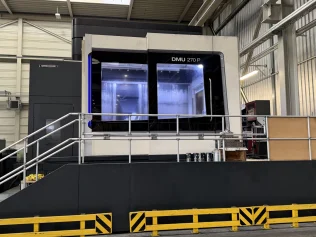
 This item is sold
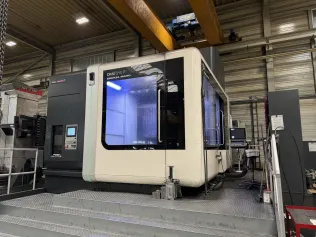 This item is sold
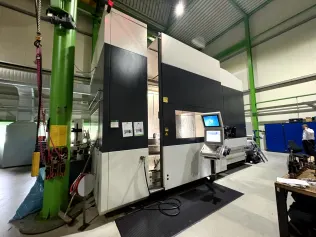 This item is sold
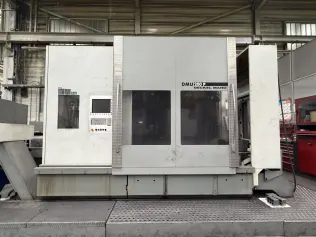 This item is sold
 This item is sold
1. What Are Used CNC Machining Centres?
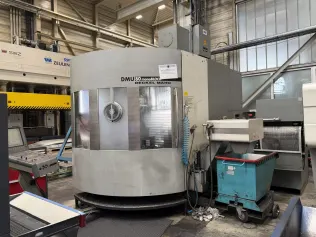
A CNC machining centre is a numerically controlled machine tool and one of the most important types of metalworking machinery. It performs multiple operations in a single setup: milling, drilling, tapping, boring, and hole enlarging.
2. Benefits of Investing in Used CNC Machining Centres
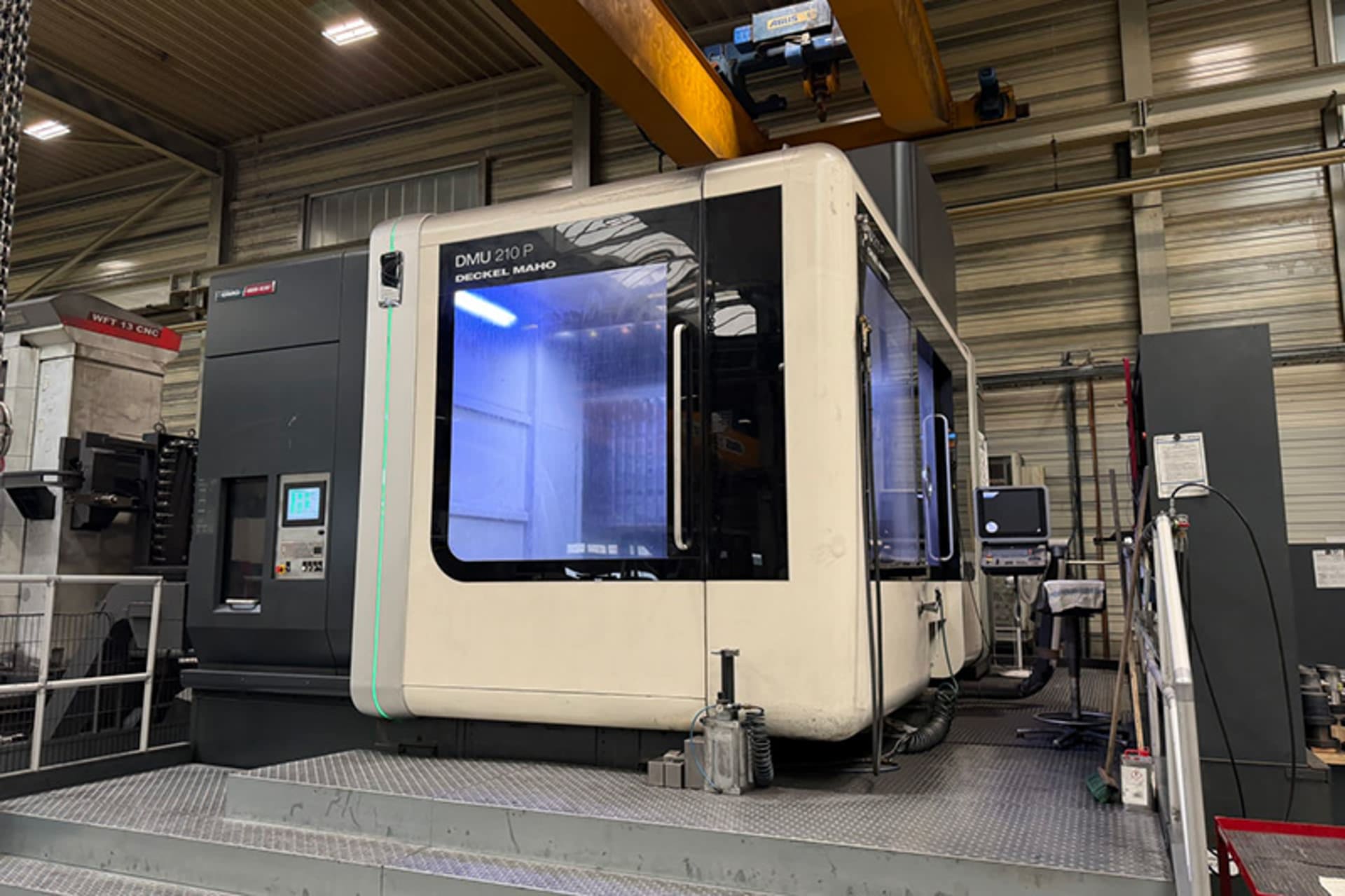
Used CNC machines save 30-60% compared to buying new - enough budget to buy a DMG MORI or MAZAK for the price of a new no-name machine. Instead of committing a large budget to new equipment, businesses can access high-quality machines from leading brands that have been thoroughly inspected and evaluated, quickly boosting production capacity.
Significant cost savings: Used machines typically cost 30-50% less than a comparable new model, with savings of up to 60-70% of the initial investment in some cases.
Faster depreciation, higher return on investment: With lower costs, businesses can recover their investment more quickly and generate profit from machining contracts sooner.
Access to premium technology: Businesses can own machines from leading brands (DMG MORI, MAZAK, MIKRON...) at a much more affordable price than buying new.
Supports sustainable development: Reusing used machinery helps reduce industrial waste, supporting green production and environmental protection.
3. Detailed Classification of CNC Machining Centres
CNC Machining Centres are classified based on machine structure, spindle orientation, and machining capability. Each type has its own advantages suited to specific requirements for accuracy, productivity, and product characteristics.
Used Vertical Machining Centres (VMC)
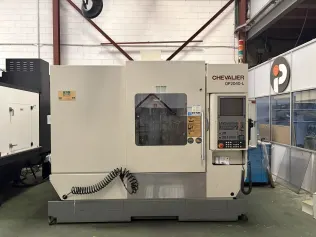
A Vertical Machining Centre (VMC) is a CNC machine with the spindle mounted vertically, perpendicular to the worktable. The VMC is the most common configuration of CNC machining centre, with a vertically oriented spindle. Compared to a conventional CNC milling machine (without ATC), the key difference of a VMC lies in its automatic tool changer (ATC) and its ability to perform multiple operations (drilling, tapping, boring, finish milling) in a single setup.
A VMC operates through the combination of numerical control (CNC) with a rigid mechanical structure and a high-speed spindle. The workpiece is clamped firmly on the worktable (or a fixture or pallet), while the CNC control executes machining commands according to a pre-programmed sequence. In essence, a VMC is a form of CNC milling machine, with the main difference being spindle orientation (vertical, over a horizontal table). This is why the VMC is often regarded as the “first gateway” into CNC machining technology, thanks to its intuitive layout and ease of familiarization.
1. Advantages and Limitations of Used Vertical Machining Centres
Advantages | Limitations |
|
|
2. Practical Applications of Vertical Machining Centres
Aerospace: Machining aluminum structural parts and lightweight alloy components.
Tooling and Moulds: High-precision milling of plastic injection moulds, stamping dies, and die-casting moulds.
Electronics: Machining enclosures, heat sinks, and precision aluminum components.
Automotive Component Manufacturing: Medium-sized parts such as brackets, flanges, and connecting rods.
General Machine Building: Machining basic components at a reasonable investment level.
Used Horizontal Machining Centres (HMC)
A Horizontal Machining Centre (HMC) has its spindle mounted horizontally, perpendicular to the main feed direction. While the workpiece is clamped to the worktable (typically a pallet), the cutting tool rotates and feeds in from the side. This layout lets chips fall away freely under gravity rather than accumulating on the machined surface, keeping the cutting process stable and delivering higher throughput than a VMC.
1. Advantages and Limitations of Used Horizontal Machining Centres (HMC)
Advantages | Limitations |
|
|
2. Practical Applications of Used Horizontal Machining Centres (HMC)
Automotive & Motorcycle Industry: Machining engine blocks, transmission housings, and box-shaped components at high volume.
Hydraulics & Pneumatics: Manufacturing valve bodies, pump housings, and components with multiple perpendicular bores.
Heavy Machinery: Large structural components requiring high parallelism and perpendicularity accuracy.
Energy: Machining turbine housings and generator components.
Used Universal / 5-Axis Machining Centres
A Universal / 5-Axis Machining Centre represents the pinnacle of CNC machining technology. This machine type can move simultaneously across 5 axes (3 linear axes X, Y, Z and 2 rotary axes A, B/C), enabling the machining of complex geometries and free-form surfaces in a single setup.
There are two common 5-axis configurations:
Rotating spindle head
Rotating table (rotary-tilt axis).
Thanks to the ability to position the tool at any angle, a 5-axis machine can reach locations that a 3-axis machine cannot access, or that would require multiple complex fixtures.
1. Advantages and Limitations of Used Universal / 5-Axis Machining Centres
Advantages | Limitations |
|
|
2. Practical Applications of Used Universal / 5-Axis Machining Centres
Aerospace: Turbine blades, engine components, complex structural parts.
Medical: Orthopedic implants (hip joints, knee joints, bone screws), surgical instruments.
Premium Tooling: Complex plastic injection moulds, stamping dies with curved rib features.
Energy: Gas turbine blades, hydro turbine blades.
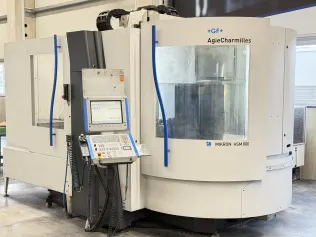
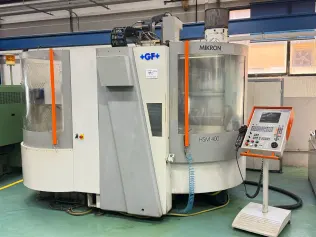
Universal machining centres from ReMach's catalogue include the MIKRON HSM 800 and the MIKRON HSM400. Both are high-precision high-speed milling (HSM) machines, suited to mould machining, graphite electrode work, and complex parts.
>>> View all Used 5-Axis Machining Centres and Used Universal Machining Centres at ReMach to find the equipment that fits your production needs.
Used High-Speed Machining Centres (HSM)
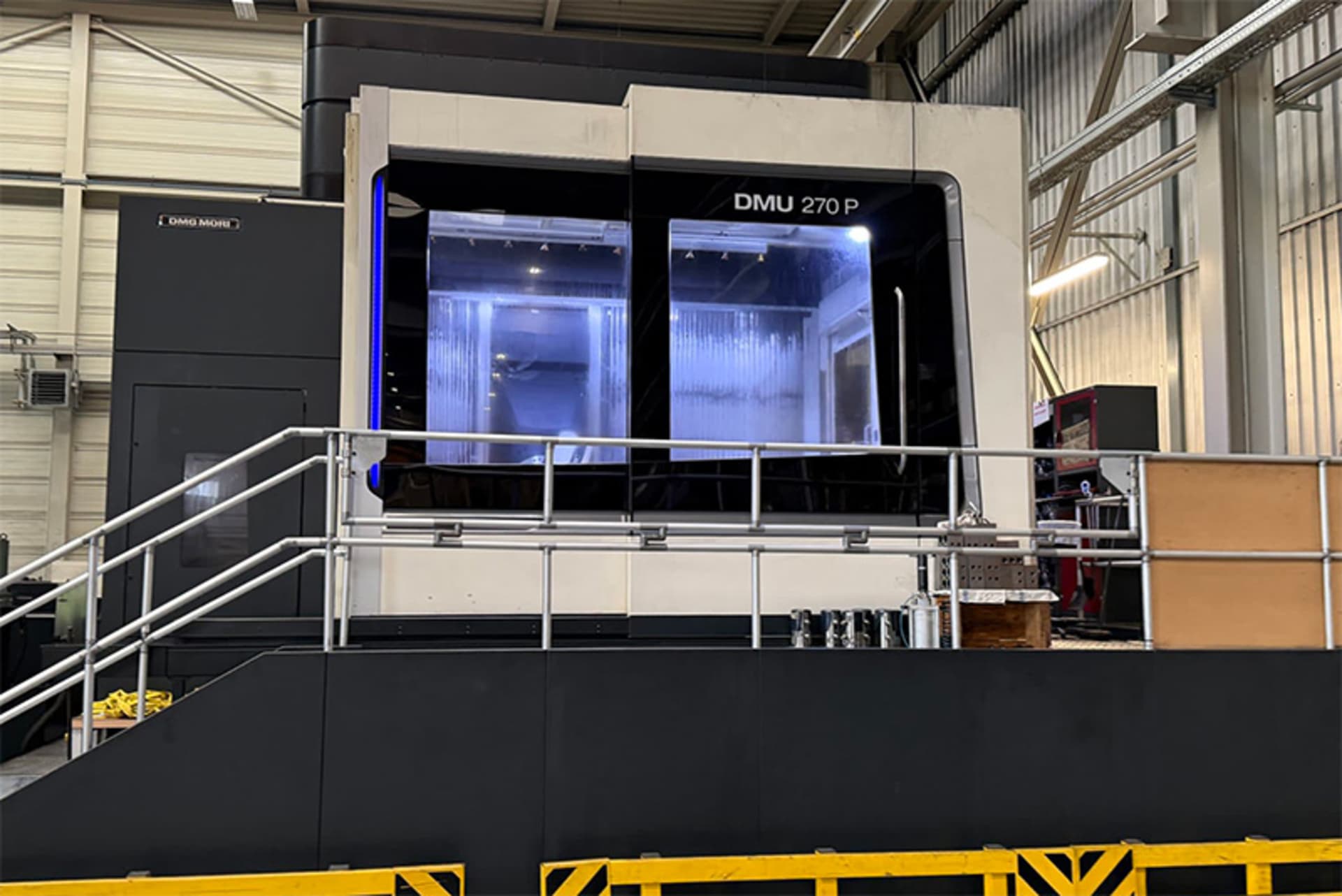
A High-Speed Machining Centre (HSM) is designed to operate at very high spindle speeds (typically from 15,000 RPM upward, sometimes reaching 15,000-30,000 RPM) with high feed rates (fast traverse rates).
Unlike conventional machining, which uses a large depth of cut and moderate cutting speed, HSM applies the high-speed machining philosophy: “small depth of cut (ap), large feed per tooth (fz).” This lets most of the heat generated leave with the chips, minimizing thermal effects on the workpiece surface while reducing cutting force and vibration. HSM machines typically have a very rigid frame structure, ball screws with a large lead, and a control system capable of extremely fast data processing.
1. Advantages and Limitations of Used High-Speed Machining Centres
Advantages | Limitations |
|
|
2. Practical Applications of Used High-Speed Machining Centres
Finish Machining of Complex Moulds: Plastic injection moulds, premium stamping dies, die-casting moulds.
Graphite Electrodes for EDM Machines: Graphite is brittle and requires high speed with low cutting force.
Aerospace Components: Turbine blades, thin hard-alloy parts.
Medical Implants and Small Hard Components in Electronics and Watchmaking.
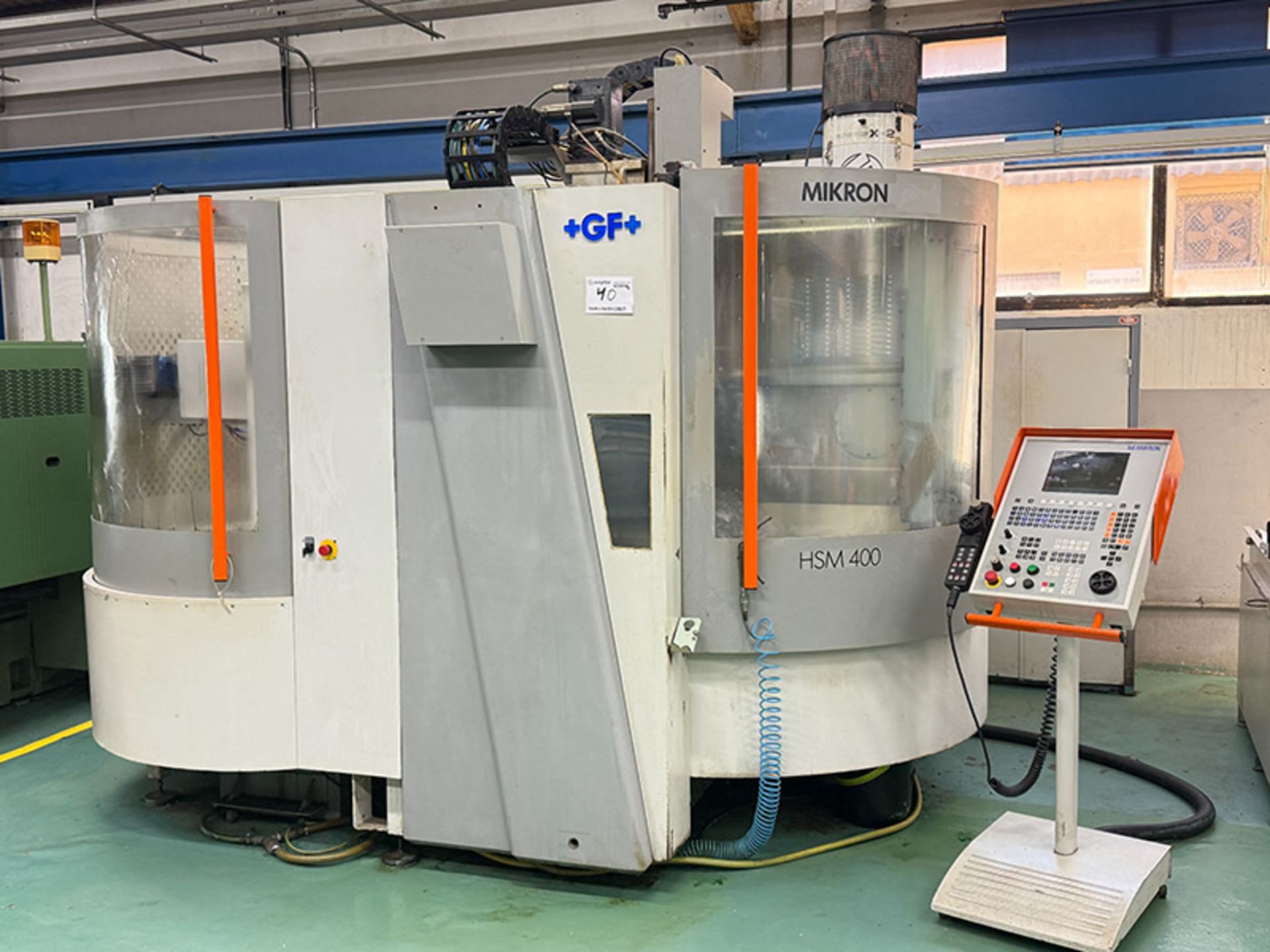
The MIKRON HSM 400 illustrates high-speed machining of precision components for tool and mould making
Used Gantry / Double-Column Machining Centres
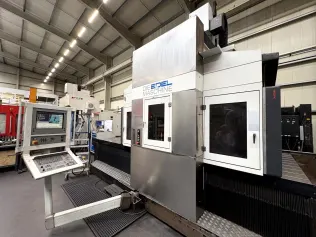
A Gantry / Double-Column Machining Centre has a distinctive structure with two sturdy support columns connected by an overhead crossbeam, forming a gantry that spans the worktable. The spindle travels along this crossbeam.
This design delivers superior rigidity and stability, essential when machining bulky parts weighing tens of tonnes without distortion. Unlike a cantilever milling machine or a conventional vertical mill, a gantry machine typically has a fixed worktable, with the spindle traveling across the full working range.
1. Advantages and Limitations of Used Gantry / Double-Column Machining Centres
Advantages | Limitations |
|
|
2. Practical Applications of Used Gantry / Double-Column Machining Centres
Large Moulds: Automotive body stamping dies, aircraft tooling, oversized plastic moulds.
Aerospace & Energy: Aircraft structural components (wings, fuselage sections), wind turbine blades, hydro turbine housings.
Shipbuilding: Machining large machine components and marine engine mounts.
Heavy Machine Building: Machining hydraulic press frames and large machine tool bodies.
4. Trusted CNC Machining Centre Brands
Trusted CNC Machining Centre brands play a critical role in ensuring machine accuracy, durability, and operating performance, especially when selecting used equipment. Below are the brands most highly regarded in the global market.
DMG MORI (Germany / Japan): Formed from long-established German brands (Gildemeister 1870, Deckel 1903, Maho 1924) and Japan's Mori Seiki (1948). The two companies began cooperating in 2009, renamed to DMG Mori Seiki in 2013, and completed the merger under the DMG MORI name in 2015.
MIKRON (Switzerland - GF Machining Solutions): A Swiss machine tool brand known for its strength in high precision. Specializes in high-speed machining centres (HSM) and 5-axis machines, suited to mould making, graphite, medical, and other industries requiring fine precision.
MAZAK (Japan): Founded in 1919, one of Japan's major machine tool manufacturers. Known for its intuitive MAZATROL control technology, which streamlines programming and operation; strong in machining centres, multi-tasking lathes, and flexible manufacturing systems.
HAAS (USA): Founded in 1983 in California, Haas is North America's largest CNC machine manufacturer, particularly popular on the used market thanks to readily available parts and reasonable prices.
Okuma (Japan): Founded in 1898, specializing in machining centres and CNC lathes, notable for its proprietary OSP control system and high mechanical durability.
5. Why Buy Used CNC Machining Centres from ReMach?
ReMach is a specialist partner for used machine tool solutions, helping businesses optimize their investment and improve production efficiency. More than just a platform for trading used CNC machines, ReMach offers a comprehensive service ecosystem covering valuation, technical inspection, dismantling, international shipping, installation, and after-sales support.
Guided by the commitment “We see a world where every machine gets a second life,” ReMach connects businesses with high-quality industrial equipment, helping to build a smarter and more sustainable manufacturing sector.
Learn about 3 reasons ReMach is a trusted choice for your used CNC machine needs:
Machines in Stock at Our European Warehouse - Inspect Before You Buy: ReMach holds a diverse stock of CNC machines at our warehouses in Germany, letting customers easily view the actual machine, run test cuts, assess condition, and shorten the time to get the machine into production.
In-Depth Technical Inspection - Ensuring Operating Quality: Every machine is thoroughly inspected, covering usage history, axis accuracy, spindle and ball screw condition, the CNC and ATC systems, and auxiliary components. Machines are serviced, cleaned, and have any necessary faults corrected before handover, ensuring they are ready to run.
Competitive Pricing - Optimizing Investment Efficiency: Thanks to a broad partner network and a direct trading process, ReMach delivers optimized pricing, helping businesses save on investment costs, shorten payback periods, and own high-specification equipment within a reasonable budget. ReMach also advises on all related costs, including shipping, dismantling, installation, and test runs, ensuring a transparent investment plan with no unexpected costs.
6. Risks to Know When Buying a Used CNC Machining Centre
Hidden Spindle Wear: The spindle is the most expensive and hardest component to assess. A machine may run well, but a spindle near the end of its life may need an overhaul within just 6-12 months. Insist on a runout and vibration check before purchase.
Outdated Control Systems: Machines running Fanuc 0M/6M or Siemens 810D or older are very difficult to source parts and technicians for. Prioritize machines with Fanuc 0i-MD, 31i, or Siemens 840D sl or newer.
Uneven Ball Screw and Linear Guide Wear: Directly affects accuracy. Verify with a ballbar test, not just a visual check.
CE Marking: Machines imported into the EU require CE marking. Machines from Japan or the US may need retrofitting to meet European safety standards - cost can range from EUR 3,000-10,000 depending on scope.
7. How to Buy a Used CNC Machining Centre at ReMach
To make selecting and investing in a CNC machine simpler, more transparent, and more effective, follow the 5 steps to buying a machine with ReMach:
Step 1 - Define Your Machining Needs: Before selecting a machine, clearly identify the material type, part size, complexity, and expected production volume. This forms the basis for choosing the right machine type (VMC, HMC, 5-axis...), table size, axis travel, and spindle power.
Step 2 - Search for and Compare Suitable Machines: Browse ReMach's CNC machine listings and evaluate key specifications such as number of axes, working range, spindle speed, tool capacity, table load capacity, and control configuration to select equipment that matches your production needs.
Step 3 - Inspect Machine Condition Before Deciding: Customers can request a live operating video or visit the warehouse in person to inspect the machine. ReMach helps assess operating capability, accuracy, and the condition of the spindle, ball screw, tool changer, and other key components before purchase.
Step 4 - Contact Hotline +49 2196 7050573 for a Quote & to Arrange Shipping and Installation: Once a machine has been selected, the ReMach team will advise in detail on costs, dismantling options, international shipping, related procedures, and the installation and test-run plan at your facility.
Step 5 - Handover and Commissioning: Once the contract is finalized, ReMach delivers the machine and supports installation, setup, operational testing, and training so the equipment can quickly reach stable production.
8. FAQs
Can a Used CNC Machine Be Integrated into a Smart Factory System?
Yes, but it requires careful assessment. Older CNC machines (pre-2000) with only an RS232 port need an additional converter and middleware to support IoT integration. Cost typically ranges from EUR 5,000-15,000 per machine depending on the level of monitoring, integration scope, and provider. Machines with a built-in Ethernet port or a newer control system (Siemens 840D, Fanuc 31i, Heidenhain iTNC 530 or later) should be prioritized. Not every used machine can be upgraded cost-effectively.
How Are CNC Machines Weighing 20-30 Tonnes Shipped and Installed? How Long Does It Take?
Shipping heavy CNC machines requires a professional process covering dismantling, packing, transport by specialized vehicles, lifting, and on-site alignment at the factory. After installation, the machine is leveled, connected to utilities, and test-run. For shipments within the EU, the process typically takes around 2-4 weeks. For international sea freight, it can range from 5-10 weeks. Actual timing depends on distance, procedures, and machine complexity.
How Can You Tell If a Used CNC Machining Centre Is Still Accurate?
Assessment should be based on machine records, inspection reports, and hands-on testing. Laser and ballbar measurements, test cuts, and inspection of the spindle, ball screw, and slideways help determine remaining accuracy. A thoroughly inspected machine ensures stable operation once it's back in production.
How Much Does a Used CNC Machining Centre Cost?
Prices for a used CNC machining centre typically range from around EUR 10,000 to 600,000+, depending on the machine type (VMC, HMC, 5-axis...), brand, year of manufacture, operating hours, and actual condition. Standard machine types are usually priced in the tens of thousands of euros, while 5-axis, HSM, or premium brands such as DMG MORI, MAZAK, and MIKRON command higher prices.
Should You Buy a Used CNC Machining Centre?
Yes, provided you choose the right source and inspect the machine thoroughly before buying. A used machine gives businesses access to advanced technology at a lower cost and shortens the payback period. That said, prioritize suppliers with clear machine provenance, inspection reports, technical support, and a warranty policy.
Where Can You Buy a Used CNC Machining Centre from a Reliable Source?
ReMach is a trusted partner in the used CNC machine sector, with a diverse machine stock available at warehouses across Europe. Customers can inspect, test-run, and evaluate machine condition directly before making an investment decision. Every machine undergoes technical inspection, accuracy testing, and operational assessment, backed by comprehensive shipping, installation, and after-sales support.
Used CNC machining centres from Europe are typically priced 30-60% lower than new, with delivery times of 35-70 days depending on the destination. Browse ReMach's current CNC machine listings or contact us via Hotline +49 2196 7050573 for a quote.
9. Glossary
English Term | Abbreviation | Explanation |
Computer Numerical Control | CNC | Computer-based numerical control that lets a machine tool automatically machine parts according to a pre-programmed sequence |
Machining Centre | MC | A CNC machine capable of performing multiple operations (milling, drilling, tapping, boring) in a single setup, typically equipped with an ATC |
Automatic Tool Changer | ATC | An automated system that changes cutting tools without manual intervention |
Automatic Pallet Changer | APC | An automated system that swaps workholding pallets while the machine is running, increasing throughput |
Vertical Machining Centre | VMC | A machining centre with a vertical spindle, common and easy to operate |
Horizontal Machining Centre | HMC | A machining centre with a horizontal spindle, offering good chip evacuation and suited to box-shaped parts |
High-Speed Machining | HSM | Machining at spindle speeds above 15,000 RPM, suited to fine parts and specialized materials |
5-Axis Machining | 5-Axis | A machine capable of simultaneous motion across 5 axes, used for complex geometries |
Gantry / Double-Column | - | A dual-column gantry-style machine, purpose-built for large, heavy parts requiring high rigidity |
Spindle | - | The main shaft that holds and rotates the cutting tool, directly affecting machining speed and accuracy |
Ball screw | - | A low-friction linear drive mechanism that ensures high positioning accuracy |
Encoder | - | A sensor that measures position and speed, mounted on a motor or rotary axis |
Linear scale | - | An optical scale that measures position directly on an axis, improving machining accuracy |
Drawbar | - | A tool-clamping mechanism inside the spindle that secures the cutting tool using mechanical or pneumatic force |
Ballbar | - | A device used to test the circularity and dynamic accuracy of a CNC machine |
Test cut | - | A sample machining run used to verify and assess a machine's actual accuracy |