
1. Cutting Machines: Types, Uses & Key Benefits
Cutting machines are industrial devices designed to cut through metal and other solid materials using precise machined or sawing motions. Whether configured as a saw, lathe cutter, or one of many other available types, these machines deliver clean cuts without burring hard materials or distorting and crushing softer ones. They are available in both portable hand-held models and larger stationary versions to suit a wide range of applications.
Designed for separating solid materials with precision
Available as hand-held or stationary machines
A wide range of models suited to various applications
2. Types of Cutting Machines: A Complete Overview
Cutting machines span a wide range of designs and capabilities, from compact pendulum jigsaws and angle grinders to heavy-duty stone saws powered by internal combustion engines. Blades are selected according to the material being cut – stone or metal – to meet specific application requirements. The most basic models consist of a handheld cutting tool mounted in a holder with a clamping mechanism for stability and control.
Crosscut saws represent a straightforward category of cutting machine, designed for the safe and efficient processing of wood. At the heavier end of the spectrum, electrically powered machines with rotating cutting wheels are commonly used in road paving and construction. Across all categories, cutting machines are engineered to deliver high precision at speed while maintaining long-term durability. With adjustable speed and cutting force, they offer the flexibility to handle a broad range of materials and thicknesses.
3. Saw Variations for Industrial Cutting Machines
Cutting machines typically feature a self-operated serrated blade, where the serrations perform the actual cutting action, or form part of a larger automated system. The blade drives through metal workpieces using manual force or power sources such as electricity, steam, or hydraulics. Depending on the design, the blade is either mounted to a rigid frame or fitted with two handles for ease of movement and control. A two-handed saw, for example, operates through pushing, pulling, or a combination of both cutting strokes.
4. Cutting Machines: Applications & Industry Uses
Cutting machines serve a wide range of industrial applications, with two principal categories of saw technology suited to different materials and environments. Band saws are designed to handle both straightforward and difficult-to-machine workpieces, including aluminium, steel, stainless steel and nickel alloys. Other saw types are primarily intended for softer materials and are widely used in the construction and roadworks sectors.
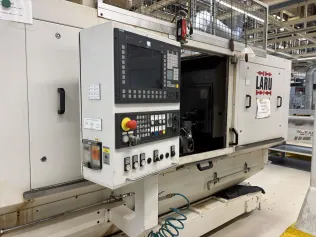
Large cutting machines play an important role in roadworks and are also deployed by emergency services. Rescue cutting equipment fitted with two-stroke engines can be equipped with either a stone or metal blade, making them effective tools for cutting through the bodywork of crashed vehicles. Stationary industrial cutting machines, typically found in heavy industry and large-scale production environments, are housed in enclosed units that protect operators from offcuts and ejected material.
Proper maintenance and cleaning by trained personnel is essential, as careful handling helps prevent damage to precision components. In stationary units, the use of cooling lubricant is recommended to ensure consistent performance. When equipped with sensors and automated feeds, cutting machines can achieve a high degree of process automation. Cutting heads can also be integrated with industrial robots and automated transport systems, enabling fully automated production workflows.
5. Cutting Machine Manufacturers & Top Brands
Cutting machines are produced by a wide range of manufacturers, from power tool specialists such as Bosch, Metabo, DeWalt and Elu to industrial-grade suppliers including ATM, Petschauer, Dreistern, Presi and Heraeus Kulzer.