
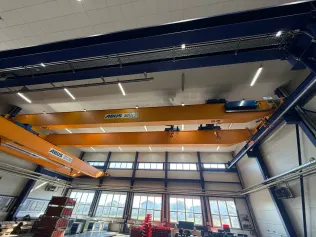
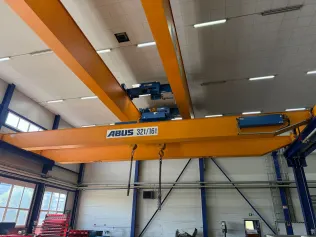
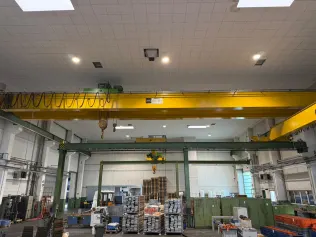
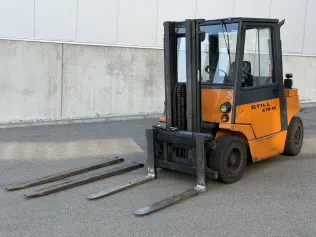
 This item is sold
 This item is sold
 This item is sold
 This item is sold
 This item is sold
 This item is sold
 This item is sold
 This item is sold
 This item is sold
 This item is sold
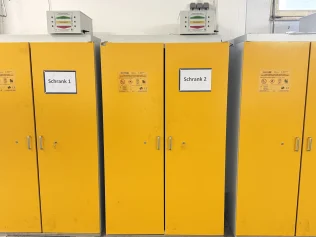 This item is sold
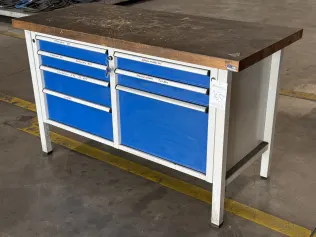 This item is sold
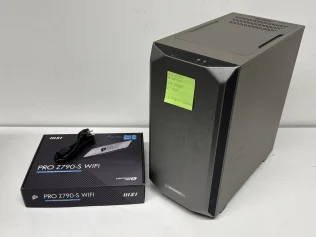
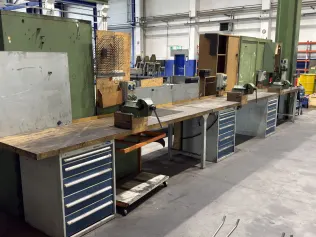
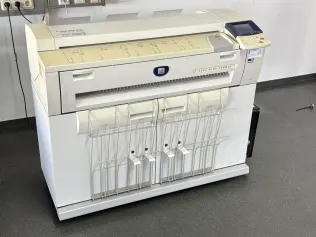
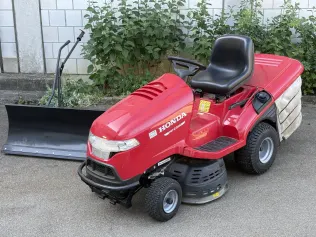 This item is sold
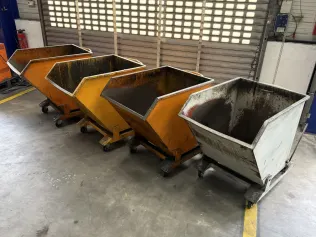
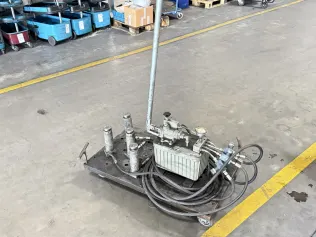 This item is sold
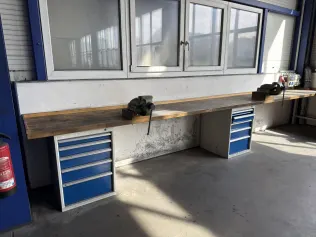 This item is sold
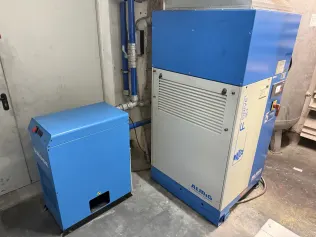
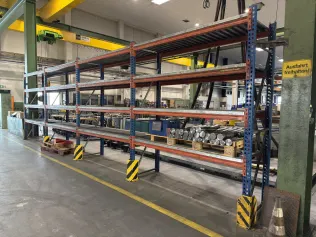 This item is sold
1. What Is Operating Equipment?
Operating Equipment is the full set of static and dynamic technical components a warehouse or distribution center needs to support storage, transfer, sorting, and material handling. Put simply, Operating Equipment is the “furniture” and “brain” of a warehouse: storage racking, forklifts, conveyors, handling robots, and control software.
2. Benefits of Investing in Used Operating Equipment
Investing in Operating Equipment doesn't just increase storage and handling capacity - it lays the foundation for automation and future scale-up. Used equipment that still delivers reliable performance lets businesses access this technology at a significantly lower cost than buying new. Here are the key benefits of investing in Operating Equipment:
Space savings: High-density storage systems make full use of a warehouse's height and depth, significantly cutting floor space costs.
Lower labor costs: Automation can substantially cut operating costs, reducing reliance on seasonal labor and overtime.
Superior accuracy: Picking error rates can drop from 1-3% (manual picking) to under 0.1% with pick-to-light systems.
Uninterrupted 24/7 operation: Robots and conveyors can run continuously around the clock, handling peak periods without shift breaks.
Better workplace safety: Robots and conveyors reduce heavy lifting and manual movement in the warehouse, lowering the risk of workplace accidents.
Fast ROI: AS/RS systems typically pay back within 3-7 years; used equipment pays back faster thanks to costs 30-70% lower than new.
3. Types of Operating Equipment in Storage
On the international market, this equipment is searched for by specific names: "used AS/RS system," "second-hand conveyor system for sale," "used AGV warehouse robot." ReMach supplies all of these categories from European warehouses - browse the equipment types below.
In warehousing, storage equipment helps businesses optimize floor space, control inventory, and improve inbound/outbound efficiency. Depending on operational needs, businesses can choose from a range of Operating Equipment solutions, from traditional pallet racking to automated systems like AS/RS or Shuttle.
Traditional Pallet Racking System with Supporting Equipment
A traditional pallet racking system is the most common industrial storage solution today, built from uprights, beams, and bracing assembled from cold-rolled steel. Typical supporting equipment includes: hand pallet trucks, electric high-reach trucks, order pickers, and other order-picking aids. For smarter racking solutions (pallet flow, push-back), guide rails and braking systems can be added to each racking lane.
1. Advantages and Limitations of a Traditional Pallet Racking System with Supporting Equipment:
Advantages | Limitations |
|
|
2. Typical Practical Applications of a Traditional Pallet Racking System with Supporting Equipment:
Storing raw materials (for the wood, plastics, and mechanical engineering industries) in small and mid-sized manufacturing plants.
Fast-moving consumer goods (FMCG) warehouses with a medium SKU count (500-2,000 SKUs).
Auto parts warehouses requiring storage for a wide range of sizes.
Dry goods (room-temperature) distribution centers with a limited investment budget.
Temporary transit warehouses combined with high-reach hand pallet trucks.
Warehouses for construction equipment or large machinery unsuited to automated racking.
3. Notes for Buying a Used Traditional Pallet Racking System
Check beam deflection: Apply a test load (100% of rated capacity) and use a laser measure to check deflection. Deflection exceeding L/200 (L = beam length) is unsafe.
Inspect joints and bolts: Rusted frames, loose bolts, or missing locking pins can cause the racking to collapse from a minor impact.
Check the paint finish and galvanized coating: If the racking was used in a humid or chemical environment, badly damaged protective coating will reduce service life and load capacity.
AS/RS (Automated Storage & Retrieval System)
AS/RS (Automated Storage and Retrieval System) is a fully computer-controlled storage system, made up of storage & retrieval machines (SRM) that run on rails between high-bay racking aisles, automatically storing and retrieving goods from storage locations. These systems can reach heights of up to 40 meters (equivalent to a 13-story building) and operate reliably in extreme temperature environments (cold storage down to -30°C).
1. Advantages and Limitations of AS/RS:
Advantages | Limitations |
|
|
2. Typical Practical Applications of AS/RS:
Cold storage and frozen food: AS/RS can operate stably in deep-freeze environments, meeting the strict storage requirements of the food and cold-chain logistics industries.
Central warehouses of major retailers and e-commerce distribution centers: locations with huge SKU counts and requirements for extremely fast order fulfillment (e.g., fulfillment centers).
Serial manufacturing (automotive, electronics): storing and delivering components just-in-time to assembly lines.
3. Notes for Buying Used AS/RS
Check the control system (PLC, WCS): older software may not be compatible with modern communication standards (OPC UA, MQTT). Ask the supplier to upgrade to the latest version or provide an open API.
Assess wear on the guide rails and the storage & retrieval machine (SRM) wheels: these components bear heavy load and friction during operation, so inspect wear levels carefully to estimate future maintenance or replacement costs.
Check maintenance intervals and the failure history of motors and drive systems. Ask the seller for detailed maintenance logs.
Shuttle System
A Shuttle System is a semi-automated or fully automated high-density storage solution, in which an electric shuttle car runs on rails inside each racking lane to store and retrieve pallets. Unlike traditional AS/RS, which uses a fixed crane, a shuttle system can operate across multiple lanes and levels, and some 4-way shuttle types can move both horizontally and vertically.
1. Advantages and Limitations of the Shuttle System:
Advantages | Limitations |
|
|
2. Typical Practical Applications of the Shuttle System:
Production input warehouses: storing incoming pallets for a production line.
Food and beverage warehouses: very high pallet counts per SKU (deep stacking), requiring fast inbound/outbound and space savings, especially in cold storage (reducing the volume that needs cooling saves significant energy).
Seasonal distribution warehouses: fast response to peak periods.
3. Notes for Buying a Used Shuttle System
Check shuttle battery life: Lithium-ion batteries can lose capacity over time. Review the charging history and test actual energy storage capacity.
Check the guide rails and wheels: Make sure the rail system inside each lane isn't bent, worn, or misaligned, which could affect operating stability.
Assess the control software and WMS integration capability: Determine whether the system supports common industrial communication standards or uses a proprietary protocol, to ensure future connectivity and scalability.
4. Other Types of Operating Equipment in a Plant
Operating Equipment isn't limited to the warehouse - it also includes many systems that directly support production and material handling on the plant floor. Equipment such as conveyors, robots, automated inspection systems, and central controllers connect process steps, reduce manual handling, and improve operating accuracy.
Conveyor Systems
A conveyor is a mechanical system that transports goods (pallets, cartons, trays, or individual products) along a defined path, linking key areas - the receiving dock, AS/RS racking, picking stations, packing areas, and the shipping dock - into one continuous flow. Common conveyor types include: roller conveyors, belt conveyors, pallet conveyors (chain or roller), and sortation conveyors (cross-belt, sliding shoe, tilt tray).
1. Advantages and Limitations of Conveyor Systems
Advantages | Limitations |
|
|
2. Typical Practical Applications:
Moving cartons from the packing area to the shipping dock in a distribution center.
Connecting an AS/RS system with the picking zone to create a continuous flow.
Sorting goods by order (sortation) at speeds of up to 20,000 items/hour in e-commerce.
Moving components from a central warehouse to assembly stations in an electronics plant.
Pallet conveyors in a beverage plant moving finished goods from the filling line to cold storage.
3. Notes for Buying a Used Conveyor System:
Check wear on the motor and gearbox: listen for unusual noise and check for oil leaks.
Inspect the conveying surface (belt or rollers): a surface that's too smooth can cause slipping; a dented or misaligned surface can damage products.
Check the sensors and control panel: ask specifically whether the optical and pressure sensors are working stably, and whether wiring diagrams are included.
Handling Robots
Handling robots in warehousing include AGVs (automated guided vehicles that follow a fixed path or magnetic strip) and AMRs (autonomous mobile robots that use sensors and maps to self-navigate and find their own routes), along with fixed robots (such as robotic palletizers and goods-to-person picking robots). These robots use cameras, lidar sensors, and AI algorithms to detect obstacles, optimize routes, and interact with the WMS.
1. Advantages and Limitations of Handling Robots
Advantages | Limitations |
|
|
2. Typical Practical Applications:
Supporting a goods-to-person model in e-commerce warehouses by bringing mobile shelving to the picking station, significantly reducing staff travel distance
Feeding materials to an electronic component production line (AGVs carrying component trays to each station).
Automatically moving finished pallets from an injection molding machine to a temporary storage area.
Moving steel blanks between CNC machines in a machining plant (FMS system).
Transporting goods from the receiving area to automated shuttle racking lanes.
3. Notes for Buying Used Robots:
Check operating hours and battery charge history: review the robot's actual usage level, since AGV/AMR batteries can degrade over time depending on operating intensity.
Assess the safety sensor system: including lidar, cameras, and bumpers; ask for a test run in an environment with obstacles to check detection and collision-avoidance capability.
Verify software integration capability with the WMS: check whether the robot supports connection to the current warehouse management system, and clarify the communication protocol and API documentation to ensure long-term integration capability.
Automated Inspection & Sorting System
These are systems that use high-resolution cameras, 3D laser sensors, artificial intelligence, and other measurement devices to inspect product quality, read barcodes, and sort and route goods automatically right on the conveyor line. A “scan tunnel” is a common application: as a product passes through, cameras mounted around it capture images from multiple angles to detect defects, measure dimensions, and read barcodes.
1. Advantages and Limitations of the Automated Inspection & Sorting System
Advantages | Limitations |
|
|
2. Typical Practical Applications:
Detecting torn packaging or incorrect expiry labels in food distribution centers.
Reading barcodes and measuring 3D dimensions of each product on the conveyor to sort by size (logistics industry).
Inspecting microchip defects and solder faults on printed circuit boards (PCBs) in electronics manufacturing.
Sorting products by color and shape (plastics, glass, ceramics industries).
Scanning QR codes and automatically printing shipping labels for each order in a fulfillment center.
3. Notes for Buying a Used Inspection System:
Check the lifespan of the lighting and camera quality: LED lights can lose brightness over time, affecting image quality.
Request a test run on actual products: Run tests directly on the business's own product samples to assess detection capability and system stability.
Verify AI/image-processing software support: Check whether the software is still updated by the manufacturer, to avoid compatibility risks with new operating systems or data standards.
Central Control System
The WCS is the middleware control software in a smart warehouse automation architecture: it sits between the WMS (Warehouse Management System) and the PLC (Programmable Logic Controller) controllers of each individual device.
The WCS receives commands from the WMS, breaks them down and reorganizes them into detailed instructions for each specific device (conveyors, AS/RS cranes, shuttles, robots), while monitoring and optimizing material flow and reporting status in real time. An effective WCS is typically flexible to integrate, vendor-agnostic, and able to connect with equipment from multiple different manufacturers.
1. Advantages and Limitations of the Central Control System
Advantages | Limitations |
|
|
2. Typical Practical Applications:
Synchronizing conveyors, AS/RS cranes, and sorting robots from multiple manufacturers within the same warehouse.
Optimizing pallet flow in real time - automatically rerouting when a device is jammed or fails.
Monitoring and reporting each device's performance (OEE), providing early maintenance alerts.
Integrating with WMS and ERP systems to fulfill orders in the correct priority order (e.g., 2-hour express orders).
Managing energy consumption across the entire automation system, optimizing operating schedules to save electricity (especially in cold storage).
3. Notes for Buying a Used WCS (Software License Transfer):
Check the license and transfer terms: Clarify the scope of use, the number of devices allowed to connect, and any maintenance or renewal fees (if applicable).
Assess system compatibility: Check compatibility with the PLC and existing equipment, and request a list of supported communication protocols and drivers.
Request documentation and technical support: Gather all relevant technical documentation and, if possible, secure support from the previous implementation team to facilitate handover and operation.
5. Trusted Operating Equipment Brands
The market today offers many brands supplying Operating Equipment with different technologies and solutions. Choosing a reputable manufacturer not only helps ensure equipment quality but also makes maintenance, upgrades, and system integration easier over the long term.
Dematic (successor to MANNESMANN DEMAG): Dematic traces its roots to 1819 in Germany. It is one of the world's leading warehouse automation solution providers. Dematic's product portfolio spans conveyors, AS/RS, shuttles, and robots. The company is ISO 9001 certified and has received “Most Trusted Brand” recognition in multiple countries.
Daifuku: Founded in 1937, this Japanese company is a global leader in AS/RS systems, with more than 34,000 cranes installed since launching its first AS/RS system in 1966. Daifuku's racking frames and guide rails can reportedly run reliably for up to 50 years (per company claims), though control components (PLC, sensors, motors) typically need upgrading or replacement after 15-20 years to maintain performance. The system operates stably even in harsh cold-storage environments.
Murata Machinery (Muratec): Founded in 1935, Muratec's Logistics & Automation division has a history spanning more than 60 years since 1962, when the company began developing multi-level automated storage systems evolved from factory tool cabinets. To date, Muratec has installed over 10,000 logistics systems across industries worldwide. Muratec's Double Reach Shuttle solution stands out for its dual-reach shuttle car design, optimizing storage density without sacrificing throughput.
>>> ReMach regularly supplies handling equipment from Dematic, Daifuku, and Muratec. Browse the Operating Equipment catalog currently available at our German warehouse.
6. How to Buy Operating Equipment from ReMach
Step 1 - Measure Your Facility and Assess Operational Needs
Determine the exact dimensions of the installation area (length, width, height, floor load capacity).
Define operating parameters: pallet type (standard or non-standard), number of pallets in/out per shift, SKU count, temperature requirements (ambient, chilled, frozen).
Draw up a summary of your target investment budget and expected payback period.
Step 2 - Assess Machine Condition
Check the maintenance log: ask the previous supplier for periodic maintenance records and major repair reports.
Conduct an overall external inspection: look for rust, cracked frames, hydraulic oil leaks, or damaged electrical cables.
Request a test run: run the system at or near maximum load to assess noise, vibration, accuracy (for robots), and wear (for conveyors, guide rails).
Check software compatibility (for AS/RS, shuttle, robots, WCS): confirm whether the software can communicate with your current WMS/ERP, or has an open API for your IT team to integrate.
Step 3 - Cross-Check with the ReMach Catalog
Go directly to the ReMach Operating Equipment catalog at: Operating Equipment to find suitable models available from our German/European warehouse.
Send a request for quotation (RFQ) with the technical specification sheet and operational requirements prepared in Step 1.
ReMach's team of specialists will help match specifications and advise on transport, installation, and warranty options for the used equipment.
>>> Contact the ReMach team directly via Hotline +49 2196 7050573 for help choosing the right equipment, checking machine condition, and getting a quote as quickly as possible.
7. FAQs
How Do I Integrate with My Current WMS/WCS?
Most modern equipment (built from 2010 onward) supports communication via common industrial standards such as OPC UA, MQTT, Profibus, EtherNet/IP, or REST API. Before buying used equipment, ask the supplier for technical documentation on the communication protocol. If the equipment uses a proprietary protocol, consider hiring an experienced integrator to build a connection gateway. For a WCS, a strong system (such as those from Körber, Dematic, or Hardis) is typically vendor-agnostic and can easily connect to equipment from multiple manufacturers.
How Are 30-Meter Racking Systems Transported and Installed?
Racking systems longer than 10 meters are typically designed in modules (individual frames and beams). Deployment usually follows these standard steps:
Disassemble the system at the old warehouse module by module, then sort and package each component separately
Transport by container or specialized truck fitted with a shock-dampening system to minimize vibration and damage in transit
Install at the new warehouse by a specialized technical team, using lifting equipment and laser alignment systems to ensure structural accuracy and verticality
Conduct a post-installation safety inspection to current technical standards such as EN 15620 or equivalent
Is It Worth Buying Used Operating Equipment?
Yes, if you have a limited budget (30-70% of a new machine's value), want to shorten lead times (since used equipment is in stock and doesn't require production time), and are willing to accept a certain level of wear. That said, keep the following in mind:
Only buy used equipment with a strong reliability record, prioritizing major brands (Dematic, Daifuku, Muratec).
Always request a test run and a minimum 3-6 month warranty from the seller.
Avoid equipment built before 2005, as components and software may no longer be supported and can be difficult to integrate into modern systems.
A better alternative to plain used equipment is remanufactured equipment - worn components replaced, fully inspected and recalibrated - extending service life to nearly that of a new machine.
Where Can I Buy Used Operating Equipment?
ReMach specializes in supplying used operating equipment from German and European factories - with technical inspection, dismantling support, international transport, and installation advice. Browse the Operating Equipment catalog on ReMach now, or send a quote request for advice tailored to your specific needs.
How Much Does Used Operating Equipment Cost?
The cost of used operating equipment depends on the equipment type, brand, year of manufacture, technical condition, and level of refurbishment. Thanks to a direct B2B model with European factories, ReMach supplies inspected equipment at more competitive prices than new equipment.
Some reference price ranges:
Used industrial pallet racking: approximately EUR 500-5,000 per set
AS/RS system (automated warehouse): from approximately EUR 50,000 upward, depending on scale and level of integration
The final price will be determined after assessing the equipment, transport requirements, installation, and any additional services. You can contact ReMach via Hotline +49 2196 7050573 for advice and a quote tailored to your specific needs.
How Long Does Delivery and Installation Take?
Delivery and installation time depends on the equipment type, location, and project requirements. ReMach offers a full-service package covering inspection, dismantling, transport, and installation support through to import/export procedures.
Standard process:
Dismantling & packing: 7-14 days
International shipping (door-to-door): approximately 4-6 weeks
Installation & test run: 2-4 weeks
Note: Actual timelines may vary depending on location, equipment condition, and customs requirements. Contact ReMach for a detailed rollout plan for your specific project.
The right equipment isn't the most expensive one - it's the one that matches your warehouse footprint, actual throughput, and investment budget. ReMach sources directly from European factories and inspects every machine technically before handover. Browse the Operating Equipment catalog to find the right fit, or contact us directly via Hotline +49 2196 7050573 for advice tailored to your specific needs.
8. Glossary
Abbreviation | Meaning | Short Explanation |
SKU | Stock Keeping Unit | A unique code for a product/item, the basic storage unit |
WMS | Warehouse Management System | Software for managing warehouse inbound, outbound, and inventory |
WCS | Warehouse Control System | Software that controls automated equipment |
PLC | Programmable Logic Controller | Programmable logic controller - the “brain” of a machine |
AS/RS | Automated Storage & Retrieval System | An automated system for storing and retrieving goods |
AGV | Automated Guided Vehicle | A self-driving vehicle that follows a fixed path (line, magnetic strip) |
AMR | Autonomous Mobile Robot | A self-driving robot that maps its own route and actively avoids obstacles |
OEE | Overall Equipment Effectiveness | Overall equipment performance metric |
ERP | Enterprise Resource Planning | Enterprise resource management software |