

 This item is sold
1. Screw Compressor: Tasks, Function & Applications
Compressors are machines that compress gas to a level at which it can be efficiently stored and used for specific technical purposes. Common applications include surface blasting and spray lacquering, where a consistent and reliable supply of compressed air is essential.
The most widely used compressor type is the reciprocating piston compressor. This design uses a mechanism comprising a crankshaft, connecting rod, valves, and cylinders, all driven by an electric motor. During operation, air or gas is drawn into a chamber where pressure builds continuously until the stored energy is released for use.
Beyond industrial surface treatment, compressors also play a central role in refrigeration systems, where they form the core component of the cooling cycle.
2. Screw Compressors: How They Work and Why They Matter
Screw compressors are a highly efficient solution for compressed air generation in modern industrial facilities. Unlike reciprocating compressors, which rely on pistons and are more costly to maintain, screw compressors use just two moving parts – a pair of interlocking helical rotors.
As these precision-engineered rotors turn against one another, they draw incoming gas from one side and progressively compress it as the space between the screws decreases. This continuous rotary motion delivers smooth, consistent airflow without the mechanical stress associated with piston-based systems.
The advantages are significant. Screw compressors operate far more quietly and energy-efficiently than reciprocating models, making them the preferred choice for facilities where compressed air is in constant demand – from pneumatically operated machinery to compressed air cleaning systems.
That said, screw compressors do require a higher minimum operating speed and rely on purpose-built components, so proper specification is essential to get the best performance from the equipment.
3. Screw Compressors: Industrial Uses and Advantages
Evolving energy efficiency standards have given screw compressors a more prominent role in reducing mechanical energy consumption, and ongoing innovation in compressor technology is expected to accelerate in the coming years.
Although not as widely available as reciprocating models, screw compressors are well established in industrial settings, accounting for approximately 50% of all compressors in use. Their adoption in smaller refrigeration units and freezers, however, remains limited.
4. Screw Compressor Manufacturers & Suppliers
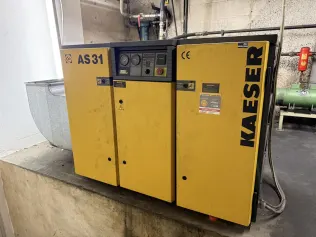
The leading manufacturers of screw compressors include Atlas Copco, Kaeser, Boge, Ochsner Bauer, Demag, Ingersoll Rand, Mahle, and EcoAir – each known for producing reliable, high-performance compressed air equipment across a wide range of industrial applications.