
1. Storage Platforms: Purpose, Benefits & Uses
Storage platforms are mezzanine-style installations fitted within existing warehouse spaces to maximise available capacity without the need for new construction. Beyond simply adding storage space, a well-designed platform system can also expand administration and production areas – making them a cost-effective solution for growing businesses. Modern storage platforms are built to robust standards, capable of safely housing everything from archived stock to small and medium-sized industrial machinery.
- Improvements to existing warehouse layouts
- Extension of storage, administration, or production capacity
2. What Are Storage Platforms Made Of?
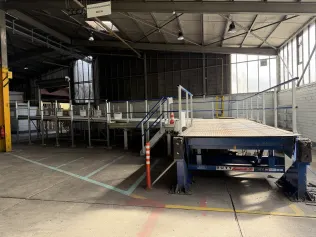
Storage platforms are built from a robust, modular steel construction designed for long-term industrial use. The key structural components – longitudinal and transverse beams – are fabricated from tested, high-grade steel, giving the overall framework its exceptional load-bearing stability.
Configuration options are extensive. At minimum, a storage platform includes a sturdy staircase providing safe access to the upper level. The flooring is typically constructed from either steel or thick-walled timber panels, which are laid across the beams and bolted securely in place – making the surface strong enough to support industrial trucks and heavy loads.
Most platforms also incorporate a goods lift or a dedicated access point for cranes and forklifts, allowing efficient movement of products, pallets, or machinery between levels. A continuous perimeter railing runs around the platform to protect both personnel and goods from falls.
3. How Storage Platforms Are Built: A Practical Guide
Building a storage platform correctly requires experienced, qualified personnel – particularly when working with used systems. New installations are typically delivered by the manufacturer and assembled by specialist teams, while second-hand platforms should always be erected and dismantled under the supervision of a worker qualified in structural statics.
All delivered storage platforms come with assembly documentation, including critical specifications for bolt torque values. A high-quality torque wrench is essential to ensure connections meet the required standards. It is equally important to inspect all components carefully before installation: any bent or damaged elements must be replaced rather than reused, as they can no longer be relied upon for structural integrity.
Due to the considerable weight of the beams involved, an overhead crane or forklift is required during the installation process.
4. Storage Platforms: Versatile Uses Beyond Warehousing
Storage platforms offer far more than simple shelving solutions – they can be adapted to create functional workspaces within production facilities. A foreman's office or technician's workspace can be efficiently integrated into a production hall using a mezzanine platform structure. Wall elements are available in a wide range of configurations to suit different requirements, and it is even possible to incorporate toilet or shower facilities directly onto the platform level.
5. Storage Platforms: Trusted Manufacturers & Suppliers
When investing in storage platforms, choosing equipment from reputable manufacturers is essential – these structures are subject to significant load and stress in daily operation. Leading suppliers of storage platforms include NOORDECK GmbH and KOCH LAGERTECHNIK, both recognised for their quality and reliability in warehouse and industrial environments.