
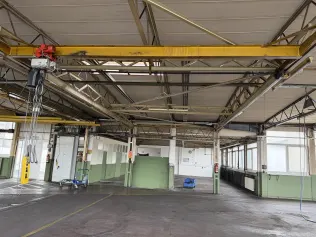
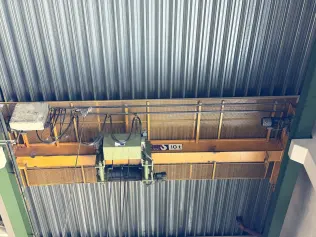
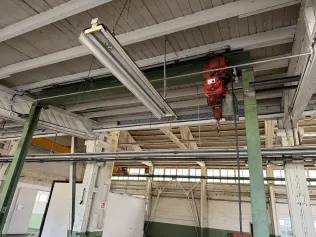
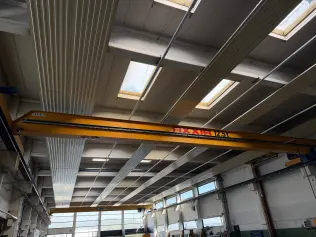
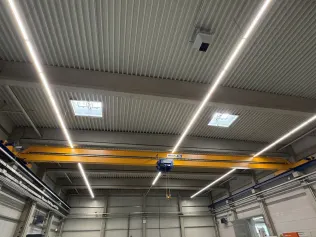
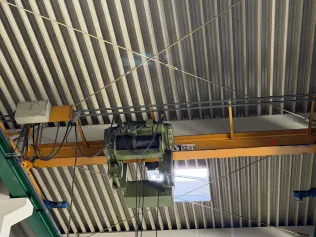
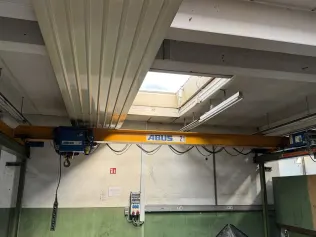
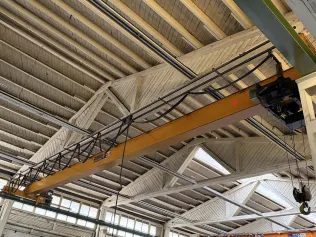
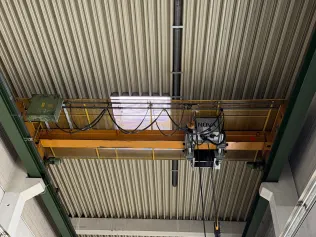
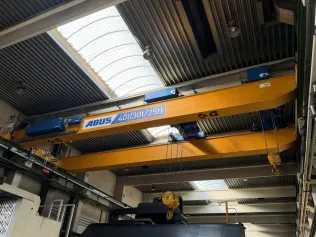
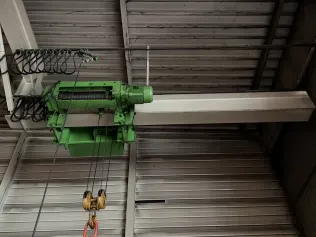
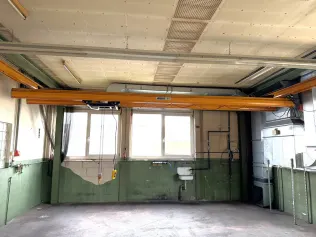
 This item is sold
 This item is sold
 This item is sold
1. Overhead Cranes: Applications and Key Features
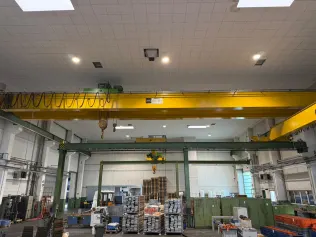
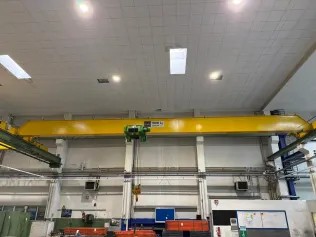
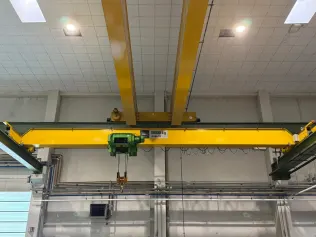
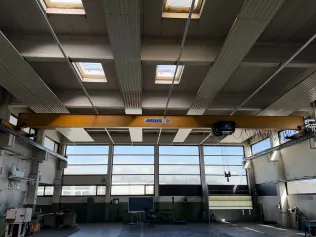
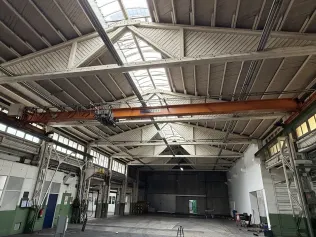
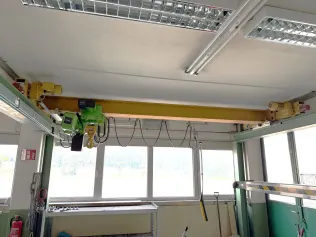
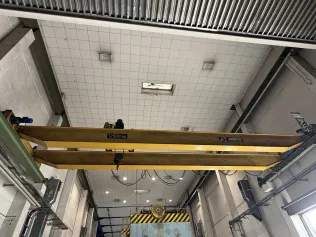
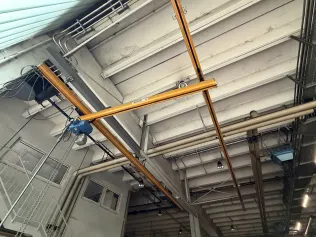
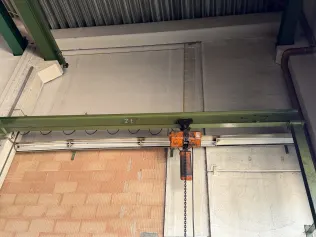
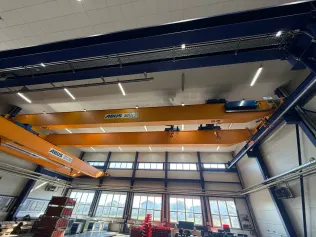
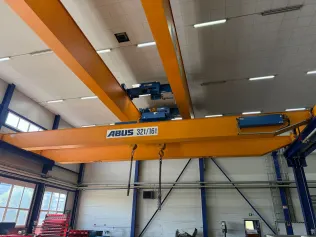
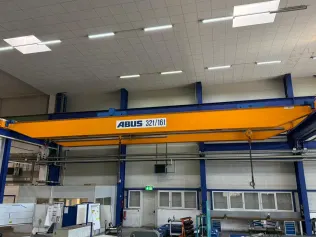
The overhead crane is a versatile lifting solution widely used in heavy industry and manufacturing to move loads efficiently across large spaces. It consists of a crane bridge mounted on parallel tracks – typically fixed to the outer walls of a hall – with a travelling trolley running along the bridge on steel wheels. This configuration gives the crane full coverage of any area beneath the tracks, making it highly effective for confined or busy work environments.
Moves heavy loads efficiently within restricted spaces
Full coverage of any area beneath the crane tracks
Loads are secured and transported via a crane hook
The travelling trolley functions as a compact carriage, enabling lateral movement across the bridge. It carries a steel rope and pulley system fitted with a crane hook, from which loads are suspended and transported. Overhead cranes are equally suited to indoor and outdoor operations – travelling bridge cranes, for example, are commonly used to transfer goods between rail wagons and lorries. In steel storage facilities, overhead cranes are a standard feature for handling heavy stock. Operation is typically managed from ground level via a control panel or remote control, though many installations also include an operator's cabin that travels with the trolley.
2. Overhead Cranes: History and Technical Background
The overhead crane has been an essential tool wherever heavy loads need to be moved with precision within a confined space. Unlike mobile lifting equipment, an overhead crane can be positioned exactly where required, enabling the controlled and delicate lowering of heavy materials even in areas with limited room to manoeuvre.
Overhead cranes came into widespread use alongside the growth of the first steel mills and heavy engineering firms, where moving large workpieces safely and efficiently was a fundamental production requirement. As manufacturing evolved, so did crane technology – with the introduction of CNC systems, fully automated overhead cranes became an integral part of modern production lines, handling complex lifting tasks with minimal manual intervention.
3. Overhead Cranes: Applications and Industry Examples
Overhead cranes are widely used to move heavy workpieces – including pallets, boxes, and bulky materials – across a range of sectors such as warehouse management, steel production, and mechanical manufacturing, where efficient loading and unloading is essential.
In tight factory workshops, these cranes are particularly valuable, transporting materials from storage directly to machines and removing completed workpieces for onward handling. Typical applications include loading vertical lathes and repositioning surface plates for efficient machine-side loading and unloading. Where conventional handling equipment cannot reach, overhead cranes with gripper attachments provide a reliable solution for moving awkward or oversized loads.
4. Overhead Crane Suppliers & Leading Manufacturers
Several companies have built strong reputations in the manufacturing of overhead cranes. Leading names in the industry include ABUS, DEMAG, PFEIFER, TAKRAF, and VEB Kranbau Schmalkalden.