
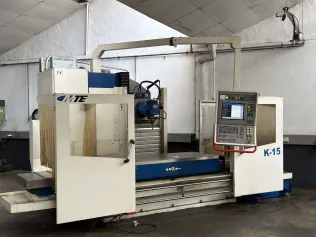
 This item is sold
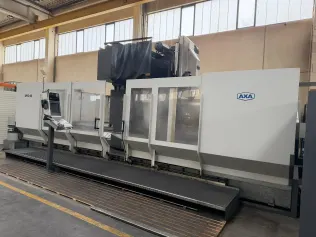 This item is sold
 This item is sold
 This item is sold
 This item is sold

1. What Is a Milling Machine?
A milling machine is a machine tool used to machine metal, plastic, or wood through cutting and chip removal. Under DIN 8589, milling, drilling, and turning form a group of machining methods that use a cutting edge of defined geometry.
The main application of milling machines is metal machining. Because at least three tool paths can be used simultaneously, the range of achievable complex shapes is far wider than with most other machining methods. Typical applications include slotting and chamfering, surface and profile planing, and producing complex parts such as spindles, worm gears, and gears, right through to heavy milling of solid components.
2. Benefits of Investing in a Used Milling Machine
Used milling machines from European brands such as DMG MORI, HEYLIGENSTAEDT, or MIKRON are typically 40-60% cheaper than new machines, while accuracy and performance still meet most industrial production needs. This is why more machine shops and factories are choosing to invest in technically inspected used equipment.
Lower Investment Cost: Used milling machines from brands such as DMG MORI and MIKRON typically cost 30-60% of a comparable new machine, freeing up significant budget for tooling, auxiliary equipment, and operations.
Quality Technology at an Optimized Budget: Used CNC milling machines from reputable brands can still achieve ±0.01-0.03 mm accuracy when well maintained, meeting 90% of standard industrial machining needs.
A Flexible Solution for Diverse Needs: A used machine is an effective choice for small and medium-sized businesses, trial production, or projects that don't require a brand-new machine.
Avoid a 6-18 Month Lead Time on New Machines: New CNC milling machines from DMG MORI or MIKRON typically take 6-18 months to deliver after ordering. With a used machine already in stock, a business can have it up and running within 4-8 weeks of signing the contract.
3. Risks to Avoid When Buying a Used Milling Machine
Drawing on experience sourcing and inspecting hundreds of milling machines across Europe, ReMach has compiled the most common issues buyers encounter:
Spindle Wear: This is the most costly type of wear on a used CNC milling machine. Before buying, request a spindle runout report, the standard is ≤3 µm. Spindle overhaul costs range from €5,000-15,000 depending on the machine model.
Ballscrew Wear and High Backlash: Check table play with a dial indicator. Backlash above 0.05 mm on a precision machine will cause dimensional errors that are difficult to correct. Request a Ballbar test run for an objective result.
Outdated Control System, Hard to Find Technicians: Machines running older Siemens 810D or Heidenhain TNC 415/426 controls can be hard to find local technicians for. Confirm the source of technical support before deciding.
Overlooked Foundation and Power Costs: A portal milling machine weighing 60-150 tonnes requires a dedicated concrete foundation, typically ≥500 mm thick, a high-capacity three-phase power supply, and adequate installation space. This can amount to 20-30% of the machine price, so it should be budgeted for from the start.
Missing Technical Documentation: A machine without mechanical drawings, a manual, or a G-code backup is very difficult to maintain. ReMach always collects the technical documentation that comes with a machine before handover.
4. Types of Milling Machines
Milling machines are built in many different configurations to meet diverse machining requirements, from small, simple parts to large, high-precision products. Based on construction, operating capability, and integrated technology, milling machines are typically divided into the following common groups:
Machine Type | Workpiece Size | Operating Skill Level | Main Application | Used Price (Estimate) |
Portal / Gantry | Very large (>5m) | CNC | Shipbuilding, energy, large moulds | €50,000-500,000+ |
Turret Milling | Small-medium | Manual/semi-auto | General workshops, repairs | €3,000-20,000 |
Universal Milling | Medium-large | CNC (3/5-axis) | Moulds, aerospace, automotive | €20,000-150,000 |
Bed-type Milling | Medium-large | CNC | Machine bodies, housings, moulds | €15,000-100,000 |
CNC Machining Center | Medium | CNC (with ATC) | Batch production, aerospace | €25,000-200,000 |
Used Portal Milling Machines
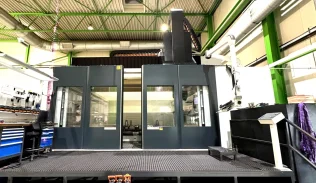
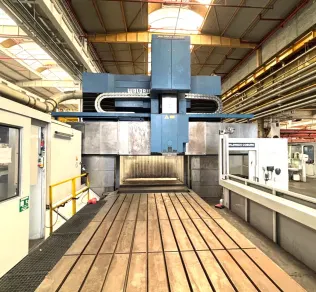
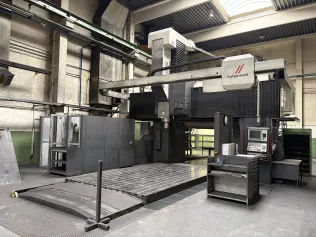
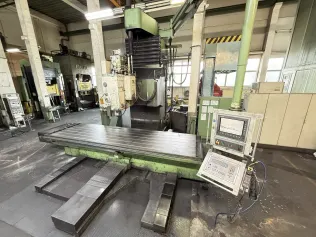
A portal milling machine (also called a gantry milling machine) is a large-scale machine tool built with a portal structure consisting of two sturdy uprights connected by a cross beam to form a gantry frame. The spindle head, which carries the cutting tool, is guided and moves along the beam above the machining area, while the table may be either mobile or fixed depending on the design.
1. Advantages and Limitations of Portal Milling Machines
Advantages | Limitations |
|
|
2. Practical Applications of Portal Milling Machines
Machining oversized, extra-heavy parts in shipbuilding
Manufacturing large-scale moulds
Machining housings and machine bodies for the energy and heavy machine-building industries
Surface and profile machining on large panels
ReMach currently distributes used portal milling machines from leading global brands, including:
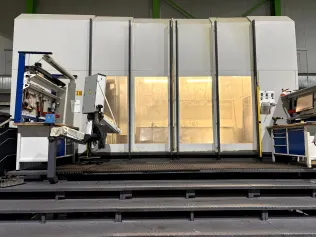
HEYLIGENSTAEDT Heynumill 3200-P CNC Portal Milling Machine: Built in 1999, dimensions 13,000 x 7,000 x 6,000 mm, weight 120,000 kg, Heidenhain TNC 430 control, in good working condition
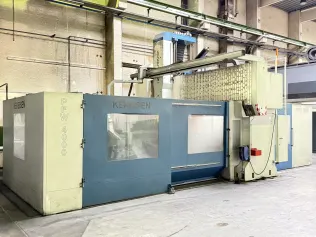
Kekeisen PFW-T 4000/12 CNC Portal Milling Machine: Built in 2011, dimensions 13,700 x 10,000 x 5,300 mm, weight 65,000 kg, Heidenhain TNC 530 control, in good working condition.
WALDRICH COBURG MC 2500 CNC Portal Milling Machine: Dimensions 22,000 x 10,000 x 6,500 mm, weight 150,000 kg, Siemens Sinumerik 840D control, already dismantled and ready for shipment.
Used Turret Milling Machines
A turret milling machine has a rotating head that allows the spindle angle to be adjusted flexibly without repositioning the workpiece. The head can swivel side to side and tilt up and down, making it possible to machine complex parts at multiple angles. This is a common machine type in general-purpose machine shops.
1. Advantages and Limitations of Used Turret Milling Machines
Advantages | Limitations |
|
|
2. Practical Applications of Used Turret Milling Machines
Machining small to medium-sized mechanical parts.
Suited to repair, maintenance, and support machining workshops.
Producing simple moulds and basic parts.
Machining parts that require multiple approach angles or cutting directions.
Used Universal Milling Machines
This milling machine type is designed to handle a wide range of machining needs, from basic to complex parts. The term “universal” reflects its flexibility: it can perform multiple operations, such as milling, drilling, boring, and tapping, on a single machine.
Depending on configuration, a universal milling machine may be equipped with:
A rotary table for machining complex-shaped parts.
An automatic tool changer (ATC) to boost throughput for batch production.
3, 4, or 5-axis machining capability to handle parts requiring high precision and complex geometry.
Thanks to its versatility, this machine type suits a wide range of applications, from general machine shops and tooling and fixture production to mould making and complex parts for the aerospace and automotive industries.
1. Advantages and Limitations of Used Universal Milling Machines
Advantages | Limitations |
|
|
2. Practical Applications of Used Universal Milling Machines
Machining a wide range of parts in general machine shops
Producing tooling and fixtures
Machining gears, worm shafts, and parts with complex profiles
Training and research workshops
ReMach currently offers a range of Used Universal Milling Machines from reputable machine tool brands, meeting diverse precision machining needs. Featured machines include:
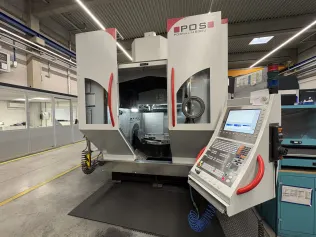
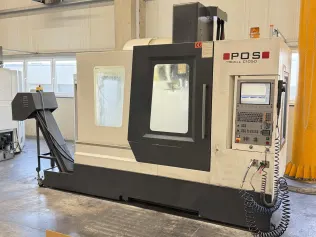
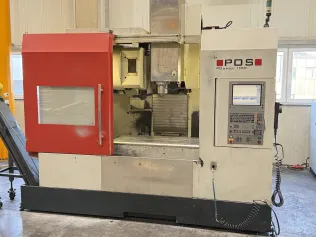
POS Posmill H800 U Universal Milling Machine: Built in 2018, dimensions 5,100 x 3,800 x 4,000 mm, weight 20,000 kg. Equipped with a Heidenhain iTNC 530 control, 5-axis machining capability, a 96-position tool changer, and in good working condition.
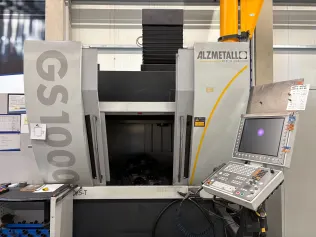
ALZMETALL GS1000 5-Axis Universal Milling Machine: Built in 2013, dimensions 4,000 x 2,250 x 2,810 mm, weight 15,500 kg. Uses a Heidenhain iTNC 530 control with integrated 5-axis machining and an NC rotary table, suited to high-precision applications.
POS PosMill Typ C1050 Universal Milling Machine: Built in 2011, dimensions 4,200 x 2,500 x 3,000 mm, weight 7,800 kg. Equipped with a Heidenhain iTNC 530 control, hydraulic system, coolant system, and chip conveyor, ensuring stable operation.
POS PosMill Typ 1100 Universal Milling Machine: Built in 2009, dimensions 4,295 x 2,575 x 2,250 mm, weight 8,800 kg. Uses a Heidenhain TNC 430 control, an automatic tool changer, through-spindle coolant (IKZ), and a chip conveyor.
Used Bed-type Milling Machines
A bed-type milling machine has a table that moves longitudinally on a fixed machine bed, while the spindle moves vertically and horizontally. This construction delivers high rigidity, making it well suited to machining large, heavy parts with high accuracy.
1. Advantages and Limitations of Used Bed-type Milling Machines
Advantages | Limitations |
|
|
2. Practical Applications of Used Bed-type Milling Machines
Machining machine bodies and housings for machine building
Producing medium and large moulds
Machining parts that require high accuracy
Automotive and aerospace industries
ReMach currently offers Used Bed Milling Machines from reputable brands, including the Droop & Rein FSM 1406 DA 30, built in 1988, dimensions 6,500 x 6,200 x 5,200 mm, weight 55,000 kg, using a Heidenhain TNC 430 control. The machine was overhauled in 2002, is still in good working condition, and is available for on-site inspection.
Used CNC Machining Centers
A CNC machining center is an advanced CNC milling machine equipped with an automatic tool changer (ATC) and other automation options, such as coolant systems, pallet changers, or workpiece management systems. It can perform multiple machining operations, such as milling, drilling, boring, and tapping, in a single workpiece setup.
1. Advantages and Limitations of Used CNC Machining Centers
Advantages | Limitations |
|
|
2. Practical Applications of Used CNC Machining Centers
Batch production of complex parts in the automotive industry.
Machining high-precision parts in the aerospace sector.
Manufacturing complex moulds with intricate details.
Machining box-type parts for machine building.
ReMach currently has the following high-end CNC machining centers in stock:
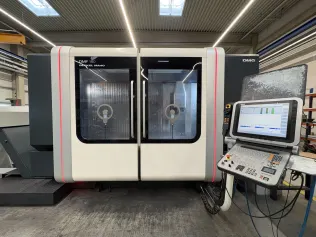
MIKRON UCP 800 Duro 5-Axis Machining Center: Built in 2018, dimensions 3,400 x 3,000 x 2,800 mm, weight 11,000 kg, using a Heidenhain iTNC 530 control. In good working condition with 4,231 spindle running hours.
DMG-Deckel-Maho 180 CNC Column Machining Center: Built in 2011, dimensions 5,000 x 3,000 x 3,000 mm, weight 12,700 kg, Heidenhain iTNC 530 ShopMill control. Equipped with a 60-position automatic tool changer, 40-bar through-spindle coolant (IKZ), an infrared probe, a chip conveyor, and a full enclosure.
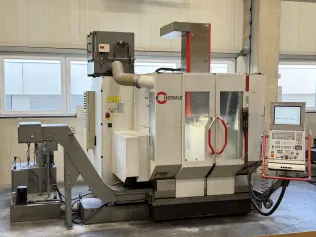
HERMLE C 600 V CNC Milling Centre: Built in 2002, dimensions 3,000 x 2,300 x 2,700 mm, weight 6,000 kg, using a Heidenhain TNC 430 control. Equipped with an SK40 spindle, automatic tool changer, chip conveyor, and coolant system, ensuring stable operation.
>>> View the full range of Used Milling Machines available at ReMach
5. Reputable Milling Machine Brands
Choosing the right brand is an important factor when investing in a used milling machine. Reputable manufacturers typically have a long development history, advanced machining technology, and high durability, helping the equipment maintain stable performance in production. Notable milling machine brands on the market include:
DMG MORI: DMG MORI was formed through the merger of DMG (Germany) and Mori Seiki (Japan), with a long history in the machine tool industry. It is one of the world's leading manufacturers, known for 5-axis machining centers, multi-axis CNC milling machines, and modern automation solutions, including hybrid machining technology.
MIKRON: Founded in 1908, Mikron traces its origins to the Swiss watchmaking industry. The brand specializes in high-precision 5-axis machining centers, particularly the UCP series, well regarded for stability and accuracy in mould and complex part machining.
HEYLIGENSTAEDT: Founded in 1876 in Germany, Heyligenstaedt has a long history in machine tool manufacturing. The brand is known for CNC portal milling machines and large-scale lathe/mill machines, serving medium to large part machining with high durability and stability.
Kekeisen: A family-owned business with over 175 years of history in Germany, Kekeisen specializes in large-scale milling machines, machining centers, and special-purpose machines. The brand is strong in portal machining solutions and large-scale machine systems for precision engineering.
ALZMETALL: Founded in 1945 in Germany, ALZMETALL is a leading brand in drilling, milling, and CNC machining. Its 3 and 5-axis machining centers are widely used across industries such as automotive, mould making, and aerospace.
MIKROMAT: MIKROMAT was founded in 1863 in Dresden, Germany, initially manufacturing industrial sewing machines before shifting to high-precision machine tools. The brand specializes in milling machines and CNC machining centers, with a strength in long-term stability for industrial production.
6. Why Buy Used Milling Machines at ReMach
ReMach is a platform specializing in used industrial machinery, with a particular focus on milling machines, dedicated to delivering effective, transparent, and sustainable investment solutions for manufacturing businesses worldwide. Backed by a warehouse network in Germany and an international partner network, ReMach not only connects buyers and sellers but also ensures the entire process, from inspection and transactions to logistics, is handled professionally, safely, and efficiently.
Choose Used Milling Machines at ReMach for the following reasons:
Machines Available in Stock: ReMach holds a portfolio of used milling machines available at its German warehouse, letting customers easily inspect actual machine condition, assess operating capability, and choose the right equipment before investing.
Transparent Machine Information and Verified Condition: Every machine comes with complete technical information, operating condition, and real photos, giving customers a clear picture of the equipment before deciding to invest.
Comprehensive Support from Purchase to Operation: ReMach accompanies the entire process, from machine selection advice, dismantling, packing, and international shipping to export procedures and installation support, helping businesses avoid complex paperwork.
Deep Expertise, Safe and Professional Transactions: With a team well versed in machine tools and international transaction processes, ReMach ensures every step, from inspection and technical handling to logistics, is carried out systematically, giving customers confidence when investing.
7. How to Buy Used Milling Machines at ReMach
Below is the process for buying Used Milling Machines at ReMach, helping customers easily search for, evaluate, and put equipment into operation smoothly.
Step 1 - Define Your Requirements: First, clearly define your production requirements: the type of part to be machined, material, workpiece size, output volume, and required accuracy. From there, choose the right machine type, such as Portal Milling, Bed-type, Universal, Turret, or a CNC Machining Center.
Step 2 - Search and Review Machine Specifications: Browse ReMach's machine catalogue to view available equipment with complete details, including technical specifications, axis travel, table size, power, control system, year of manufacture, machine condition, and brand. Every machine is verified with transparent information, real photos, and a clear quote.
Step 3 - On-Site Inspection or Operating Video: You can request a test-run video to assess machine condition remotely, or visit the warehouse in Germany directly to check the operation, accuracy, and key technical details before deciding to buy.
Step 4 - Receive a Quote and Logistics Support: After selecting a machine, ReMach provides a detailed quote and supports the entire related process, including dismantling, packing, international shipping, and export and customs procedures. Customers can arrange their own transport or use ReMach's support service.
Step 5 - Confirm Purchase and Handover: After signing the contract and completing payment, the machine will be shipped and delivered to your facility. ReMach can also support installation and basic operating guidance if needed, ensuring the machine is ready for production.
8. FAQs
How Can I Tell if a Used CNC Milling Machine Still Delivers Accurate Machining?
To assess the accuracy of a used CNC milling machine, you should check three key technical indicators: (1) Spindle runout, a measured report with a standard of ≤3 µm; (2) Backlash test, request a Ballbar test run, backlash above 0.05mm on a precision machine signals a need for ballscrew overhaul; (3) Spindle running hours, the actual figure from the machine's counter, not an estimate. ReMach provides an inspection report with all three indicators for every machine in stock.
Is a Used Portal Milling Machine Suitable for a Workshop with Limited Space?
Yes, but you need to choose the right machine type and assess your workshop conditions before buying. A used portal milling machine is typically large and requires suitable installation space and a foundation. However, some designs, such as moving-gantry machines with a fixed table, can optimize floor space. Businesses should therefore check machine dimensions, floor load capacity, and actual machining needs to ensure the machine operates effectively.
Can I Upgrade the Control System or Change the Axis Count (3 to 5-Axis) on a Used Milling Machine?
Upgrading the CNC control system on a used machine is entirely possible and can improve performance and extend the machine's service life. However, converting a 3-axis machine to 5-axis is typically very complex, requiring extensive mechanical modifications and high cost. If 5-axis machining is required, choosing a machine that already has 5-axis capability is a better option.
Can a Used Milling Machine Handle Hard Materials Such as Stainless Steel, Titanium, or Heat-Resistant Alloys?
Yes, but you need to choose a machine suited to the machining requirements. Used CNC milling machines from reputable brands can still machine hard materials such as stainless steel, titanium, or heat-resistant alloys if the machine has high rigidity, adequate spindle power, and cutting speed and coolant systems that meet requirements. Before buying, businesses should carefully review the technical specifications to ensure the machine matches the intended production application.
What Should I Consider When Shipping a 40-70 Tonne Portal Milling Machine?
Shipping a heavy portal milling machine requires specialized transport, appropriate lifting equipment, and a safe dismantling process. The machine must be securely fastened, packed to standard, and handled with the correct oversized and overweight cargo procedures.
Does ReMach Provide Operator and Programming Training for Used CNC Milling Machines?
ReMach supports customers during installation, test operation, and getting familiar with the machine after purchase. Our technical team can guide basic operation and maintenance and connect customers with CNC programming specialists when needed. The goal is to help businesses quickly bring the machine into effective production.
Investing in Used CNC Milling Machines is a practical choice for businesses seeking high-quality machining equipment at a more optimized cost. With a diverse machine portfolio, transparent information, and support from inspection to shipping and installation, ReMach makes it easy for businesses to find the right milling solution. Contact ReMach via Hotline +49 2196 7050573 today for consultation and to select equipment that meets your production needs.
9. Glossary
Term | Abbreviation | Explanation |
Spindle | - | The central rotating shaft that carries the cutting tool, with speed measured in revolutions per minute (RPM). Spindle rigidity and maximum speed are the most important parameters when choosing a milling machine. |
Feed rate | - | The speed at which the tool moves relative to the workpiece, measured in mm per minute (mm/min). Together with spindle speed, it determines productivity and surface quality. |
Depth of cut | DOC | The amount of material removed in depth during a single cutting pass. Roughing uses a large DOC, while finishing uses a small DOC for a smooth surface. |
Face milling | - | A milling operation that creates a flat surface on the workpiece, using a face mill with multiple cutting edges. |
End milling | - | An operation using an end mill to create slots, pockets, or complex profiles. |
Climb milling | - | A cutting method where the feed direction matches the tool's rotation, producing chips that go from thick to thin, with less vibration and better surface quality. |
Conventional milling | - | A cutting method where the feed direction opposes the tool's rotation. Safer on older machines with significant table backlash. |
ATC | Automatic Tool Changer | A system that stores multiple tools and changes them automatically according to the program, enabling multiple operations in a single workpiece setup. |
Gantry / Portal | - | A machine structure with two uprights and a cross beam, characteristic of large milling machines, providing high rigidity when machining heavy parts. |
5-axis machining | - | Simultaneous control of 5 axes (X, Y, Z plus 2 rotary axes), enabling complex surfaces to be machined in a single workpiece setup. |
Runout | - | The deviation of the spindle's actual rotational center from the theoretical center, directly affecting machining accuracy and surface quality. |
CAM | Computer-Aided Manufacturing | Machining programming software that converts CAD drawings into G-code programs for CNC machines, for example Mastercam, Siemens NX, and Hypermill. |
Coolant / Cutting fluid | - | A liquid that cools and lubricates the cutting zone, extending tool life, improving surface quality, and aiding chip evacuation. |
Backlash | - | The clearance between the ballscrew and the table guide nut. On older machines, backlash increases over time and affects positioning accuracy. |