
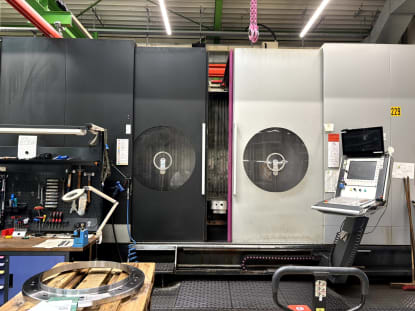
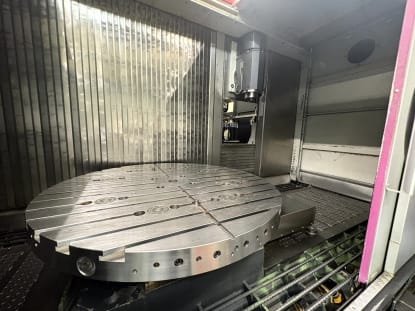
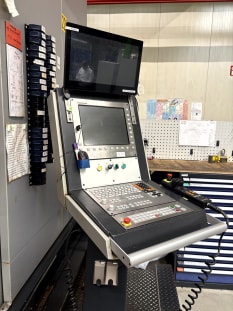
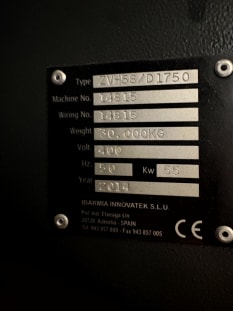
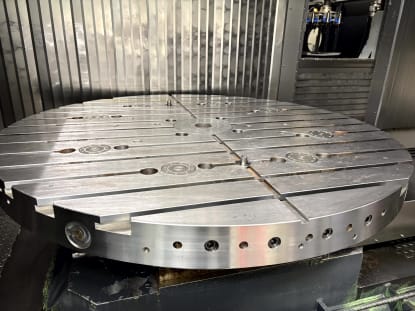
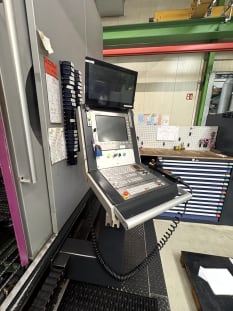
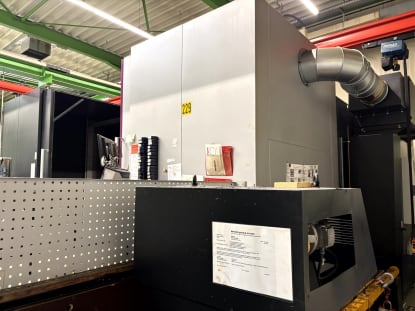
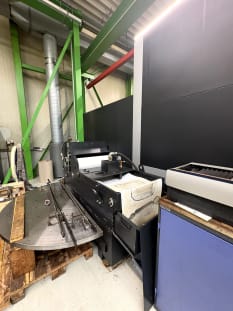
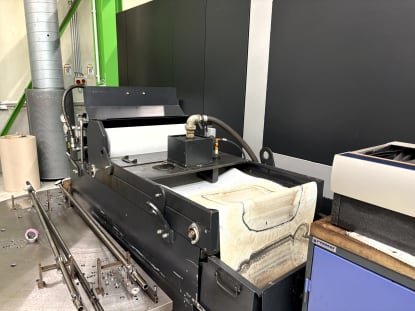
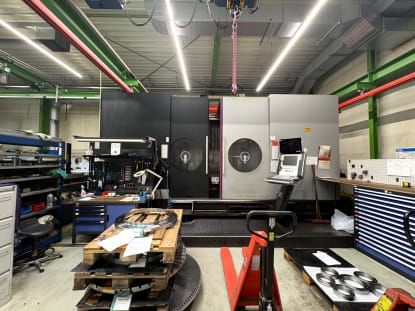
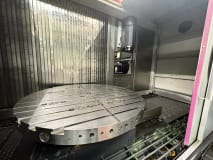
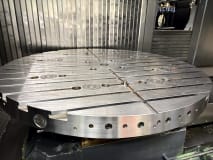
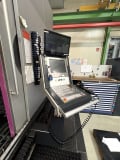
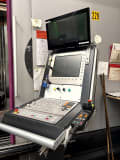
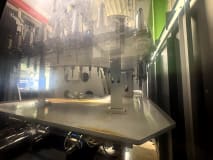
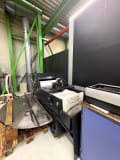
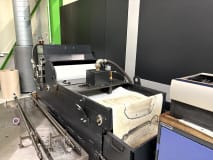
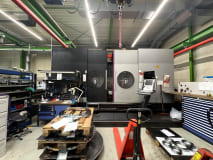
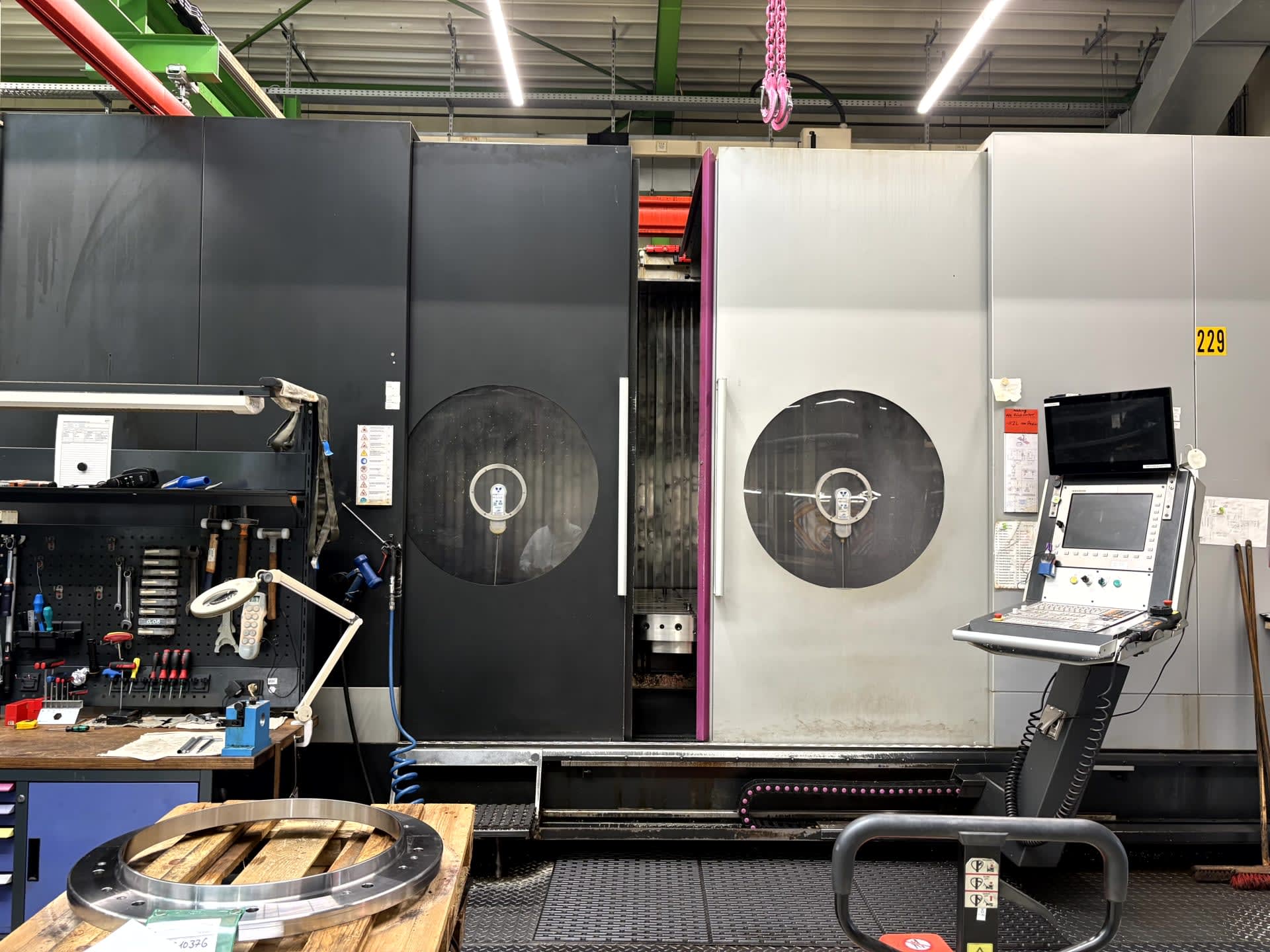
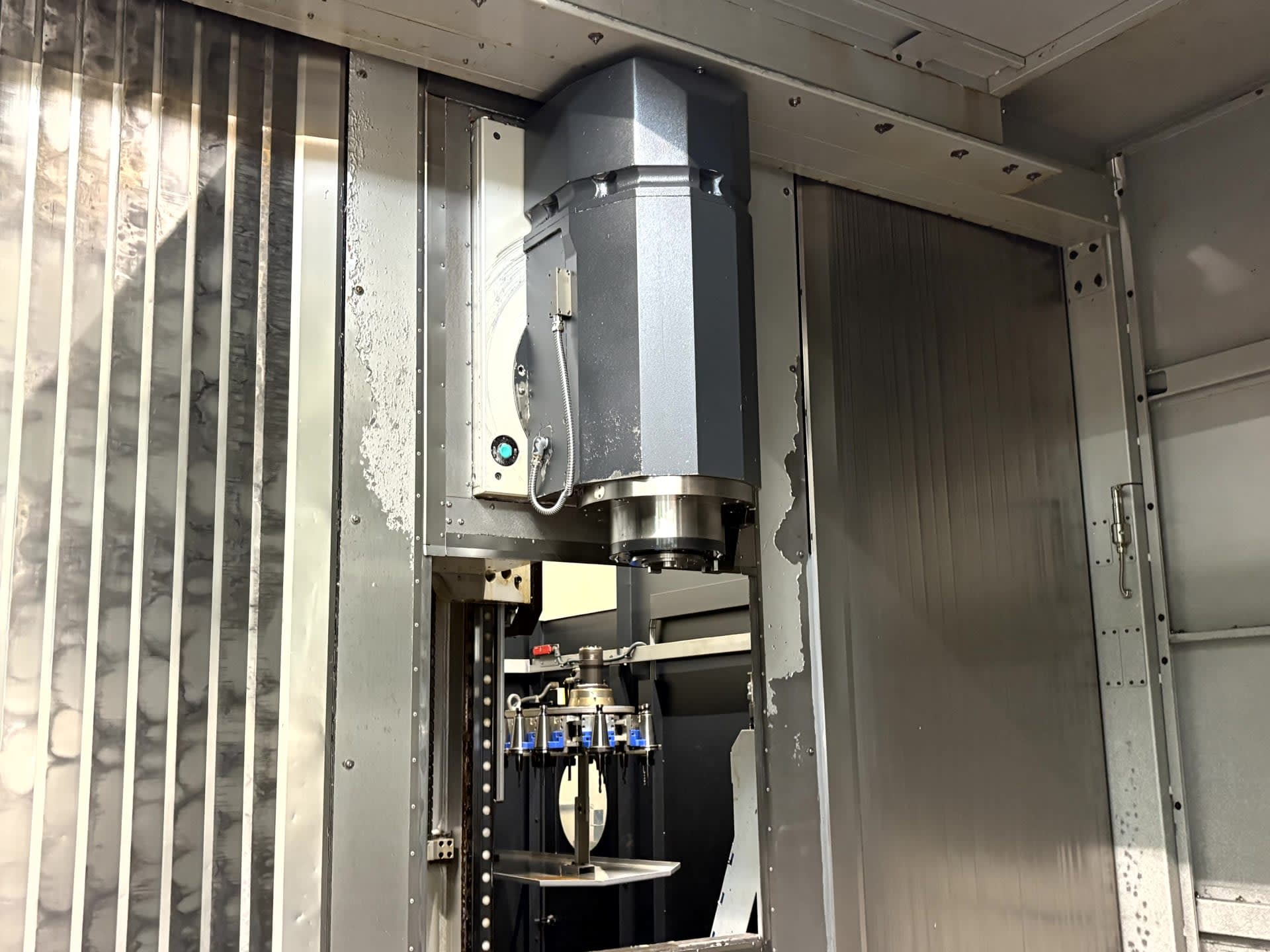
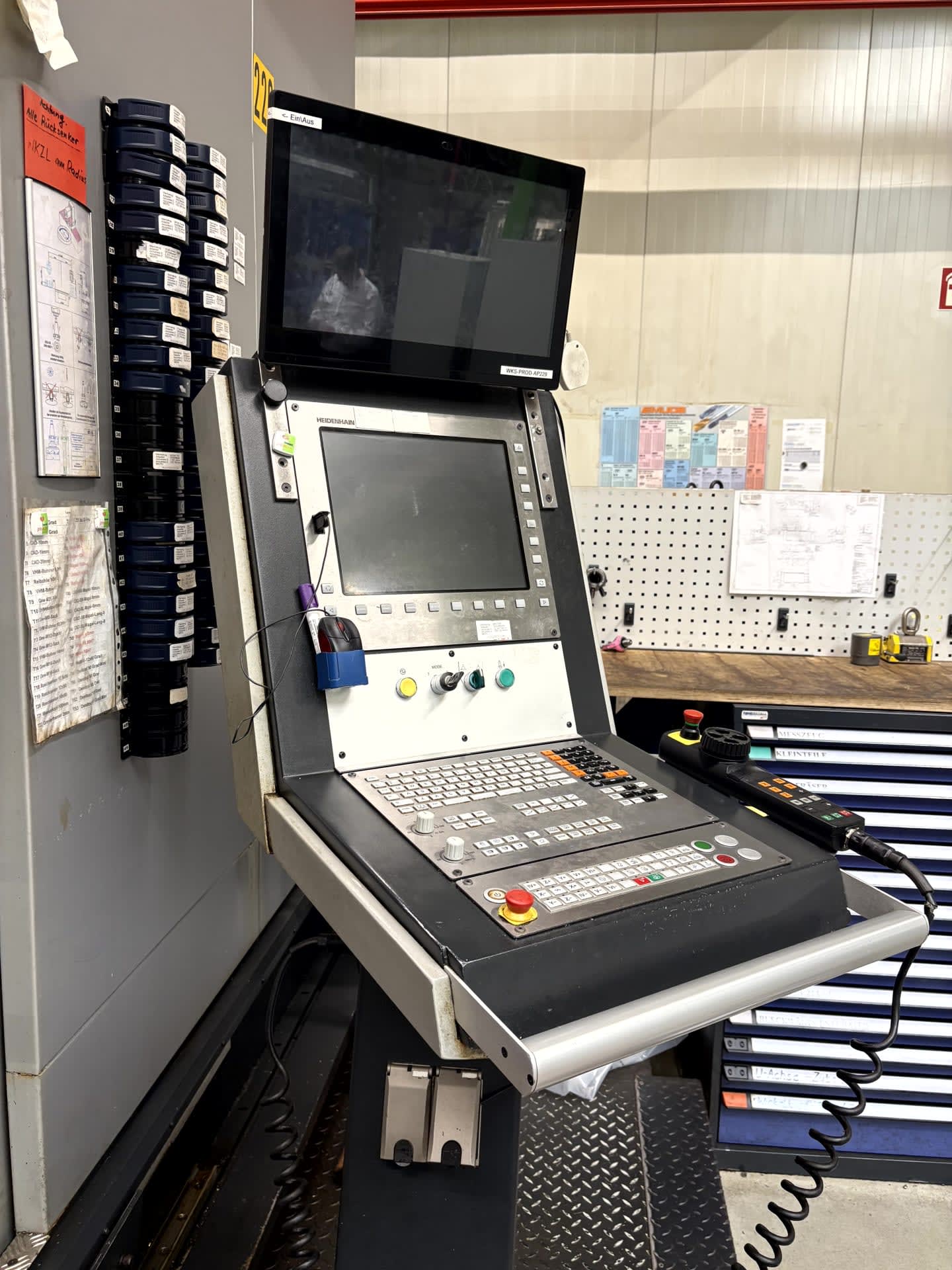
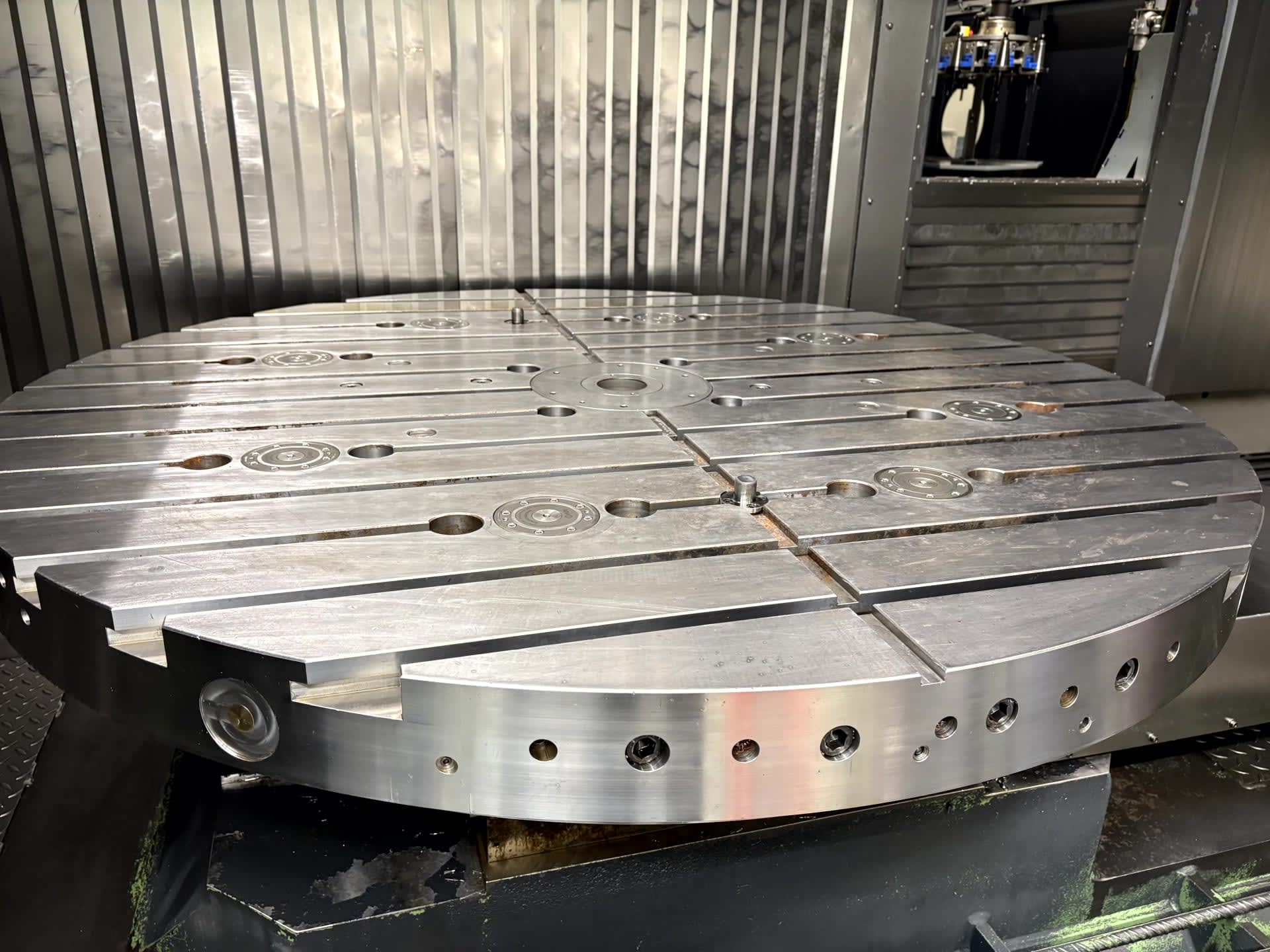
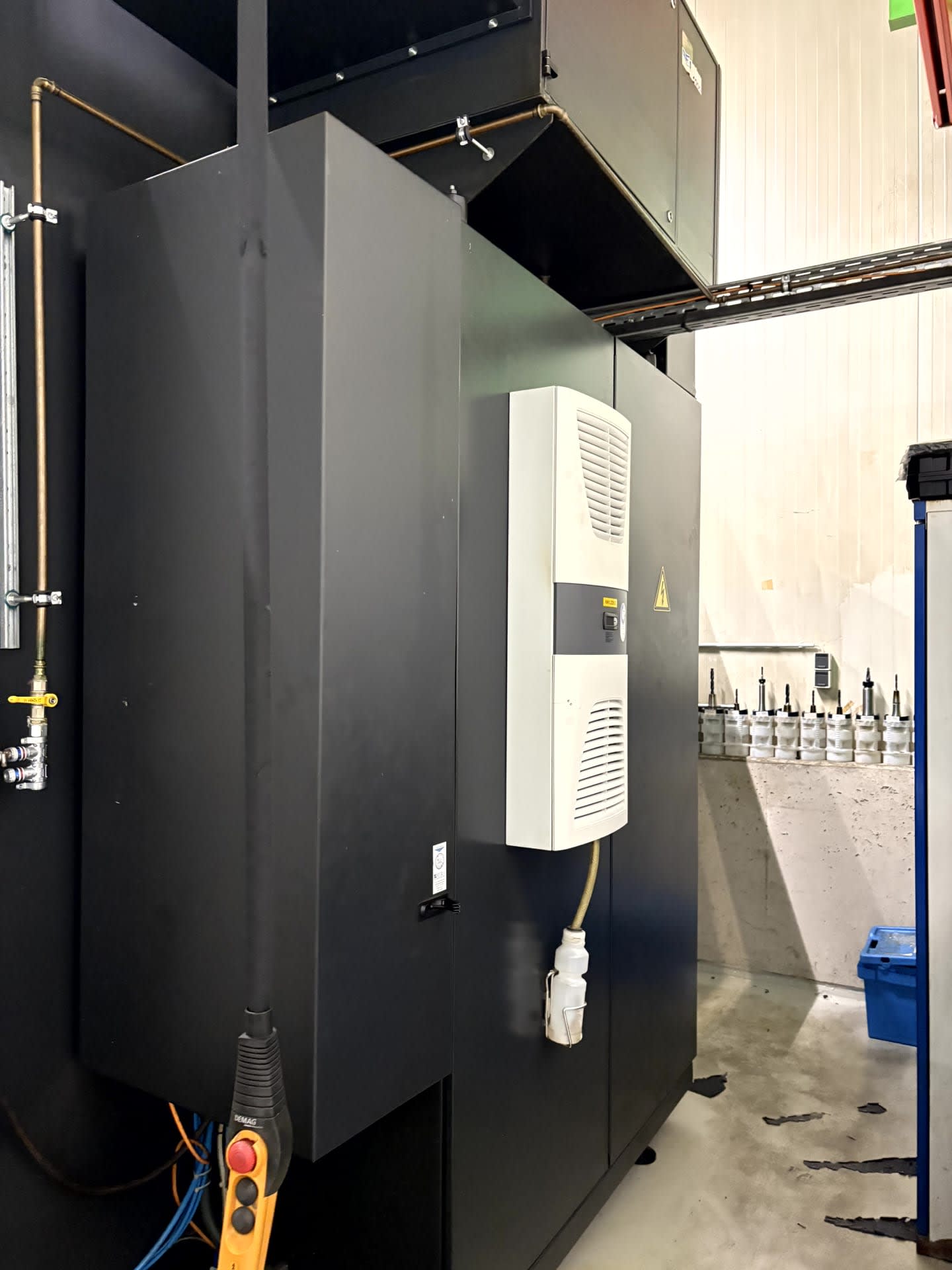
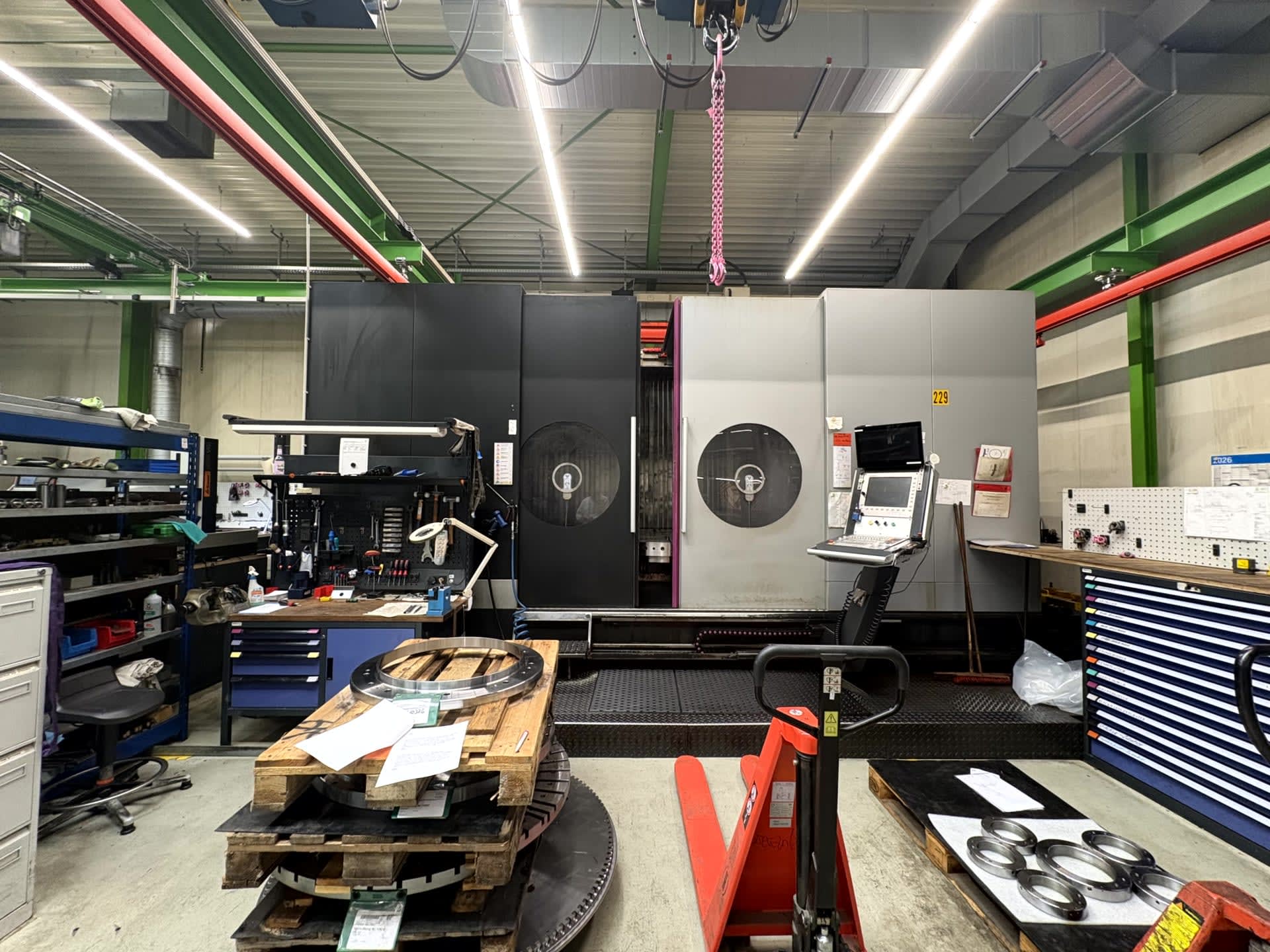
IBARMIA ZVH58 bed type milling machine with 1750 mm rotary table
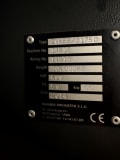
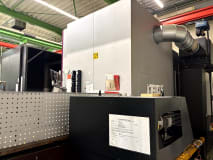

- Storage Number
- 26019-869
- Machine type
- Bed Type Milling Machines
- Manufacturer
- IBARMIA
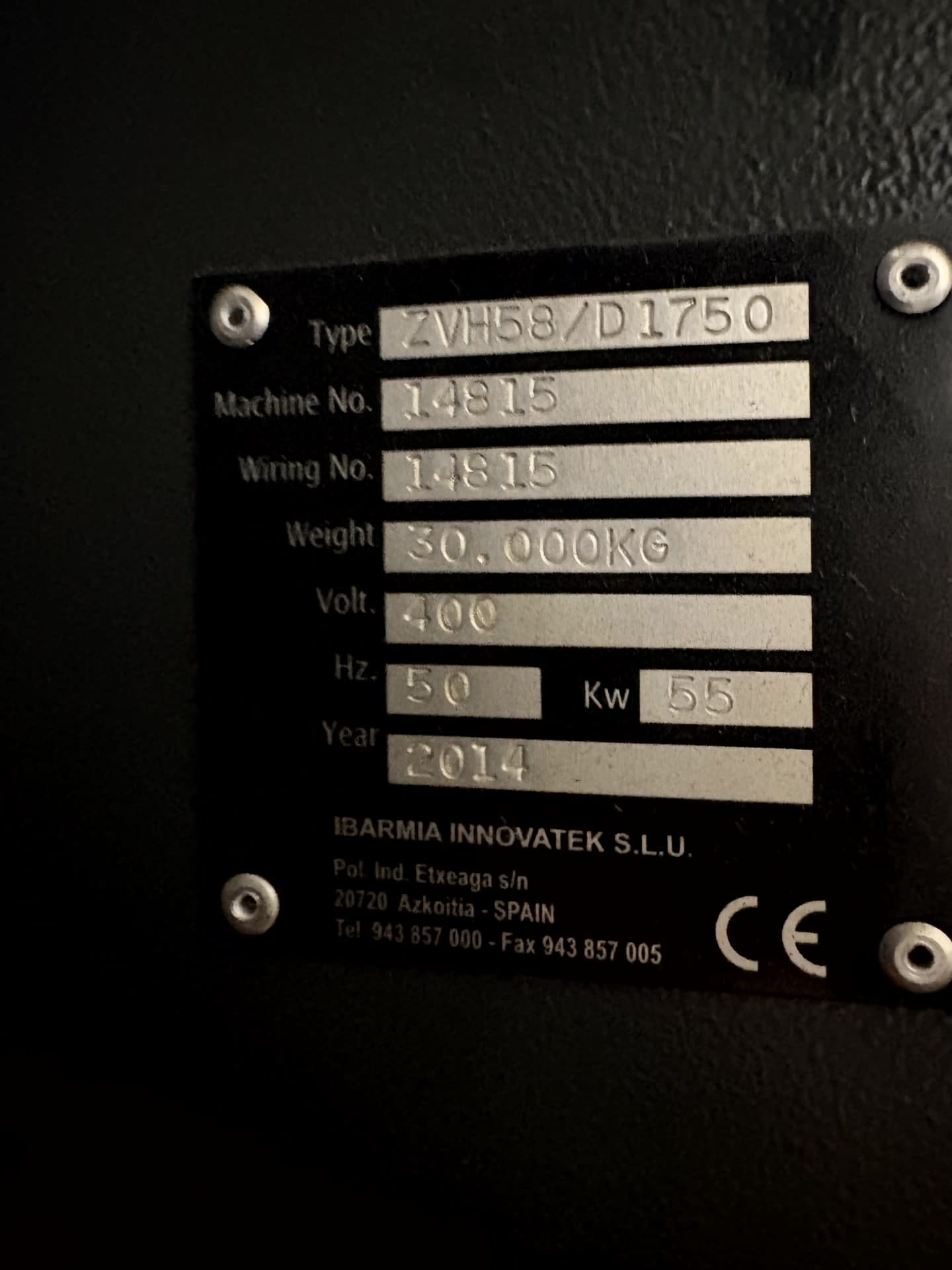
- Type
- ZVH58
- Year of construction
- 2014
- Location
- Langenfeld, Germany
- Availability
- by arrangement
- Documents
- Price
- This item is sold
- Control
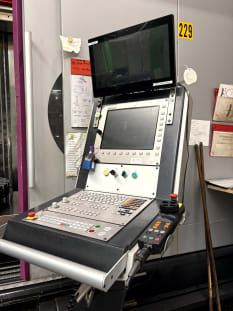
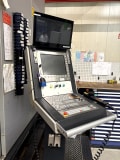
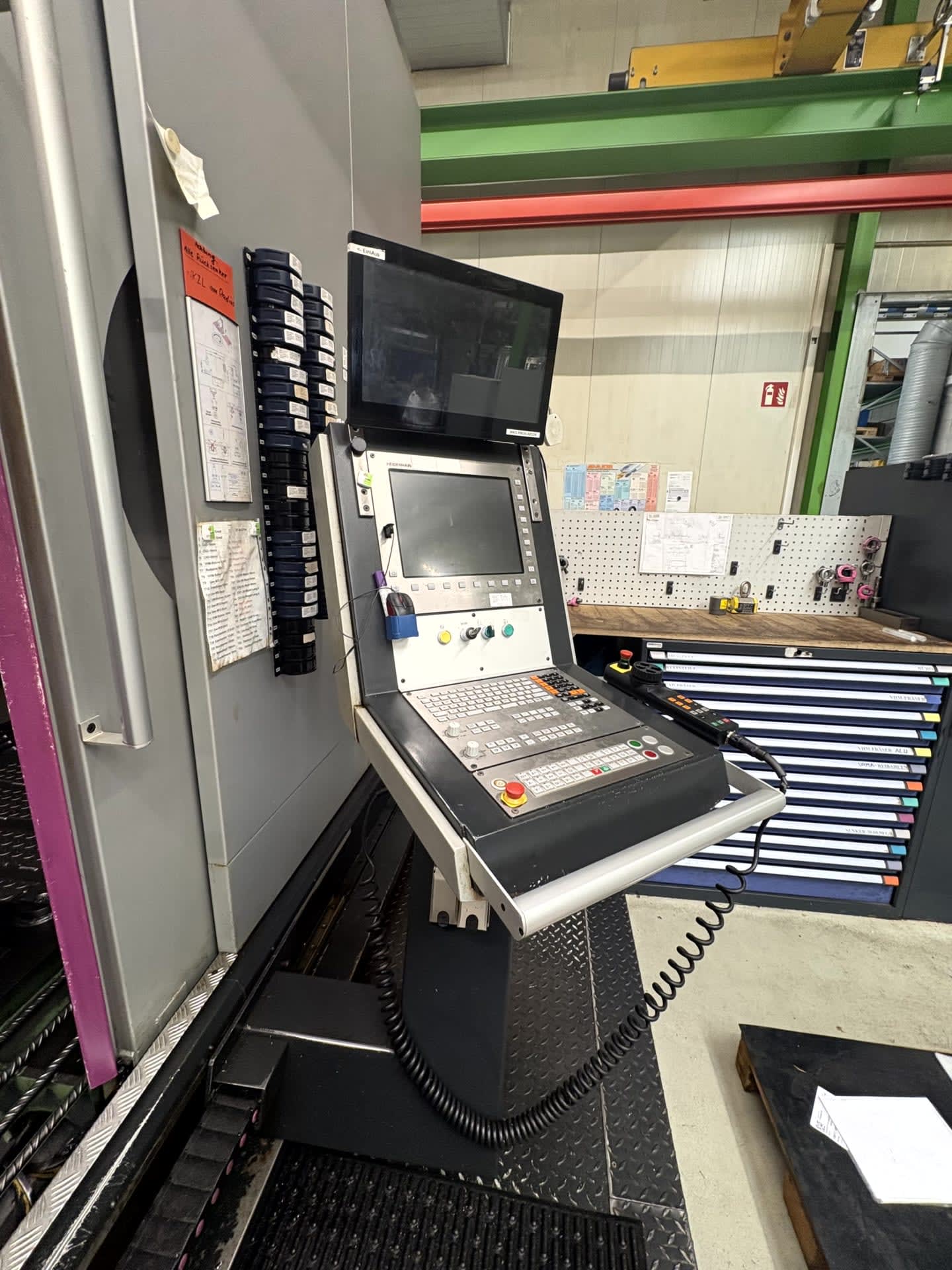
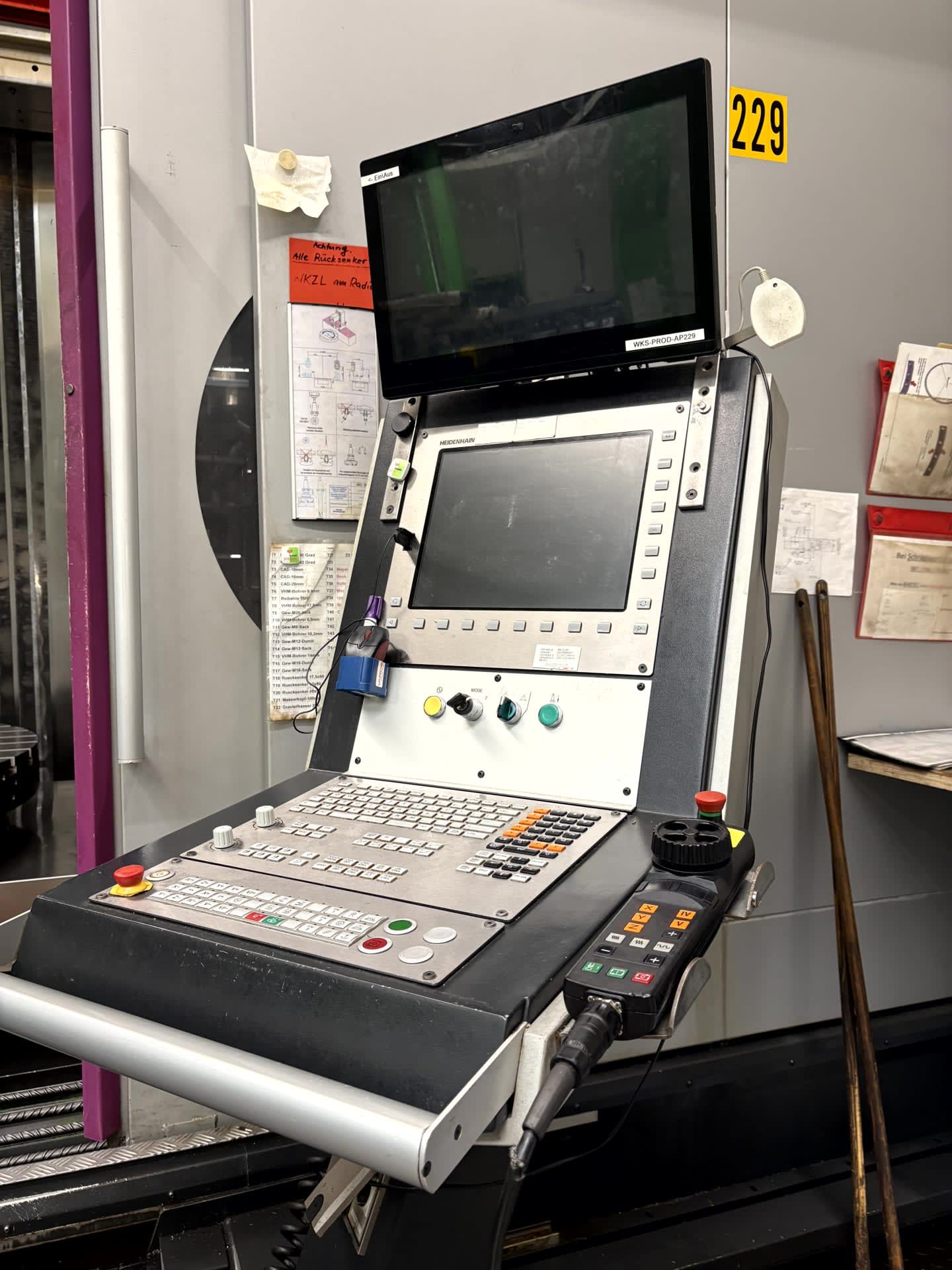
- HEIDENHAIN TNC i530
- Dimensions (LxWxH) approx.
- 10000 x 8200 x 3620 mm
- Travel X-axis
- ≥ 3000 mm
- Travel Y-axis
- ≥ 1000 mm
- Travel Z-axis
- ≥ 1100 mm
- Weight approx.
- 32,500 kg
Technical Key Facts – IBARMIA ZVH 58/D1750 EXTREME
X-axis travel: 3,000 mm
Y-axis travel: 1,000 mm
Z-axis travel: 1,100 mm
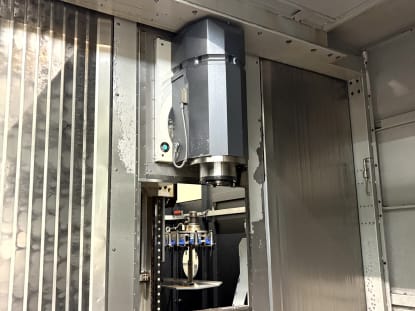
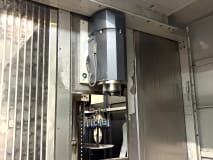
Maximum spindle speed: 9,000 rpm
Spindle power: 35 kW (S1 duty)
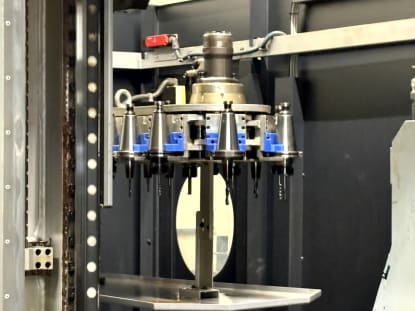
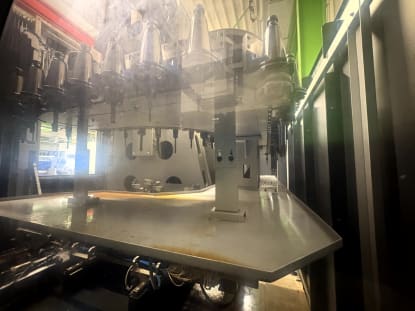
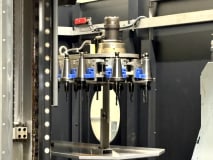
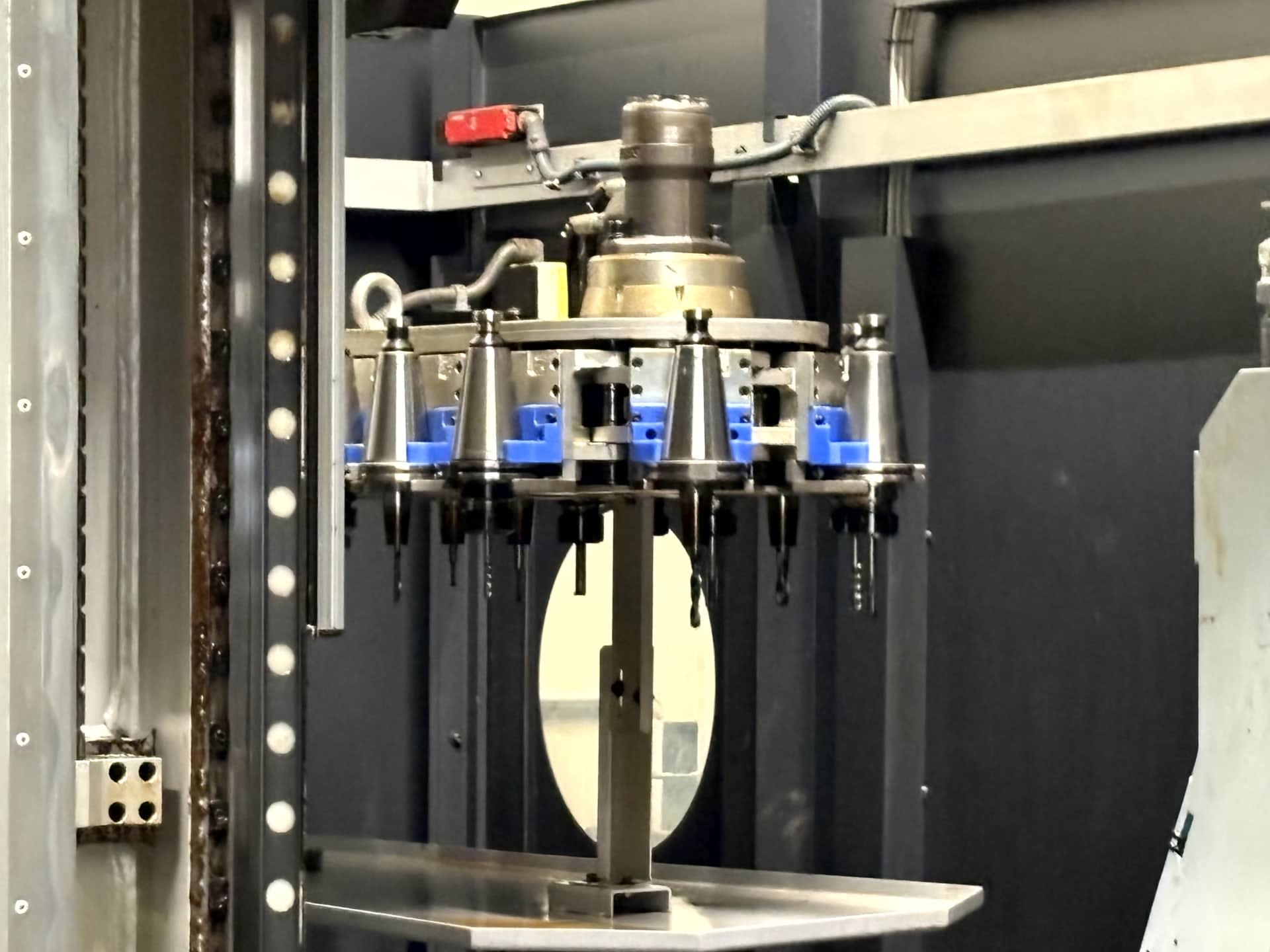
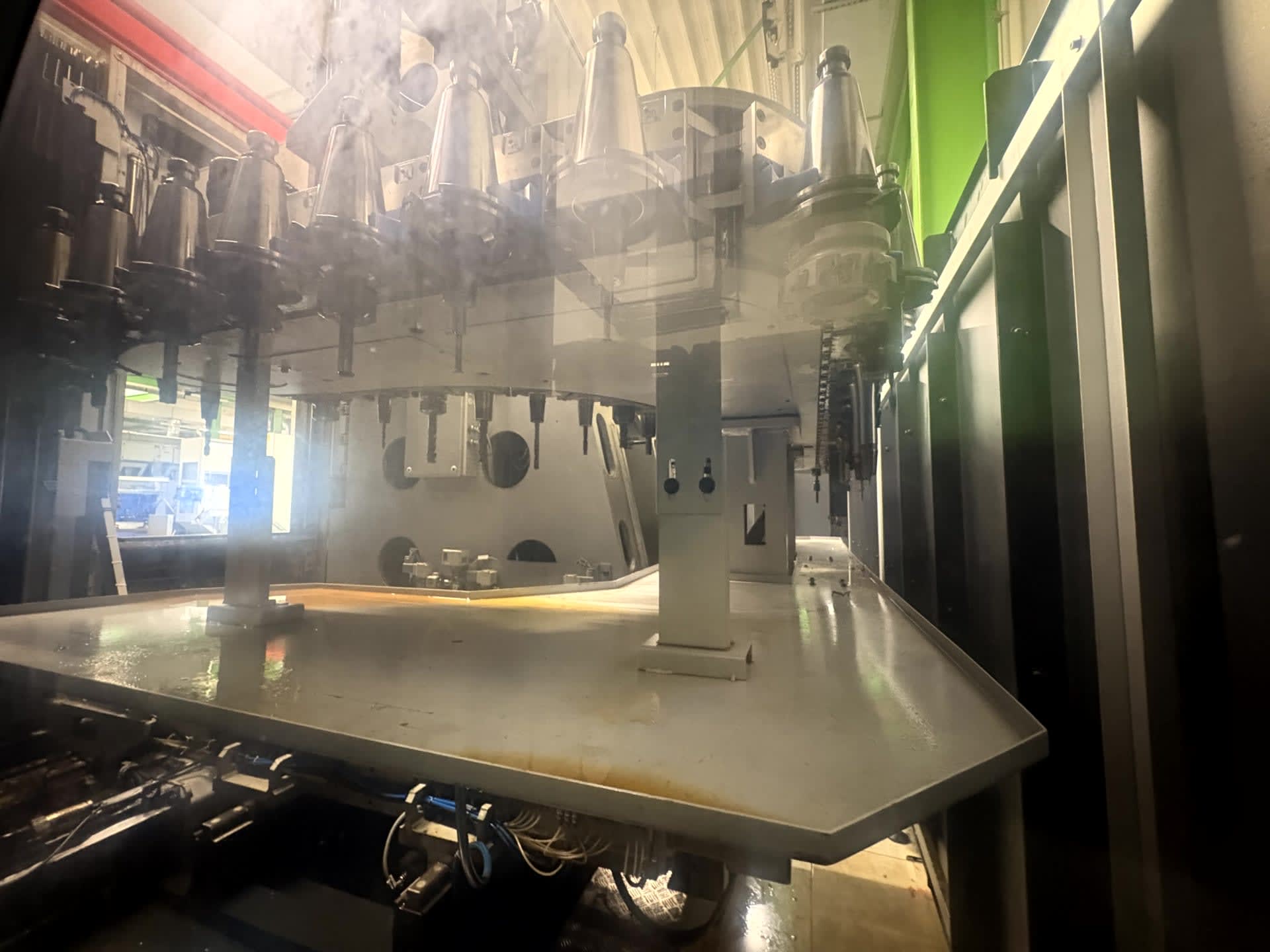
Automatic tool changer (ATC): 60 positions (Random type)
Tool interface: ISO 50 (DIN 69871)
Through-spindle coolant (TSC): Yes, up to 60 bar
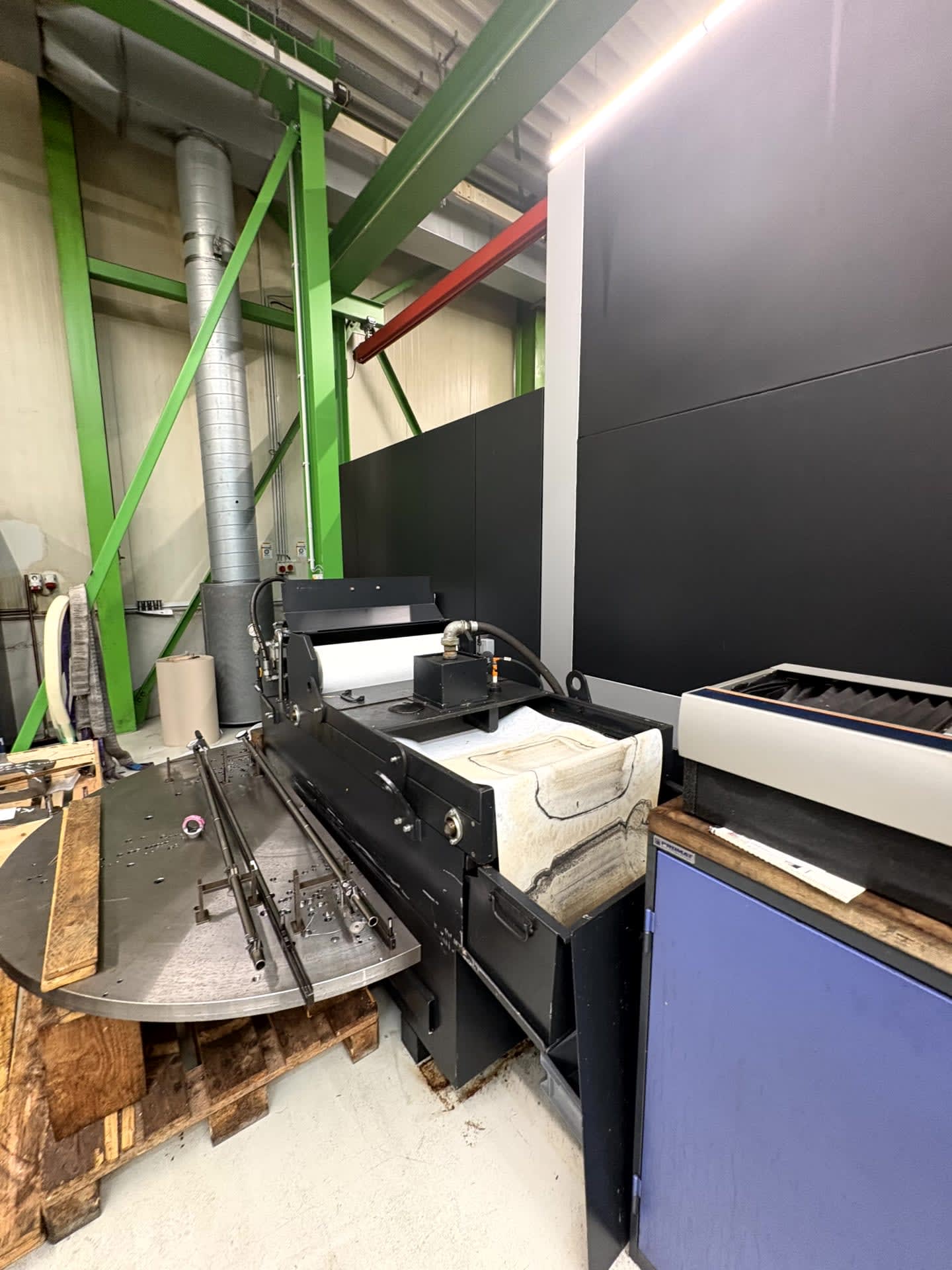
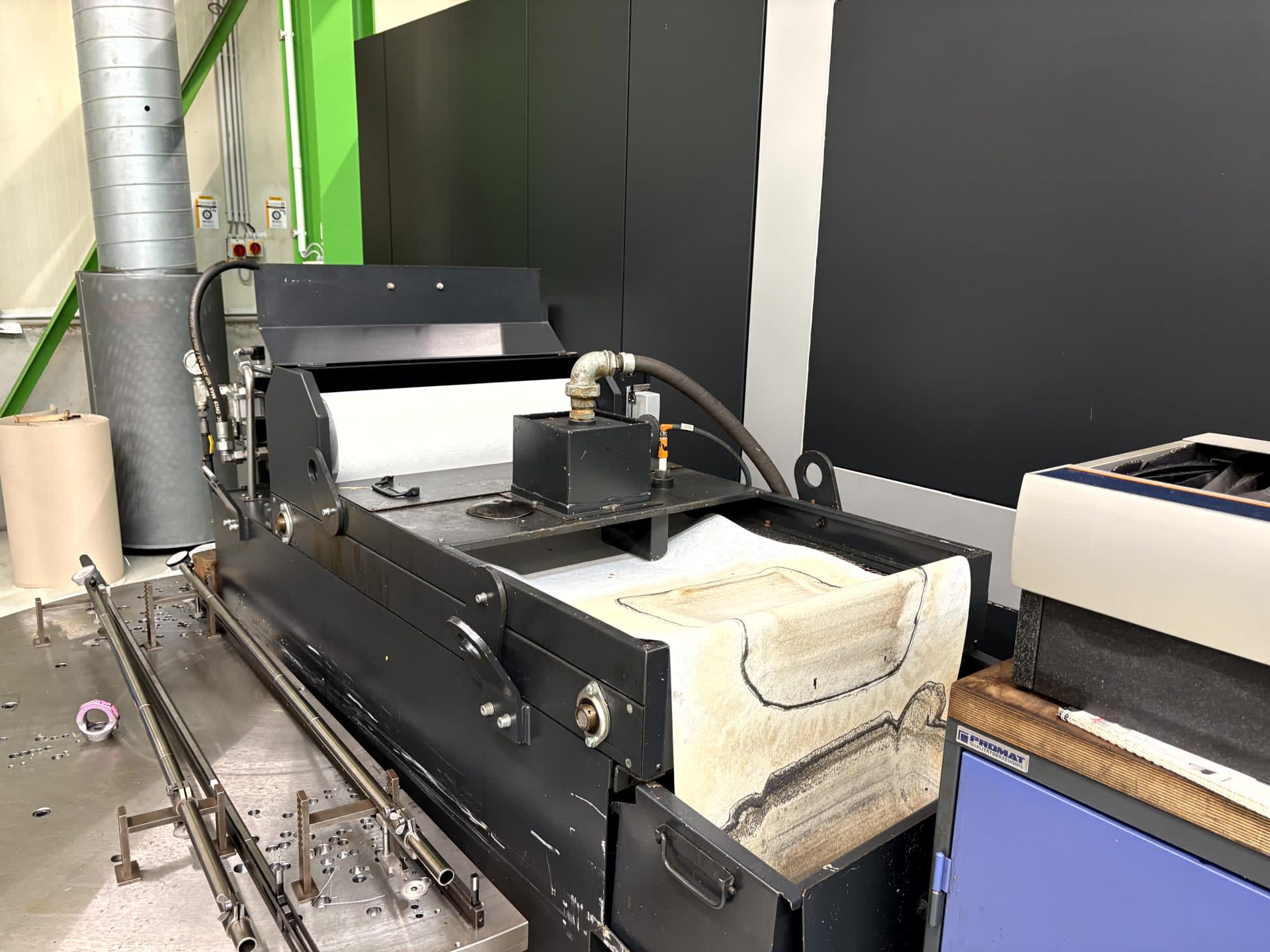
Chip conveyor: Twin auger chip conveyor
B-axis: Tilting axis, ±105°
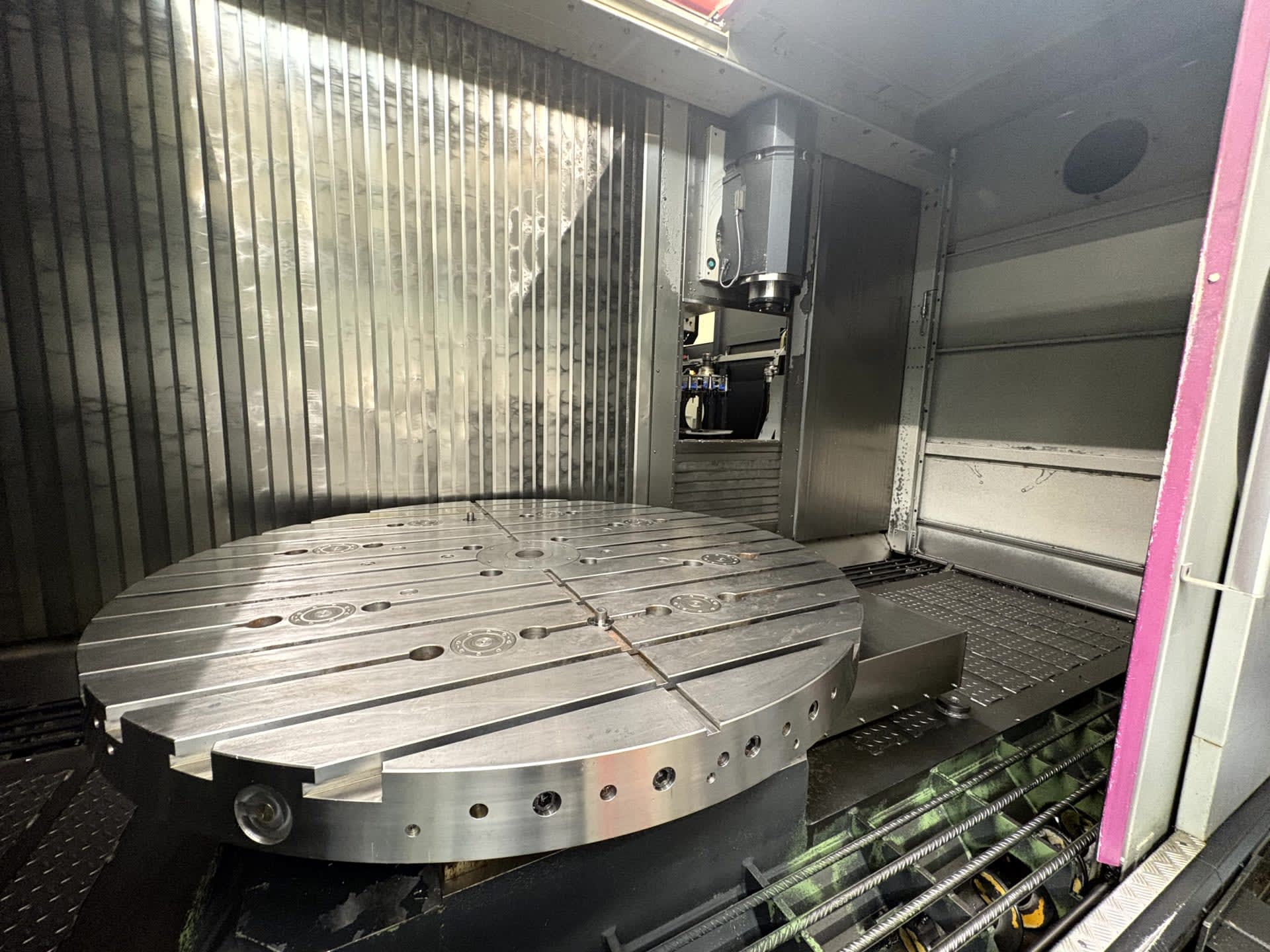
C-axis: NC rotary table (FIBRO), Ø 1,750 mm
- Transportation costs
- not included
- Terms of delivery
- EXW EX Works
- Terms of payment
- 100% prepayment before pick-up
Transportation costs are not included in the used milling machine price; terms of delivery and payment are stated under "Additional information" in each listing. You should also budget for installation and commissioning at the new site. In most cases, the buyer is responsible for organizing the transport; upon request, ReMach can check whether transport can be arranged or supported. ReMach also helps with dismantling, loading and export paperwork.
Choose the control your operators already know and that is compatible with your existing programs and CAM post-processors. On European machines the most common controls are Heidenhain (TNC, conversational Klartext programming), Siemens SINUMERIK and FANUC. The control version determines the available functions, such as 5-axis cycles, and the availability of spare parts.
The five axes are three linear axes, X, Y and Z, plus two rotary axes, usually two of A, B or C depending on the machine design. In 3+2 machining the rotary axes tilt the part to the required angle before the linear axes cut; in simultaneous 5-axis machining all five move together for complex freeform surfaces. A swivel head suits large, heavy parts, while a swivel-rotary table limits part size and weight to the table.
Choose by the size, weight and shape of your parts. A vertical machining centre suits small and medium parts in series; a portal milling machine handles large, heavy parts such as moulds and machine beds; a bed-type milling machine, with its table on a fixed bed, offers the rigidity for long parts and heavy cutting. A 5-axis machine is for complex parts machined on several sides with few set-ups, while a horizontal boring mill suits large prismatic parts with precise bores on several faces.
A machining centre is a CNC milling machine with a tool magazine and an automatic tool changer. This lets it perform milling, drilling, tapping and boring in one set-up without manual tool changes. The number of magazine positions in the listing shows how many tools a part can use.
This item is sold

Our Services
- Inspection & report
- Disassembly & installation
- Global logistics
- Customs & paperwork
- Sourcing & valuation
- Personal consultation
Related items
1. Bed-Type Milling Machine: Structure & Key Features
A bed-type milling machine is built around a stable, low-vibration machine bed on which the workpiece is securely mounted. Workpiece clamping is achieved through a variety of methods, including clamping slots, clamping claws, and corresponding fastening screws. The clamping system can be mechanical, hydraulic, electric, or pneumatic, offering flexibility across different production environments. Unlike quick-clamping devices, this design allows large and heavy workpieces to be machined without any risk of tipping.
In most configurations, the machine bed also serves as the worktable, which minimises vibration during operation and extends cutting tool life. One or two machine stands hold the tool units, enabling multiple faces of a component to be machined in a single setup. Bed-type milling machines are available in horizontal, vertical, and universal configurations, making them suitable for a wide range of milling applications.
- Available in horizontal, vertical, and universal configurations
- Rigid machine bed minimises vibration and extends cutting tool life
- Capable of machining large, heavy components and machine casings in a single setup
2. Bed-Type Milling Machines: A Long Industrial Tradition
Bed-type milling machines have been a cornerstone of industrial metalworking since the early days of industrialisation. Today, many manufacturers continue to produce conventional designs of this versatile machine, while advances in technology have introduced a broad range of modern variants. CNC bed milling machines, for example, feature a mobile worktable and precision computer-controlled movement, combining traditional robustness with contemporary accuracy. Multi-tool machining heads are now considered standard, allowing manufacturers to process workpieces efficiently in a single setup.
MTE bed-type milling machine in use
3. Bed-Type Milling Machines: Applications & Capabilities
CNC bed-type milling machines are widely used across industrial sectors thanks to their versatility and precision. Unlike conventional horizontal or vertical bed mills, the universal variant can process workpieces in multiple directions, making it exceptionally adaptable for complex machining tasks.
When working with very long workpieces, dual-column configurations significantly reduce setup time by allowing both machine stands to drive the milling head simultaneously. A key consideration with this setup is collision detection – the CNC control system automatically halts axis movement whenever a potential collision is detected within the machining zone, protecting both the tooling and the workpiece.
These machines are particularly well suited to the production of large, heavy components such as machine housings, structural parts, and industrial casings. Typical applications include the milling of flat surfaces and bearing seats, as well as the precise machining of external contours and complex geometries.
4. Used Bed-Type Milling Machines: Top Brands & Buying Guide
The European market offers a wide range of bed-type milling machines to suit diverse machining requirements. German manufacturers such as MAHO, RECKERMANN, SCHELLER and BERLETT produce highly regarded universal bed mills, while the global supply of both new and used machines remains strong.
Swiss manufacturer REIDEN and French brand HURON are also well worth considering. Many of these machines are CNC bed mills equipped with control systems from leading providers such as SIEMENS, HEIDENHAIN or FANUC.
Used bed-type milling machines from the brands mentioned above are frequently available in excellent condition on the second-hand market, often representing strong value compared to new equipment.