
1. Universal Milling Machines: Versatile Metalworking Tools
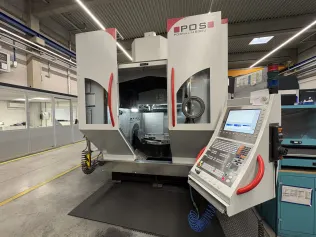
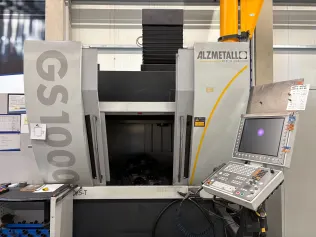
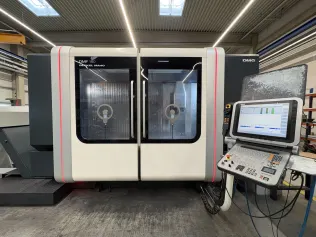
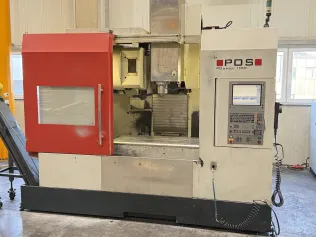
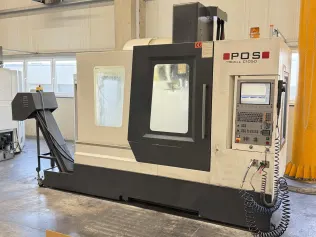
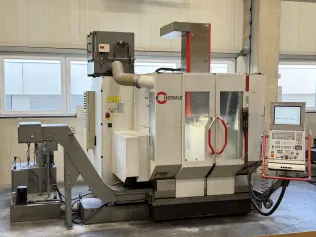
The universal milling machine is one of the most important cutting tools in metalworking, alongside the universal lathe. Widely known as universal mills, these machines are available in a broad range of configurations to suit diverse production needs.
The term 'universal' reflects the machine's exceptional versatility – capable of transforming metal stock into virtually any component imaginable. A further advantage is the ease with which universal milling machines can be extended with a wide variety of tooling and attachments.
Structure of a Universal Mill
A universal mill consists of a work table and two working spindles. The spindles and table perform coordinated movements to produce the finished workpiece, with the precise motion depending on the machine's design. Typically, the table travels along the X and Y axes while the spindles operate on the Z axis. On higher-specification models, additional movements are possible: the table can rotate and pivot, and the milling head can be repositioned around the workpiece for greater flexibility.
Universal milling machines are available in manual, cycle-controlled, and CNC variants. Although CNC milling machines have largely superseded manual models for industrial one-off production, a small number of manufacturers continue to produce fully manual universal mills.
Choosing the Right Milling Machine Variant
The universal milling machine is not ideally suited to every application. For particularly large or heavy components, a moving work table can become a limitation rather than an asset – which is why the gantry milling machine was developed. These high-performance machines move the spindle around a stationary workpiece using a gantry guiding system, making them well suited to heavy-duty work. Other specialist configurations include the bed-type milling machine and the knee-type milling machine, each designed to meet specific production requirements.
2. Universal Mills: Applications & Key Uses
Universal milling machines are the workhorses of their class, ideally suited to one-off productions and small-batch work. CNC controls allow the same milling programme to be repeated precisely at the touch of a button, combining flexibility with consistency. While dedicated machines exist for high-volume serial production, universal mills are the go-to choice for prototype construction, small series, and staff training – and they are equally common in repair workshops worldwide.
3. Universal Milling Machine Add-Ons & Accessories
To reduce tool wear and enhance precision, milling machines should always be fitted with cooling lubrication. To keep the surrounding area clean, machine housing or partition walls are a practical addition. Effective lighting is equally important for a universal mill, and long-term efficiency can be supported by consistently recording and comparing work results over time.
4. Universal Milling Machine Buying Guide: Key Considerations
Universal milling machines vary considerably in size, achievable tolerances, and processing capabilities. While the universal design allows for a wide range of tooling options, not every workpiece can be produced on every milling table to a consistent quality standard. Before selecting the right machine, it is worth addressing the following questions:
- What materials will typically be processed?
- How frequently do production runs need to be completed?
- What are the dimensions of the workpieces to be manufactured?
- What tolerance ranges must be achieved?
As a rule of thumb: the harder, heavier, larger, and more precise the finished workpiece needs to be, the higher the specification required of the machine. For occasional milling work on prototypes or fittings, a more basic model may be perfectly adequate. However, producing high-precision, resilient components from solid steel demands a machine whose quality is equal to the task.
Minimum specifications for producing reliable results include:
- A machine from a reputable, established manufacturer
- SK 30 or SK 40 tool holder
- Minimum spindle speed of 50 rpm in slow mode – essential for cutting threaded holes
- Up to 3,000 rpm for contour work
- At least 250 × 700 mm² of clamping surface
These benchmark specifications are well suited to working with soft metals such as aluminium, bronze, and copper, and will also handle steel processing to a reasonable degree.
One further consideration before purchasing is the availability of compatible milling accessories – including box cubes, machine vices, dividing apparatus, and additional tooling – as well as any peripheral equipment required. It is worth noting that these extras can, depending on requirements, add up to costs that rival or even exceed the price of the machine itself.
5. Buying a Used Universal Milling Machine
A thorough inspection is essential when buying a used universal milling machine, starting with the guide mechanisms – these should show no play or excessive looseness.
Electrical issues are generally less critical, as they can usually be resolved on manual universal mills without major effort. Far more important is that all axes move smoothly by hand, with no noticeable resistance at the handwheel. Any stiffness or grinding typically points to worn bearings that will need attention.
Surface wear such as scratches and faded paint is normal on older machines. If a second-hand mill appears freshly repainted, approach with caution – while it may reflect a careful restoration, it can equally indicate an attempt to conceal underlying mechanical problems.
Ideally, run a test cut on a sample piece before committing to a purchase, then measure the result with a micrometer to confirm the machine delivers the accuracy and surface quality your work demands.
6. Universal Milling Machines: Top Manufacturers Guide
The most recognised manufacturers of universal milling machines include DECKEL, MAHO, EMCO, GROB, KNUTH, KUNZMANN, MAKINO, RAMBAUDI, IXION, and RECKERMANN – all of whom offer a wide range of models to suit different production needs.
OPTIMUM is a newer name in the universal milling machine market, known for its highly affordable entry-level mills. New machines from this manufacturer can start as low as €2,500 – a remarkably low price point. However, build quality and long-term reliability tend to reflect the lower cost, and repair expenses can add up over time. EPPLE and HOLZMANN are similarly positioned in the budget segment of the market.
ELMAG occupies a noticeable step up in quality. With entry prices from around €12,000, these machines are better suited to demanding industrial environments where consistent performance and durability are priorities.
For true professional-grade quality, budgets of two to three times that figure are typically required. This is why sourcing a used universal milling machine from an established brand-name manufacturer is often an economically sound alternative – offering proven performance at a significantly reduced cost.