
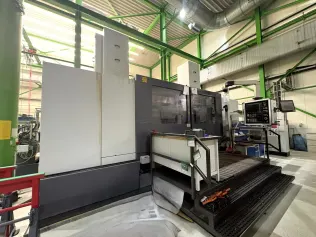
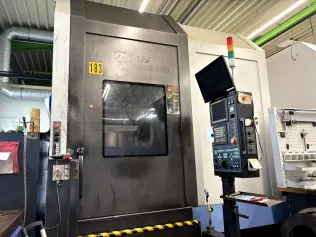
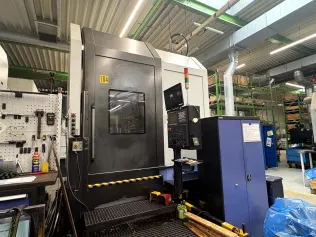
1. Vertical Turning Machines: How the Process Works
Turning is a machining process used to produce workpieces with symmetry about an axis of rotation. Typical components include shafts, gearwheels, rollers, and axles. Vertical lathes are also widely used for specialist designs in media supply systems and the mass production of plumbing components.
Vertical turning is a distinct variation of the turning process in which workpieces are clamped vertically rather than horizontally. This orientation makes vertical lathes particularly well suited to short, wide, or compact workpieces, and eliminates the need for a second clamping step – improving overall efficiency on the shop floor.
- Ideal for workpieces with rotational symmetry, including shafts, rollers, and gearwheels
- The workpiece is secured vertically in the machine chuck for stable, precise machining
- Single-step clamping improves throughput and reduces handling time
2. How a Vertical Lathe Works: Key Principles Explained
A vertical lathe secures the workpiece in a chuck, using the force of gravity to hold it firmly in place without requiring a second clamping point. This is the fundamental difference from a horizontal lathe, which uses a tailstock for additional support. Because vertical lathes are designed for large, wide, and relatively short components, clamping from above is unnecessary. An electric motor rotates the workpiece while a range of cutting tools shapes it to specification – carbide or hardened steel tools define the contour and surface, drills create holes, and thread taps cut threads.
Rather than being operated manually, a vertical lathe follows instructions from a pre-loaded CNC programme. The cutting tool moves along a slide according to the programmed path, ensuring precise and repeatable results. CNC programmes for vertical lathes are generally straightforward to learn, and many manufacturers provide free simulation software so operators can test programmes before running them on the machine. That said, day-to-day operation and maintenance should be carried out by qualified and experienced machinists.
Vertical lathes vary considerably in size. Smaller models are well suited to high-volume production and can be integrated into automated feed systems. In these setups, loading and unloading is handled automatically rather than manually, and the machine's fully enclosed housing protects against flying debris. This level of automation means that a machine attendant – rather than a skilled turner – can oversee the loading and unloading process.
In many facilities, this material handling is carried out entirely by industrial robots. The absence of a tailstock makes workpiece changeover faster, which directly increases output per hour – a significant advantage in mass production environments. CNC vertical lathes are particularly valued for their ability to produce large quantities of identical parts efficiently. Typical products include pipe fittings, sockets, and connecting pieces for water and gas systems.
3. Vertical Lathe Manufacturers: EMCO, EMAG & More
Leading manufacturers of vertical lathes include EMCO, EMAG, MAZAK and DMG. For larger vertical lathes, well-regarded producers include MAREP AG, EHLA and DÖRRIES.
These brands represent some of the most trusted names in vertical lathe technology, offering a wide range of machines to suit varying production requirements and workpiece dimensions.