Buying Used Industrial Machinery: 10-Step Checklist
Ten steps before you buy: how to check requirements, operating hours, maintenance, documents and CE marking so you buy used industrial machinery with less risk.
Buying used industrial machinery means settling ten points before you commit: requirements and installation site, year of manufacture and operating hours, maintenance records, nameplate and documents, conformity, inspection with a functional test, CNC control and spare parts, and payment, dismantling and transport. Buyers who get these points documented before the purchase spot risks early and end up with a machine that fits their production.
A used machine only pays off if it fits your production and its condition is properly documented. This checklist follows the order in which you should work through a purchase: requirements first, then condition, documents and inspection, and finally the handover.
Steps 1 and 2: Define your requirements and installation site
Which workpieces and tolerances must the machine handle?
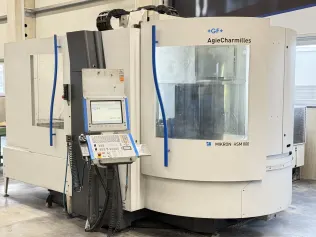
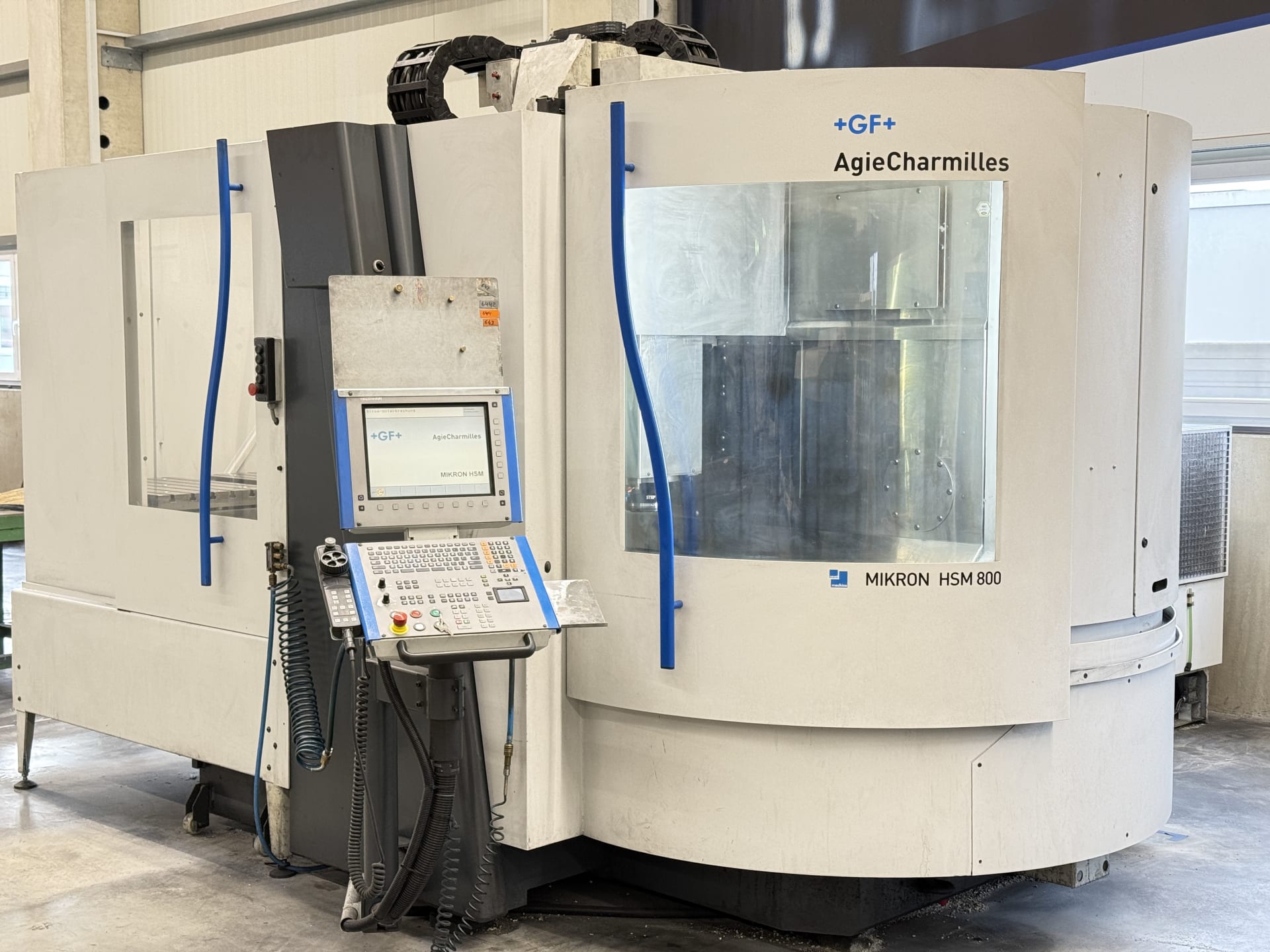
Define which workpieces you need to produce, in what size, from which material and to which tolerances. This gives you the key data: axis travels in X, Y and Z, spindle speed and power, table size, number of tool pockets and the CNC control. Our stock shows how far these values can differ: a machining centre like the MIKRON HSM 800 travels 800 x 600 x 500 mm, while a portal milling machine like the HEYLIGENSTAEDT Heynumill 3200-P travels 6,000 x 5,000 x 1,500 mm (figures as stated in the listings).
Do the hall, foundation and power supply fit?
Check floor space, hall height, crane capacity and the load-bearing capacity of the floor. For heavy machines, weight decides the foundation and the transport route: according to the listings, the two machines above weigh roughly 8,300 kg and 120,000 kg. Also clarify connected load, compressed air and the disposal of coolant and chips. You can browse by machine group under metalworking machinery (machining centres, milling machines and lathes), woodworking machinery and operating equipment (for example cranes, forklifts and workshop equipment).
Steps 3 and 4: Assess condition - year of manufacture, operating hours and maintenance
How to read operating hours
A single number says little. Listings sometimes state power-on hours (machine under power) and spindle hours (spindle running) separately, and the two values can be far apart. Ask which hours are meant and how they were recorded, for example from the control's counter. There is no fixed benchmark because it depends on the machine type. What matters is the combination of running time, maintenance and load.
Which maintenance records should you ask for?
Ask for documents that let you trace the machine's history:
Dated maintenance and service reports: show whether service intervals were kept.
List of replaced wear parts: for example spindle, ball screws or guideways. It shows which assemblies have already been renewed.
Machine accuracy test reports: document geometry and positioning accuracy, especially after a repair.
Information on collisions and repairs: reveals earlier damage that cannot be seen from the outside.
Steps 5 and 6: Check documents and conformity
Match the nameplate and serial number
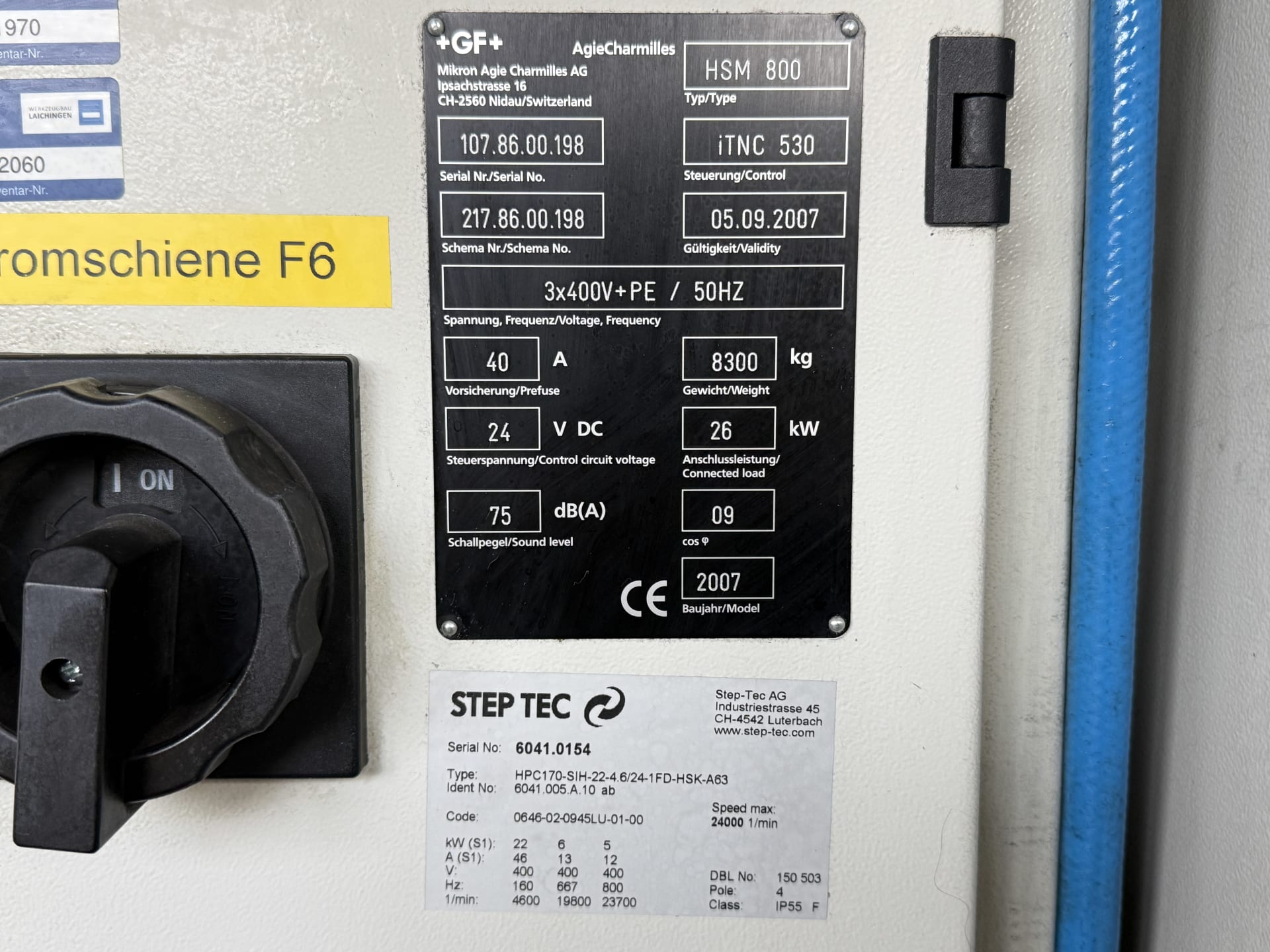
Compare manufacturer, type, year of manufacture and serial number on the nameplate with the offer, the listing and the documents. If the details differ, clarify this before you order. The documents should include the operating manual, electrical diagrams, hydraulic and pneumatic diagrams, the maintenance log and, if available, the declaration of conformity. Name any missing documents before the purchase and clarify whether and how they can be obtained.
What applies to machines without CE marking?
With the CE marking, the manufacturer declares conformity with the applicable EU regulations. If it is missing, the machine is not automatically unusable. According to the 2021 project report on machines without CE marking by the German federal-state committee LASI, the occupational safety authority cannot require an operator to make up the CE procedure for machines placed on the market after 1 January 1995. Under section 5 of the German Industrial Safety Ordinance (BetrSichV), the operator must still ensure that the machine can be used safely. This is done through a risk assessment, as a rule carried out by a competent person, for example based on DIN EN ISO 12100. The rules of the country where the machine will be operated apply. This is general information, not legal advice.
Step 7: Inspection and functional test
Can the machine be inspected under power?
ReMach listings state whether a machine is under power. If it is, function and condition can be checked directly during the inspection. Run all axes to their reference position and watch for the following:
Guideways and ball screws: scoring, wear marks or noticeable backlash point to wear.
Spindle: running noise, temperature rise during operation and runout indicate the condition of the bearings.
Hydraulics, lubrication and coolant: oil traces and leaks point to seal damage or overdue maintenance.
CNC control: the alarm history shows recurring faults that listings do not reveal.
Tool changer: a test change exposes malfunctions of the gripper or magazine.
Accuracy: a test cut or a circularity test with a ballbar shows whether the machine still holds the required tolerances.
Inspect on site or by video?
If you cannot travel, ask for videos of the homing run, spindle run and tool change, as well as close-ups of the nameplate and the control. An independent on-site inspection can stand in for your own visit if its scope is agreed in writing beforehand.
Step 8: Control system, spare parts and service
The CNC control determines how easily a machine can be operated and maintained. The ReMach stock includes, for example, Heidenhain controls of the TNC 430 and iTNC 530 types. For the specific control generation, clarify whether spare parts, service and documentation are available and whether your programmers and operators can work with it. Also ask which accessories are included, such as clamping devices, tool holders or measuring probes.
Steps 9 and 10: Purchase, dismantling and transport
ReMach listings state the terms of payment and delivery as separate details. Read them before you send an enquiry. Record in writing who handles dismantling, loading and transport, from when the machine is ready for collection, and how handover and acceptance are documented. Plan dismantling, loading and reassembly as a project with clear responsibilities before you commit.
How ReMach supports your purchase
ReMach is a marketplace for used industrial machinery. On request, the team helps with sourcing suitable machines and arranges inspections. After you confirm a purchase, you receive the information on payment and the next steps such as dismantling, loading or collection. An overview is available under ReMach services.
Currently in stock
Three examples that show how much machines and specifications can differ:
MIKRON HSM 800 universal machining centre: built 2007, Heidenhain iTNC 530, axis travels 800 x 600 x 500 mm, with pallet changer, designed for HSC machining according to the listing, among other things in mould making.
POS Posmill H800 U universal milling machine: built 2018, Heidenhain iTNC 530, axis travels 670 x 820 x 600 mm, 5-axis machining. Suited to workpieces that need machining from several sides in one setup.
HEYLIGENSTAEDT Heynumill 3200-P portal milling machine: built 1999, Heidenhain TNC 430, axis travels 6,000 x 5,000 x 1,500 mm, weight about 120,000 kg. Designed for large and heavy workpieces.
Frequently asked questions about buying used machinery
How many operating hours are normal for a used machine?
There is no universal figure. It depends on machine type, size and use. The number only becomes meaningful once it is clear whether power-on or spindle hours are meant and once maintenance records are available. A machine with many hours and complete maintenance can be in better shape than one with few hours and no documentation.
Does a used machine need CE marking?
Machines placed on the market in the EU normally carry a CE marking. If it is missing on an older or modified machine, the operator in Germany must demonstrate safe use, usually through a risk assessment by a competent person. The rules of the country where the machine will be operated apply.
Can I test a machine before buying it?
That depends on the machine. ReMach listings state whether it is under power. In that case an inspection with a functional test is possible before you buy. If you cannot travel, videos of the homing run, spindle run and tool change or an arranged inspection can help.
Who organises dismantling and transport?
Buyer and seller settle this case by case. At ReMach, after you confirm the purchase you receive the information on payment and the next steps such as dismantling, loading or collection, and the team can support the organisation on request. Agree on responsibilities in writing before you commit.
Next step
Looking for a specific machine, or want to clarify condition and documents before buying? Browse the current machine stock or talk to the ReMach team about inspection and purchase handling. Phone: +49 2196 7050573.