
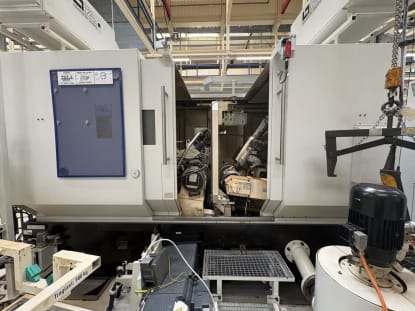
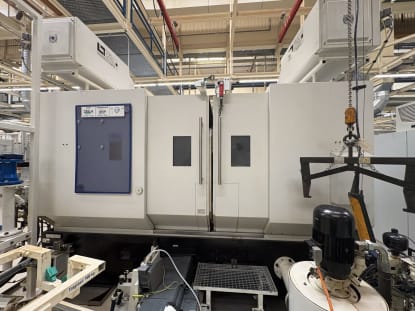
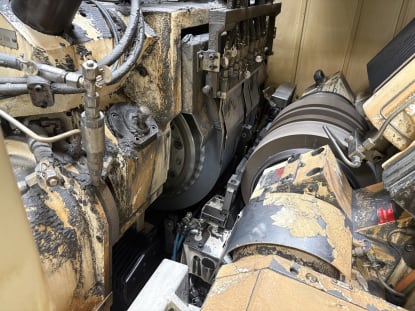
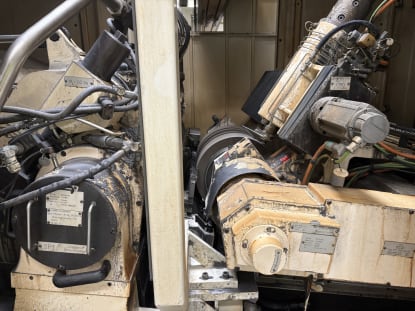
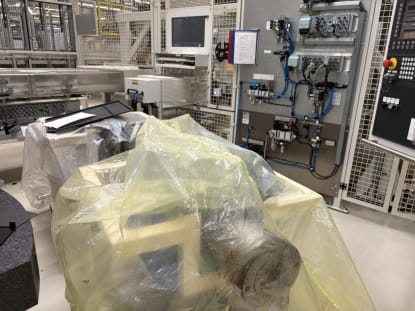
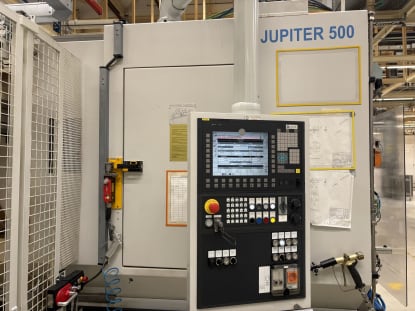
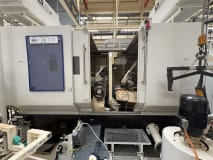
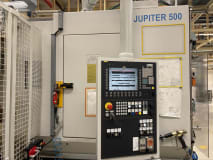
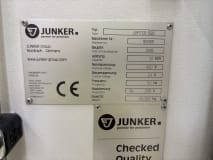
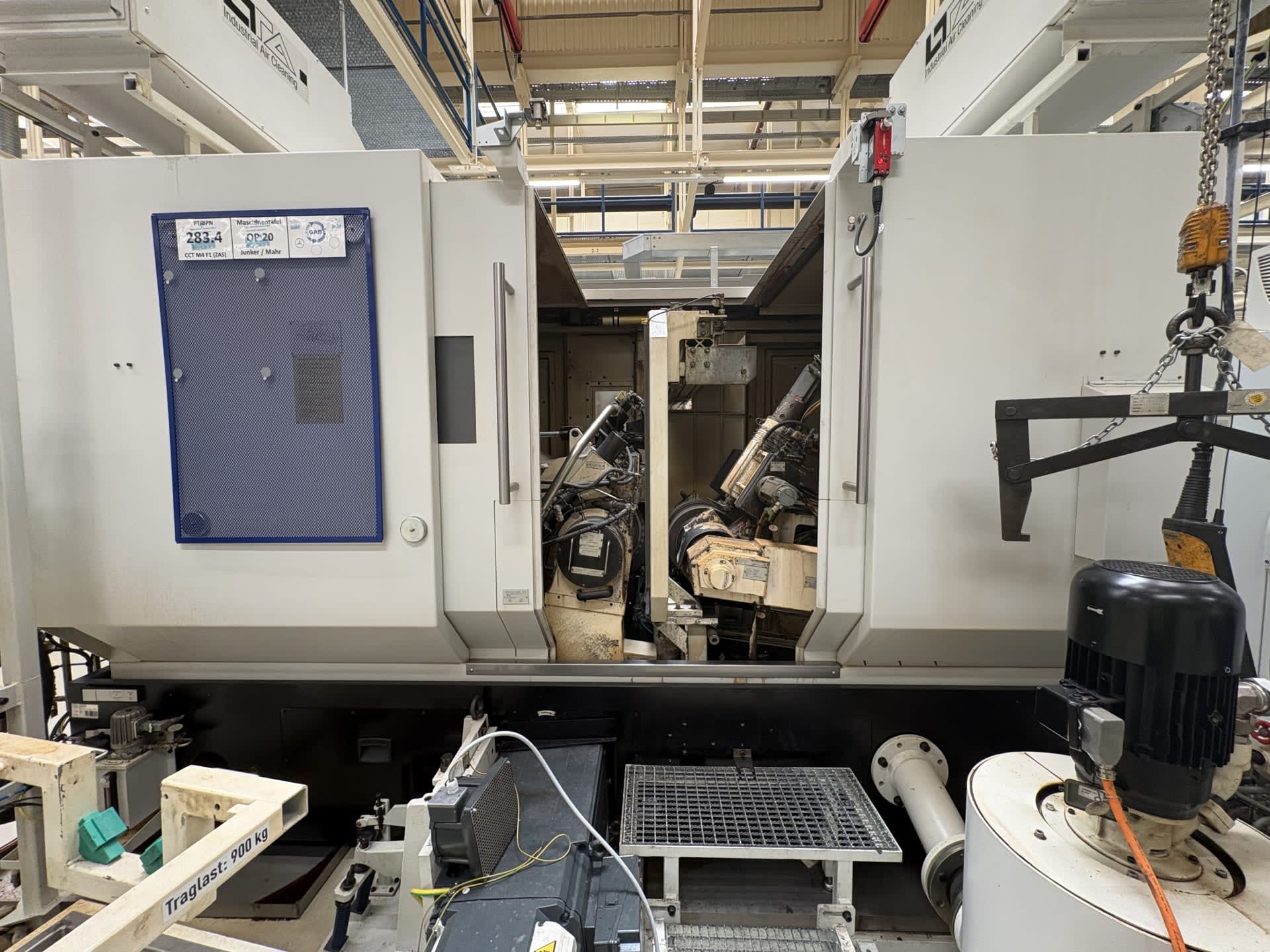
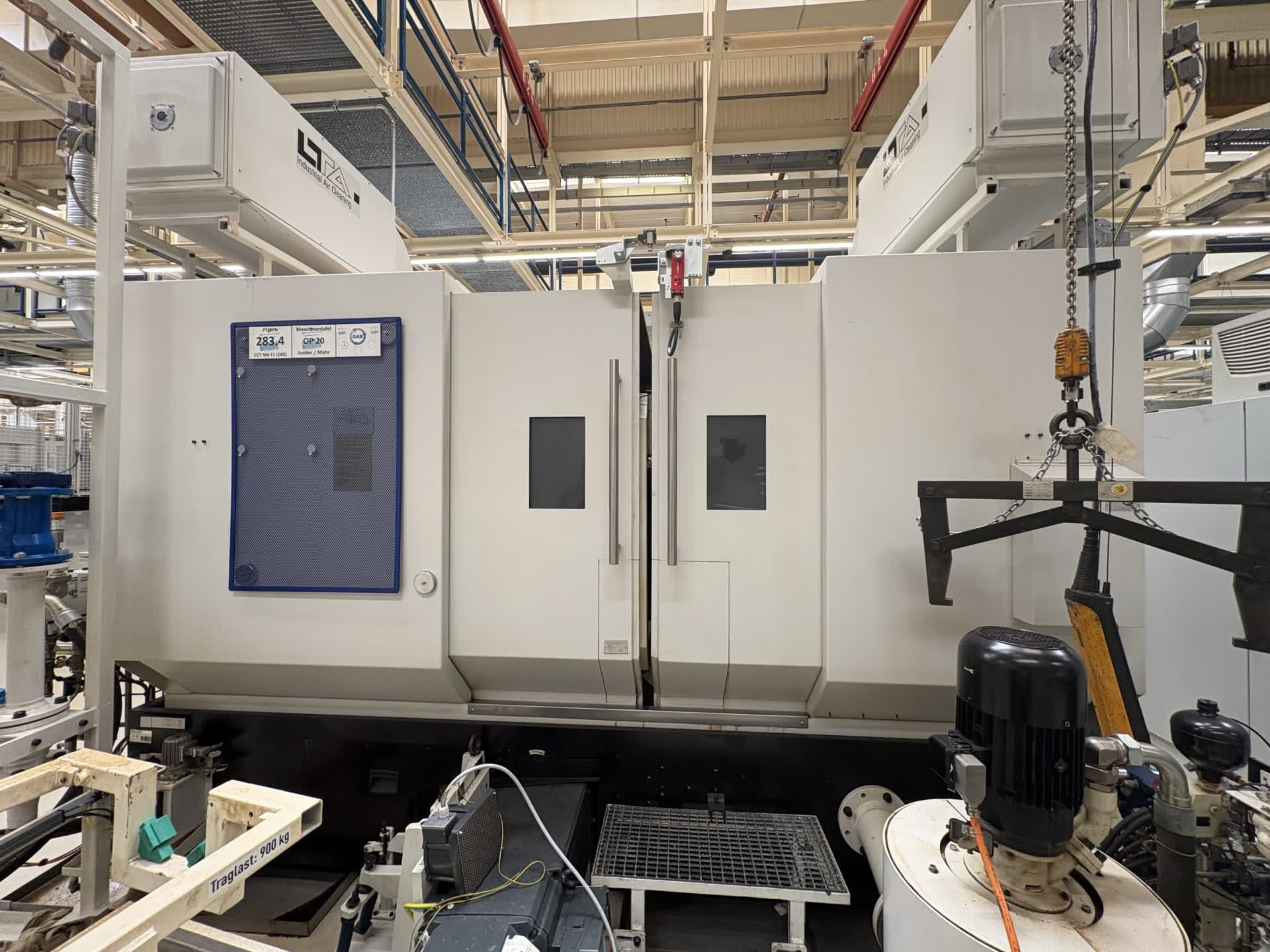
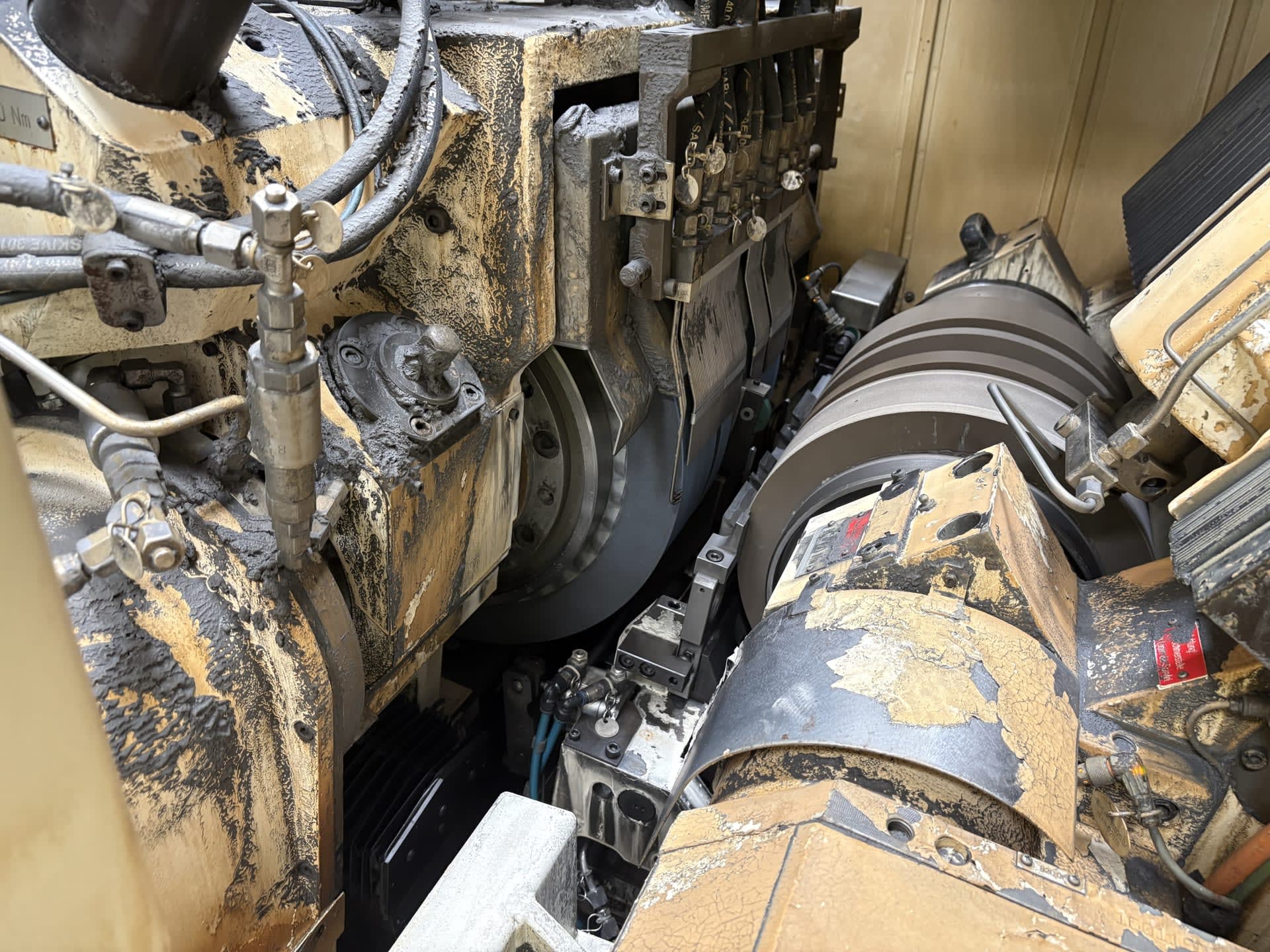
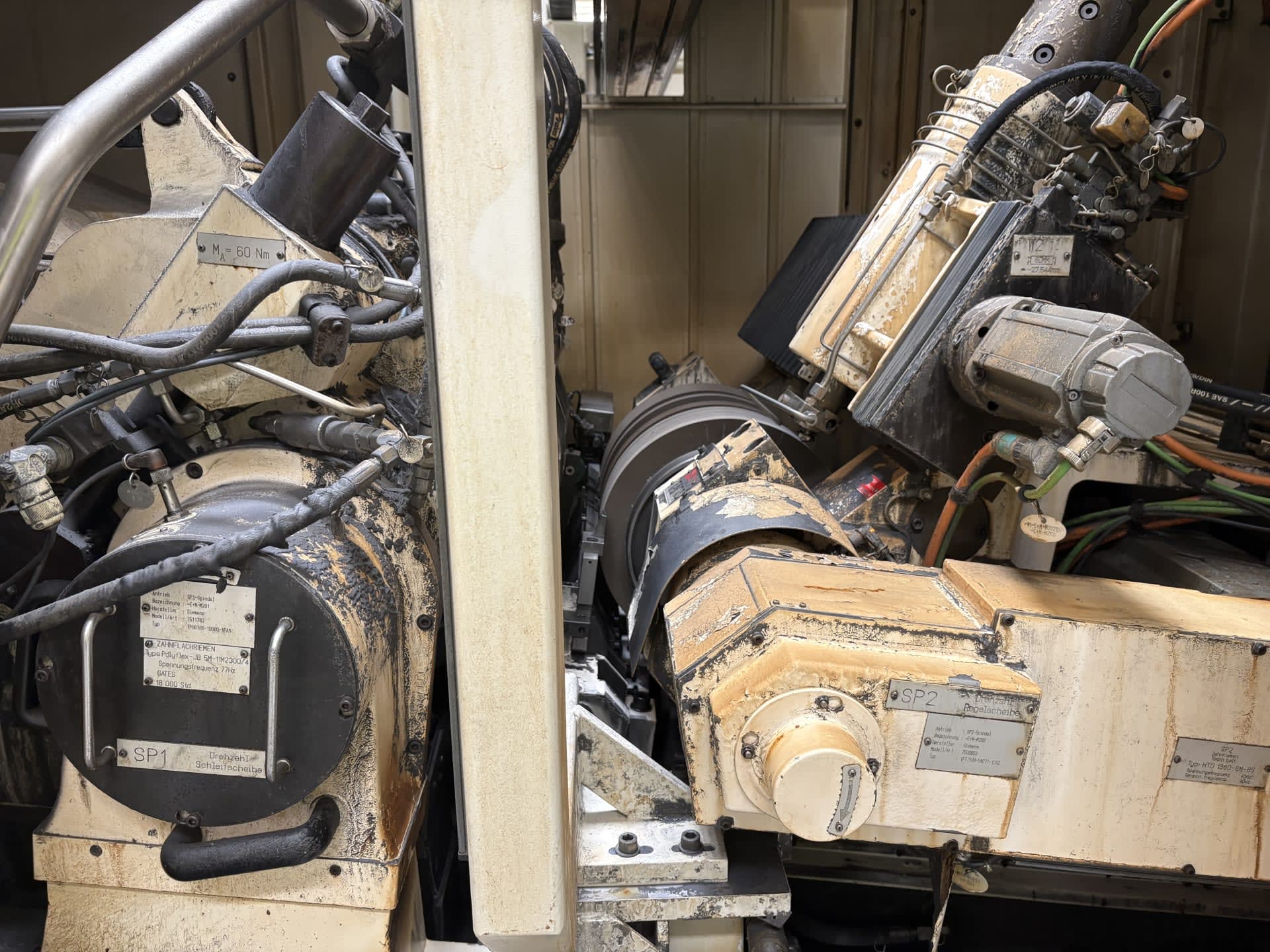
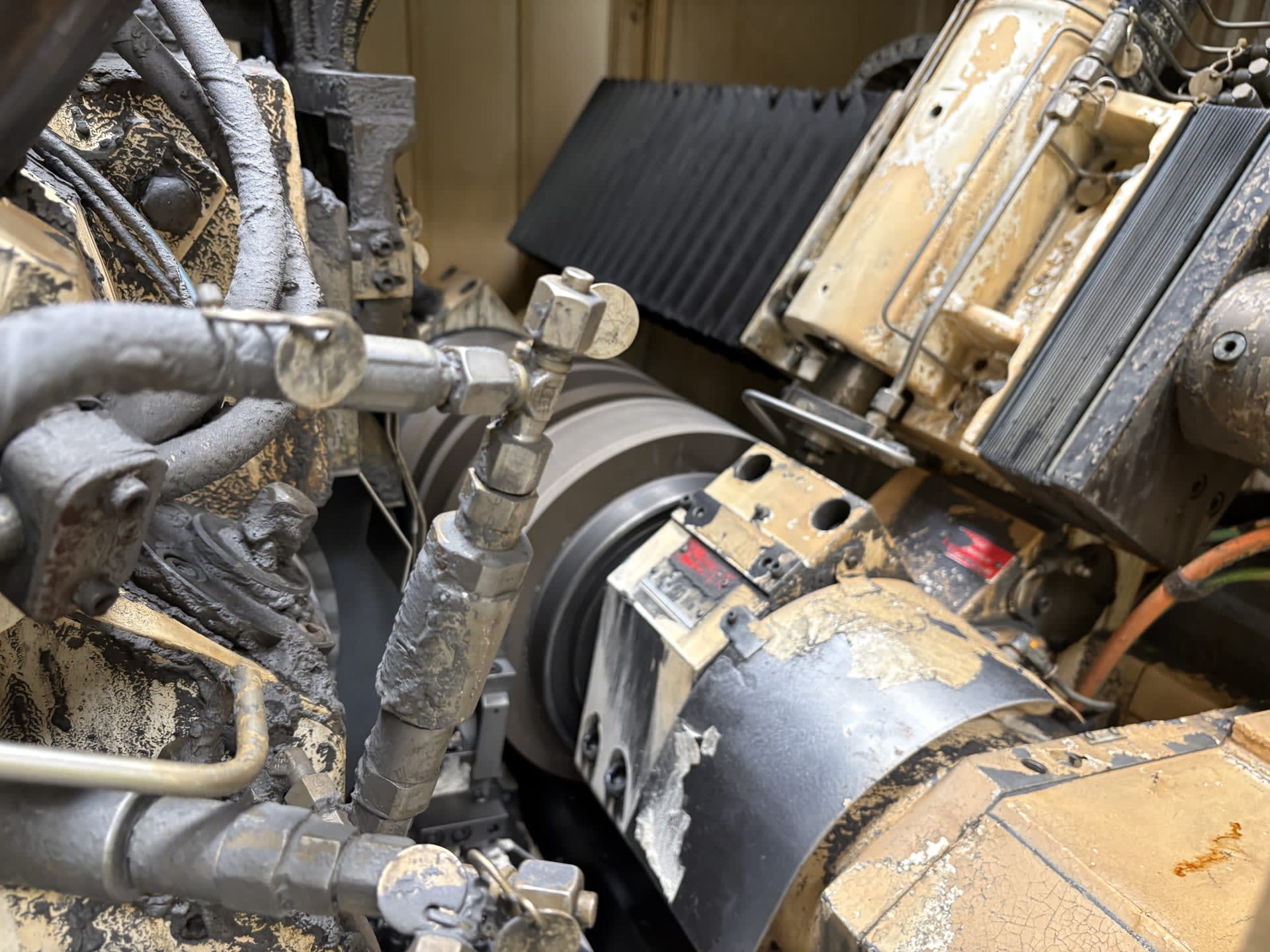
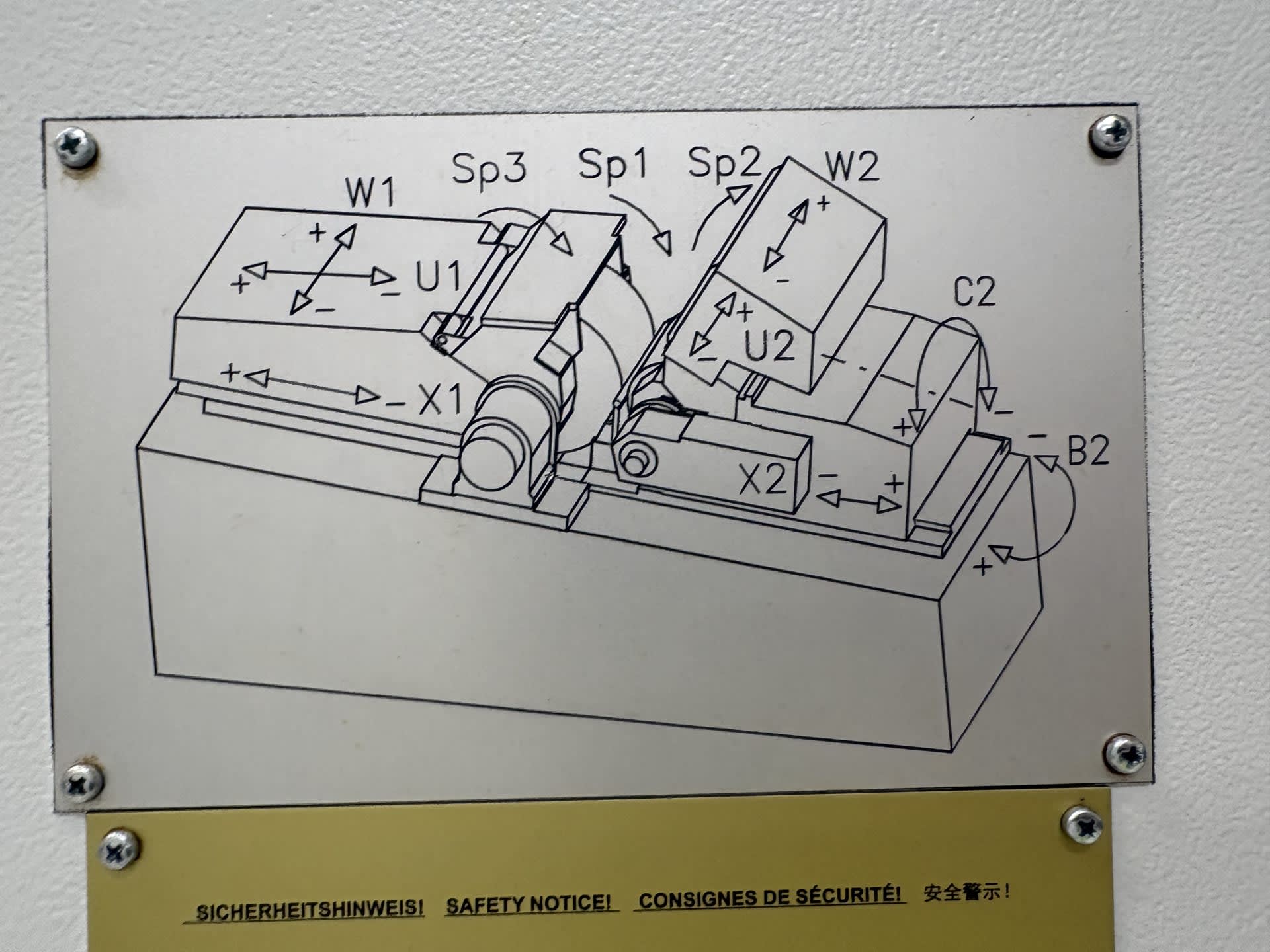
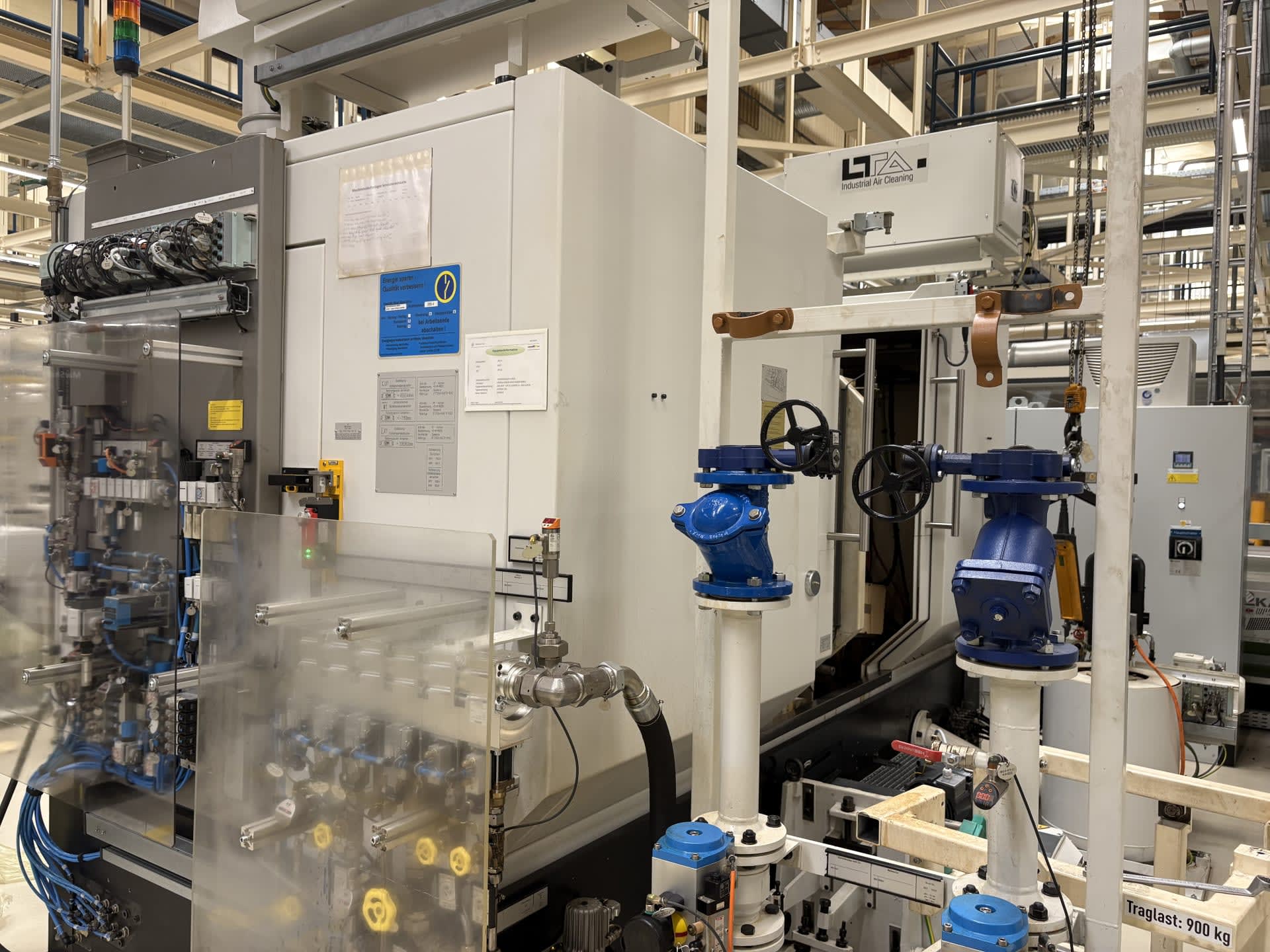
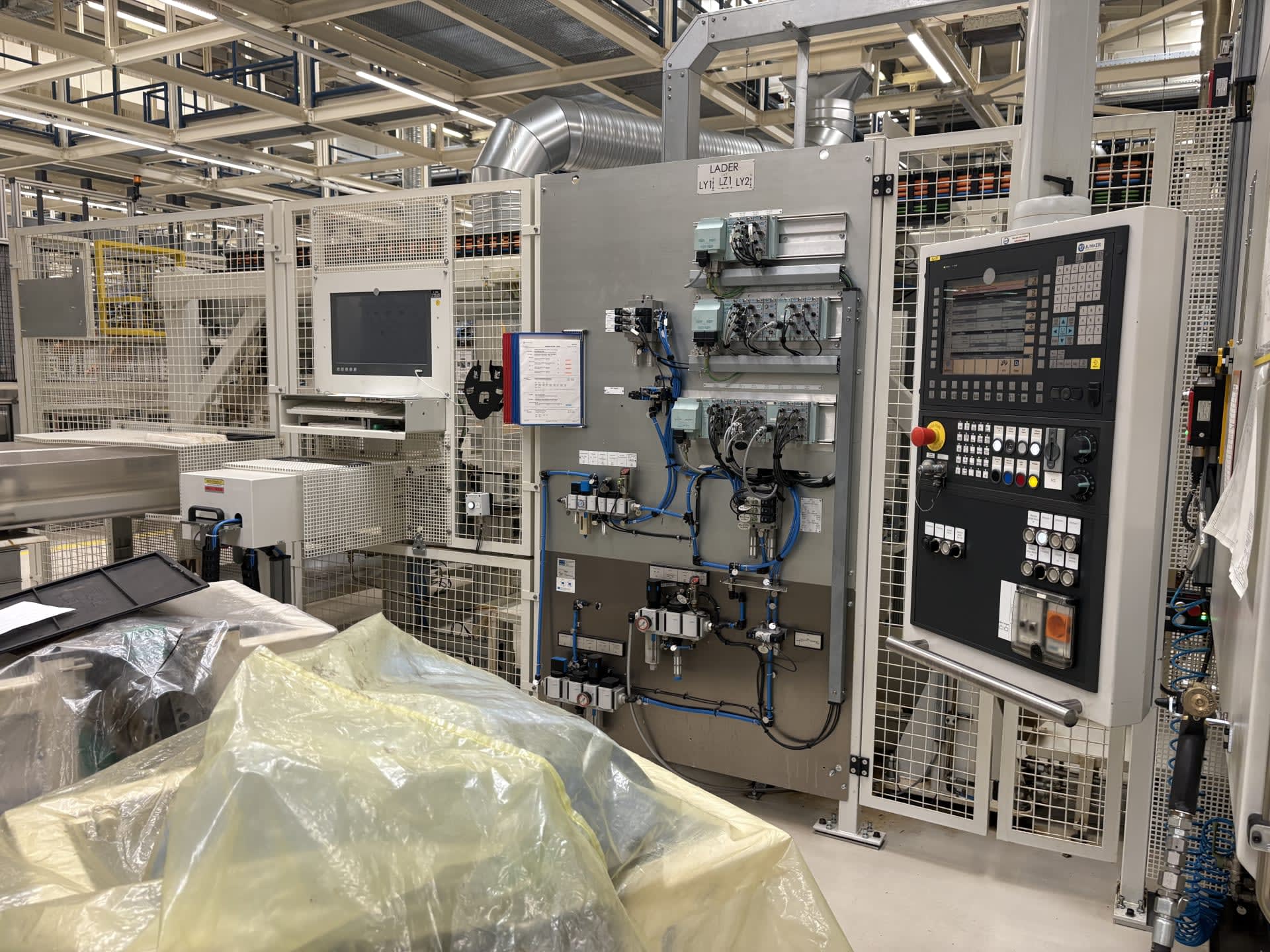
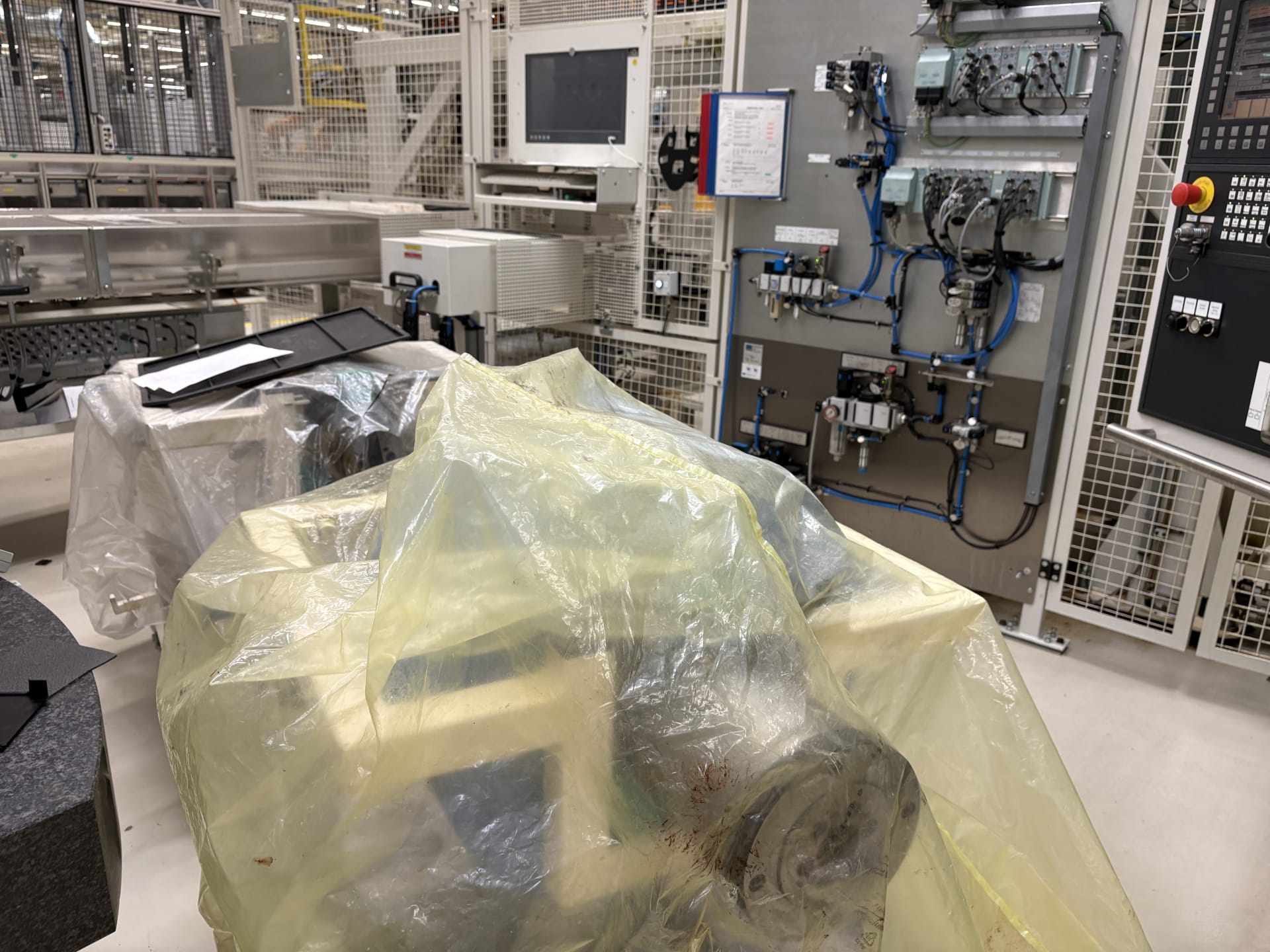
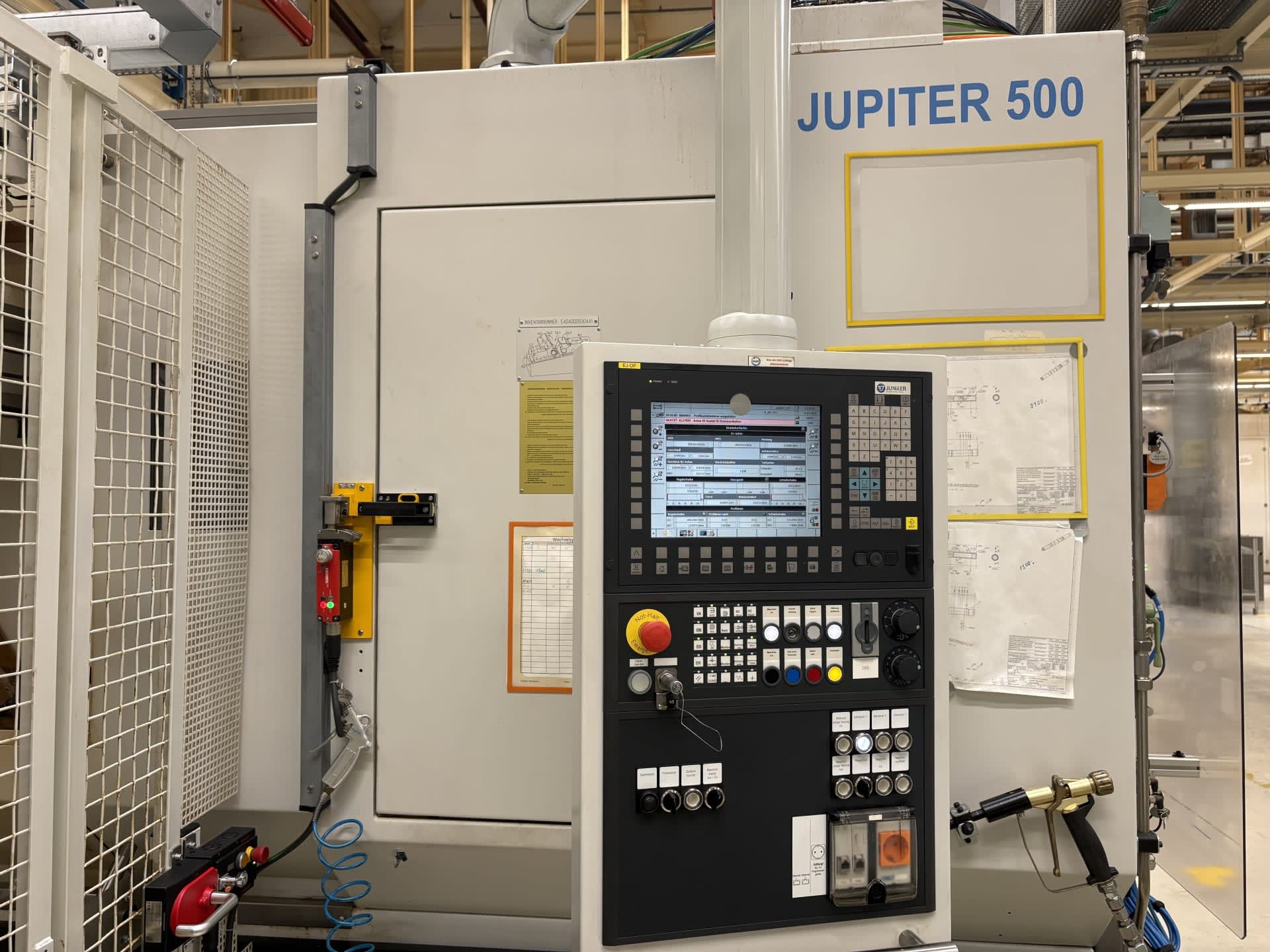
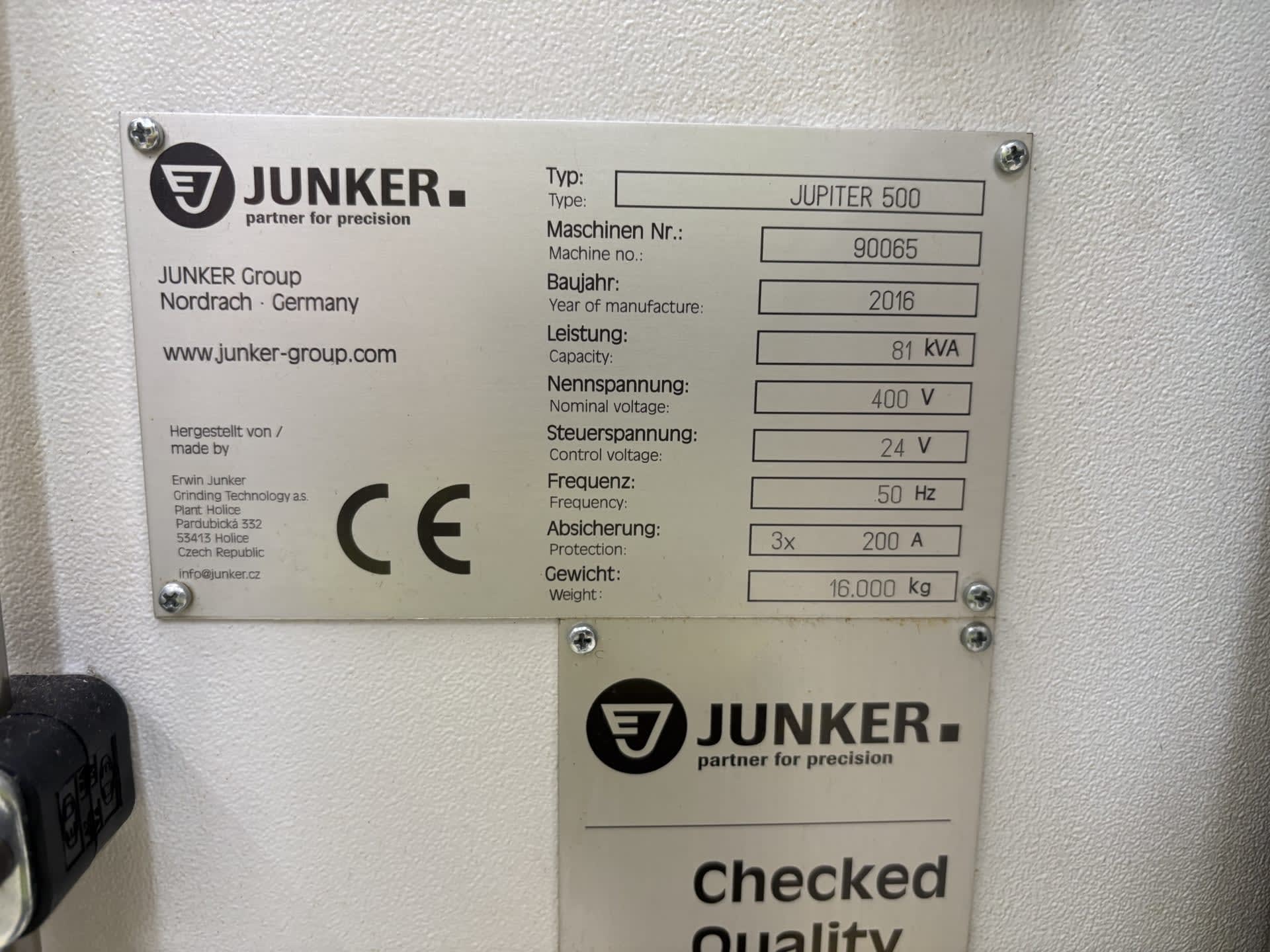
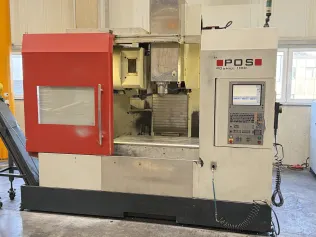
JUNKER JUPITER 500 Centreless Grinding Machine
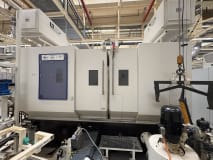
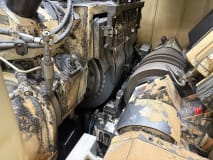
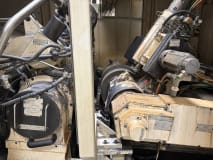
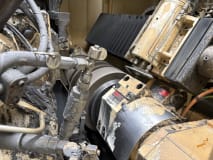
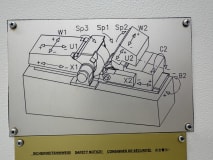
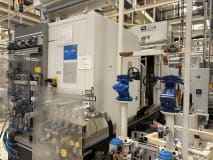
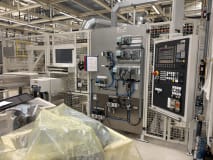
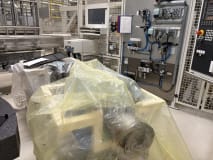
- Storage Number
- 26024-1787
- Machine type
- Centreless Grinding Machines
- Manufacturer
- JUNKER
- Type
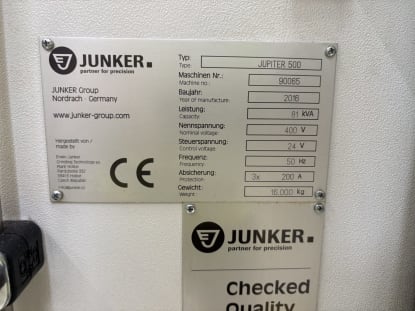
- JUPITER 500
- Year of construction
- 2016
- Location
- Berlin, Germany
- Documents
- Price
- On Request
- Dimensions (LxWxH) approx.
- 4500 x 2600 x 2200 mm
- Weight approx.
- 16,000 kg
JUNKER JUPITER 500 – CNC Cylindrical Grinding Machine Plunge-Cut Method
Technical Data:
Workpiece diameter: 2–220 mm
Workpiece length: max. 500 mm
Corundum grinding wheel: 610 × 500 × 305 mm
CBN grinding wheel: 500 × 500 × 305 mm
Spindle drive: 37 kW
Regulating wheel: 350 × 500 × 203 mm
Regulating wheel speed: 1–800 rpm
Regulating wheel drive: 11.5 kW
Power: 81 kVA
- Transportation costs
- not included
- Terms of delivery
- From foundation
- Terms of payment
- 100% prepayment before pick-up
Transportation costs are not included in the used grinding or gear cutting machine price; terms of delivery and payment are stated under "Additional information" in each listing. You should also budget for installation and commissioning at the new site. In most cases, the buyer is responsible for organizing the transport; upon request, ReMach can check whether transport can be arranged or supported. ReMach also helps with dismantling, loading and export paperwork.
Yes. Grinding produces very fine swarf, and coolant that is not filtered scratches the surface and shortens the life of the grinding wheel. Check whether the listing includes a filter system, such as a paper band filter or a magnetic separator. Grinding with oil, common in gear and tool grinding, also requires oil mist extraction and fire protection.
For gear cutting machines, check the maximum workpiece diameter, maximum module, face width and helix angle. For grinding machines, check the maximum grinding diameter and length, grinding wheel size and workpiece weight. For CNC machines, also check the control and whether in-machine measuring is included.
The three processes are used at different stages. Gear hobbing cuts the teeth with a hob, usually before heat treatment. Gear grinding finishes the teeth after heat treatment to reach high accuracy. Cold rolling forms teeth or splines by cold forming without chips and suits small modules and series production.
Grinding machines differ by the surface they produce. Surface grinders machine flat faces, usually on a magnetic table; cylindrical grinders machine rotational parts held between centres or in a chuck, externally or internally; centreless grinders support cylindrical parts on a work rest blade between grinding and regulating wheel, ideal for large series. Tool grinders sharpen and make milling cutters, drills and turning tools, while gear grinders finish tooth profiles.

Our Services
- Inspection & report
- Disassembly & installation
- Global logistics
- Customs & paperwork
- Sourcing & valuation
- Personal consultation
Related items
1. Centreless Grinding Machines: How They Work
A centreless grinding machine is a precision tool used to grind exact circularity into metal cylinders, achieving exceptionally high levels of dimensional accuracy. Where rougher machining processes remove larger volumes of material, centreless grinding handles the final stages — ensuring each workpiece meets precise dimensional tolerances. Its versatility makes it suitable for a wide range of industrial applications and compatible with numerous machine types.
2. How a Centreless Grinding Machine Is Constructed
A centreless grinding machine is built around a main column, which provides the structural capacity and strength needed to support all key components. As with a universal lathe, a drive rotates the workpiece at the required speed. A grinding spindle then engages against the workpiece to carry out the material removal. The machine also incorporates a guide rail to ensure the workpiece is fed and supported safely throughout the process.
3. Centreless Grinding Machines: Components & Applications
Centreless grinding machines are used to produce components that demand exceptional dimensional accuracy. A classic example is the piston of a hydraulic or pneumatic cylinder, which must fit with a precise, tight tolerance to prevent hydraulic oil or compressed air from escaping. This makes high-precision surface finishing essential. Other typical components machined on centreless grinders include shafts, axles, and transmission parts.
4. Centreless Grinding Machines: How They Work
Centreless grinding machines are a specialised category of metalworking equipment, valued for their ability to achieve exceptionally high throughput rates. Unlike conventional grinding methods, the centreless process adapts readily to both individual-piece work and large-scale mass production, making these machines a versatile choice across many manufacturing environments.
In high-volume settings, it is common practice for a qualified specialist to configure and set up the machine, with semi-skilled operators handling loading and unloading. This workflow allows production lines to run efficiently without requiring every worker to have advanced technical training.
Grinding machines of this type have been a staple of industrial plants for decades, which means a broad selection of used and pre-owned models is consistently available on the market. Built for durability, centreless grinders are exceptionally rigid and require minimal maintenance. Key components – including electronics, guide rails, bearings, and bushings – can be replaced with relative ease, helping to extend the operational lifespan of the equipment well beyond that of many comparable machine types.
5. Centreless Grinding Machines: Leading Manufacturers
Centreless grinding machines are produced by a range of established manufacturers, each known for precision engineering and reliable performance. Leading brands in this sector include:
- AGATON
- CINCINATTI
- ESTRATA
- KOENIG & BAUER
- HERMINGHAUSEN
- WEDALCO
- WICKMANN