
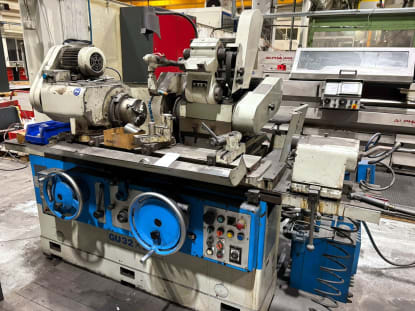
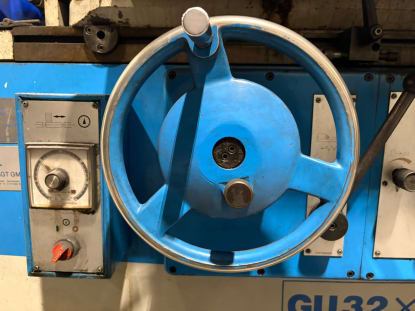
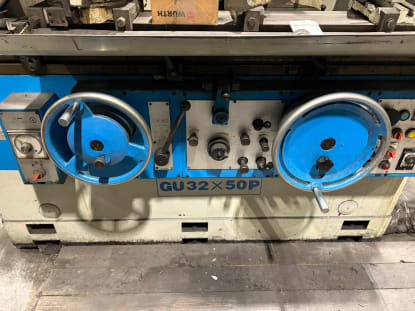
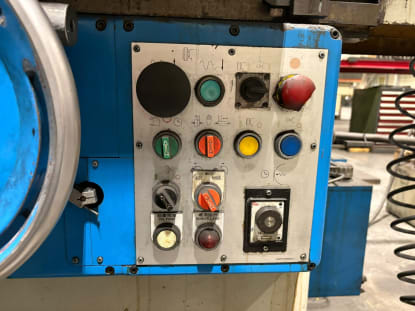
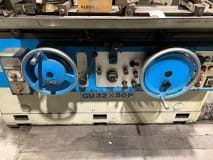
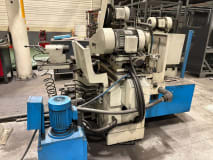
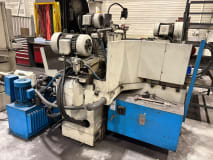
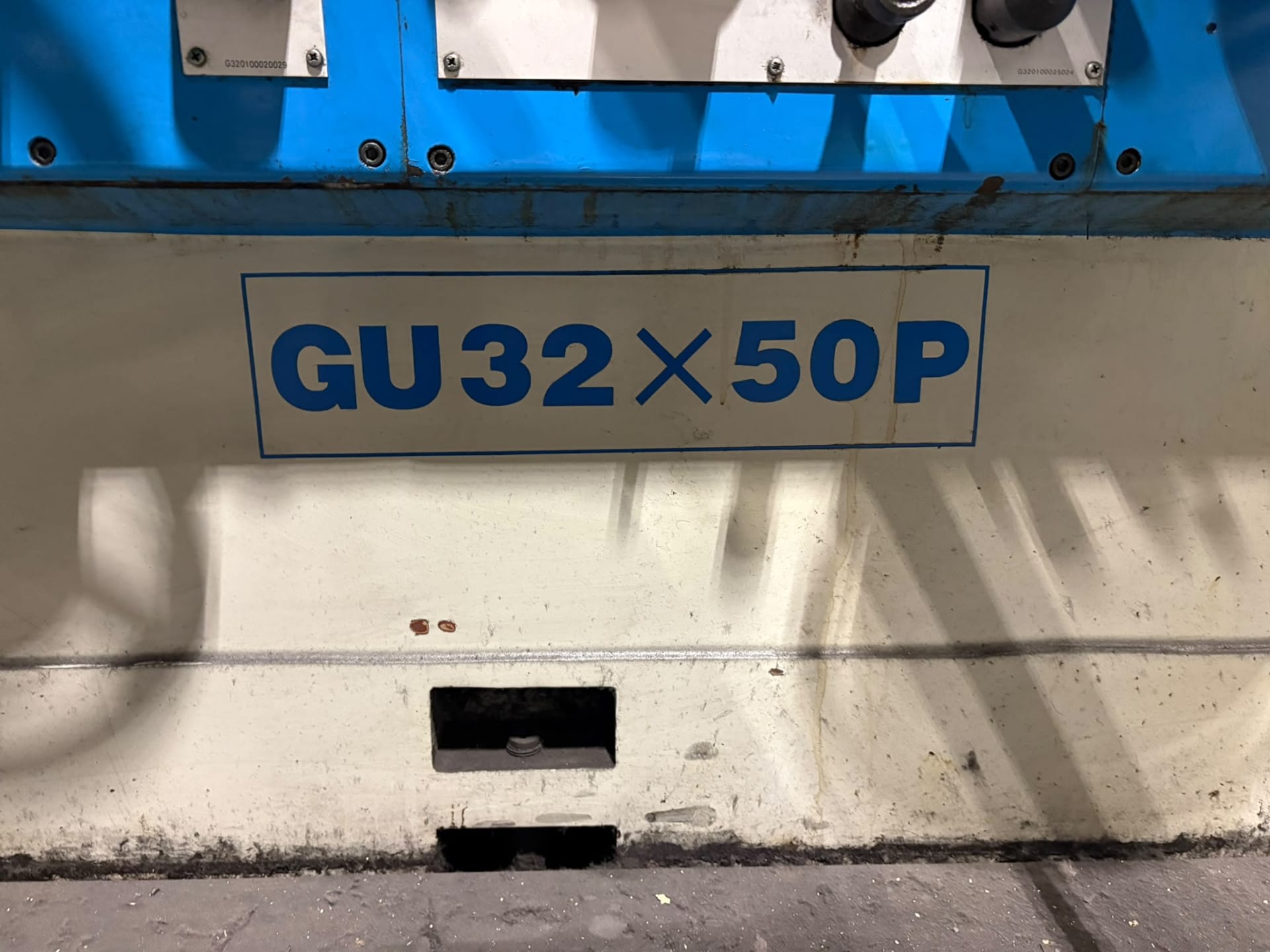
GU32 × 50P Cylindrical Grinding Machine
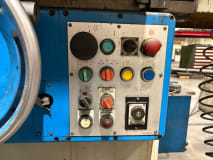
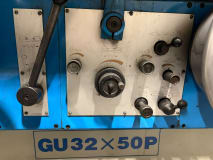
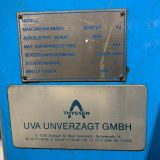
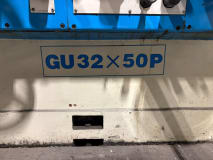
- Storage Number
- 26018-2289
- Machine type
- Cylindrical Grinding Machines
- Type
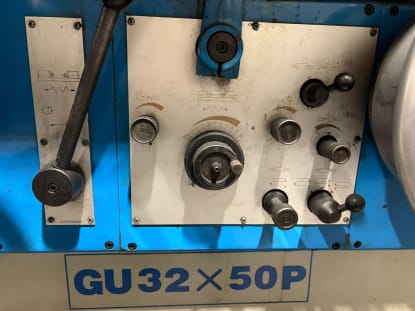
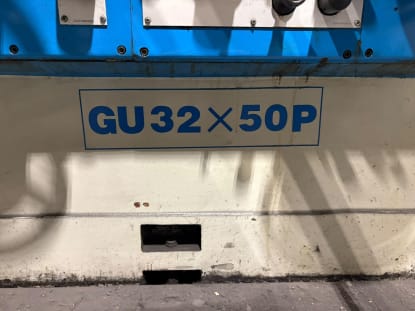
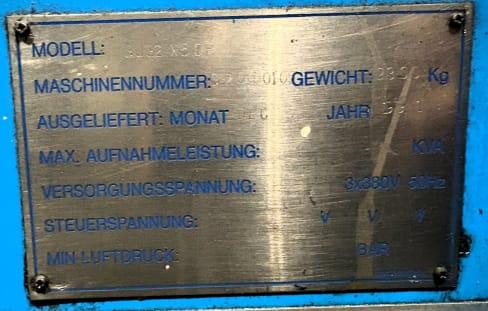
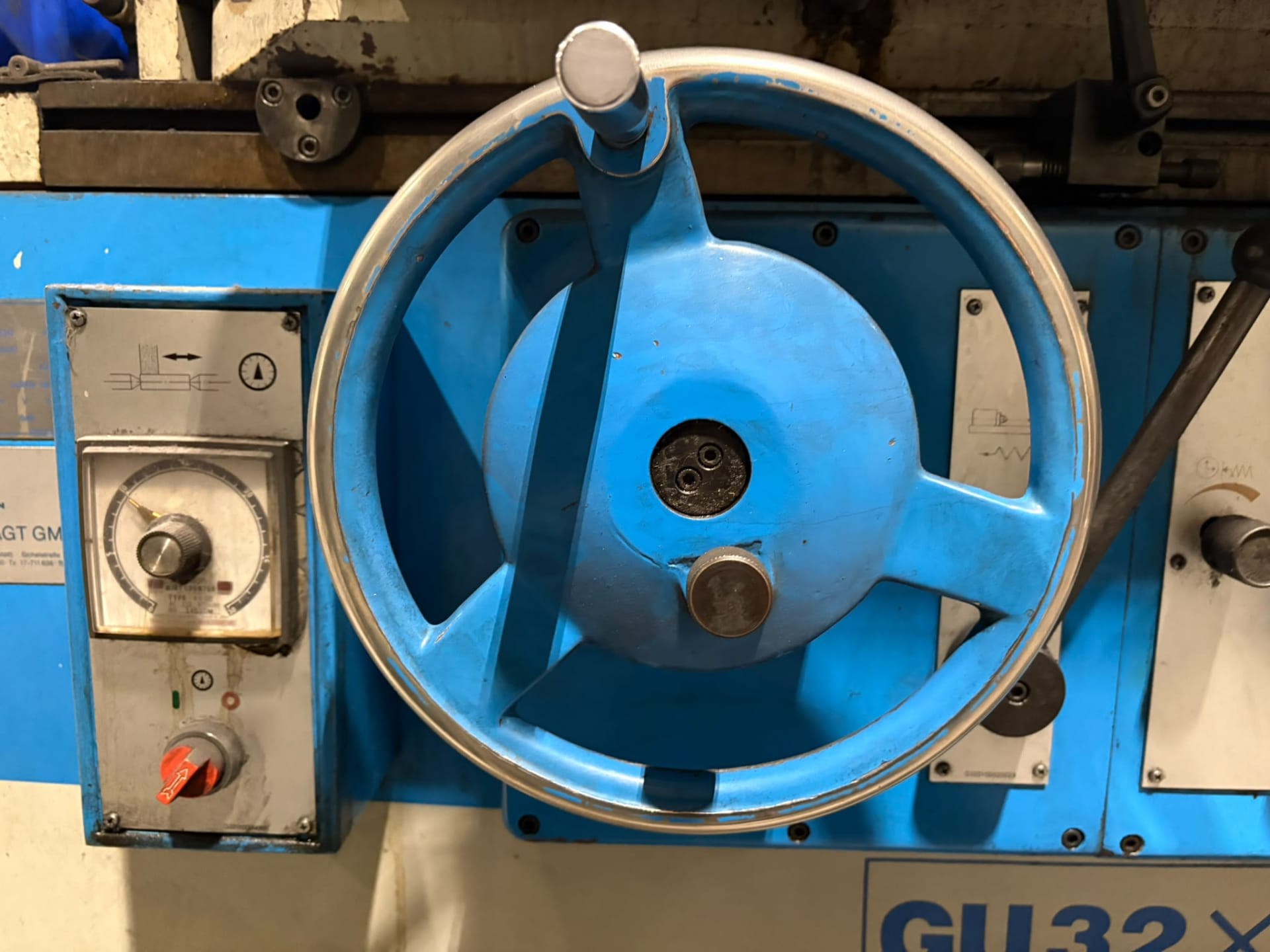
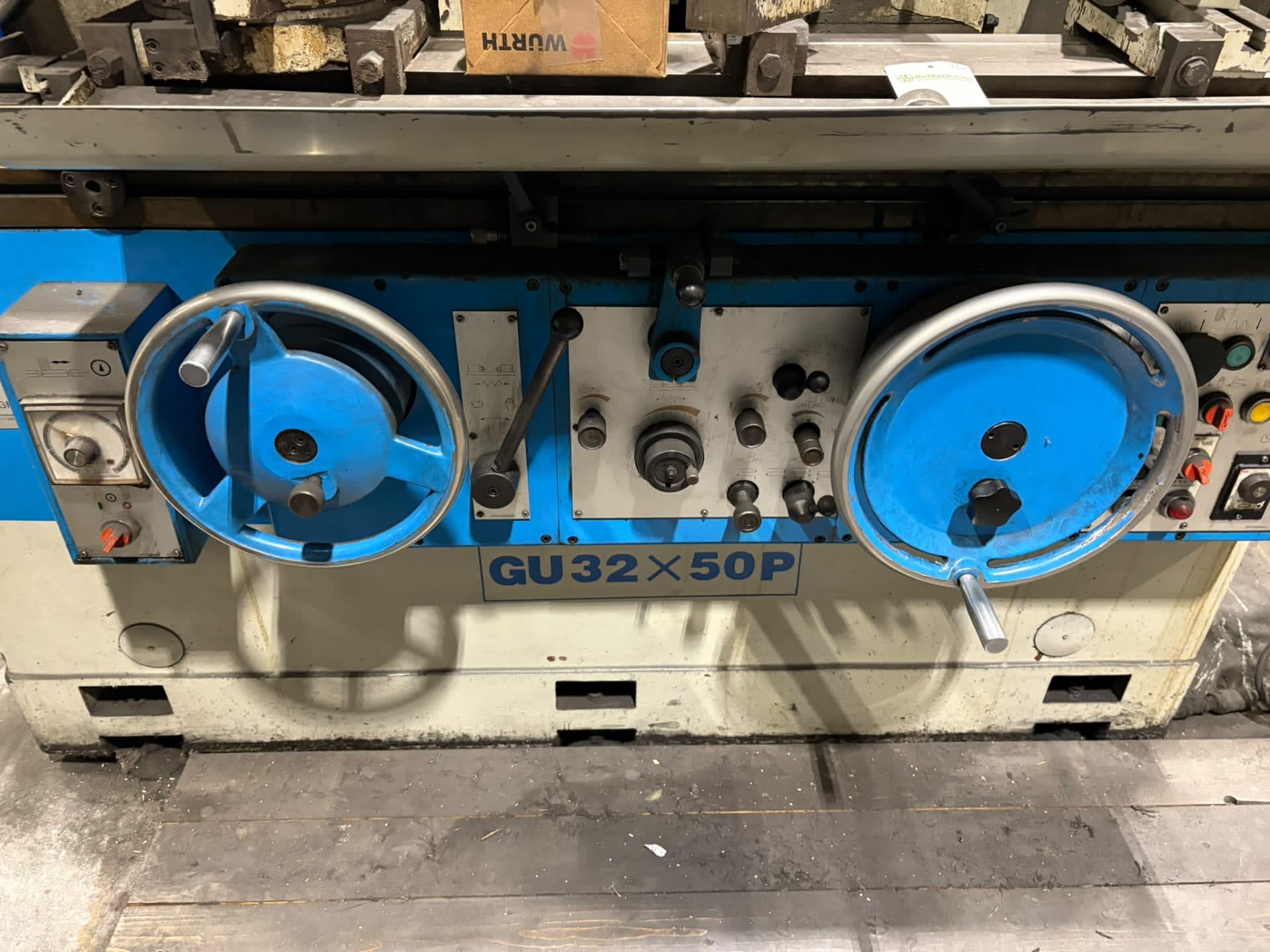
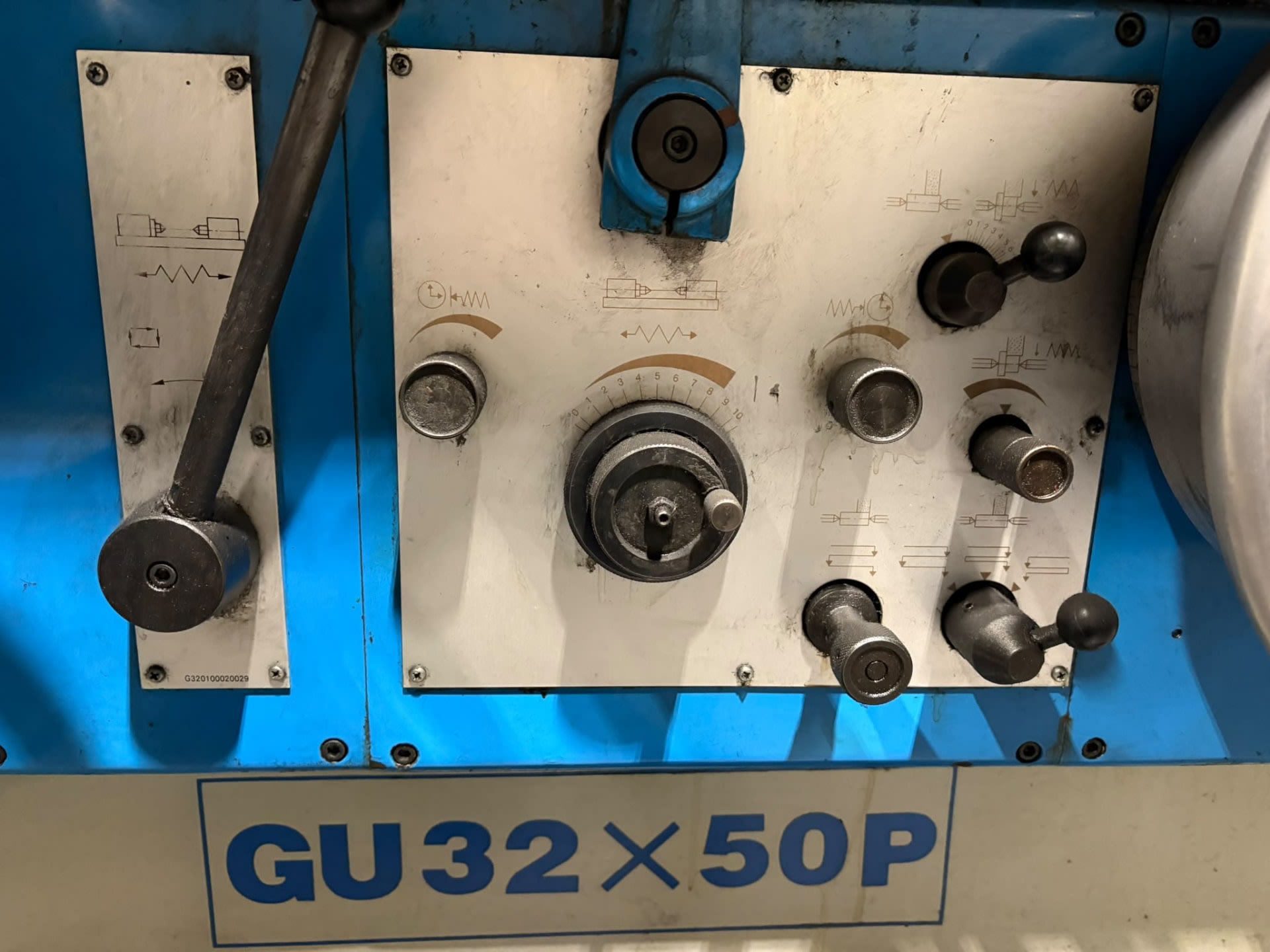
- GU32 × 50P
- Location
- Zwickau, Germany
- Availability
- immediately
- Price
- Auction item
- Dimensions (LxWxH) approx.
- 2400 x 2000 x 1800 mm
- Weight approx.
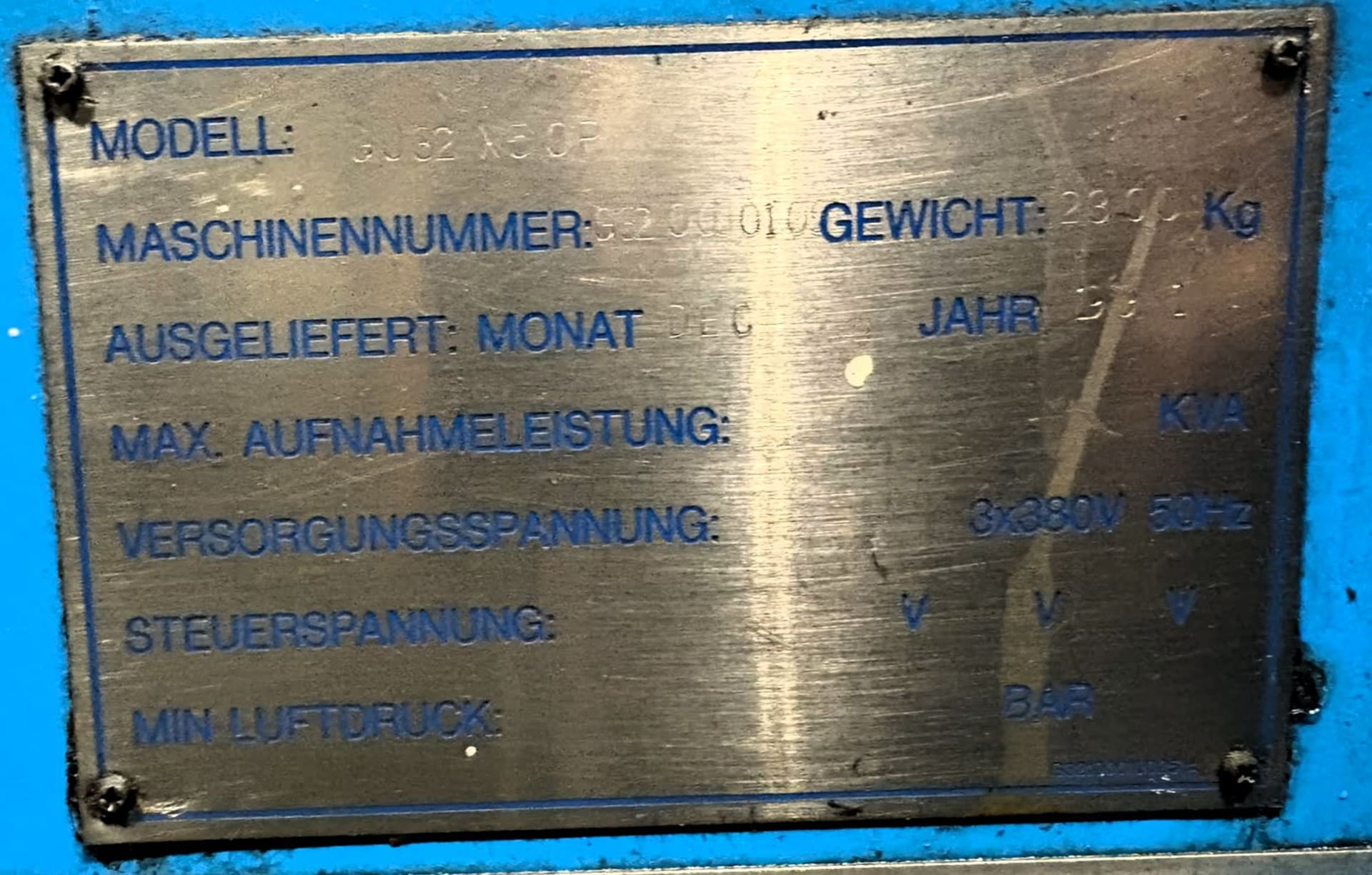
- 2,300 kg
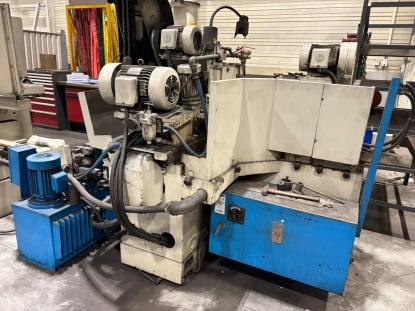
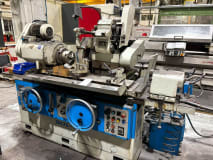
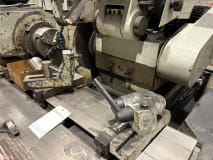
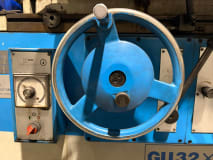
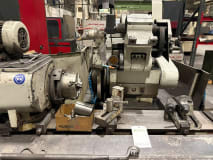
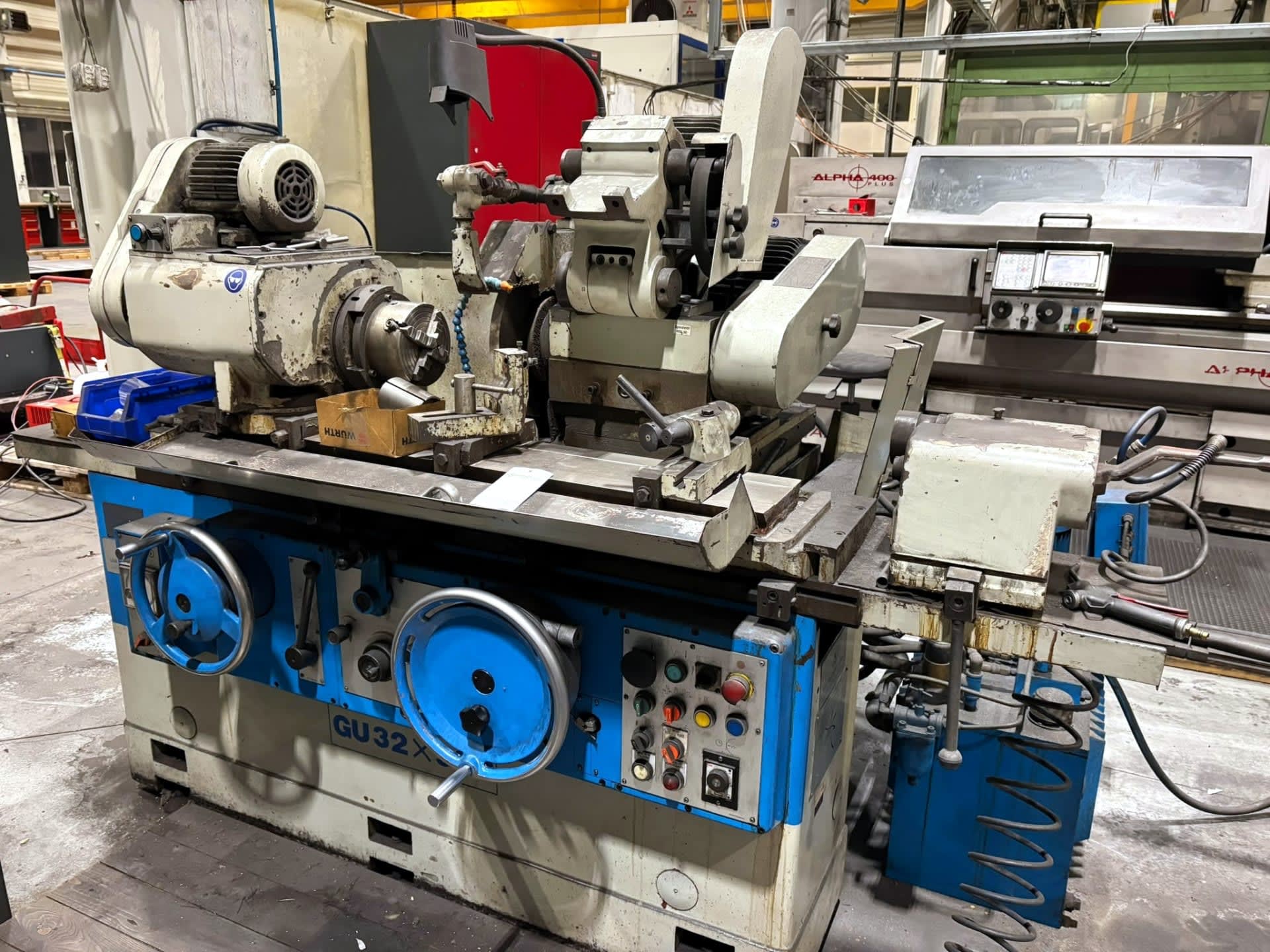
Cylindrical Grinding Machine GU32 × 50P
Working Area
Distance between centers approx.: 500 mm
Center height approx.: 160 mm
Max. grinding diameter approx.: 280 mm
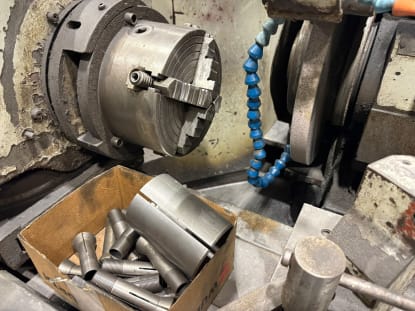
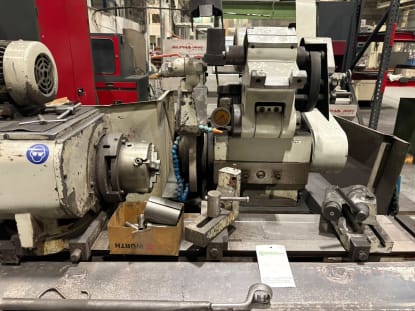
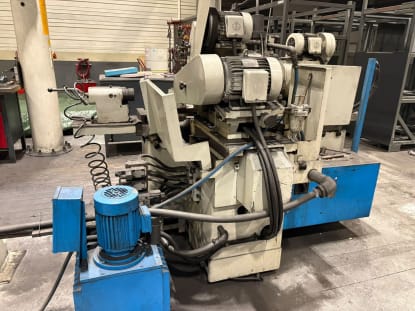
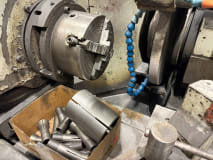
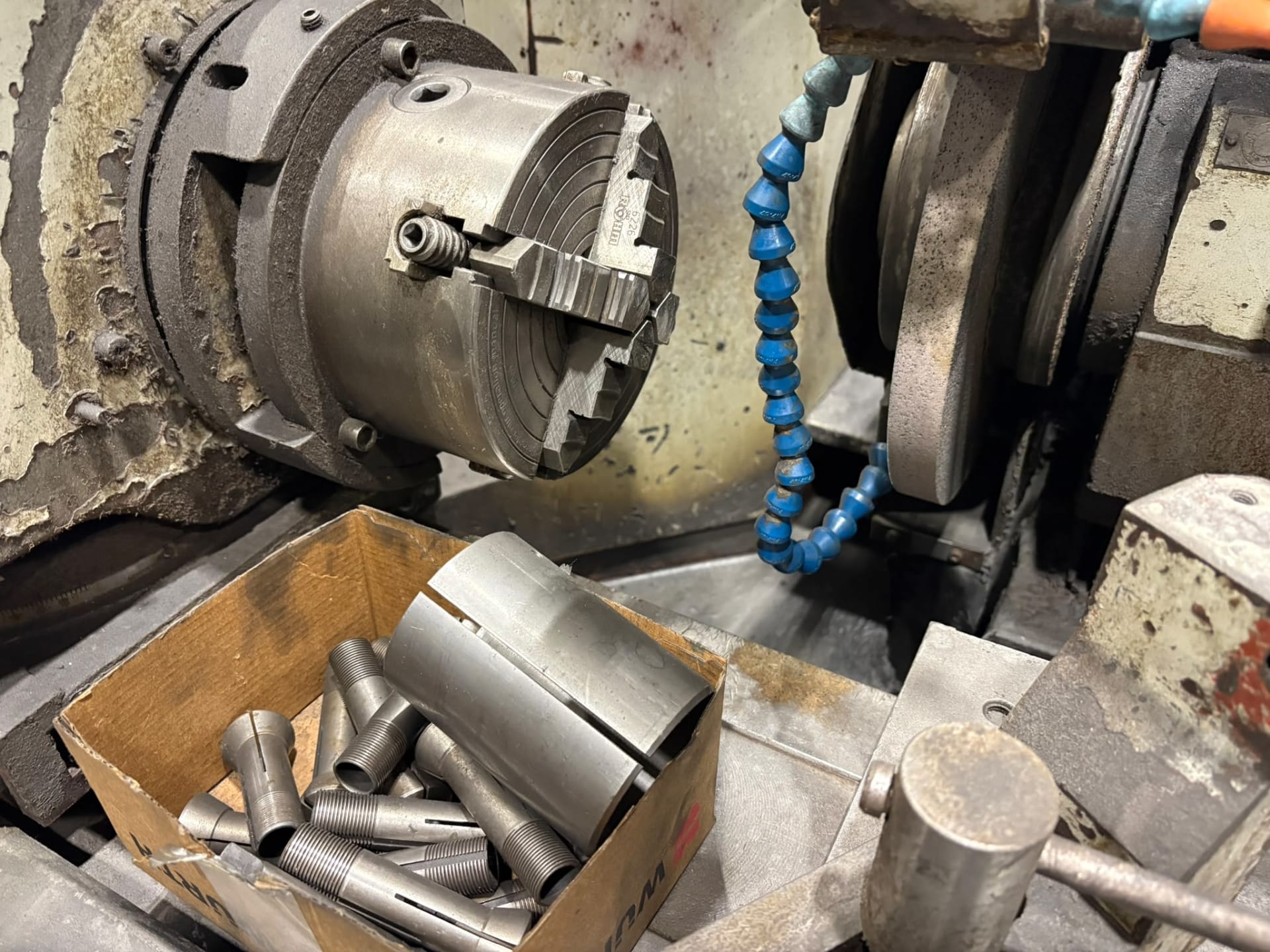
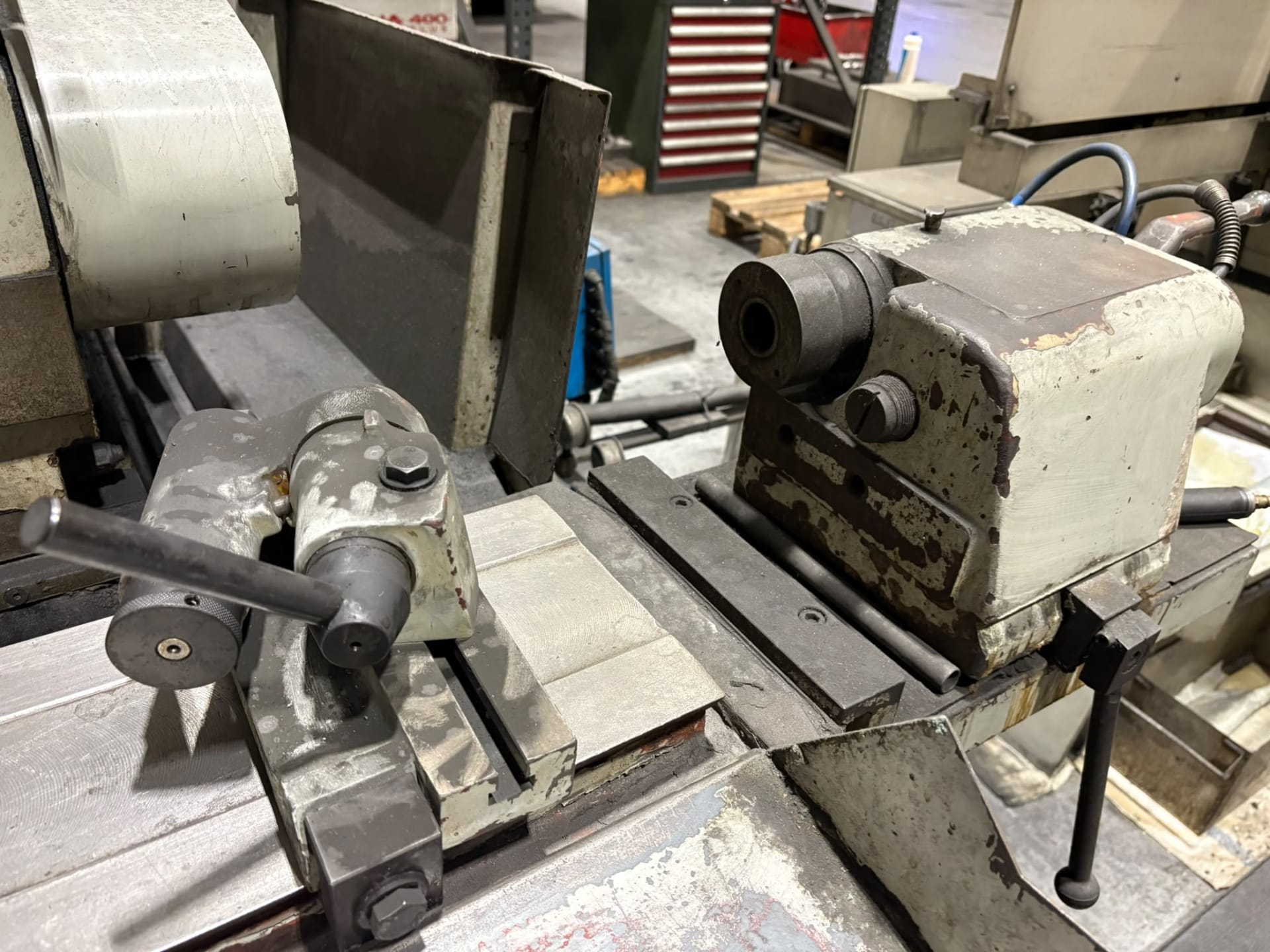
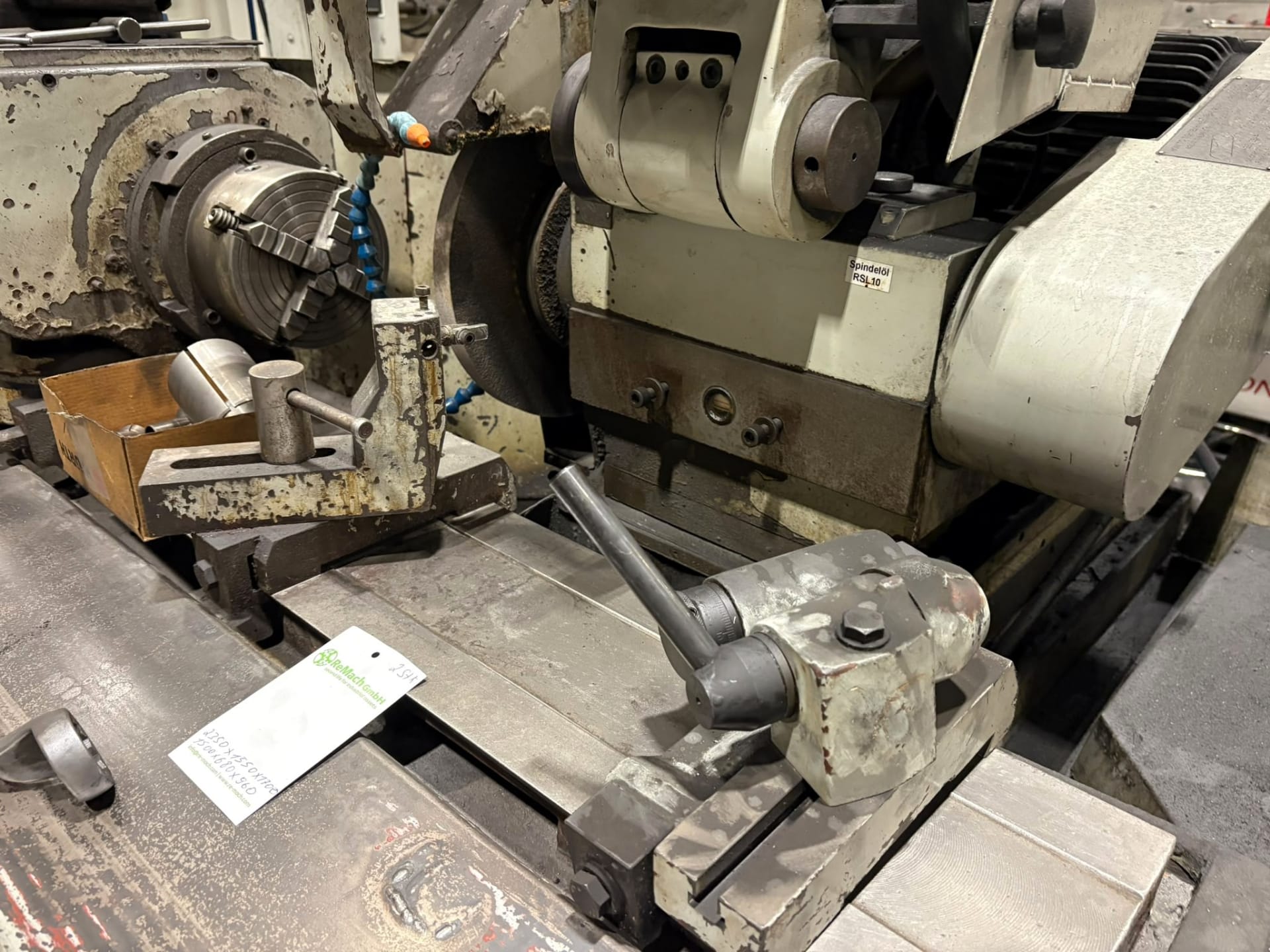
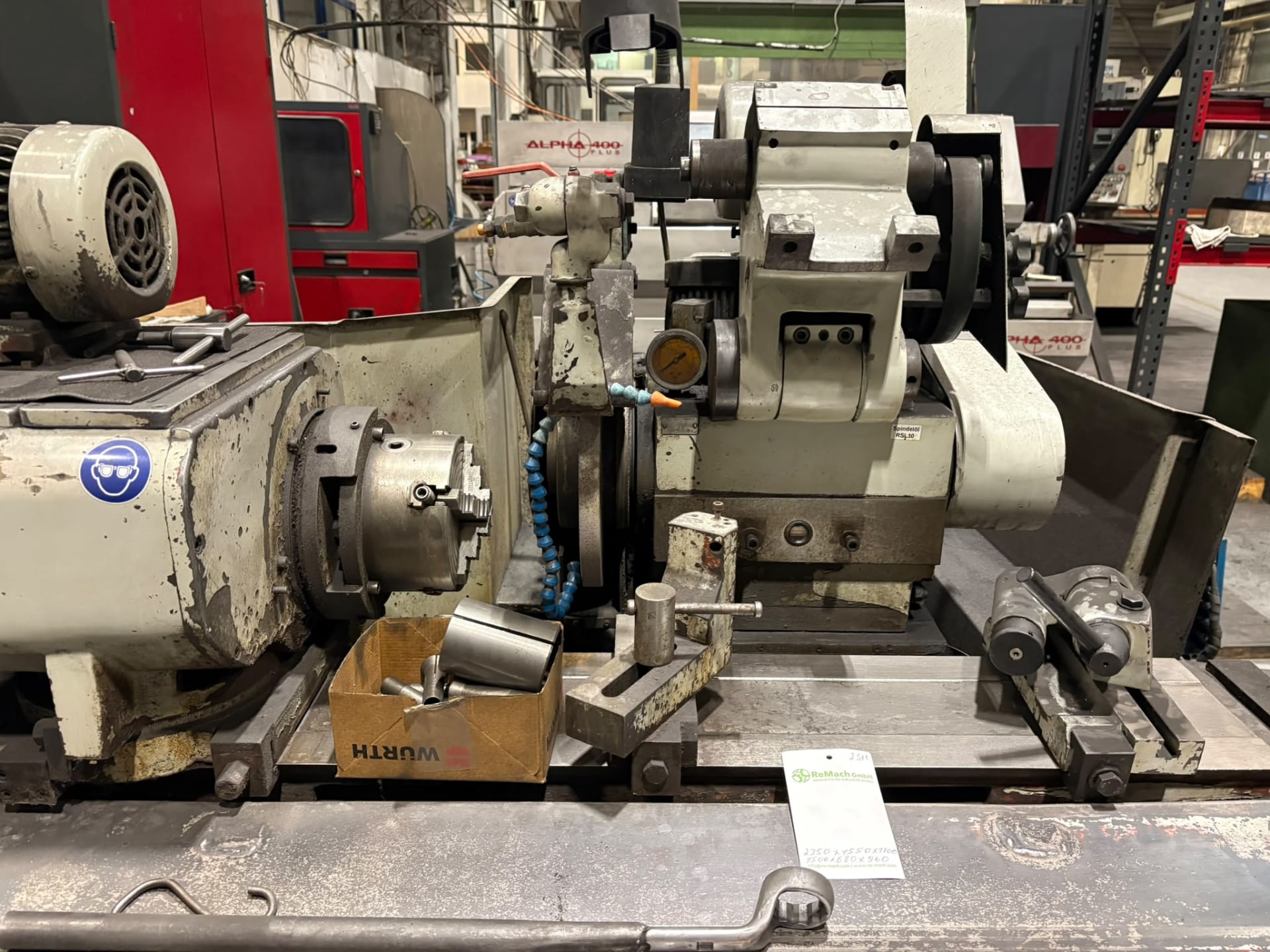
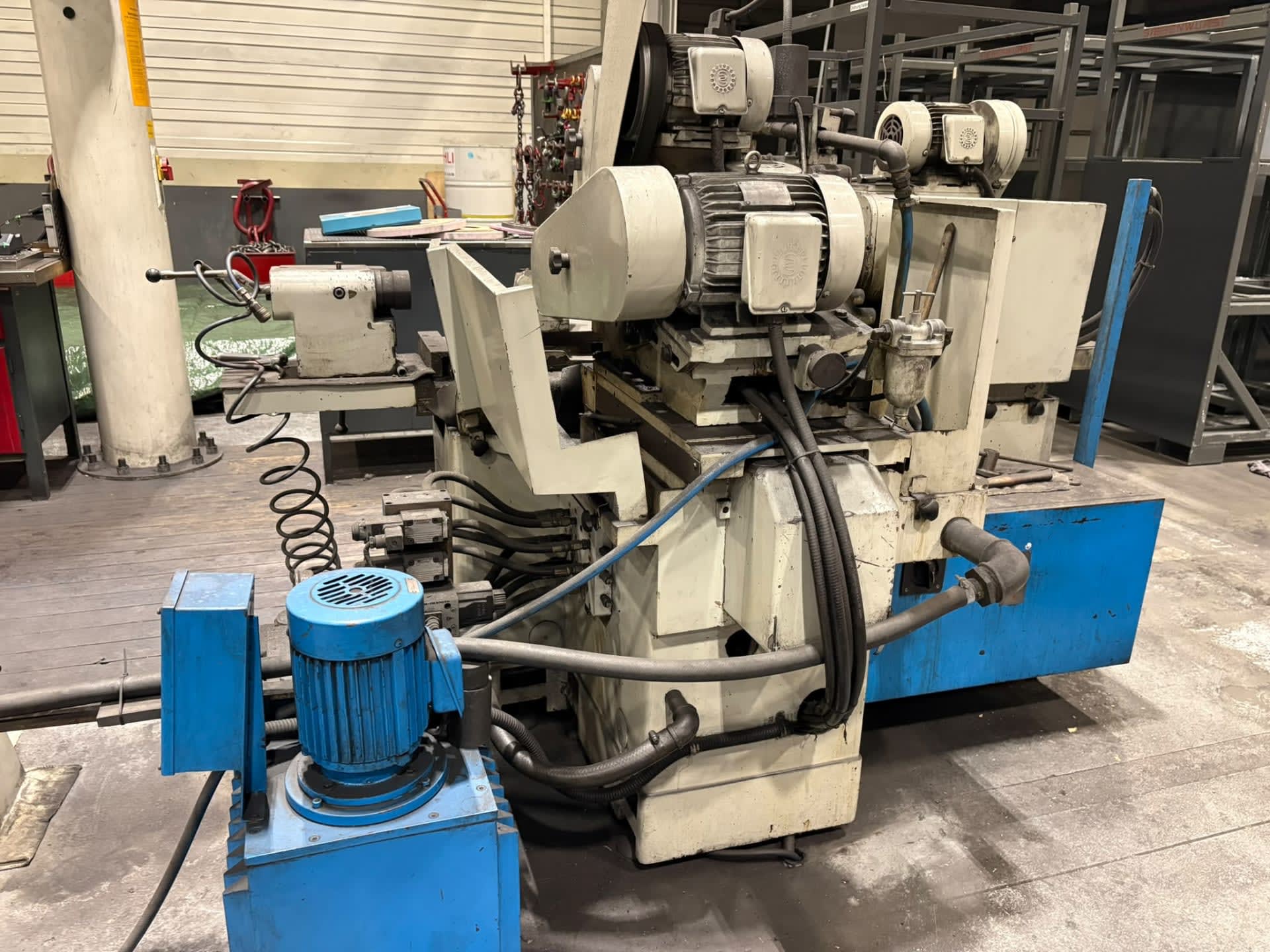
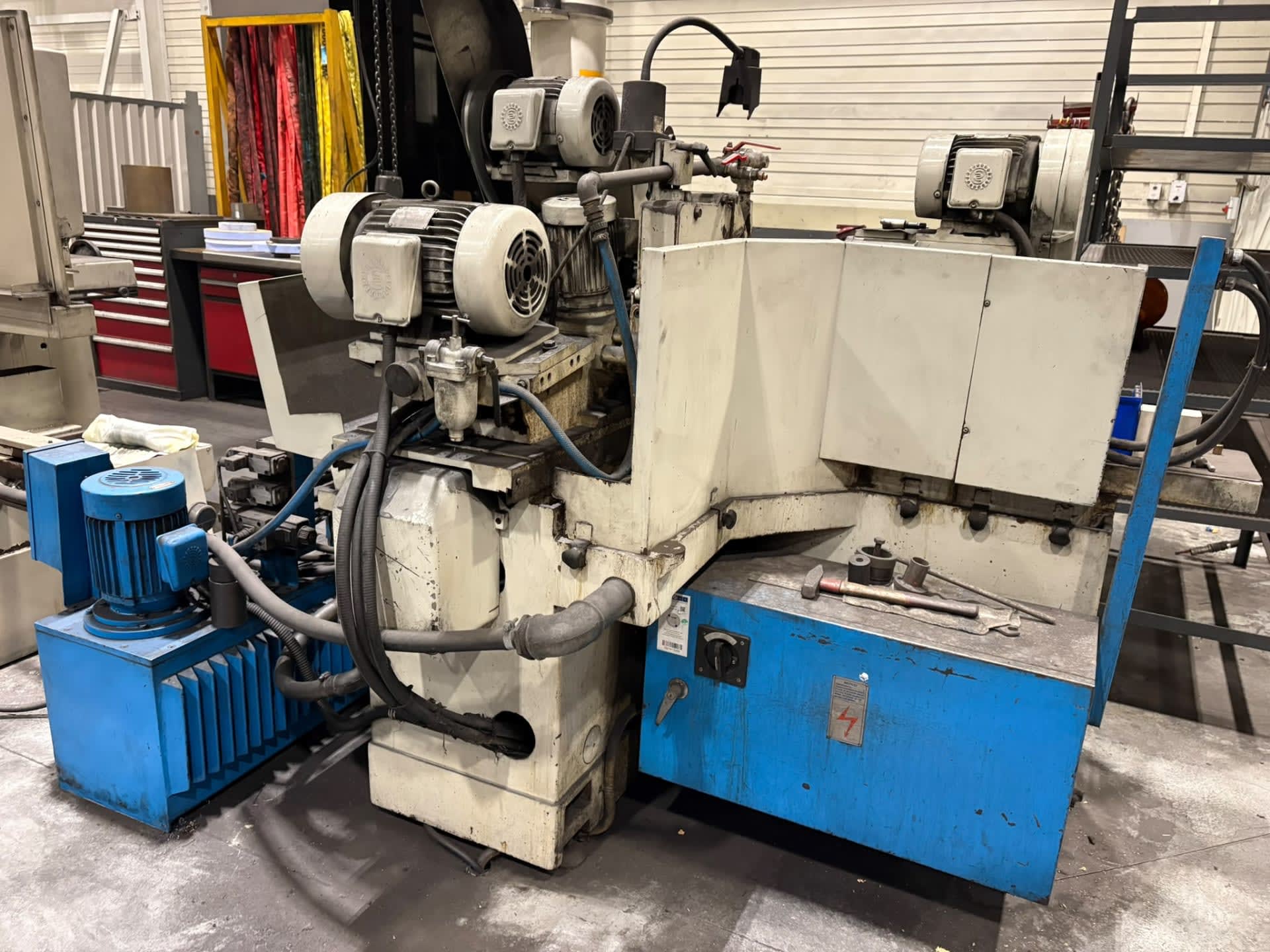
Swiveling workpiece spindle head with Röhm four-jaw chuck
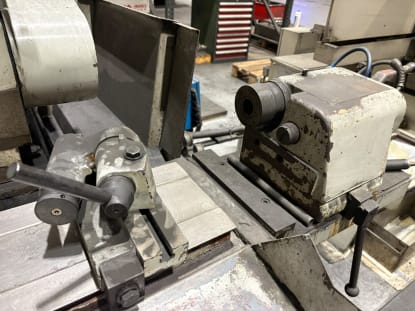
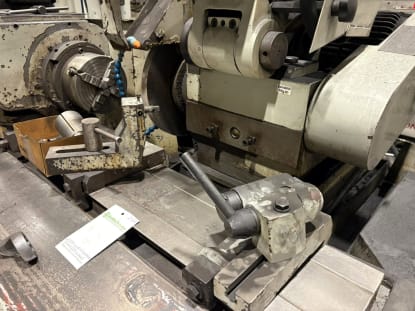
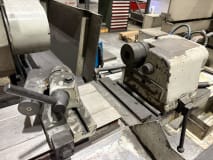
Tailstock
External grinding unit with grinding wheel and protective cover
Swiveling internal cylindrical grinding device with separate drive
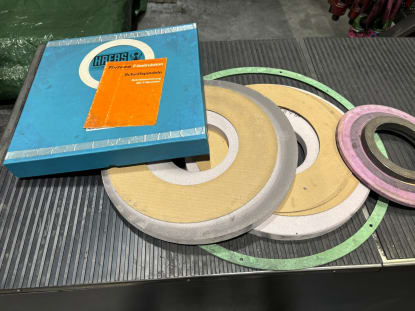
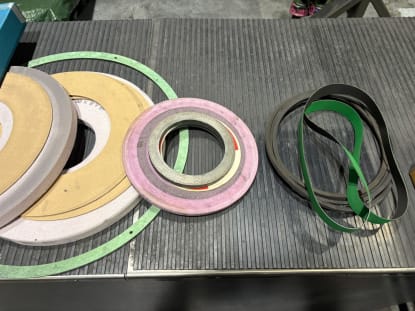
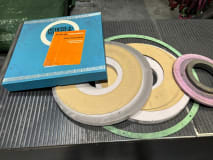
Accessories
Various collets and sleeves
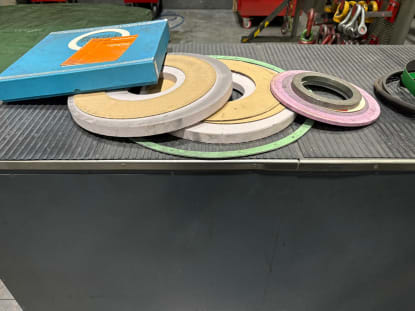
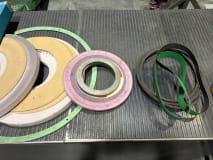
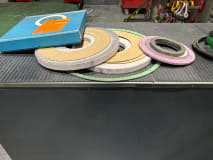
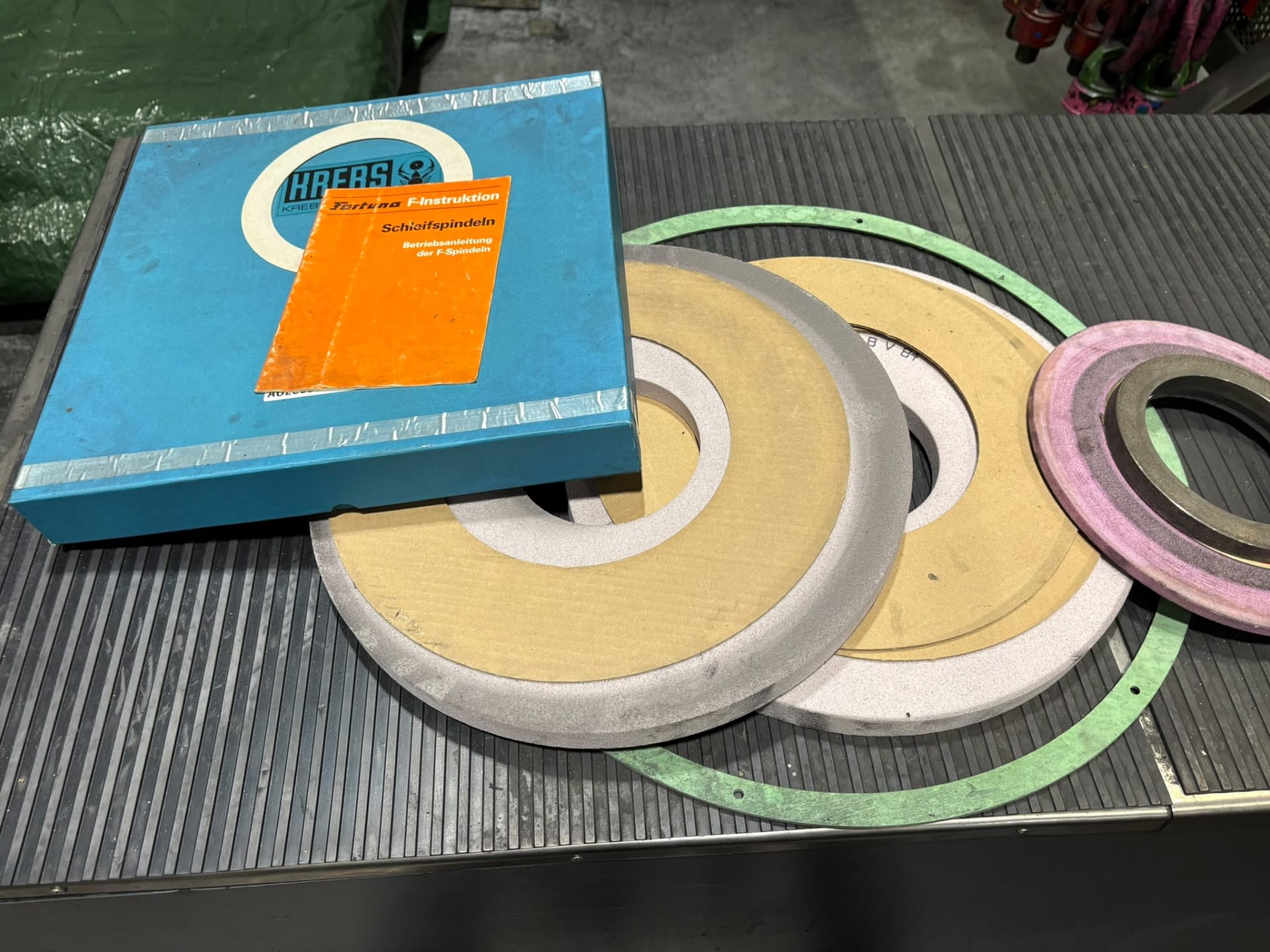
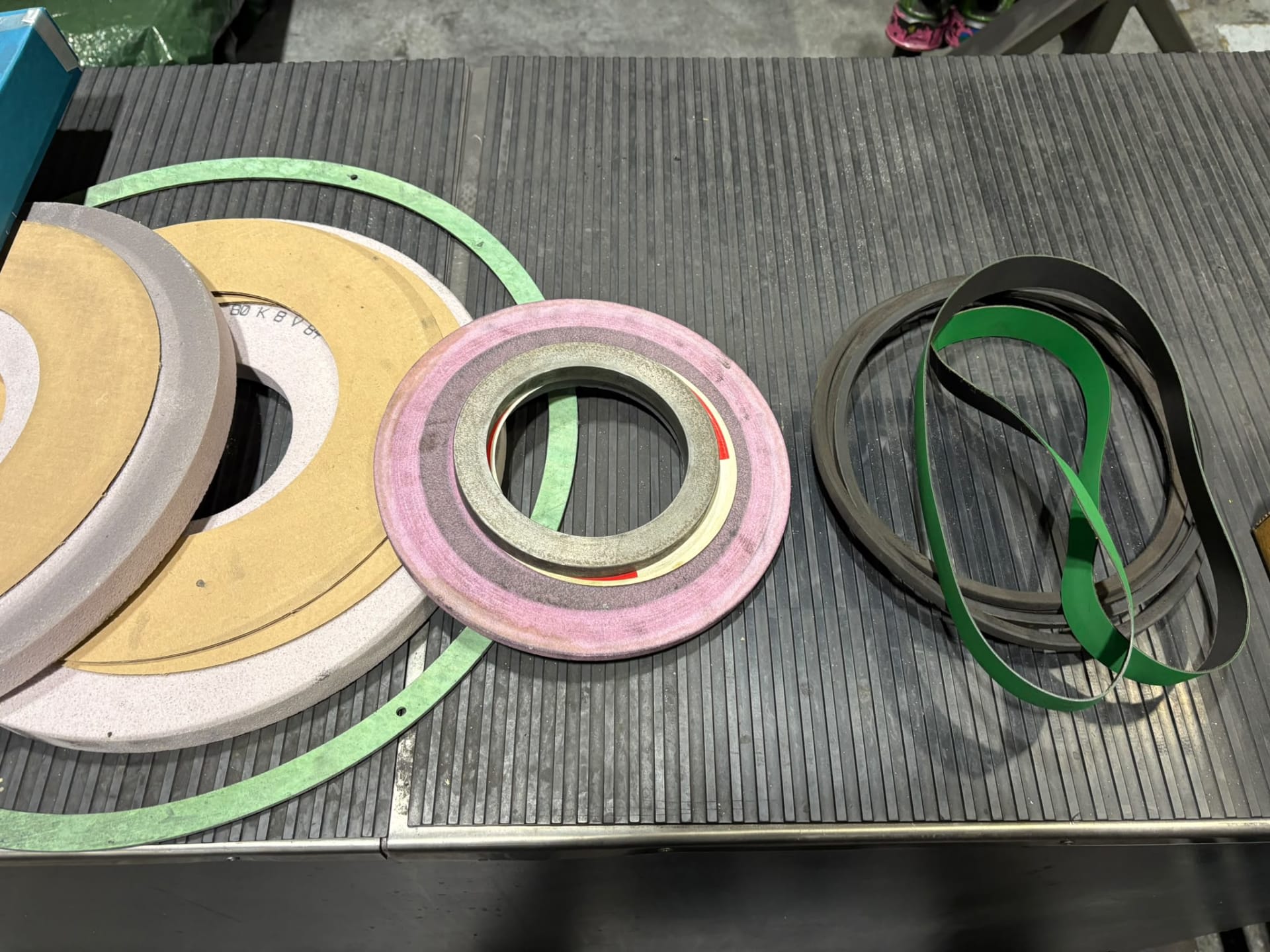
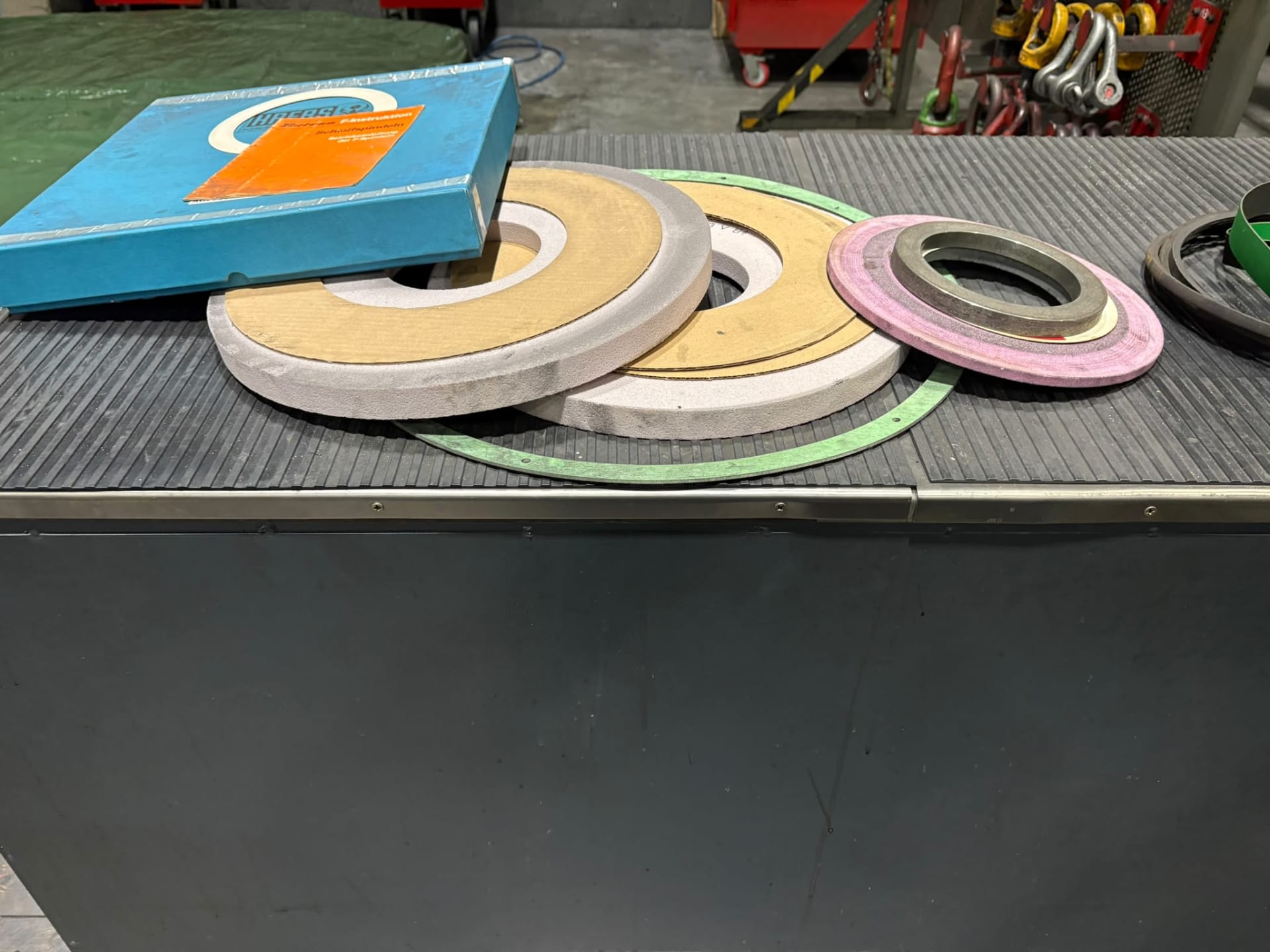
Additional grinding wheels
Drive belts
General Data
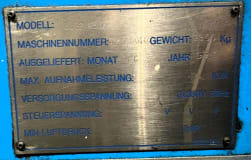
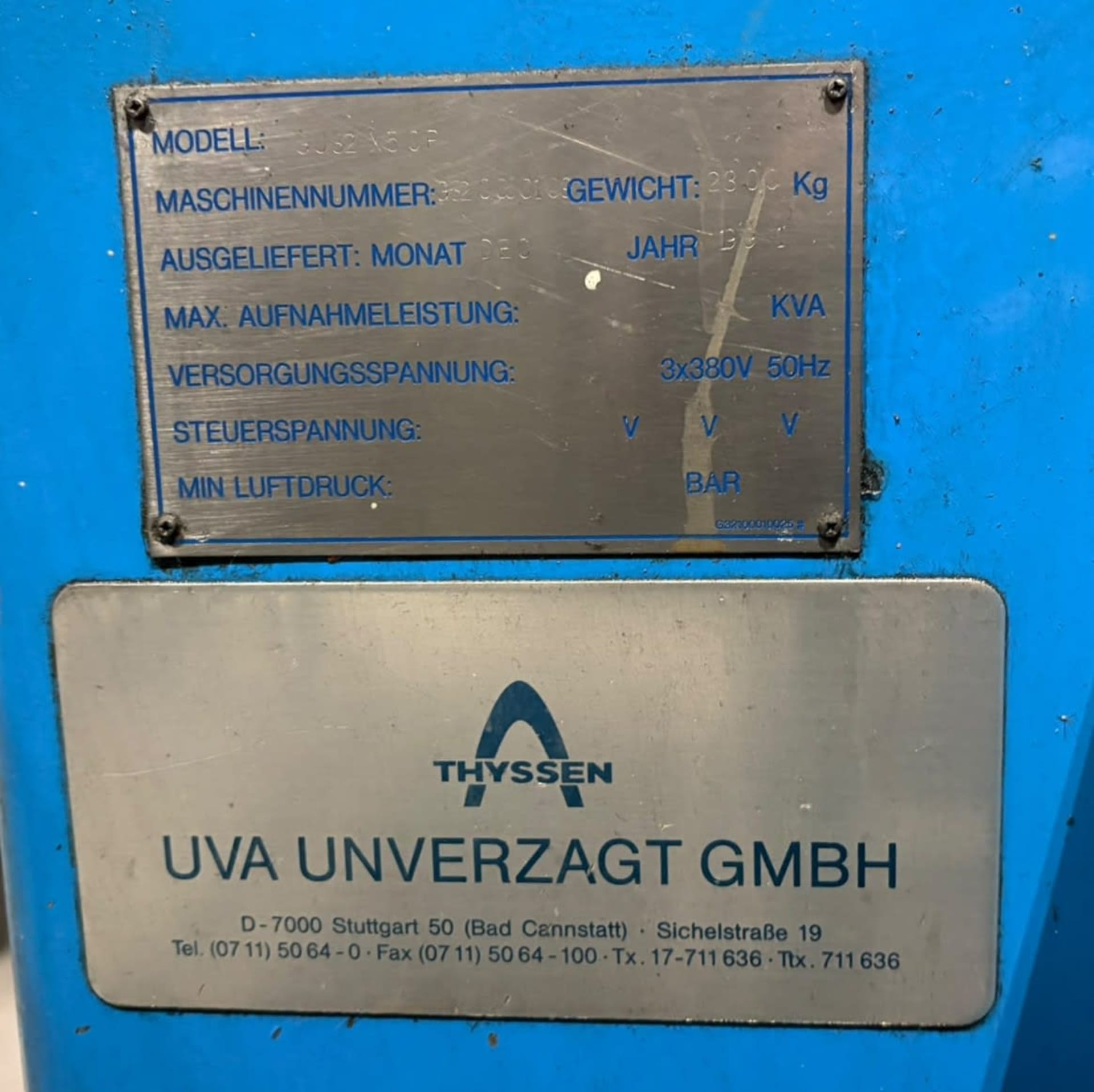
Type: GU32 × 50P
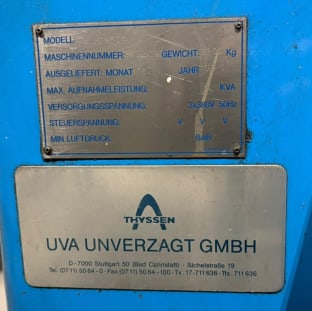
Designation: Thyssen / UVA Unverzagt GmbH
Machine weight: approx. 2,300 kg
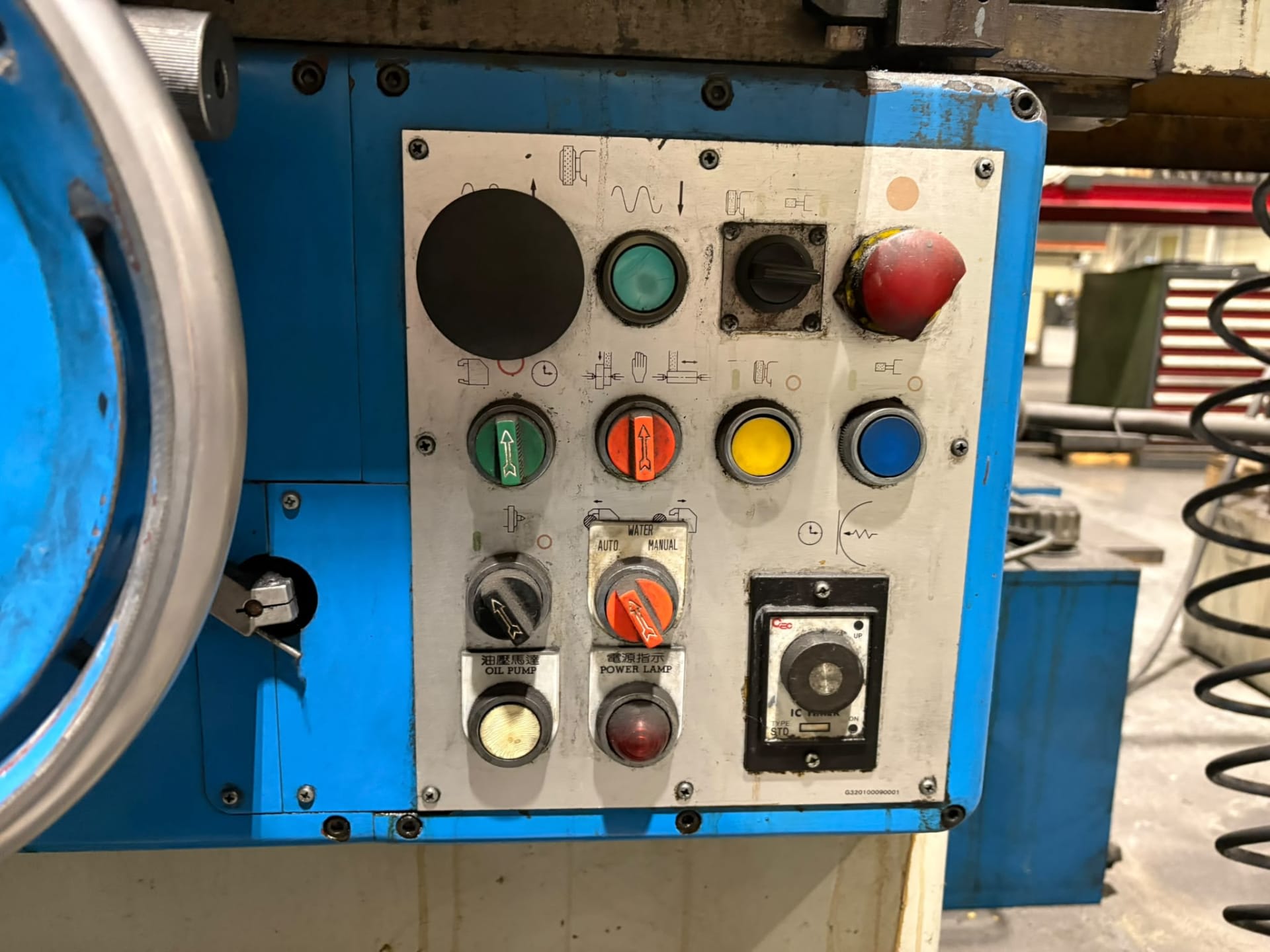
Supply voltage: 3 × 380 V, 50 Hz
Coolant tank
No documentation available.
- Dismantling Costs
- €250 - binding
- Transportation costs
- not included
- Terms of delivery
- Loaded on truck
- Terms of payment
- 100% prepayment before pick-up

Our Services
- Inspection & report
- Disassembly & installation
- Global logistics
- Customs & paperwork
- Sourcing & valuation
- Personal consultation
Related items
1. Metal Grinders: Levelling, Adjusting & Surface Finishing
Grinding machines come into their own once cutting operations are complete. They remove fine particles from a workpiece surface and serve several key purposes in metalworking:
- Surface planing and finishing
- Achieving precise dimensions
- Preparation for further processing
Surface Planing
In metalworking, dimensional accuracy down to a thousandth of a millimetre is often essential. Even a surface that feels smooth to the touch may be far too rough for its intended application. Milling machines and lathes can deliver excellent dimensional accuracy, but the final finish typically requires an appropriate grinding machine.
This is especially true for surfaces subject to tight tolerances – piston tracks in combustion engine cylinders, for example. These must guide piston rings precisely and reliably across a wide range of temperatures and speeds without jamming, a requirement that only a metal grinder can consistently meet.
Achieving the Right Dimensions
Grinding machines do not rely on cutting tools. Instead, they use abrasive media such as coated papers, abrasive textiles, or grinding stones – the latter made from pressed and fired materials, typically quartz sand. The finer the abrasive, the less material is removed per pass.
Where solid abrasives cannot achieve the required dimensions, fluid abrasive agents offer an effective alternative. Wet polishing machines and lapping machines are well suited to this type of fine material removal.
Preparation for Further Processing
Polishing and lapping processes are used when the highest dimensional accuracy and a uniformly smooth surface are required – particularly for electroplating applications. A component can only be galvanised or chrome-plated successfully if it has first been polished to a high sheen.
A smooth, even surface is equally important when applying paint or powder coatings, making grinding machines a valuable step in many finishing workflows.
2. Grinding Machine Design: Key Components & Types
Grinding machines differ fundamentally from cutting machines such as lathes or mills in their straightforward mechanical design. A typical grinding machine consists of a work table, a guide for the abrasive media carrier, and a drive unit.
The most common abrasive media carriers are round and belt-shaped, with roll-based designs also widely used across industrial applications.
Round abrasive media carriers are found in eccentric and plate grinders. These feature a circular grinding surface where the media moves either radially or eccentrically. Radial grinding machines are among the simplest in design and are generally cost-effective to acquire and operate.
Belt grinding machines use an abrasive belt tensioned between a drive roller and one or two tensioning rollers. This configuration removes outer material layers consistently and evenly. Because a defined quantity of material is removed per work cycle, dimensional accuracy is straightforward to maintain – simply by distributing the abrasion process across multiple cycles at varying grinding heights. The uncomplicated design also makes belt grinders easy to service and maintain.
Cylindrical grinding machines use cylindrical abrasive media and are suited to grinding interior radii as well as flat surfaces.
Any grinding machine designed for metalworking requires effective cooling lubrication and a powerful extraction system. Particles removed from the workpiece must be cleared away promptly, as fine metallic dust causes accelerated wear. This is especially true of iron-containing particles, which expand in volume as they oxidise and can cause progressive damage to machine components.
3. Types of Grinding Machines: A Complete Guide
There are many types of industrial grinders and CNC grinders available to metalworking operations of all sizes. Below is an overview of the most widely used metal grinding machines, their applications, and leading manufacturers.
Bore Grinding Machines
Bore grinding machines are used to create precise holes in metal, stone and wood. While entry-level models are available for private use, professional-grade bore grinding machines for industrial applications are manufactured by FARMAN, FROEHLICH, KLINGEL, SCHANBACHER and SCHLUMBERGER.
Surface Grinders
Surface grinders are used when an exceptionally flat finish is required. A grinding disc is guided consistently across the workpiece to achieve the necessary dimensional accuracy – making these machines indispensable in tool-building and mould construction. Leading surface grinder manufacturers include ABA, BLOHM, ELB-SCHLIFF, JUNG and KUGELMÜLLER.
Guideway Grinding Machines
Guideway grinding machines are designed to grind guideways with extreme precision and are commonly found wherever large cutting machines are produced. Modern guideway grinders can achieve tolerances of 1/1000 of a millimetre across seven metres of length. They primarily use grinding stones, with the abrasion of the stone factored into the pressing force to ensure consistent results. Well-known manufacturers include MEUSER MOL, SHW, SCHMALTZ, WALDRICH-COBURG and KRAFT.
Double-Disc Grinding Machines
Double-disc grinding machines are highly efficient, allowing both the front and back of a workpiece to be processed simultaneously within a single work cycle. Popular manufacturers include DISKUS, GIUSTINA, KOYO, BESLY, C+B MACHINERY and JUNKER.
Internal Grinding Machines
Internal cylindrical grinding machines are used to produce consistent and accurate internal radii using roll-shaped grinding bodies. Today's models feature computerised numerical control (CNC), enabling the strictest tolerances to be achieved. Manufacturers include DANOBAT, HANKOOK, TRIPET, JUNG and VOUMARD.
Jig Grinders
Jig grinders feature CNC controls and a very small grinding body, allowing precise material removal at specific points on a workpiece – a design that closely resembles a CNC milling machine. Among the most sophisticated grinding machines available, jig grinders are produced by HAUSER, DECKEL, MOORE, MIKROMAT and KELLENBERGER.
Knife Grinding Machines
Knife grinding machines are used to sharpen blades, knives and scissors, as well as to grind chisels. Manufacturers include BERNADO, KNECHT, GOWEIL, TORMEK and SCHEPPACH.
Cylindrical Grinders & Centreless Grinding Machines
Cylindrical grinders are used to grind profiles, pipes and round steels to a cylindrical form. Tensioning cylindrical grinders use centre tips similar to the tailstocks of lathes, while centreless grinding machines allow profiles to be processed continuously without any clamping. Major manufacturers include STUDER, OMICRON, KARSTENS, SCHAUDT and HERMINGHAUSEN.
Bench Grinders
Bench grinders are standard workshop tools used for sharpening, grinding, planing or deburring workpieces by hand. They consist of a motor with one or two grinding discs attached and are available in single- and double-sided variants. High-quality bench grinders are produced by ELEKTRA BECKUM, MAKITA, GREIF and REMA.
Stylus Grinding Machines
Stylus grinding machines are primarily used to sharpen milling heads, though they can also grind marking tools such as styli – making them functionally similar to bore grinding machines. Popular manufacturers include BERNARDO, DECKEL, HASBERG, KUHLMANN, PARPAS and SCRIPTA.
Crock Grinding Machines
A crock grinding machine takes its name from the pot-shaped guide in which the grinding disc is mounted. The drive, guiding mechanism and grinding head are all attached to a pivoting arm, making these machines well suited to grinding and resizing small workpieces by hand. Manufacturers include DELTA, EDEL, KUGELMÜLLER, UNICUM and NYBERG.
Roll Grinding Machines
Roll grinding machines are used to precisely grind press rollers – whether new, used or freshly turned – to the required dimensions. Precision rollers can only be produced using a dedicated roll grinding machine. These machines are manufactured by HARKOV, HERKULES, KELLENBERGER, SCHAUDT, WALDRICH and ZIMMERMANN.
Tool-Grinding Machines
Tool-grinding machines are the forerunners of the modern jig grinder and are used to manufacture and recondition crimping tools and casting tools. Leading manufacturers include AGATHON, CLARKSON, DECKEL, EWAG, HAHN & KOLB, TRUMPF and WALTER.
4. Buying a Used Grinding Machine: What You Need to Know
The wide variety of used grinding machines on the market makes choosing the right one a genuine challenge, but a few key considerations can help any prospective buyer make a confident, informed decision. The most important starting point is defining what the machine will actually do – a simple bench grinder is worlds apart from a complex jig grinder, and the right choice depends entirely on your application.
Cleanliness and overall condition
A useful first step is to assess the general condition and cleanliness of any second-hand grinding machine you are considering. Even with comprehensive rinsing and extraction systems in place, grinding machines demand regular, thorough cleaning – ideally on a daily basis. If the most immediate impression of a used machine is that it is heavily soiled, this warrants a much closer inspection across every aspect of the equipment.
Unless the used grinding machine has been sourced from a reputable machinery dealer who has already addressed maintenance and repairs, a full strip-down and clean should be expected. If you or your team lack the technical qualifications to carry out this work, commissioning a specialist service provider is strongly advisable.
Weak point: bearings
In virtually all used grinding machines, the bearings are the most vulnerable component. High spindle speeds, continual one-sided load, and grinding heads that gradually lose their geometry all place significant stress on the bearings over time. Any sign of rattling or play should be treated as grounds for immediate replacement. A second-hand grinder fitted with new bearings can reliably deliver thousands of additional operating hours – making this one of the most worthwhile investments in the refurbishment process.
Frequently asked questions
Purchasing machines through ReMach is simple and transparent. Once you have found a suitable machine or industrial equipment on our platform, we guide you step by step through the entire purchasing process.
After confirming your purchase, you will receive all relevant information regarding payment as well as the next steps, such as dismantling, loading, or collection. Our team can support you with the organizational process if needed, ensuring that the machine purchase is handled smoothly and in a well-planned manner.
ReMach provides a comprehensive service for the purchase and sale of used machines and industrial equipment.
Our services include, among others:
- Organization of dismantling and loading
- Support with the invoicing and payment process
- Export and customs checks
- Preparation of required documents and export paperwork
- Assistance with transport and logistics
- Coordination of a timely and structured transaction
This allows both buyers and sellers to benefit from a complete service solution for industrial machinery trading.
To create an account, click on “My Account” and select Register.
Fill out the registration form and confirm your email address using the activation link sent to you via email. Once confirmed, your account will be activated and you can immediately start browsing offers or submitting inquiries.
No. ReMach is a B2B platform for trading machines and industrial equipment and is intended exclusively for companies and commercial customers.
Registration for private individuals is currently not possible.
In most cases, the buyer is responsible for organizing the transport.
However, upon request, ReMach can check whether transport can be arranged or supported.