
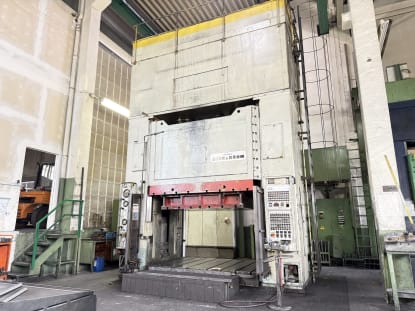
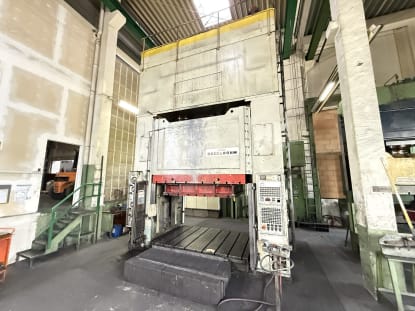
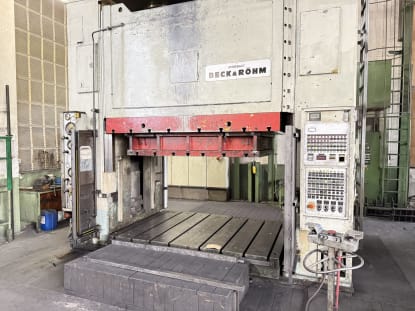
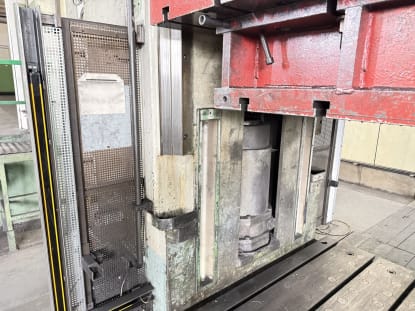
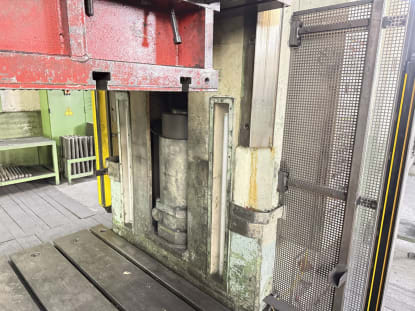
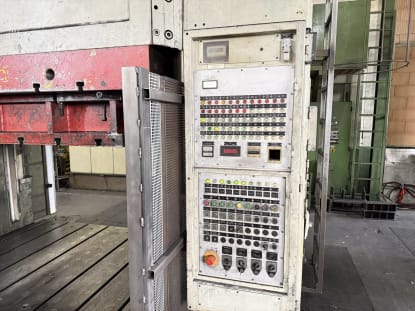
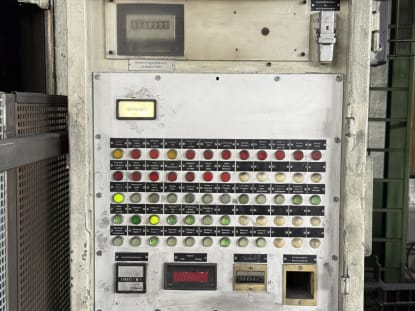
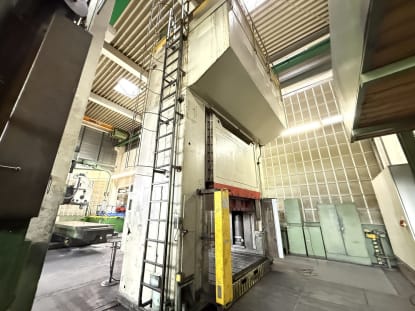
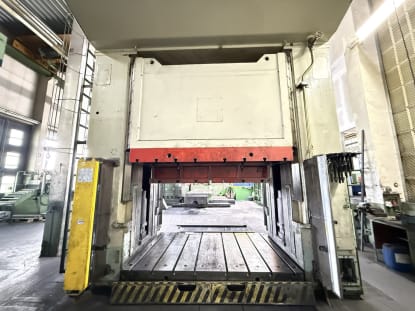
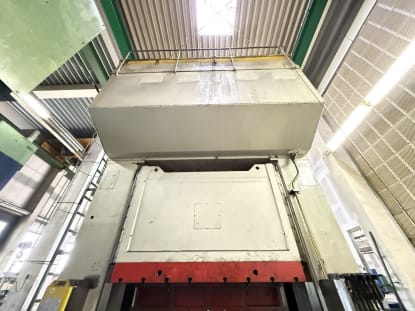
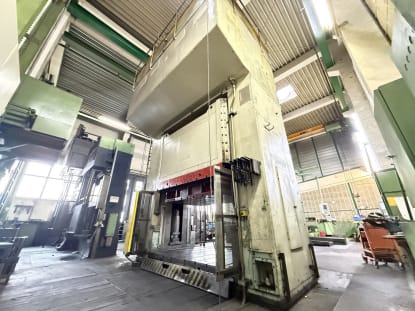
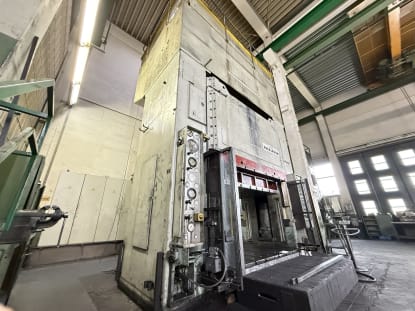
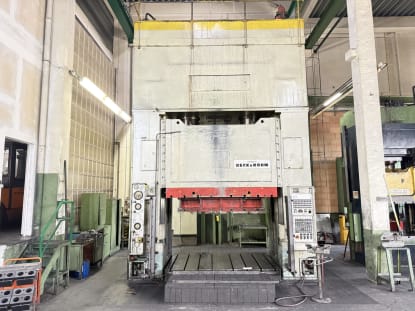
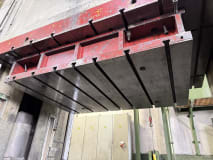
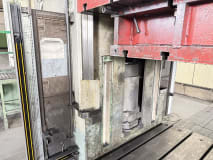
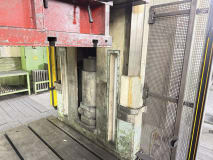
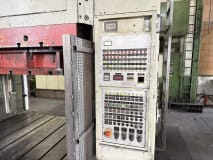
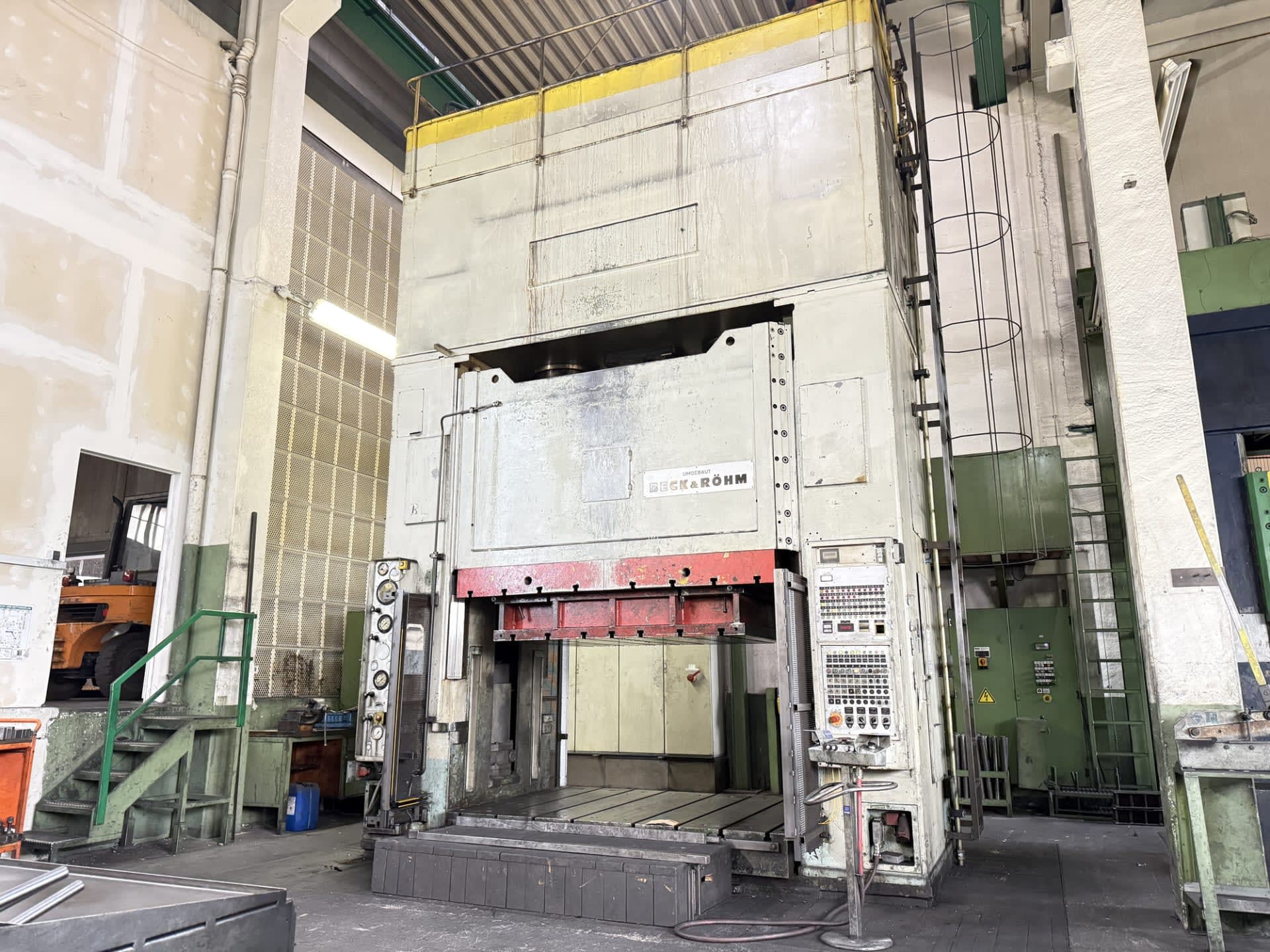
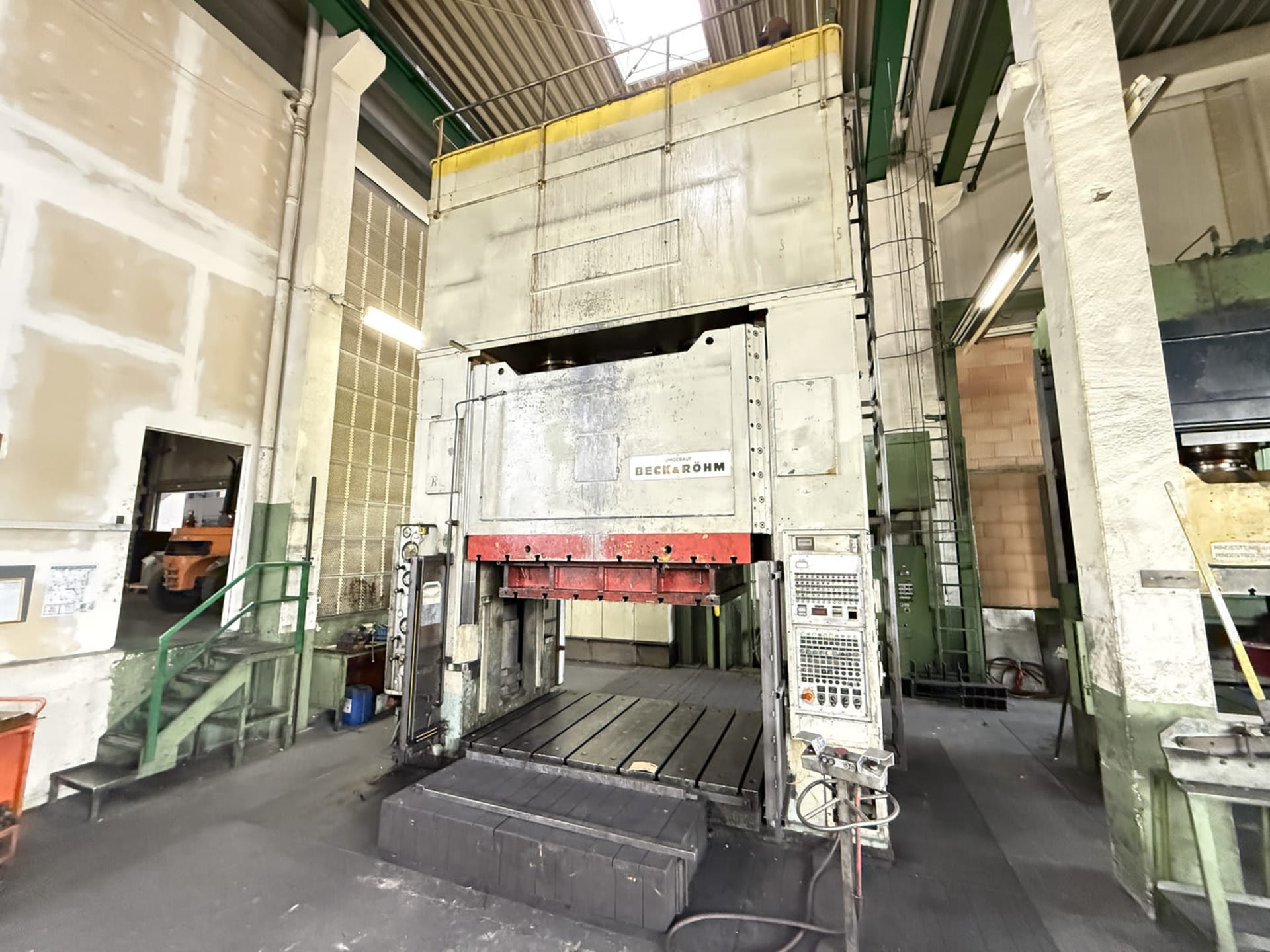
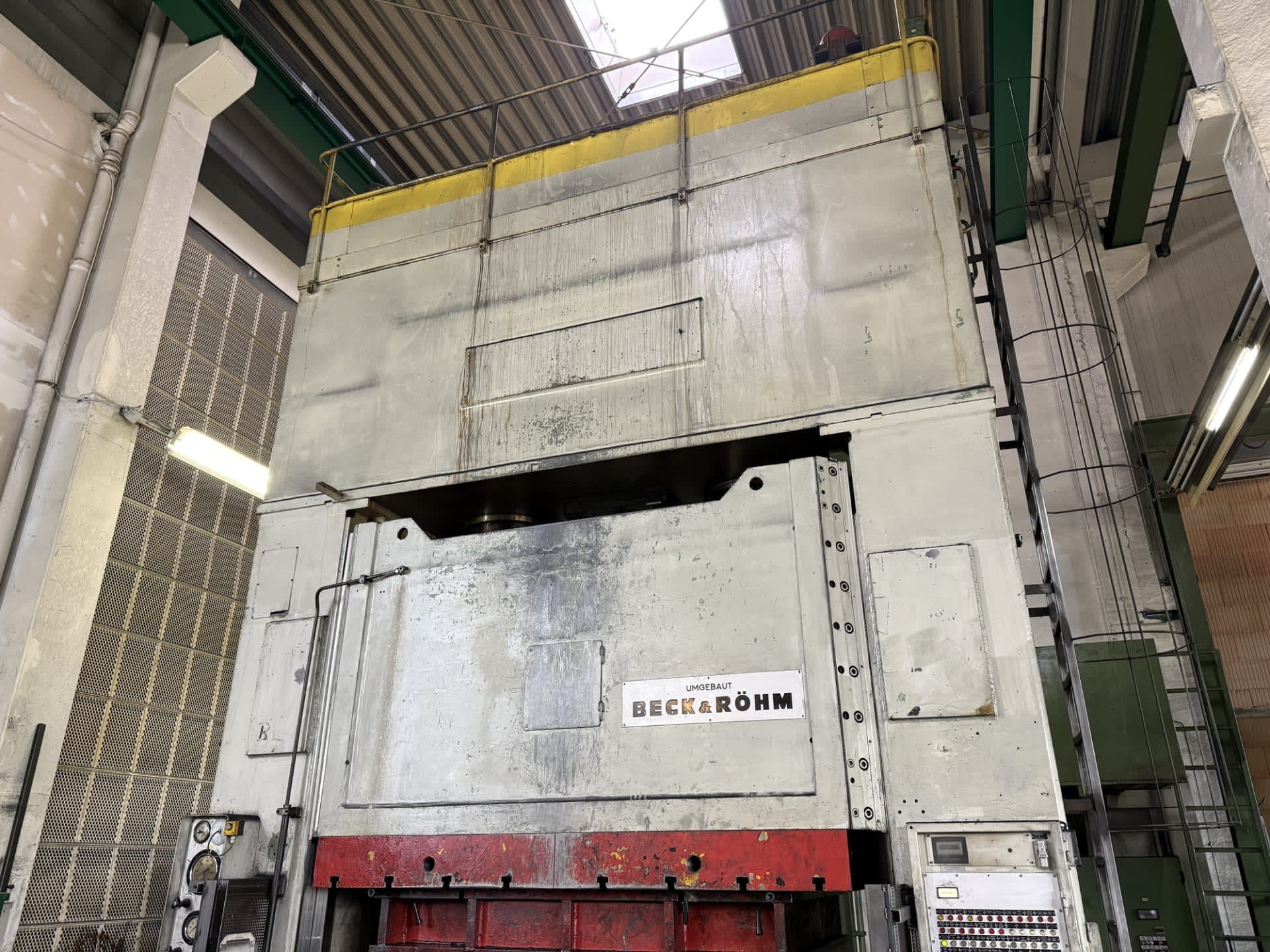
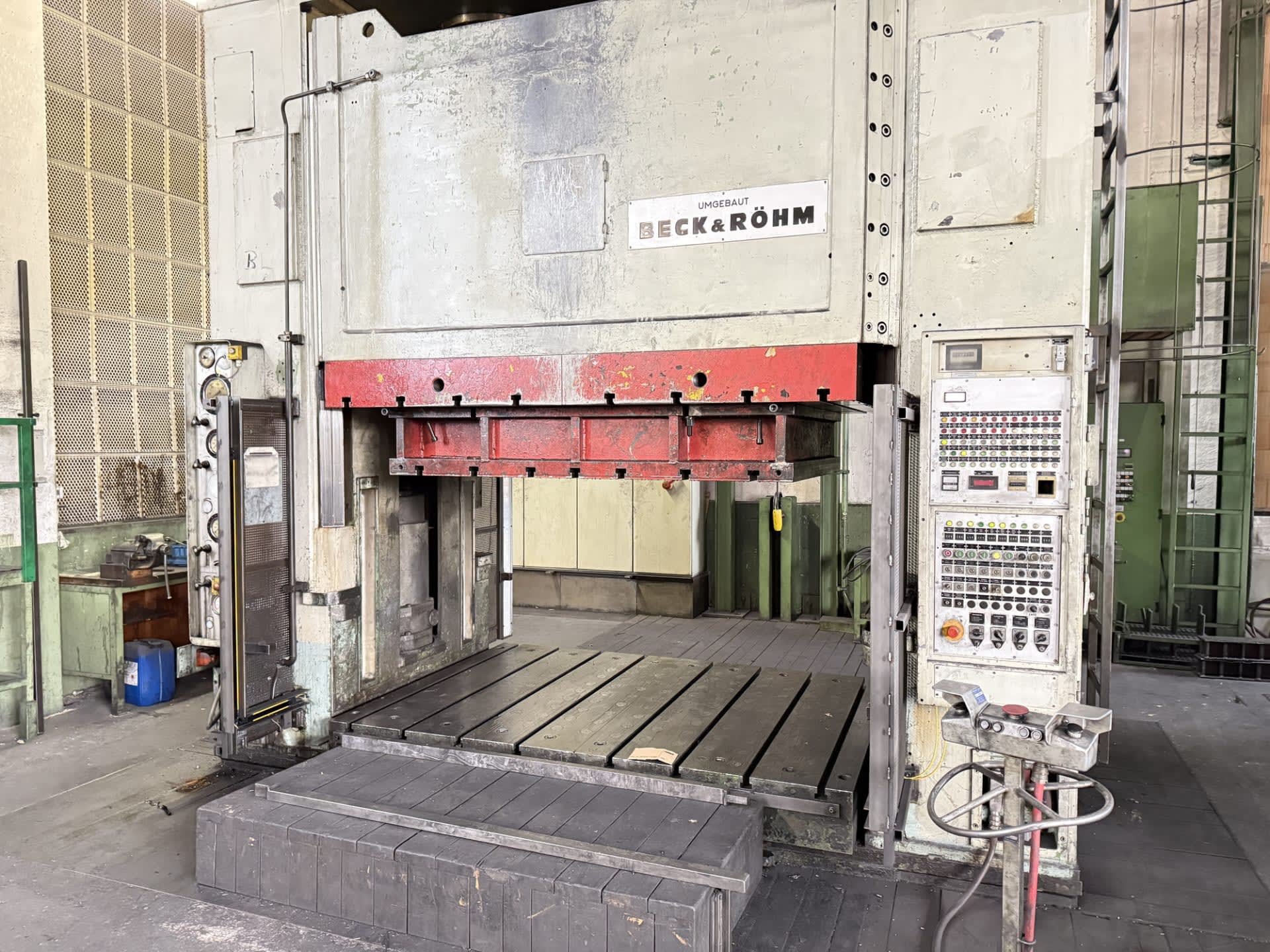
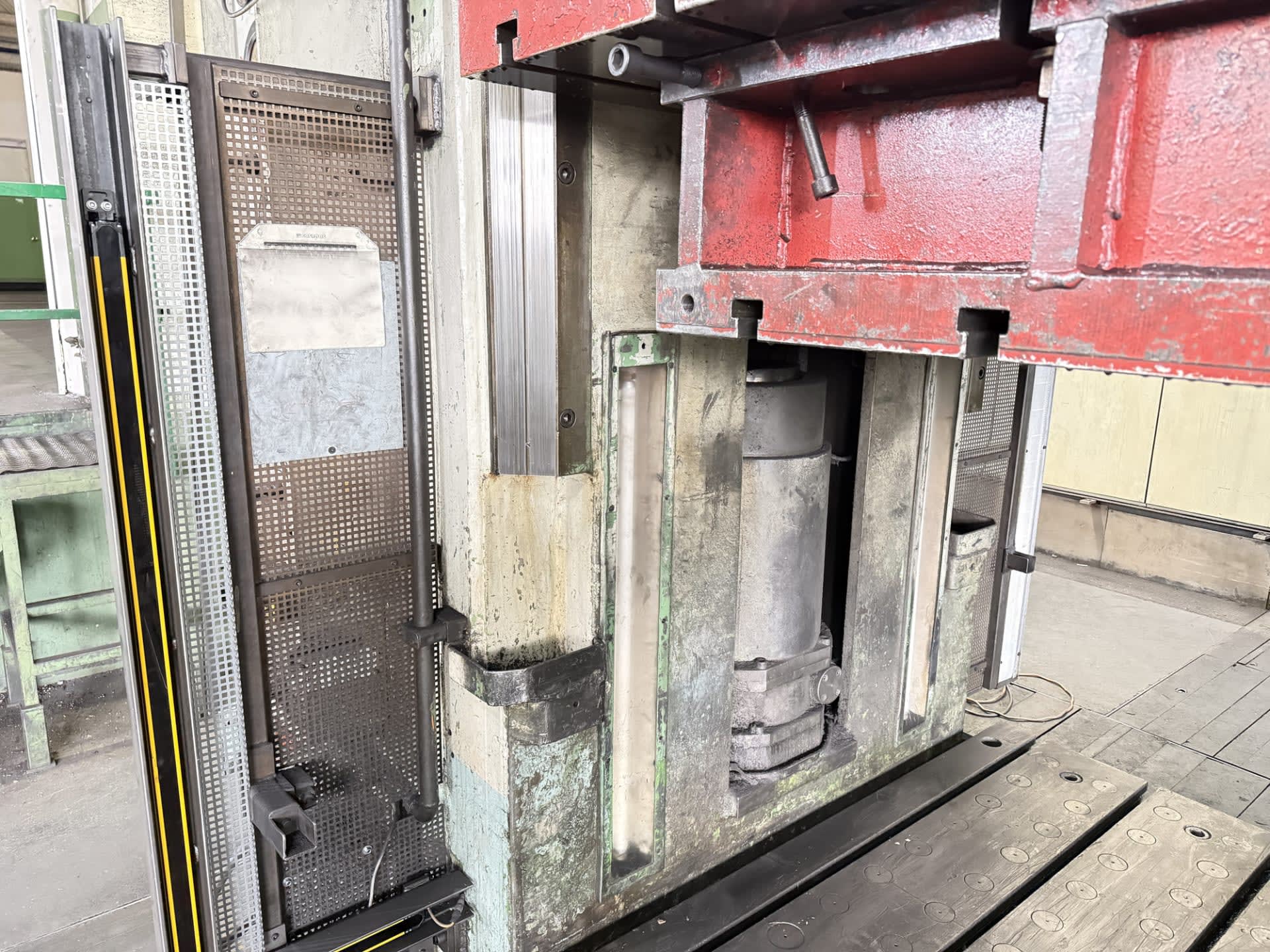
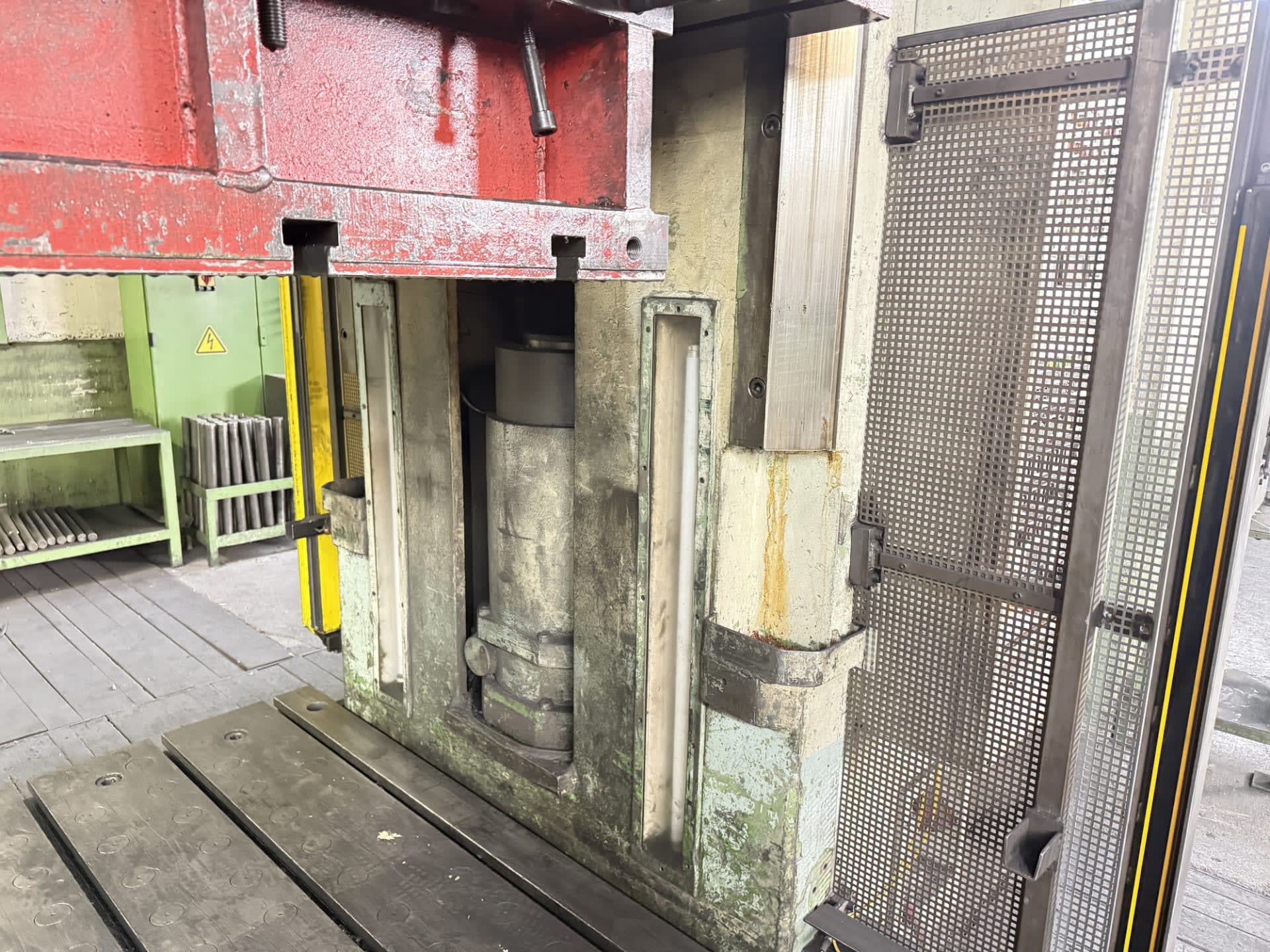
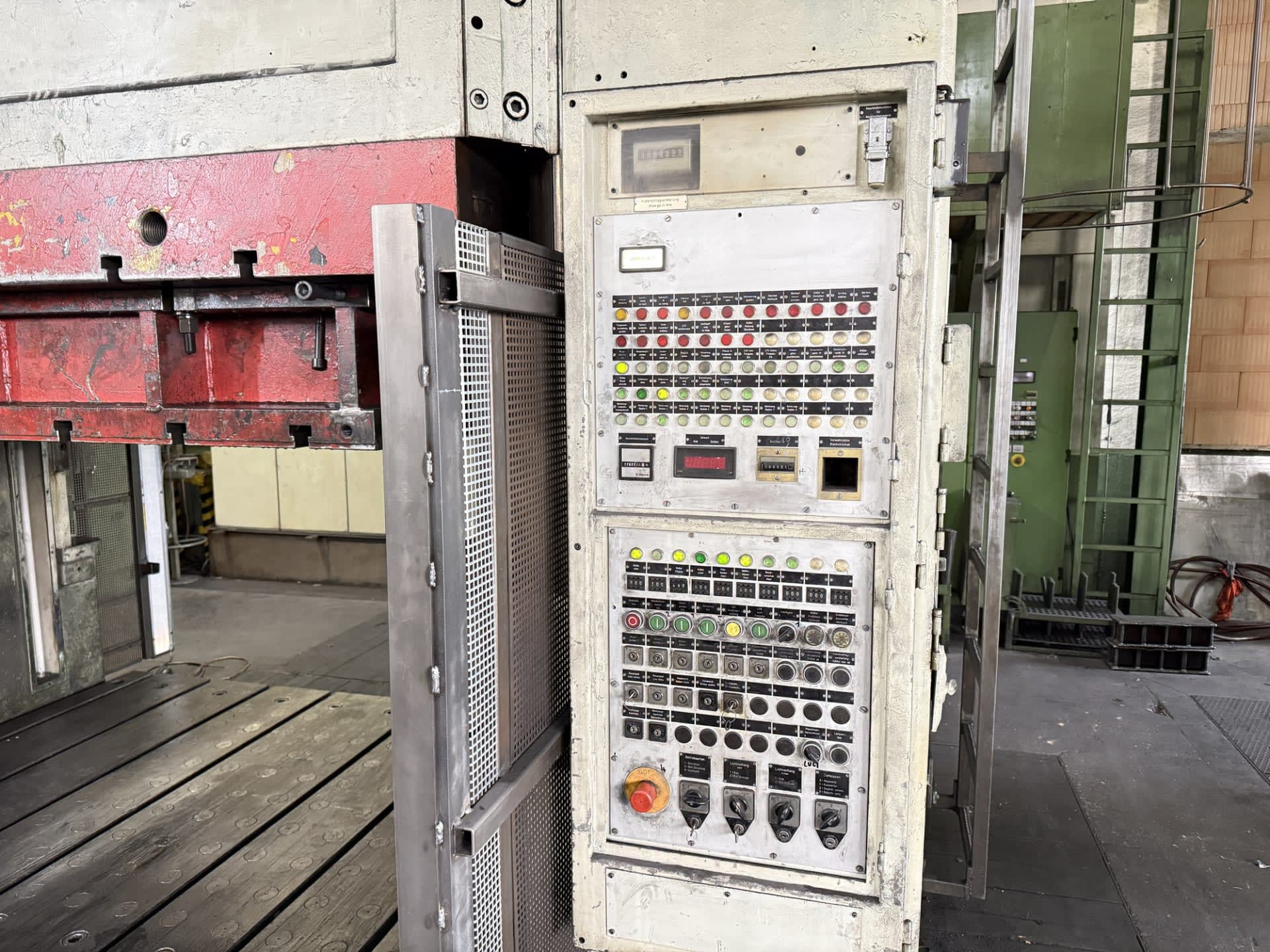
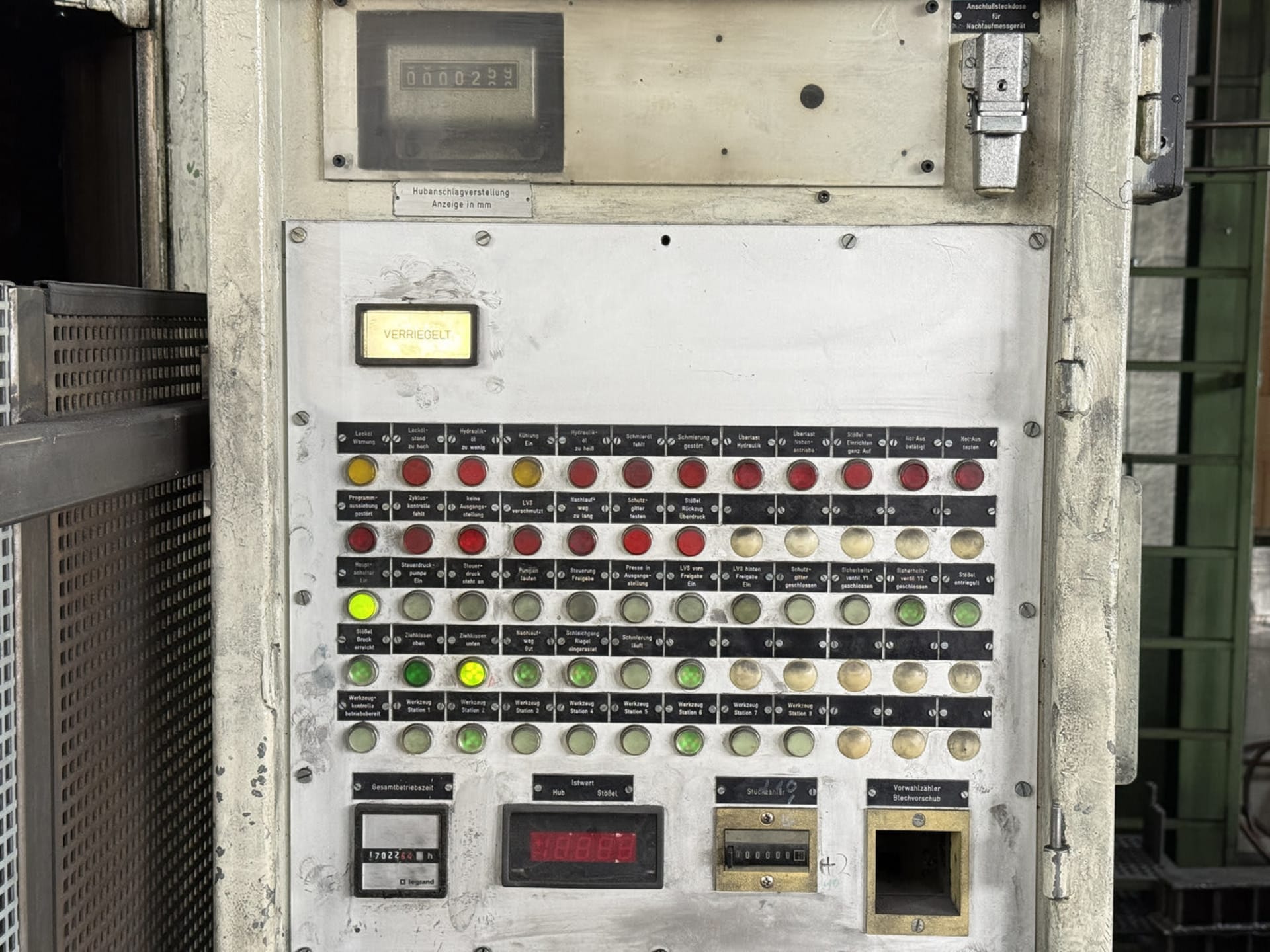
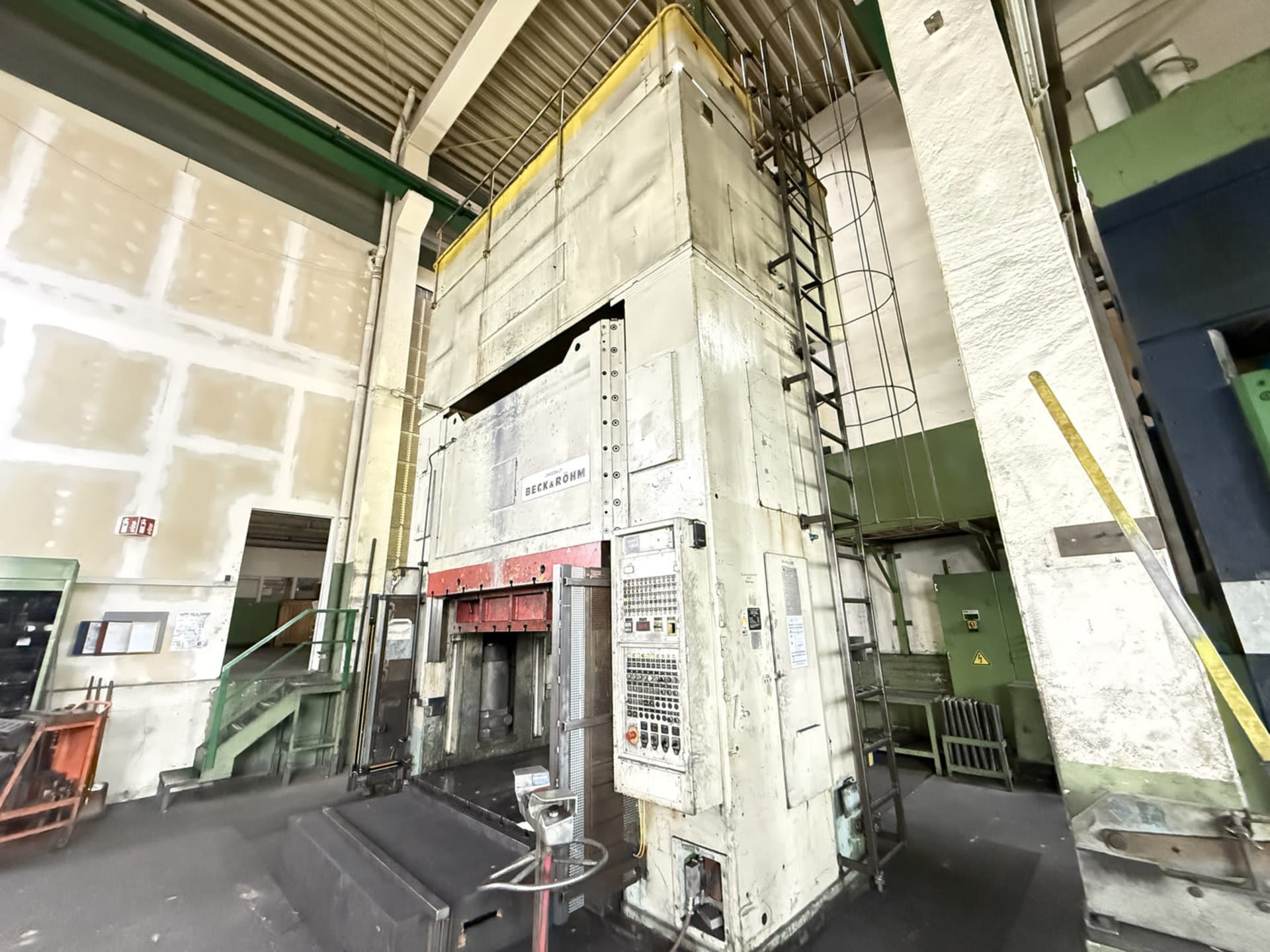
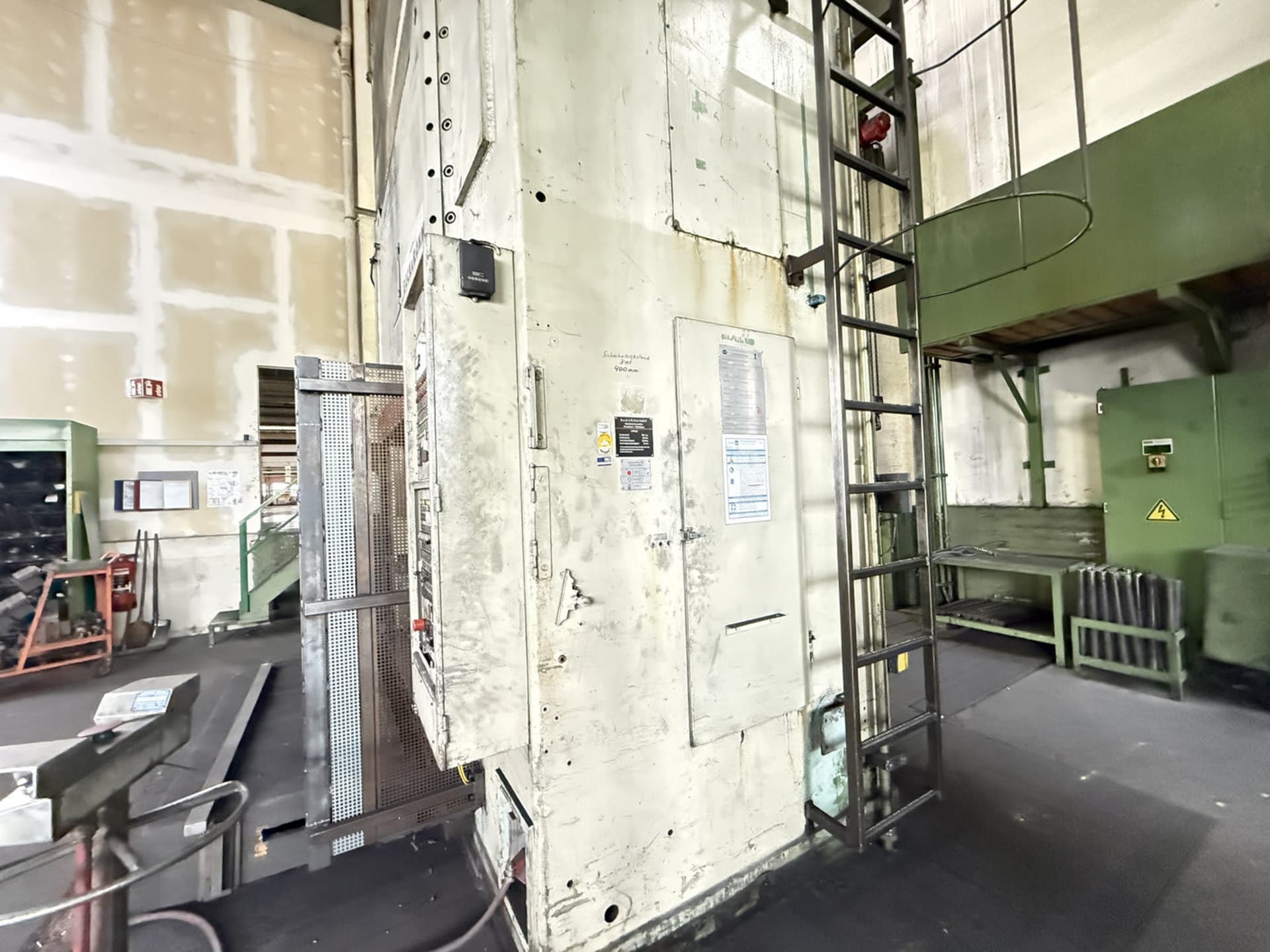
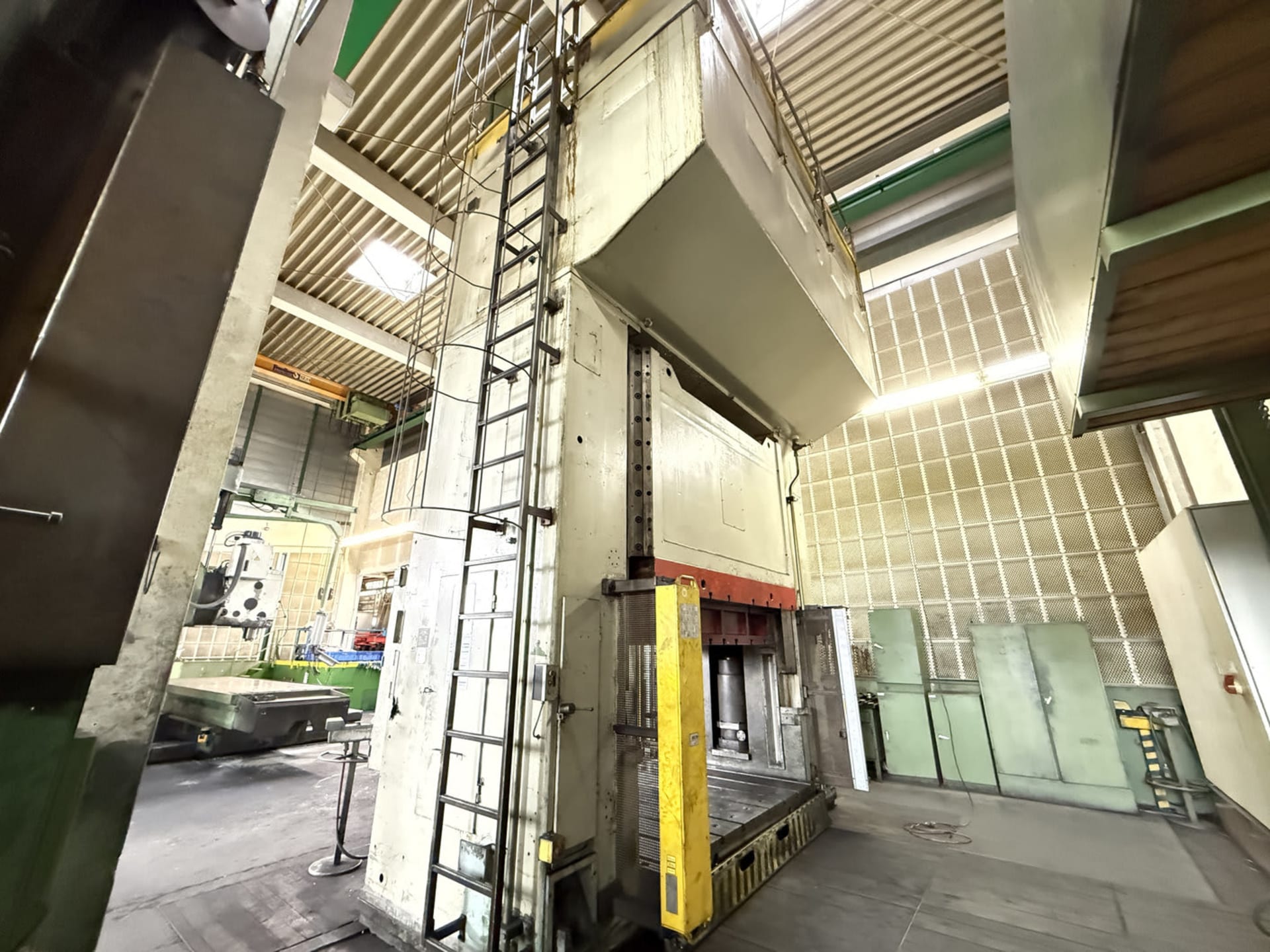
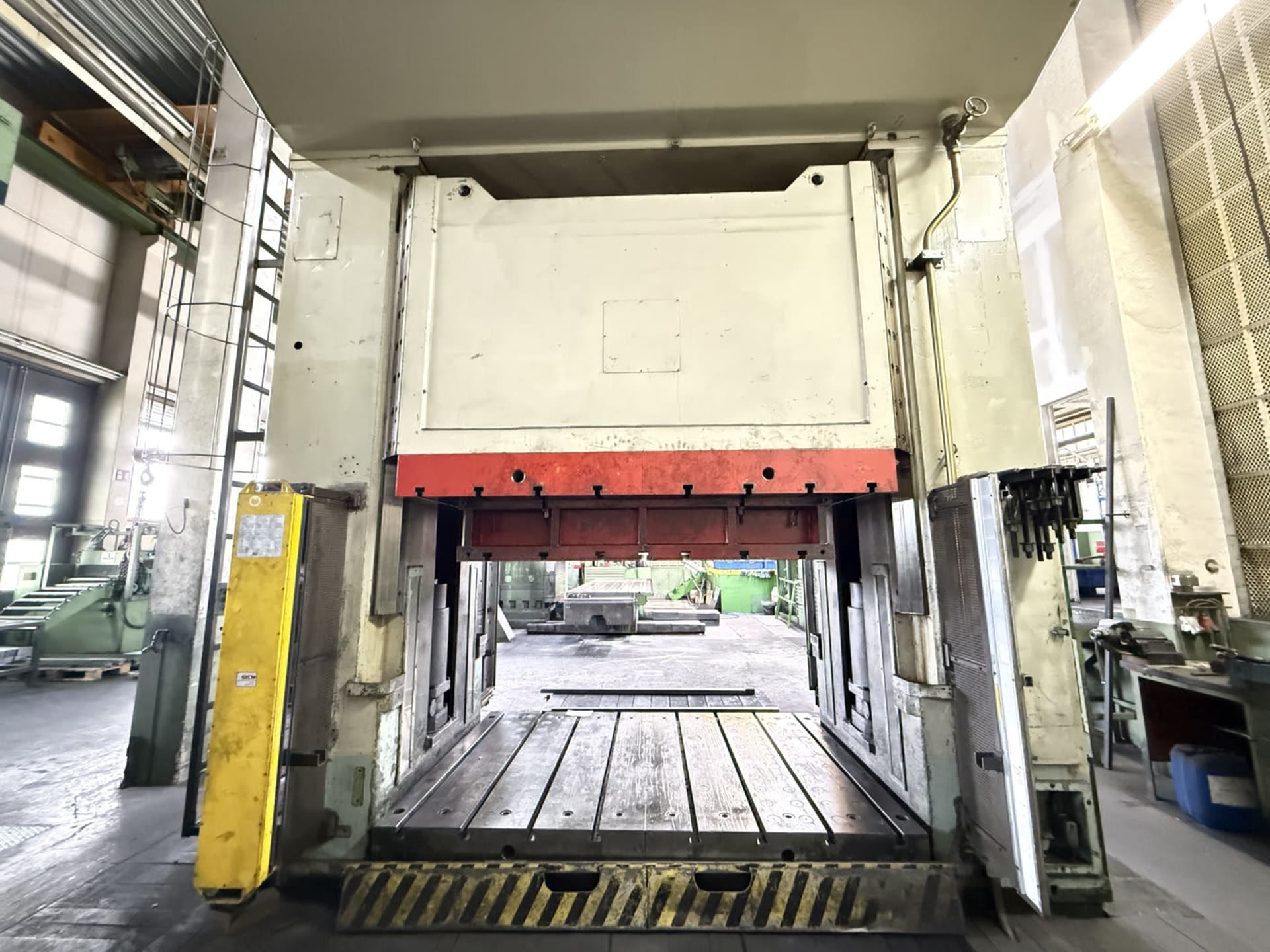
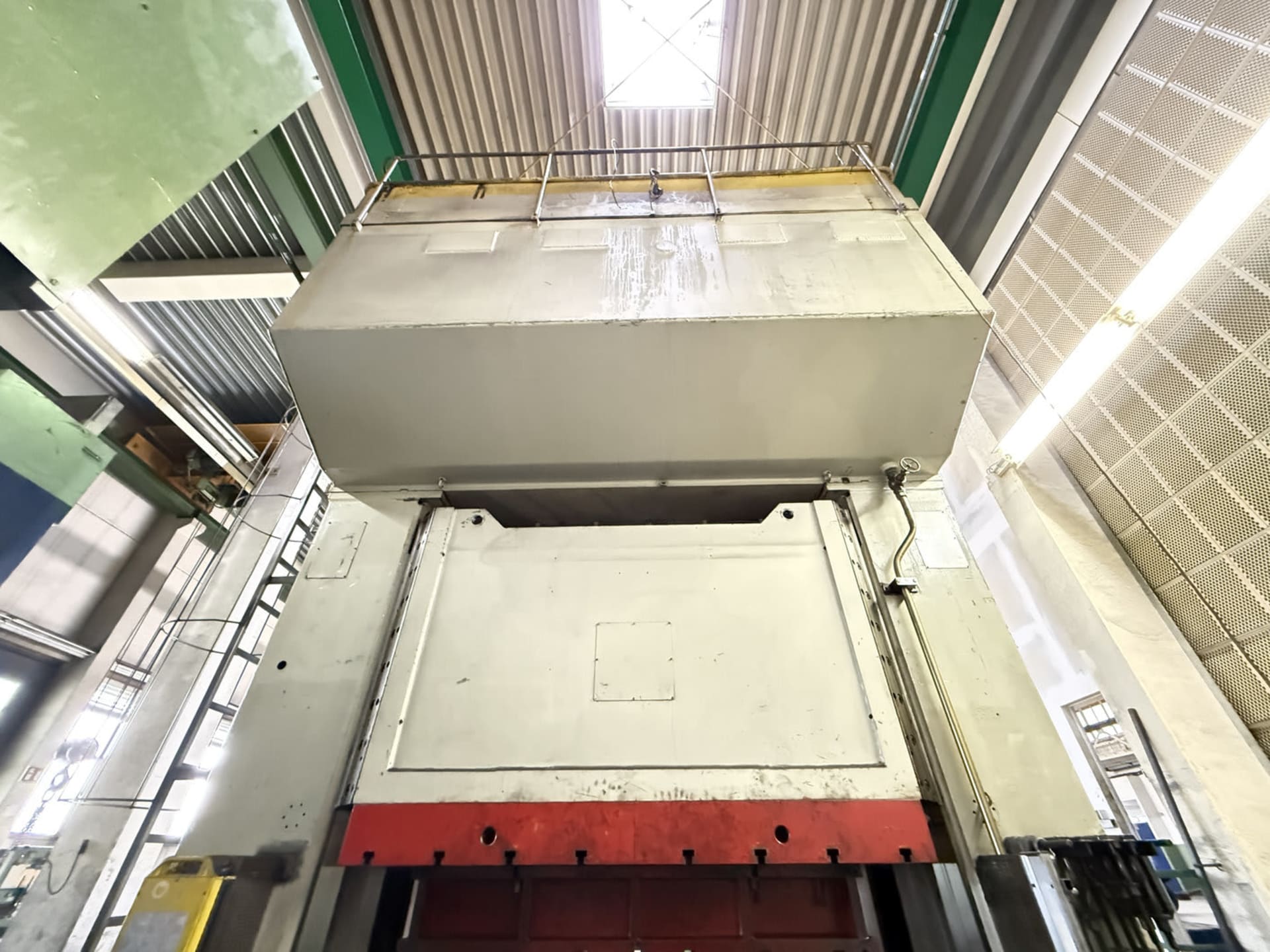
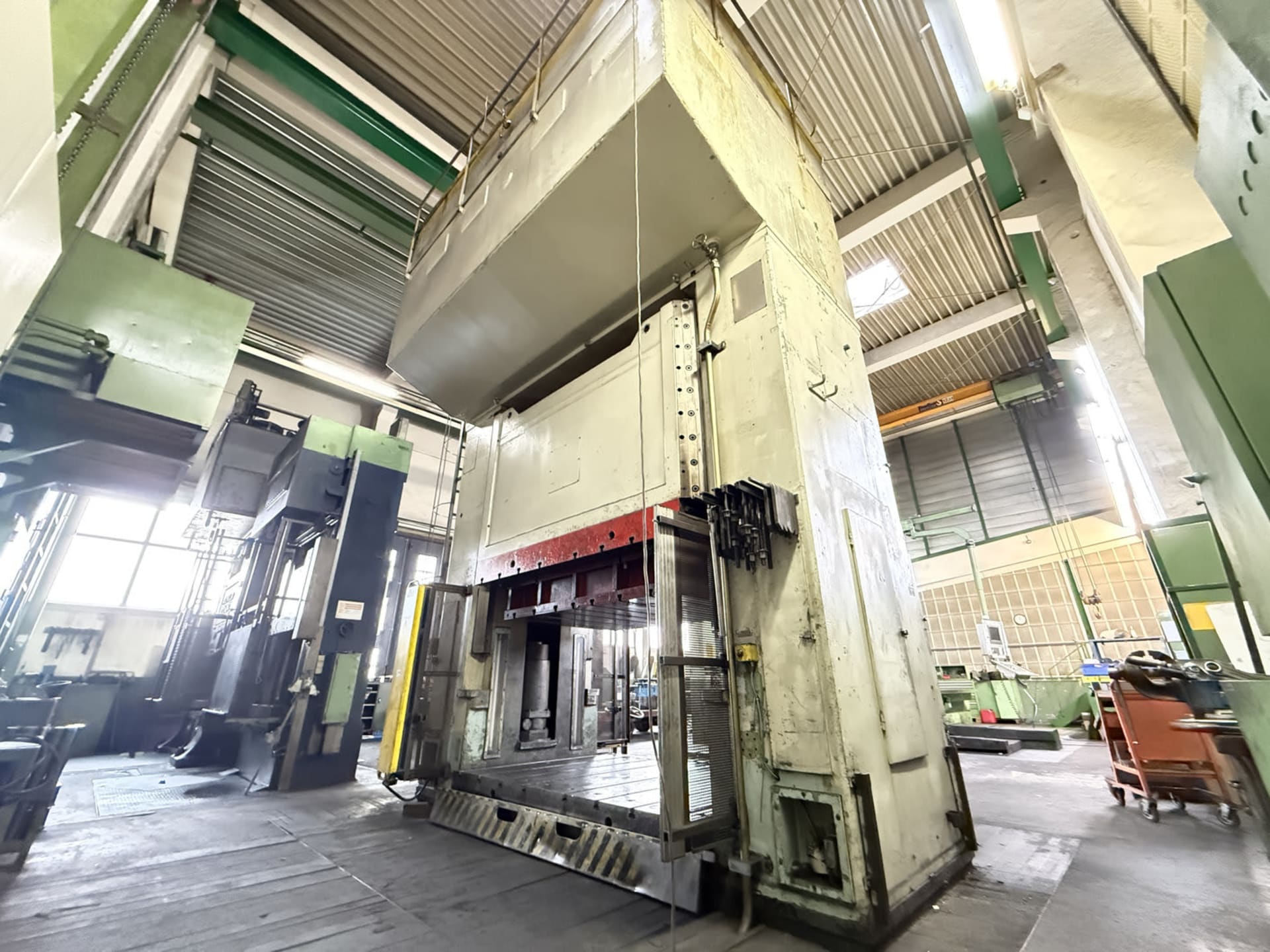
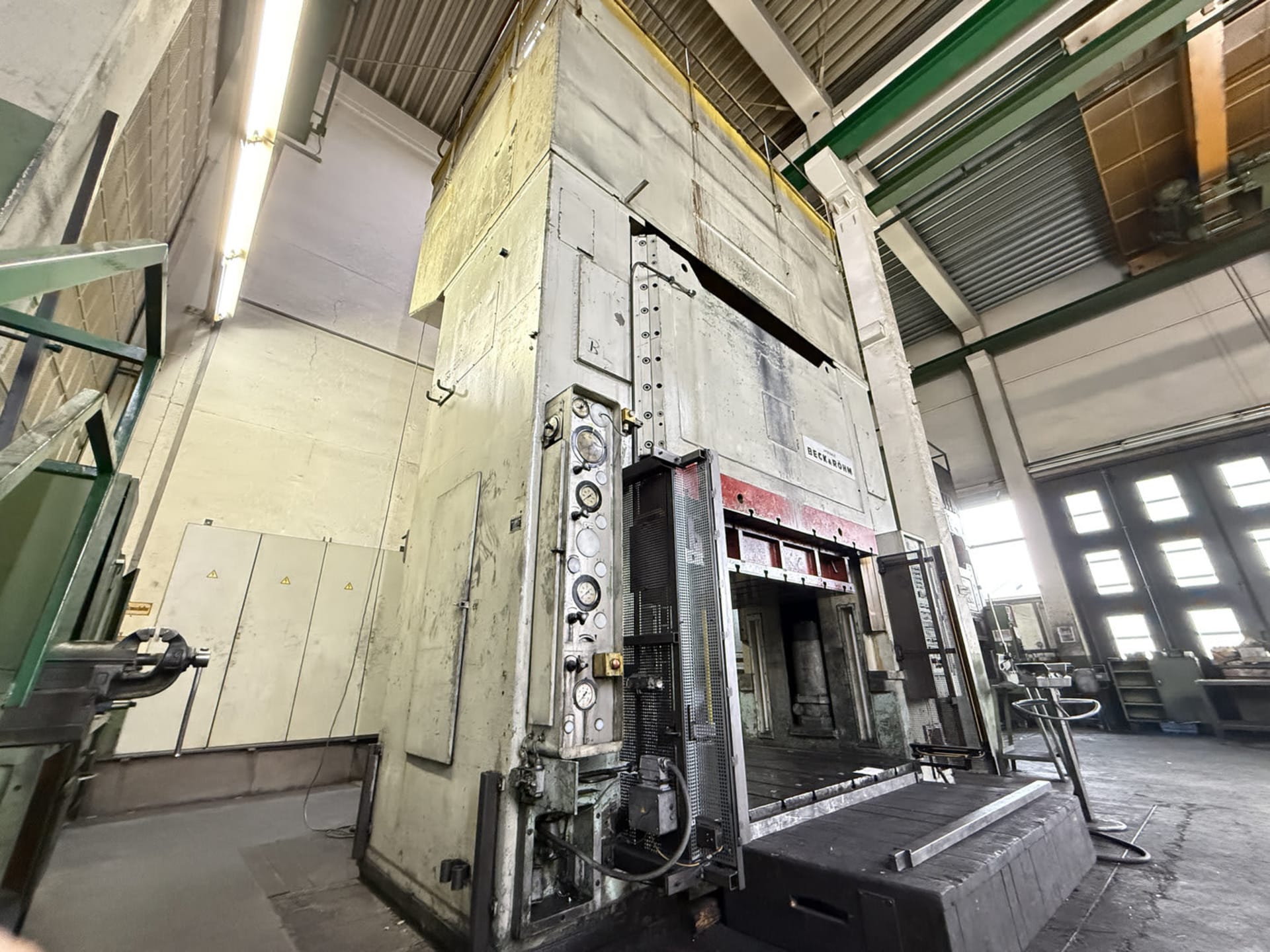
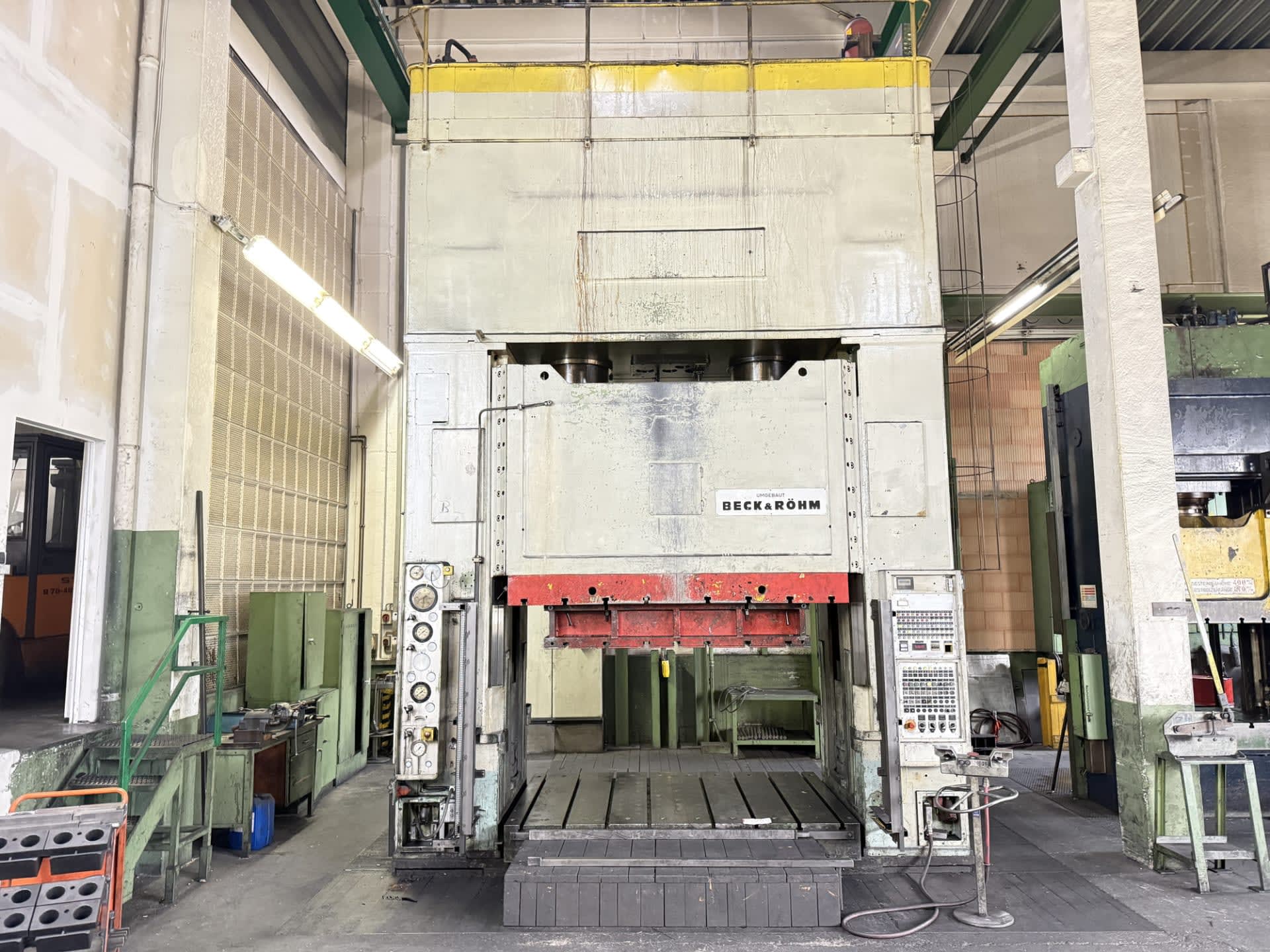
Double-Column Deep-Drawing Press
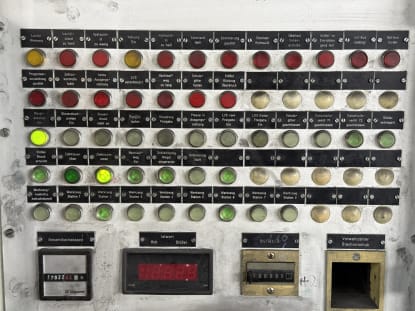
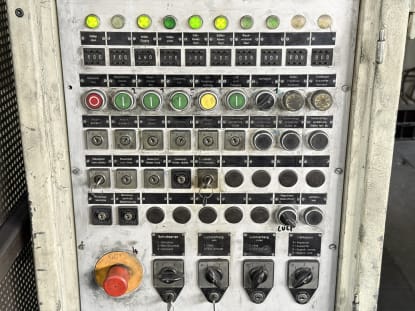
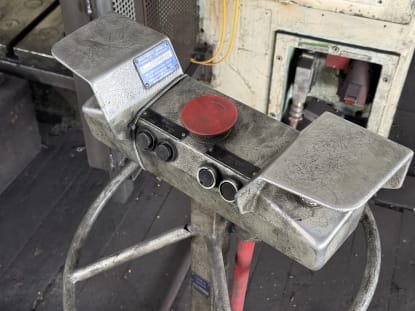
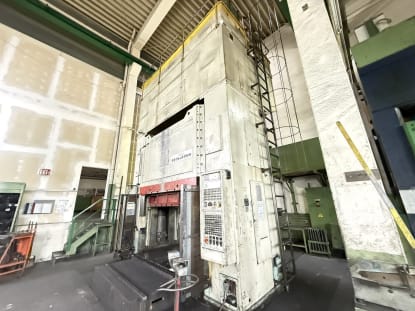
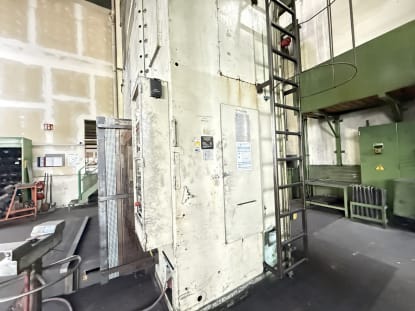
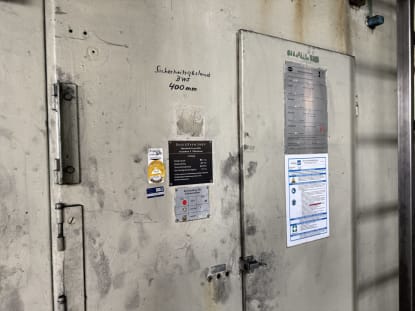
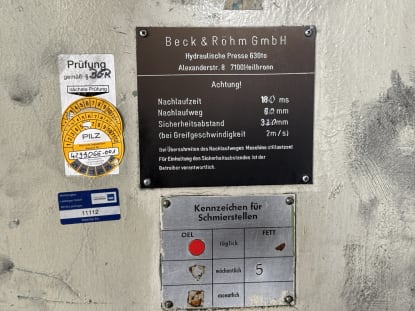
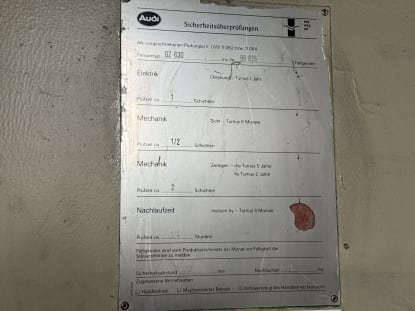
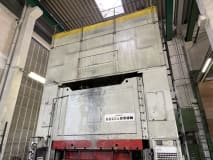
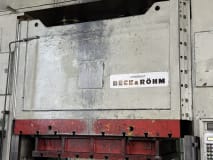
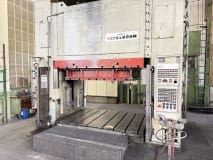
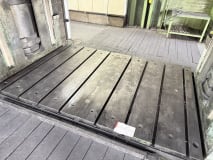

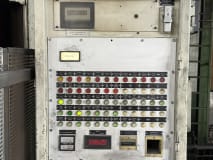
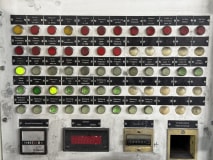
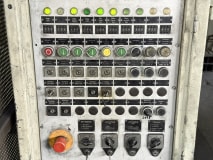
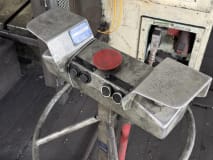
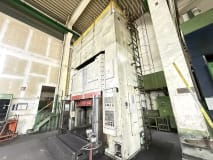
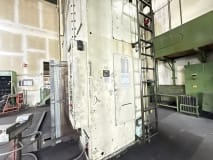



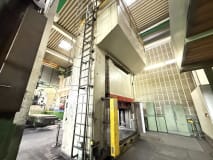
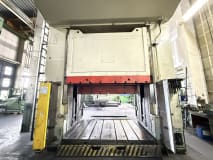
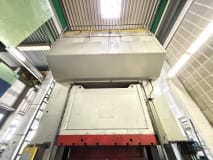
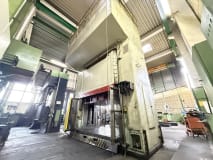
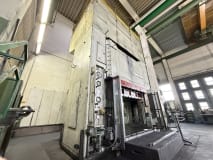
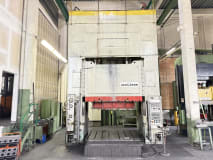
- Storage Number
- 26007-133
- Machine type
- Hydraulic Presses
- Manufacturer
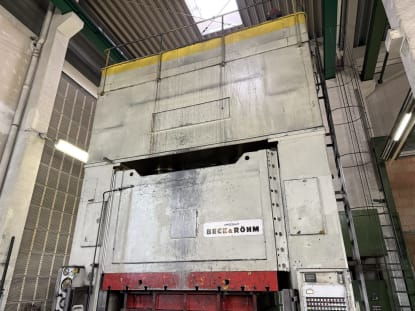
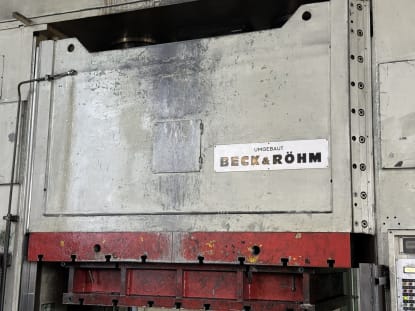
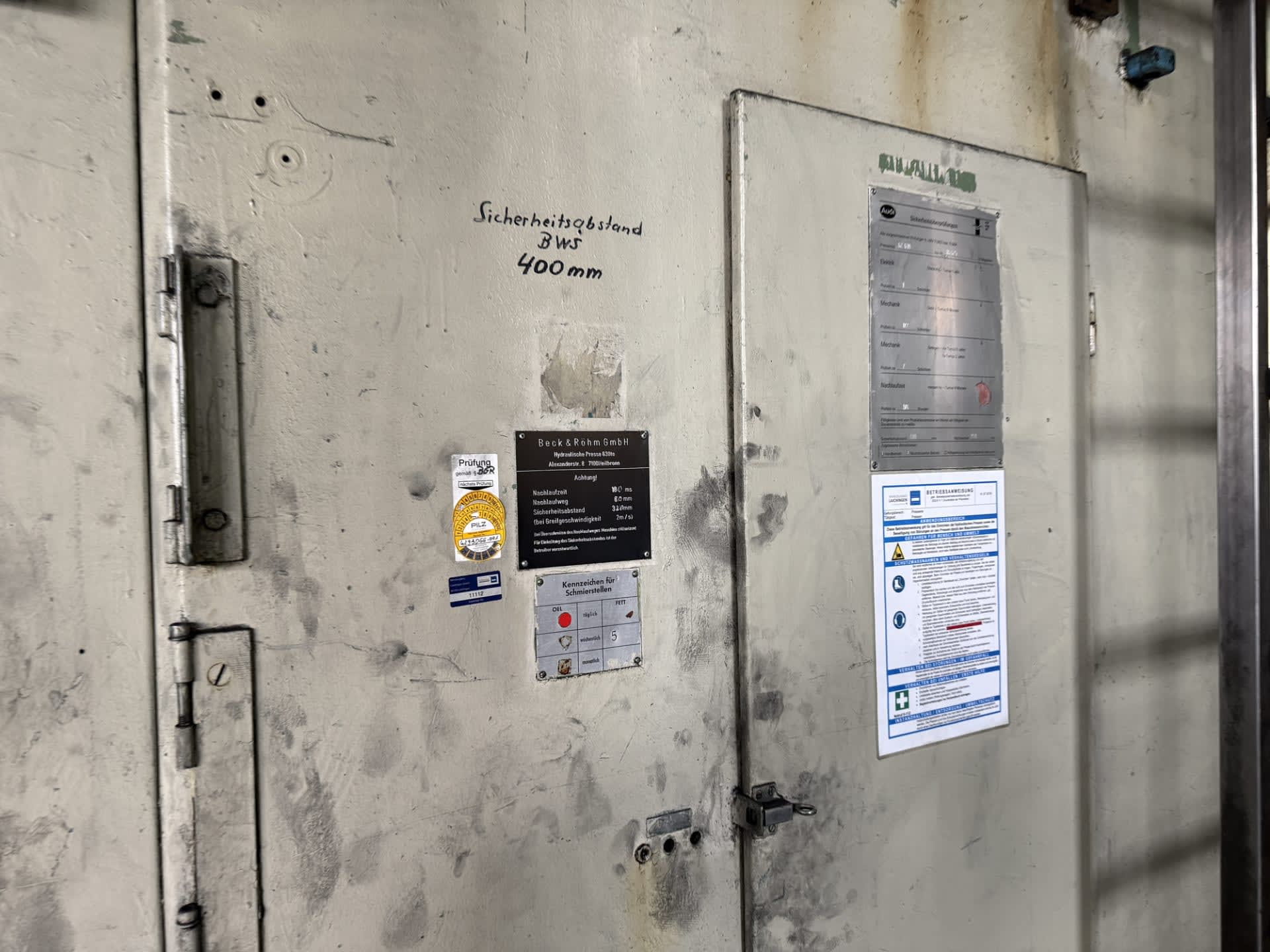
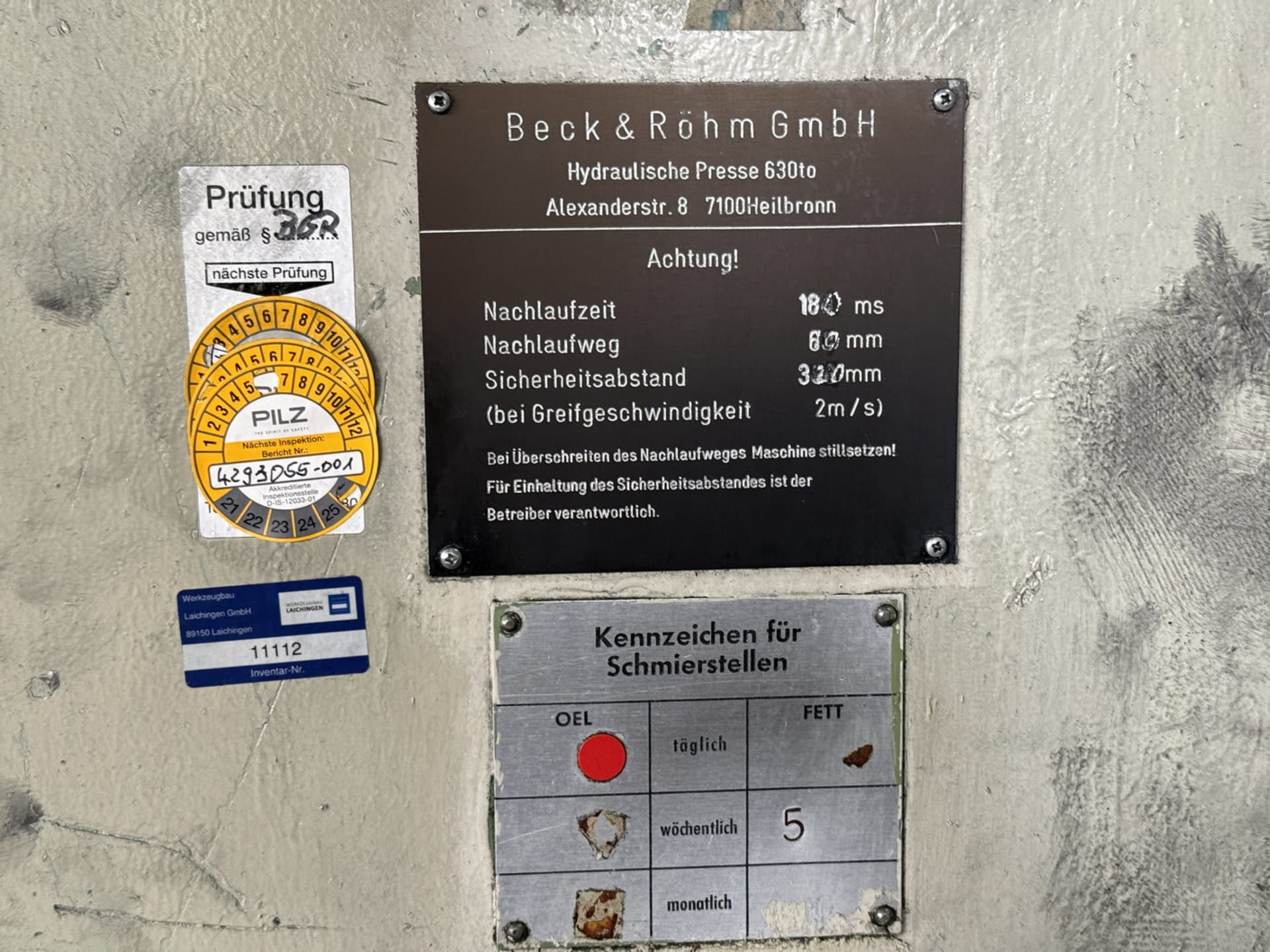
- EITEL / BECK & RÖHM
- Type
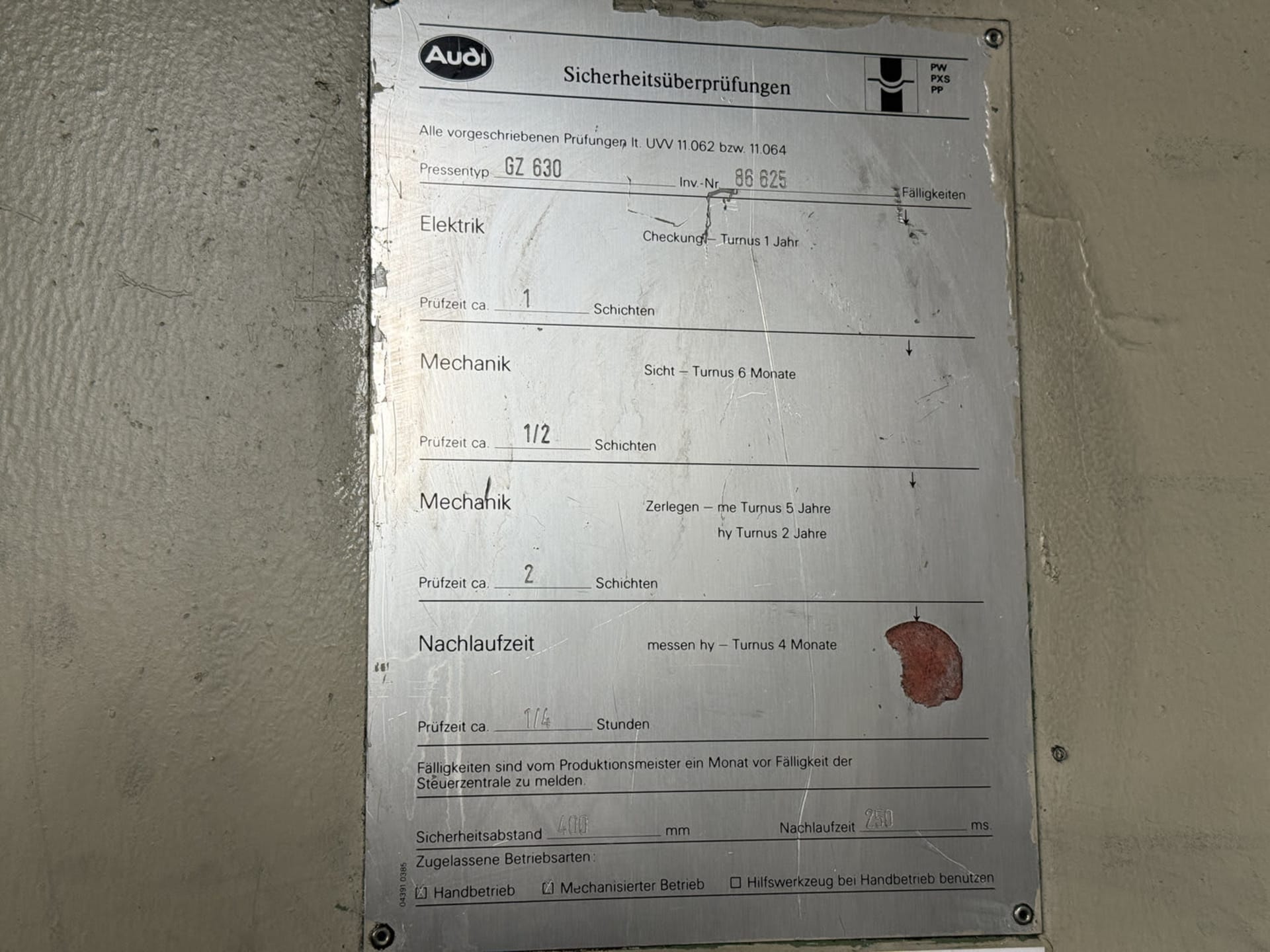
- GZ 630 F4
- Location
- Laichingen, Germany
- Availability
- immediately
- Price
- This item is sold
- Dimensions (LxWxH) approx.
- 5200 x 2700 x 6800 mm
- Weight approx.
- 110,000 kg
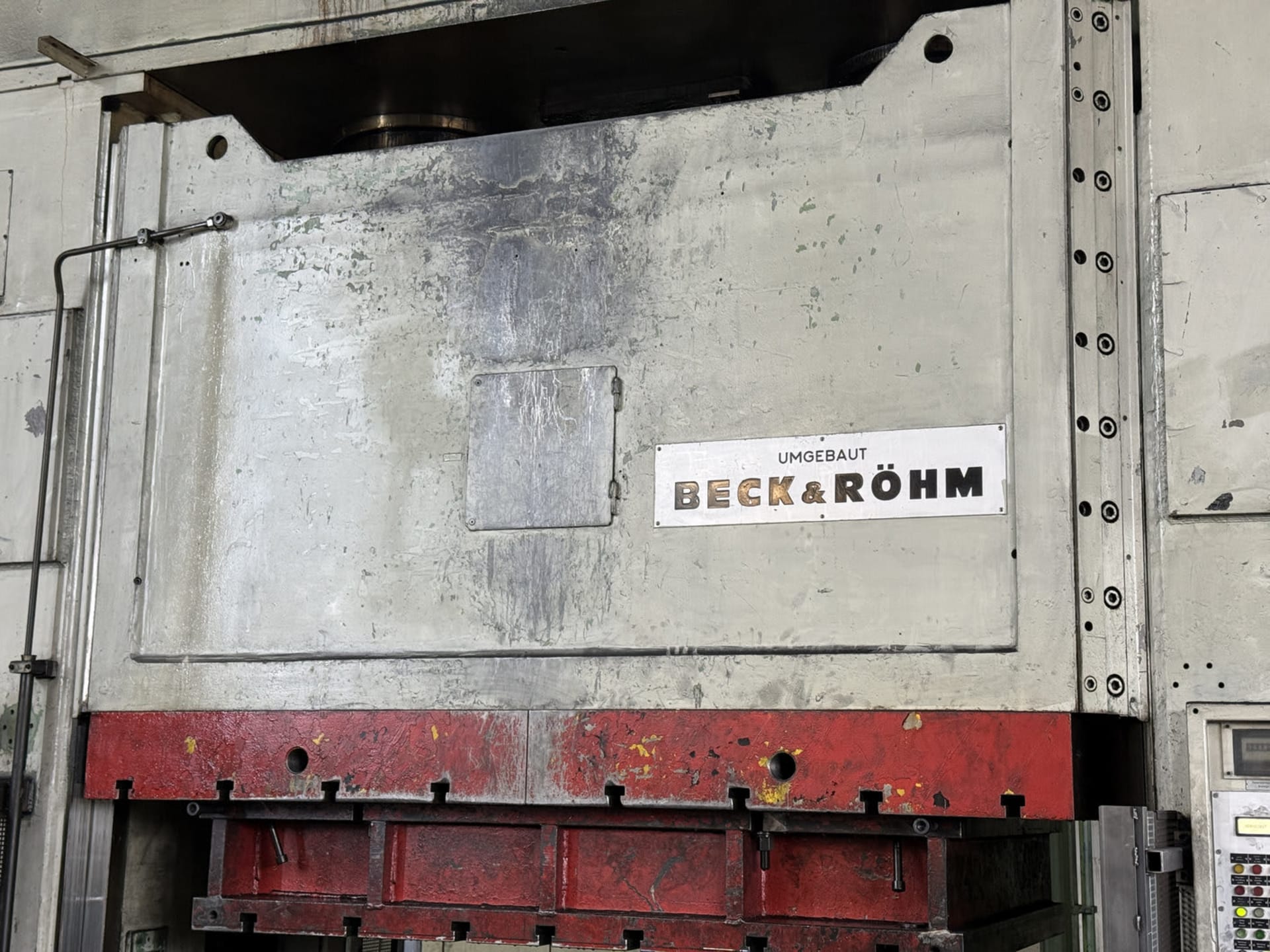
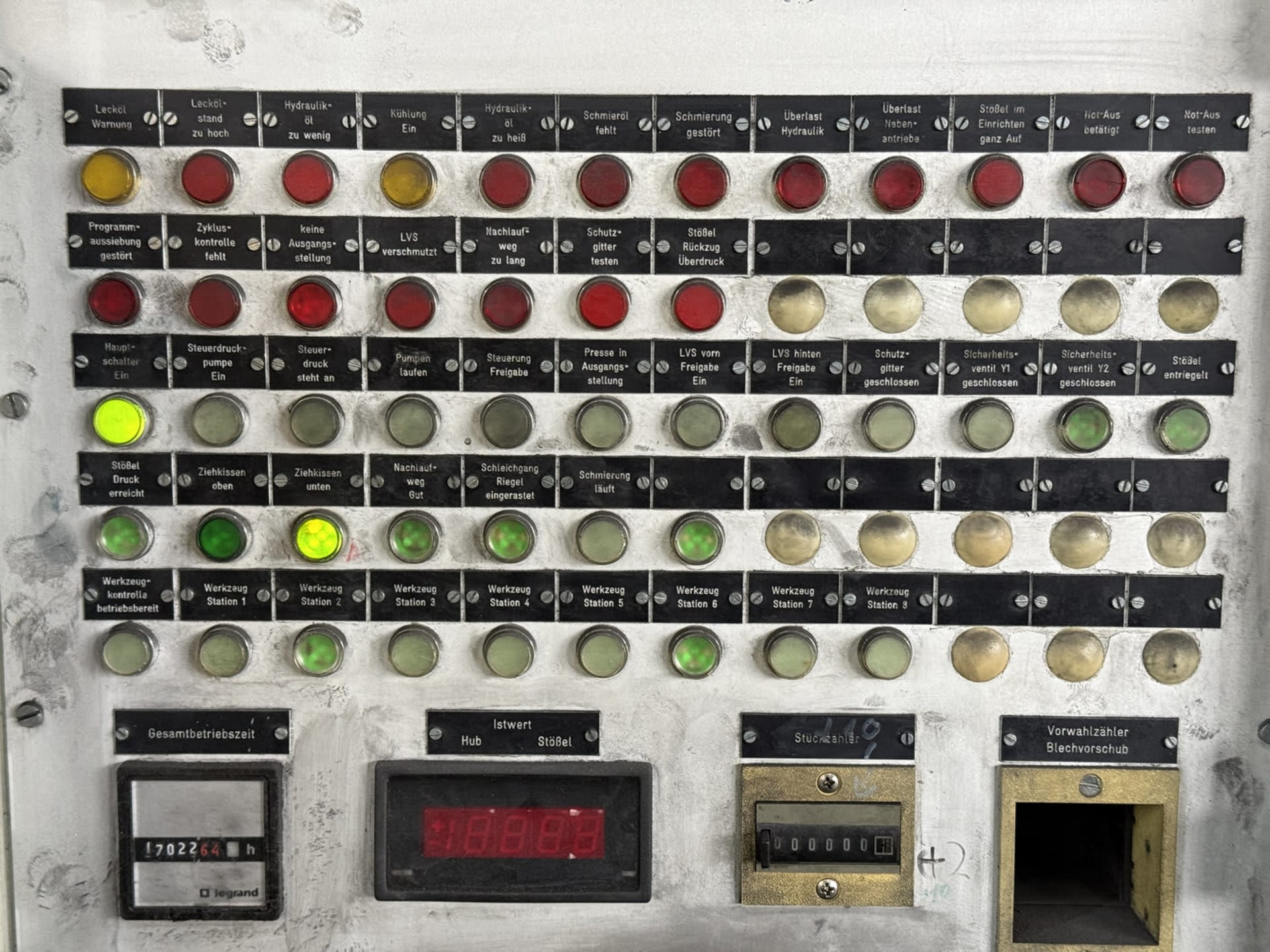
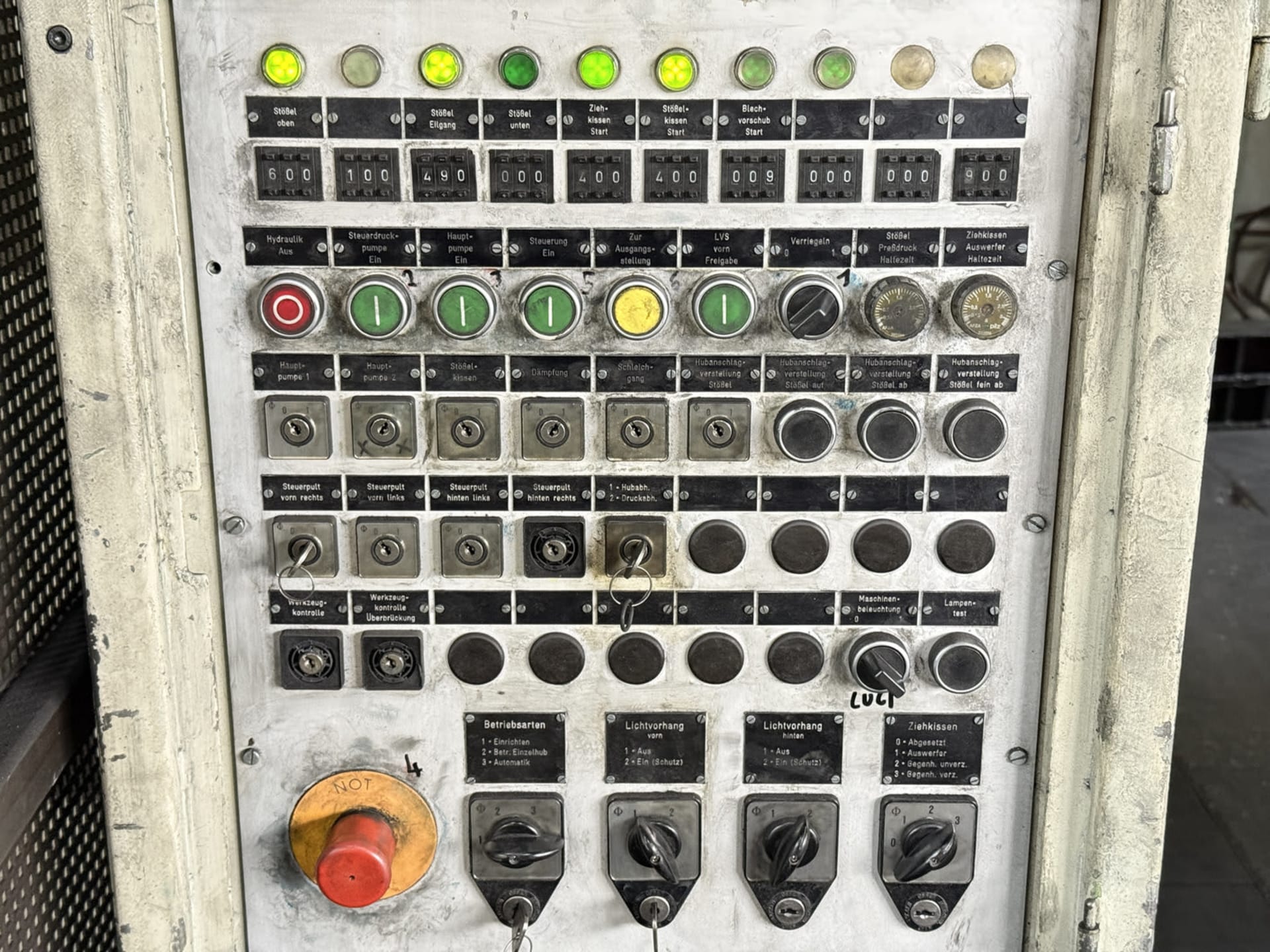
Renovated by Beck & Röhm in 1992,
pressing force: 630 t,
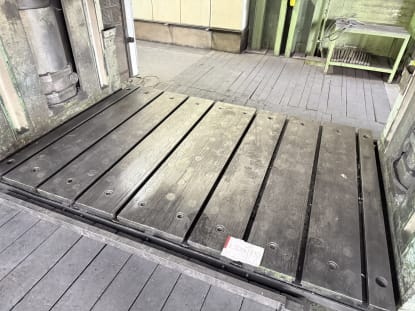
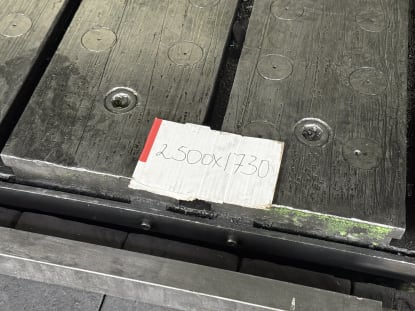
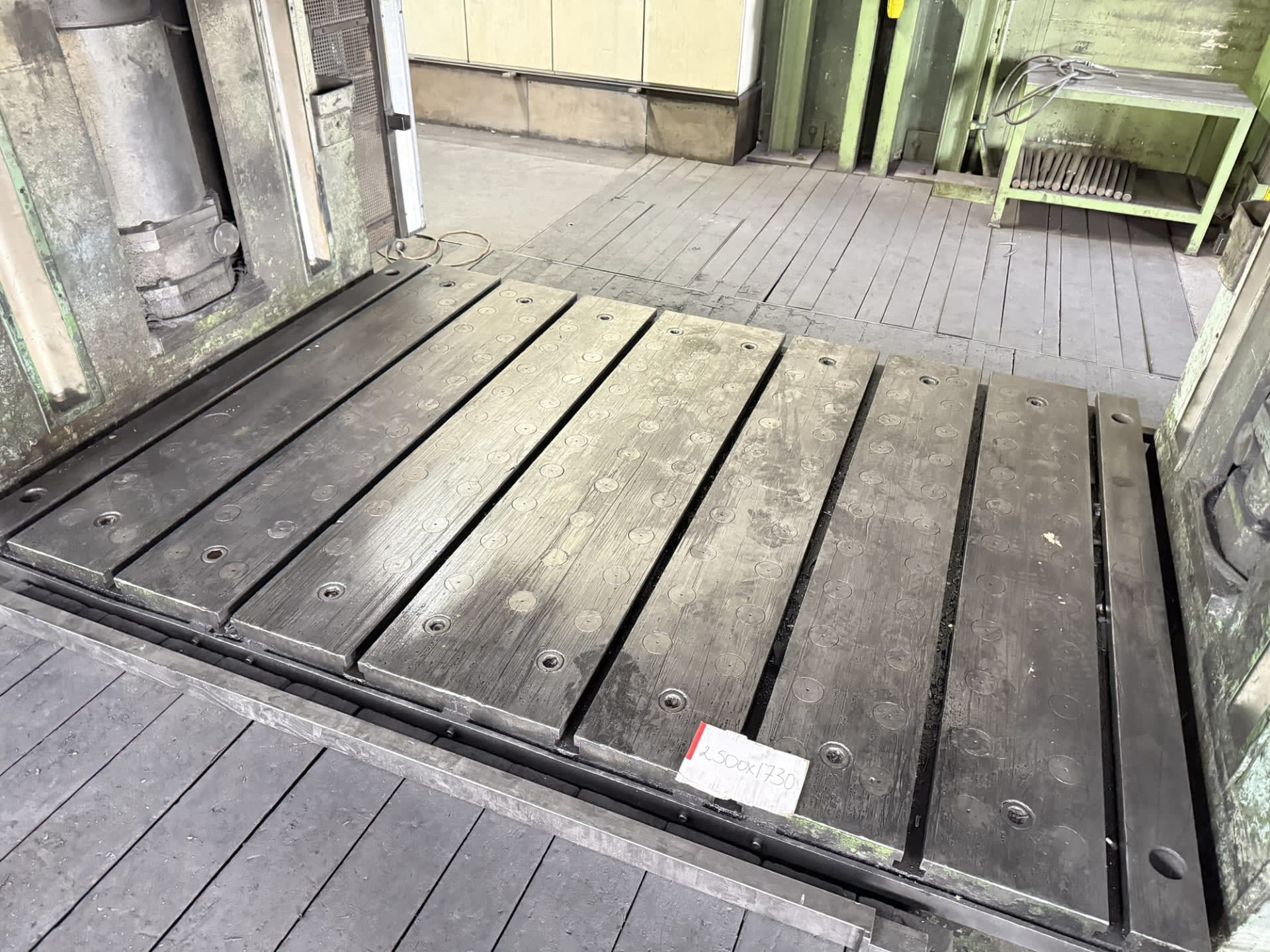
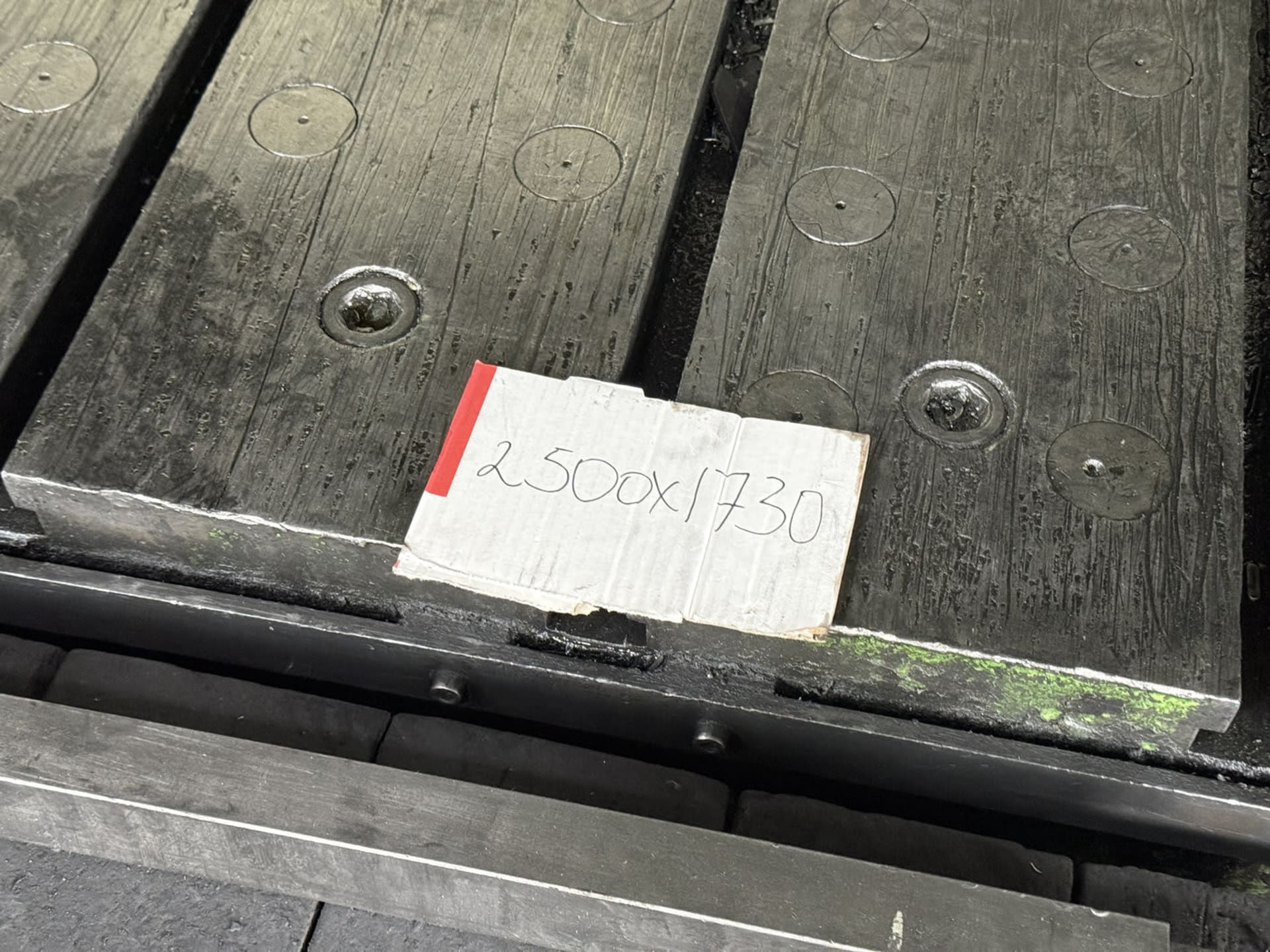
bolster area: 1730 × 2500 mm,
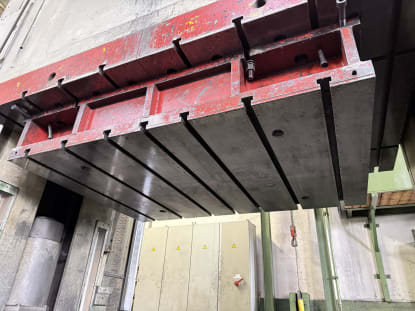
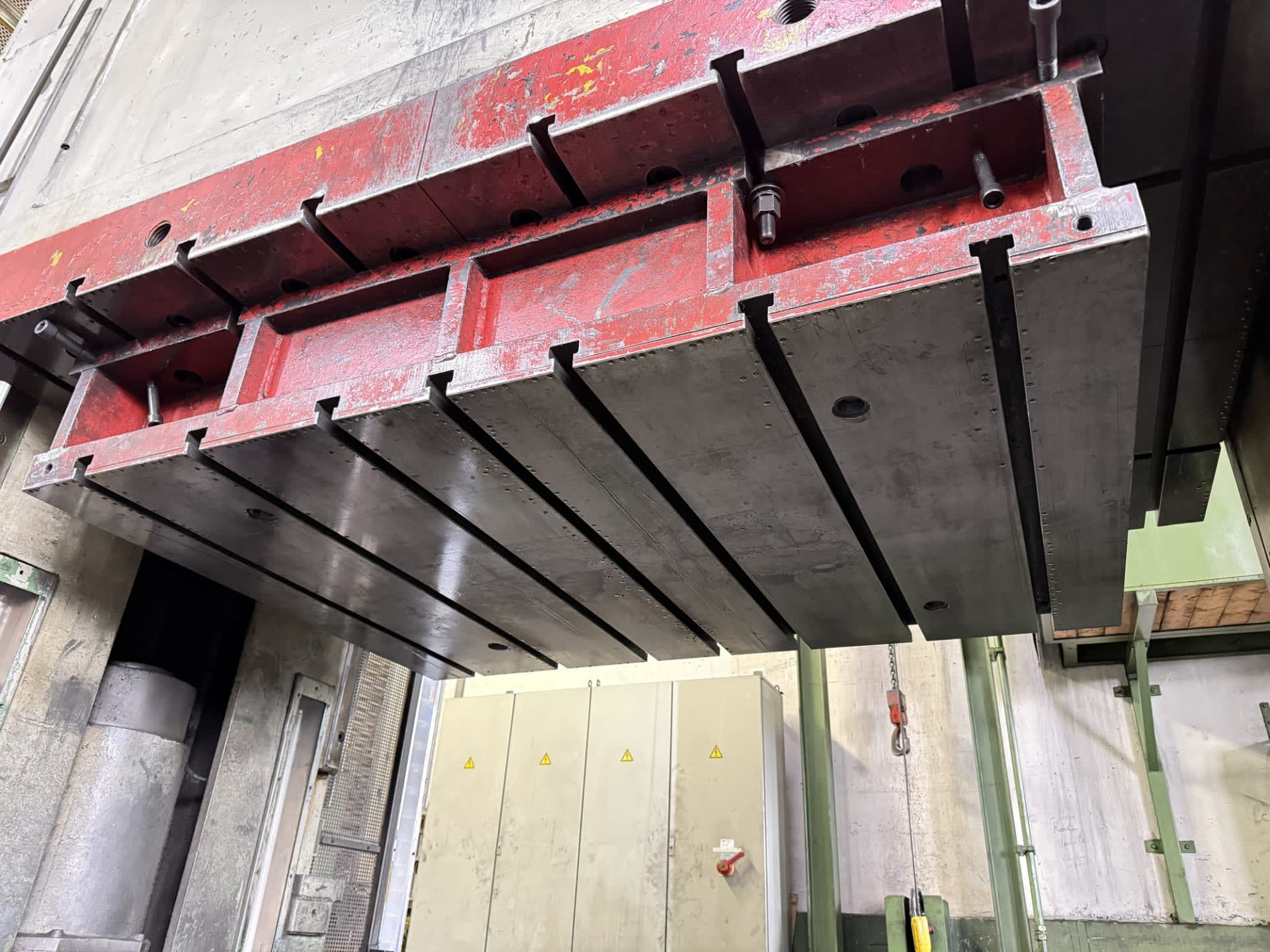
number of T-slots: 8,
ram stroke: 900 mm,
installation height: 1550 mm,
power requirement: 2 × 7.5 kW.
Dismantling and loading costs are optional. If dismantling is carried out by the buyer, the corresponding costs will of course be reimbursed.
- Dismantling Costs
- €35,000 - optional
- Transportation costs
- not included
- Terms of delivery
- Free loading on truck
- Terms of payment
- 100% prepayment before pick-up
The price of a used press depends on the press type, press force, bed size, stroke, die cushion, control, year of manufacture and condition. Transportation costs are not included in the machine price; terms of delivery and payment are stated under "Additional information" in each listing. You should also budget for installation and commissioning at the new site. In most cases, the buyer is responsible for organizing the transport; upon request, ReMach can check whether transport can be arranged or supported. ReMach also helps with dismantling, loading and export paperwork.
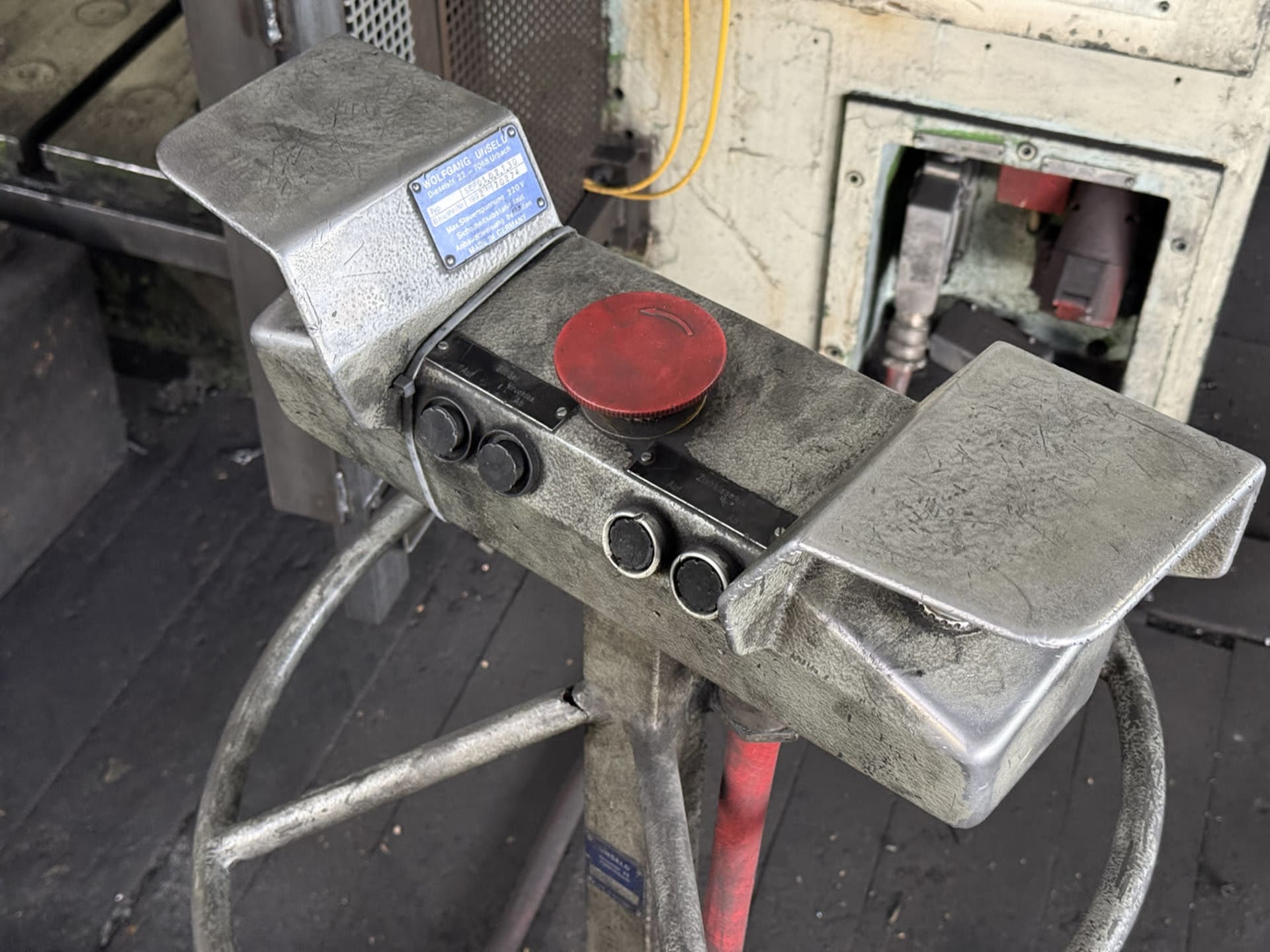
Before restarting a used press, check all safety devices: light curtains or guards, interlocks, the emergency stop circuit and, on hydraulic presses, the safety valves. In the EU, the reference safety standard for presses is EN ISO 16092. Have an expert carry out a safety assessment before operating the press at the new site.
A press suits your die when its press force (in t or kN), bed size and die height all match the die. Also check the stroke, and a die cushion if the die is used for deep drawing. On mechanical presses, the number of strokes per minute determines output.
A workshop press has an H-frame or C-frame with manual or electric hydraulics and is used to press bearings and bushes and straighten parts in maintenance and repair. A production press has a bed and slide for mounting dies, stroke control, often a die cushion and safety systems for series production. For production use, choose by press force and die, not by force alone.
A hydraulic press uses a pump to push oil into a cylinder, and the pressing force equals oil pressure multiplied by piston area. It delivers full force over the entire stroke with adjustable stroke and speed, which makes it suitable for deep drawing, forming and die try-out. A mechanical (eccentric) press runs faster with a fixed stroke and reaches its nominal force near bottom dead centre, ideal for high-volume stamping; a try-out press is used to test and adjust dies before production.
This item is sold

Our Services
- Inspection & report
- Disassembly & installation
- Global logistics
- Customs & paperwork
- Sourcing & valuation
- Personal consultation
Related items
1. Hydraulic Presses for Industrial Use: How They Work
Hydraulic presses are among the most versatile and efficient machines for producing and processing components and workpieces across a wide range of industries. The operating principle is based on Pascal's Law, which states that pressure applied to a fluid within an enclosed system is transmitted equally in all directions. This allows hydraulic presses to generate substantial compressive force from a relatively compact mechanism.
The system works by using two interconnected hydraulic cylinders. Fluid – typically oil – is introduced into a smaller cylinder, known as the slave cylinder, and transferred through to a much larger master cylinder. A piston in the master cylinder then drives the fluid back into the slave cylinder, multiplying the applied force significantly. Most modern hydraulic presses rely on electric motors paired with high-performance pumps to generate and maintain the required operating pressure.
2. Hydraulic Press Types: A Complete Guide
Hydraulic presses come in a range of configurations, each designed to meet specific industrial requirements. Arbor presses, for example, are suited to lighter applications such as hole piercing and inscription marking.
Well-suited to smaller operations due to their flexibility and compact footprint
Available in two main configurations: single-column and double-column
Valued for ease of use and precise pressure control
C-frame presses are single-application machines primarily used for assembly work. Their open-sided design maximises floor space, allowing for safe and efficient movement around the workspace. Pneumatic presses operate at high production speeds and are effective for drawing, punching, and assembly tasks – though their maximum pressure output is limited and they typically require a dedicated, trained operator.
At the heavier end of the spectrum, certain hydraulic press models offer substantial pressing capacity, with some reaching close to 80,000 tonnes of pressure. Multi-application machines such as the H-frame are also available for more versatile production needs. Compact handheld versions of C-frame and O-frame presses round out the range, offering portability for lighter-duty tasks.
3. Hydraulic Press Applications Across Industries
Hydraulic presses are used across virtually every sector of modern industry. Their versatility in metal forming – covering forging, cutting, punching, reforming, and clinching – makes them indispensable to a wide range of manufacturing operations. Smaller-scale presses also play an important role in compacting powders for the cosmetic, food, and pharmaceutical industries. This combination of flexibility, varied production capabilities, and rapid operating speeds makes hydraulic presses a popular choice for businesses of all sizes.
4. Hydraulic Press Manufacturers & Leading Brands
The hydraulic press market features a wide range of established manufacturers, each known for engineering reliable and high-performance machinery. Leading brands in this sector include Exner, Madom, DUNKES, SAFANDARLEY, BYSTRONIC, EUROMAC, FAGOR, SCHULER, MÜLLER WEINGARTEN, PRIMA POWER, RHTC, AEM3, AGME, HIDROGARNE, DIMECO, and KNUTH Werkzeugmaschinen.