
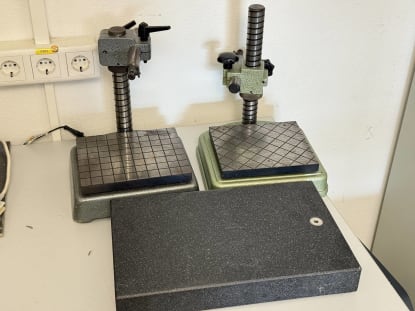
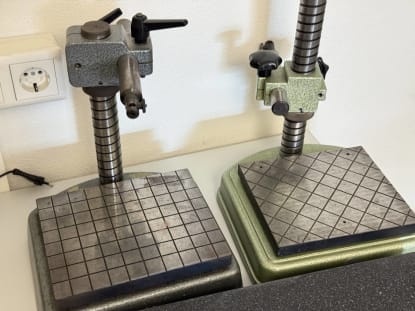
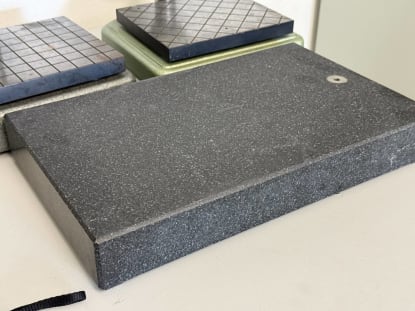
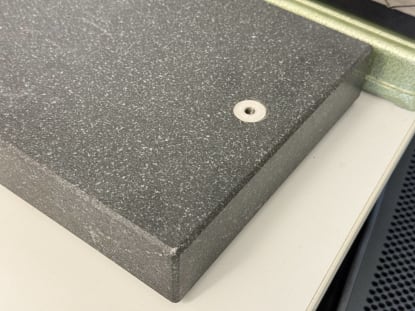
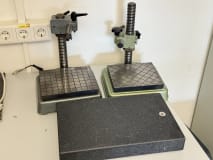
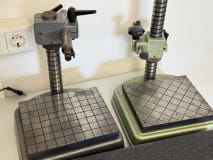
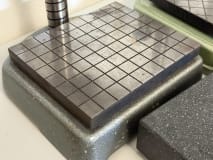
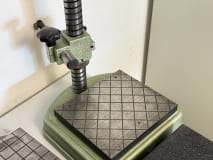
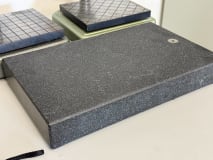
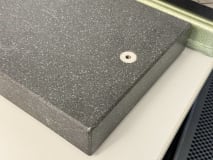
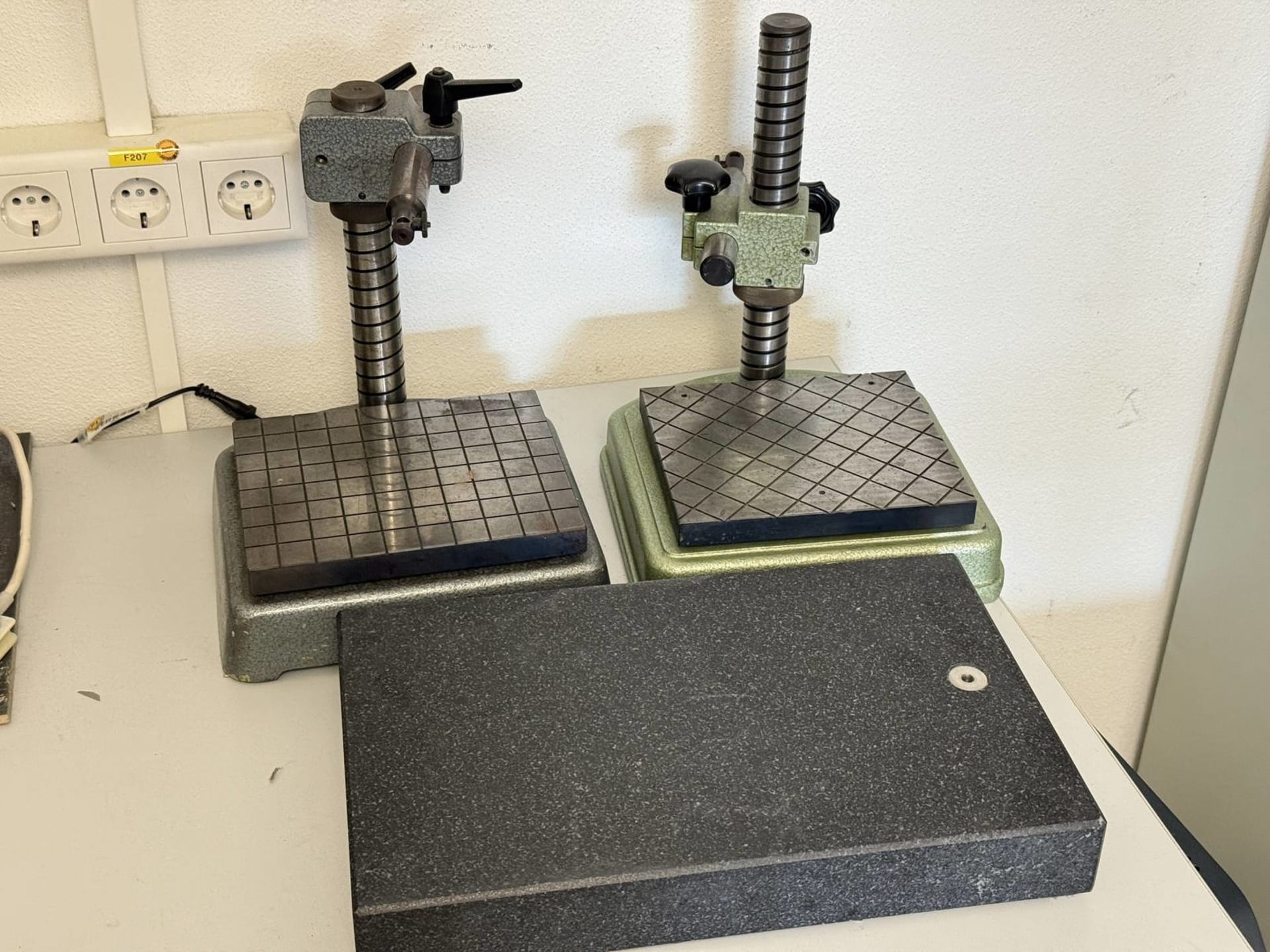
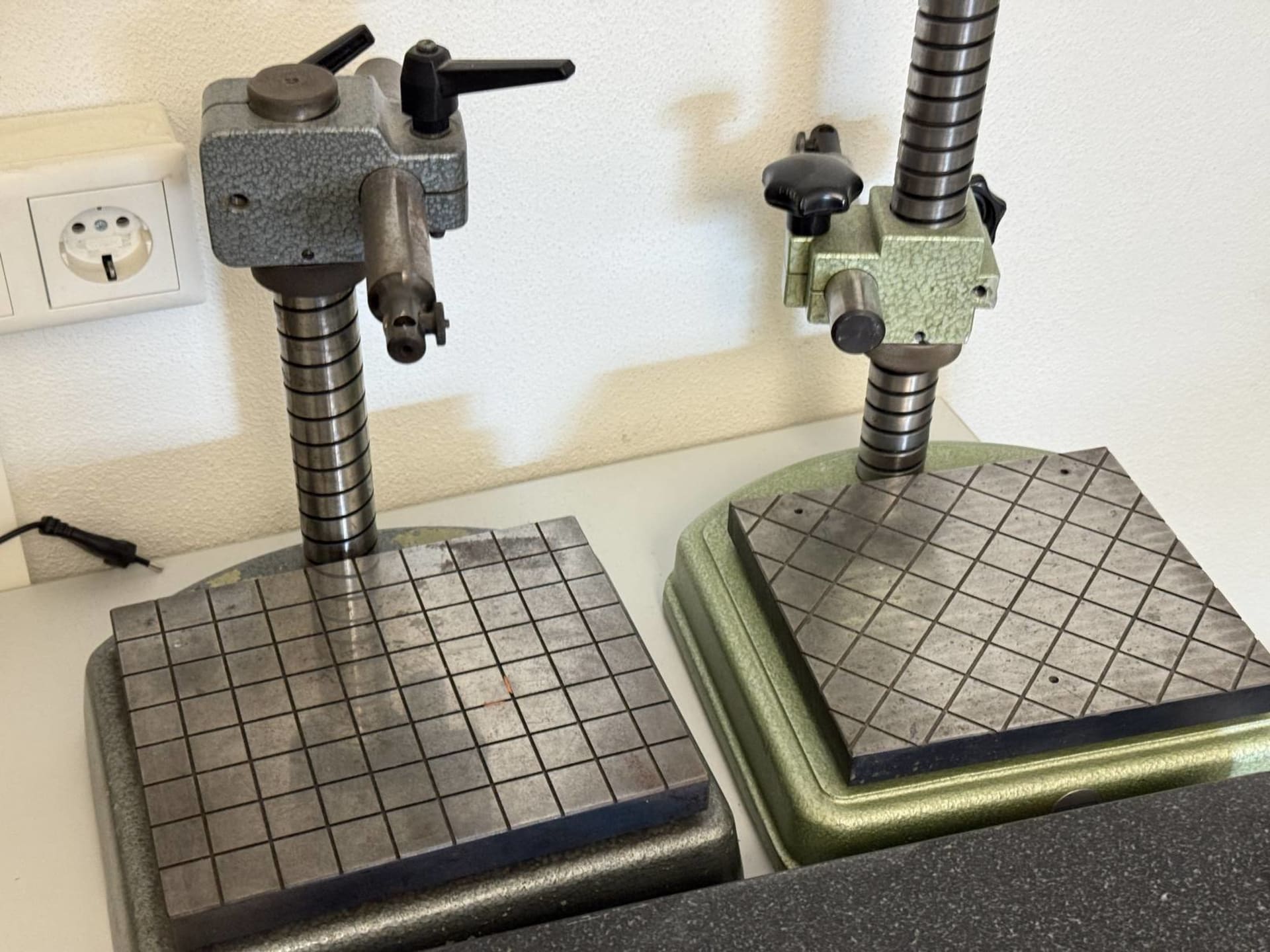
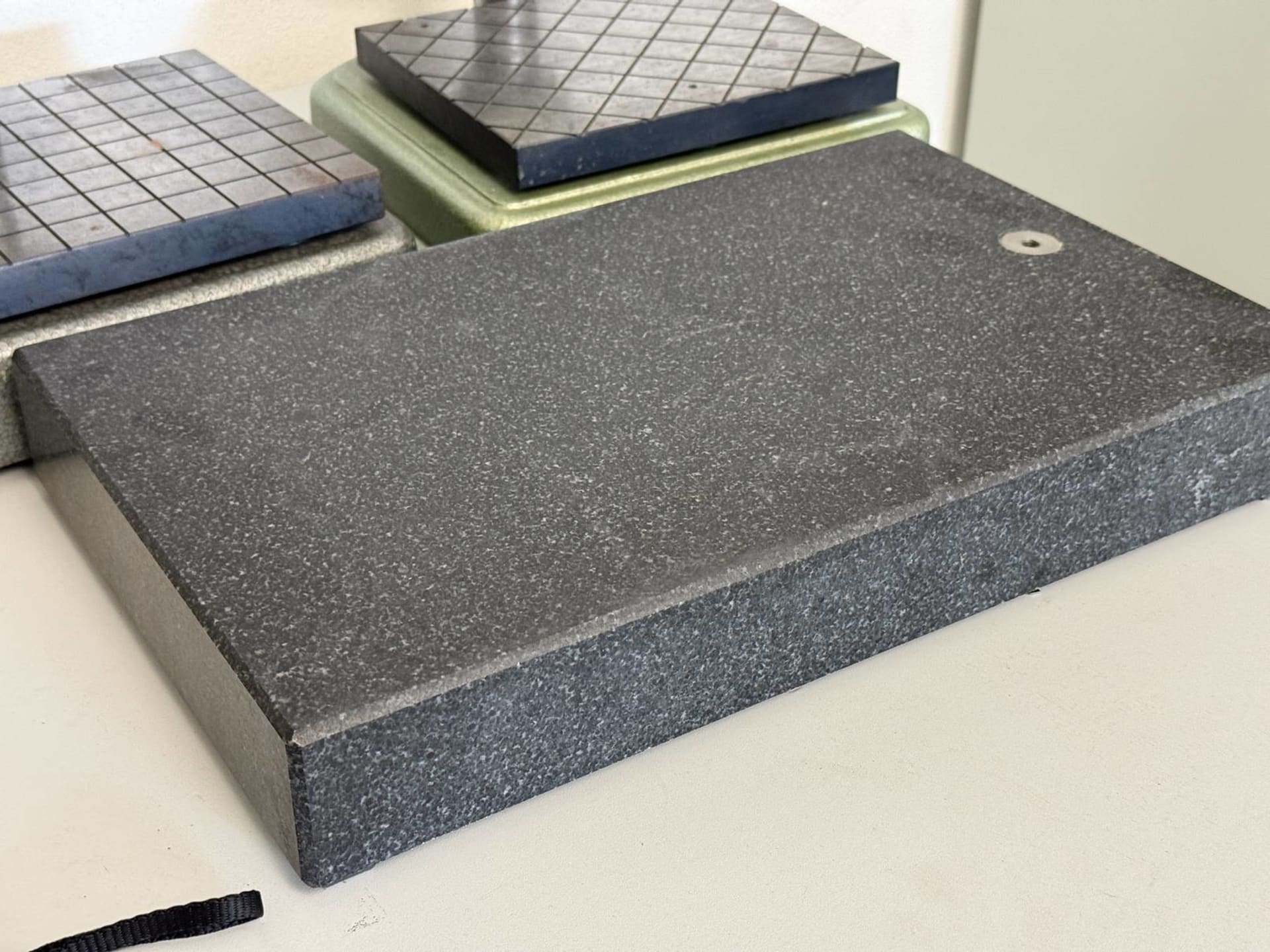
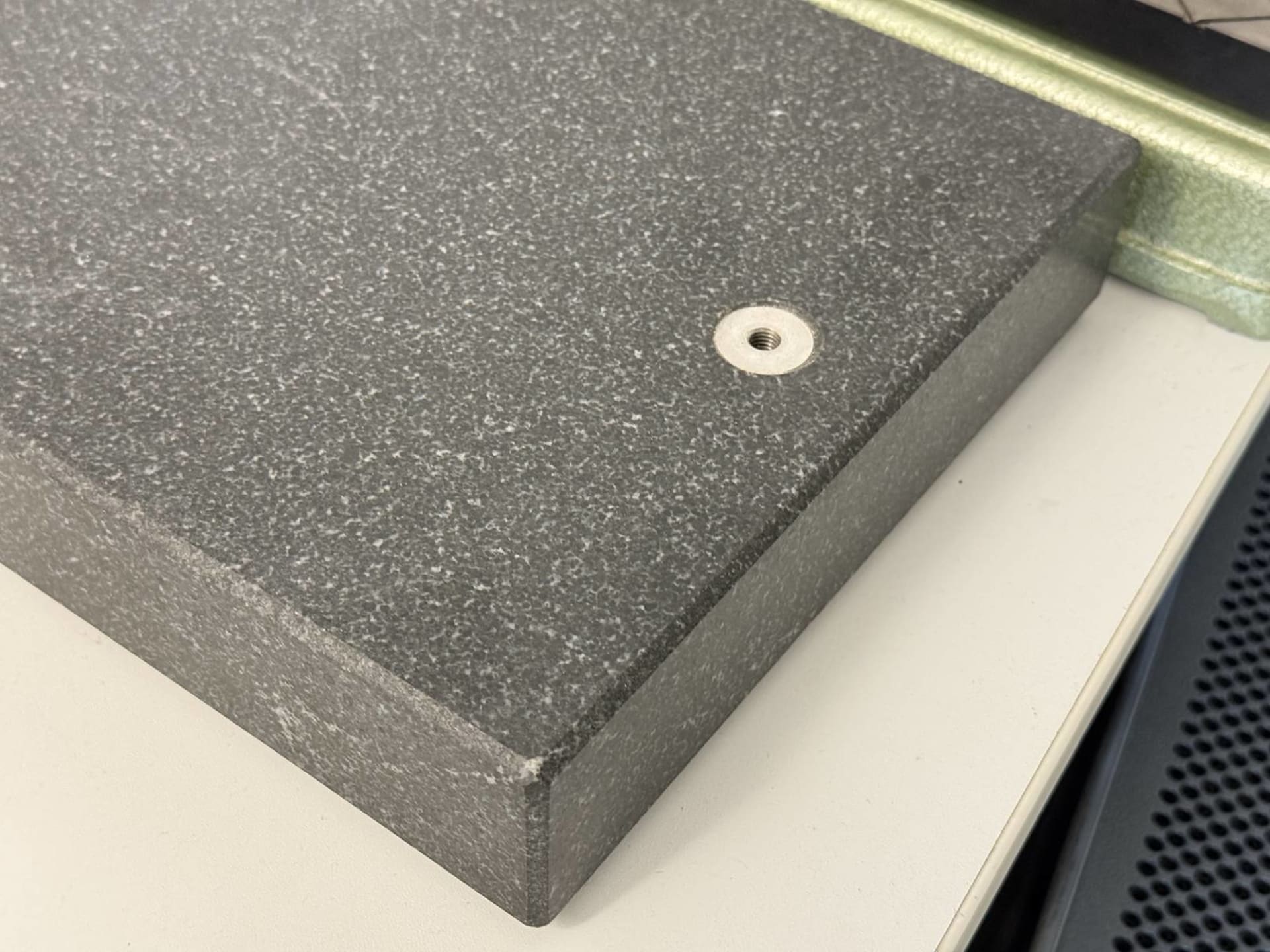
Two measuring stands + granite plate
- Storage Number
- 26023-1779
- Machine type
- Office Furniture
- Location
- Solingen, Germany
- Availability
- immediately
- Price
- Auction item
- Dimensions (LxWxH) approx.
- 900 x 250 x 300 mm
- Weight approx.
- 80 kg
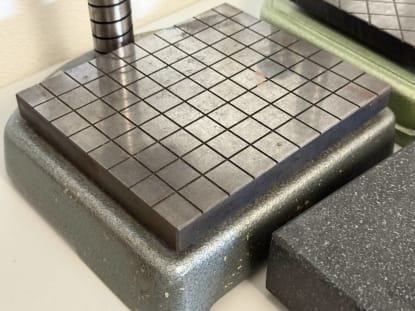
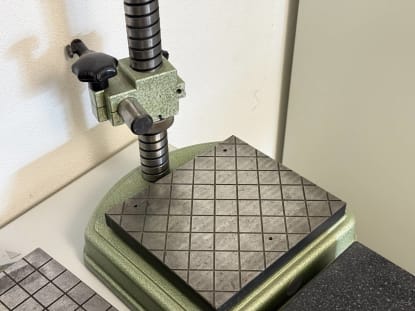
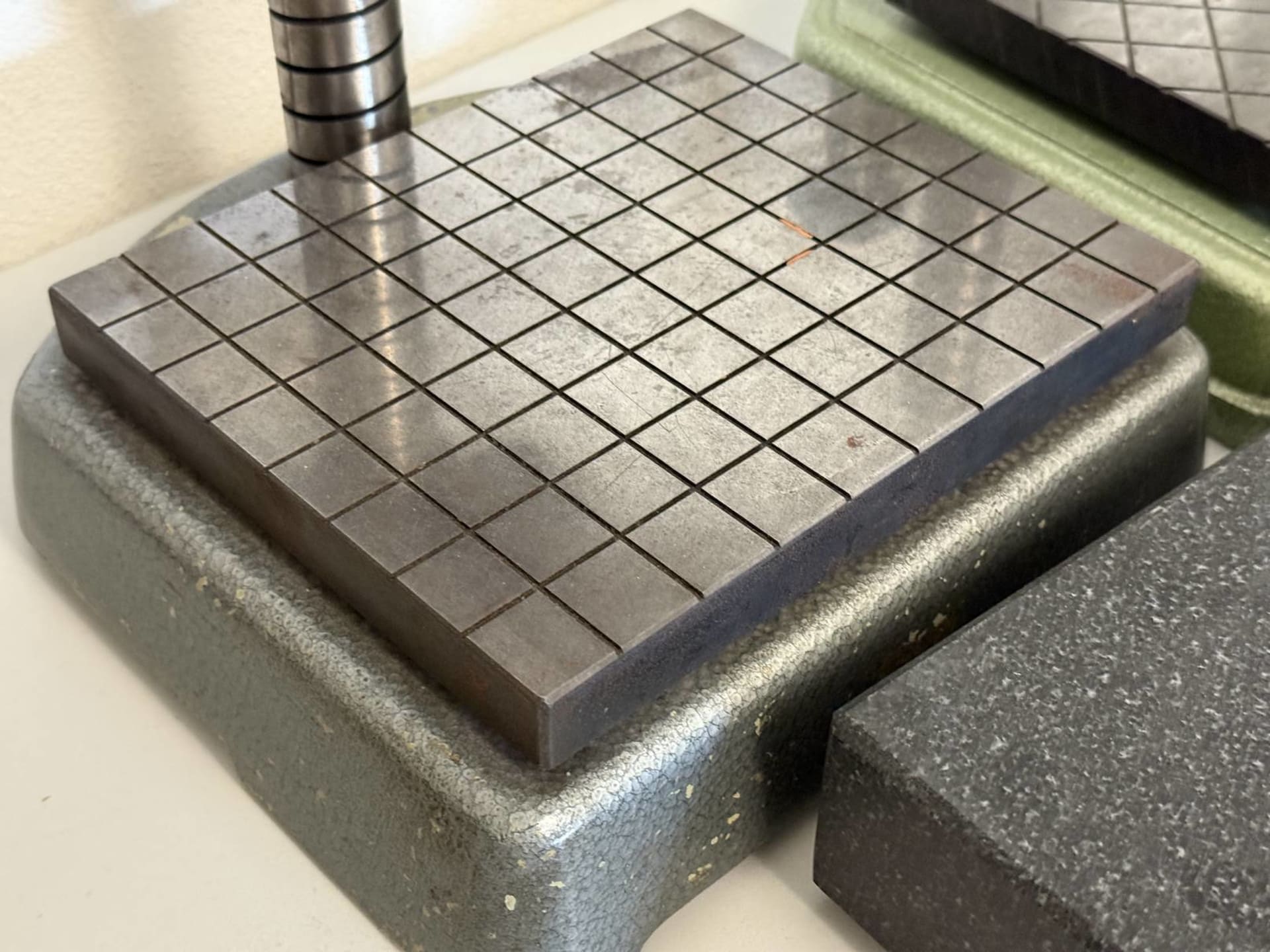
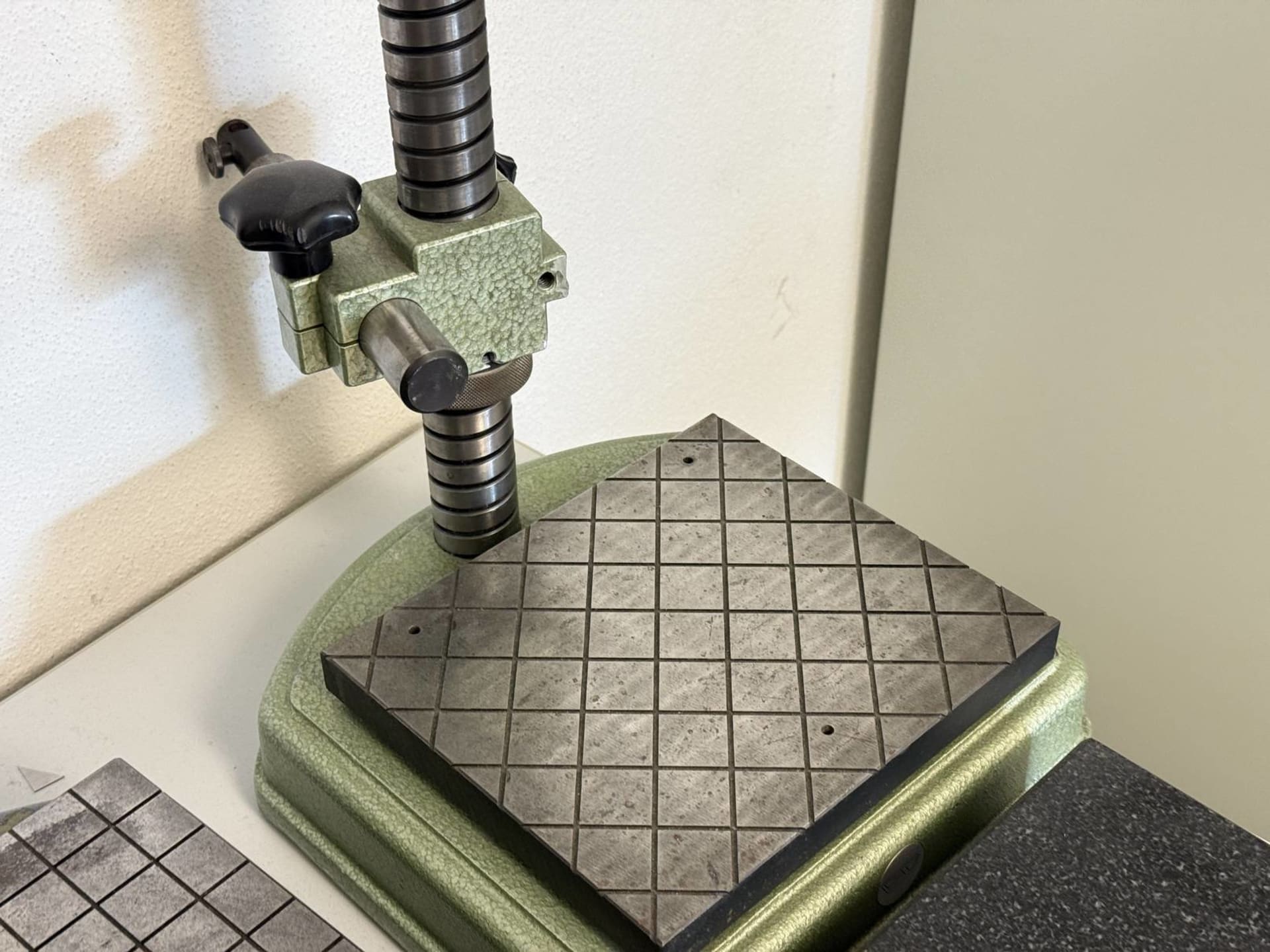
- Total 2 measuring stands e.g. dial gauges and a granite plate, Dimensions 250x250x300 (2 pieces), 400x250x60 (plate), further details see photos
- Dismantling Costs
- €15 - optional
- Transportation costs
- not included
- Terms of delivery
- From foundation
- Terms of payment
- to be agreed upon
The price of used measuring equipment depends on the equipment type, measuring range, stated accuracy, included probes and software, calibration certificate and condition. Transportation costs are not included; terms of delivery and payment are stated under "Additional information" in each listing. You should also budget for recalibration after installation at the new site. In most cases, the buyer is responsible for organizing the transport; upon request, ReMach can check whether transport can be arranged or supported. ReMach also helps with dismantling, loading and export paperwork.
Precision measuring equipment needs a stable temperature, because the reference temperature for dimensional measurement is 20 °C (ISO 1) and manufacturers usually state accuracy at around 20 °C. Vibration and dust should also be avoided, which is why coordinate measuring machines usually stand in a separate measuring room. Some machines, such as the MAHR MarShaft SCOPE, are designed by the manufacturer for shop-floor use as well.
A common rule of thumb is that the measurement uncertainty should be much smaller than the tolerance, typically about 1/10 and at most about 1/5. For example, a tolerance of ±0.01 mm (a range of 0.02 mm) needs an instrument accurate to about 0.002 mm. A calliper is not sufficient here; a micrometer, dial indicator or more accurate measuring machine is needed.
Calibration means comparing a measuring instrument with a more accurate standard and documenting the deviation; it is not the same as adjustment. "Not calibrated" means there is no valid calibration certificate: the instrument may work properly, but its results are not proven. Used equipment should be calibrated after installation and before use in quality inspection; if an accredited certificate is required in Germany, this is a DAkkS calibration.
Each instrument serves a different accuracy level and purpose. A calliper quickly measures outside, inside and depth dimensions but is the least accurate; micrometers and bore gauges measure outside diameters and bores precisely; limit gauges give fast go/no-go checks against the tolerance in series production. Gauge blocks are length standards for calibrating and setting instruments, graded according to ISO 3650, while profile projectors, optical shaft measuring machines and coordinate measuring machines (CMM) handle complex parts and 3D measurement.

Our Services
- Inspection & report
- Disassembly & installation
- Global logistics
- Customs & paperwork
- Sourcing & valuation
- Personal consultation
Related items

1. Office Equipment for Industrial & Commercial Spaces
Every industrial establishment requires dedicated office spaces equipped with the right office furniture and technology to support day-to-day operations. These spaces are typically housed in adjoining rooms or separate office buildings, with supervisory offices positioned close to the production floor for efficient oversight. On construction sites, transportable office containers with integrated equipment provide a practical on-site solution.
Essential in all industrial and commercial establishments
Encompasses all types of furniture and workplace technology
Supports the full range of office tasks and administrative functions
Conference rooms, meeting areas, and reception spaces are similarly styled to align with the company's brand. High-end reception desks combine an impressive appearance with ample storage and workspace to handle all organisational tasks efficiently. In facilities that operate around the clock, ergonomic seating is essential – chairs and stools must withstand continuous use while supporting healthy, fatigue-free posture.
At production workstations, seating must meet more demanding requirements, including resistance to constant movement and potential exposure to chemicals. Office desks most commonly feature countertops made from melamine resin-coated chipboard or laminate, with models selected to suit the specific working environment. In production areas, sheet metal furniture is a popular choice for its durability.
Manufacturers typically offer coordinated office ranges at various price points and design profiles. Furniture for public authorities and institutional settings tends to prioritise stability, simplicity, and functionality. Powder-coated frames, interchangeable countertops, and modular cupboard systems allow for flexible configuration, while steel bases ensure long-term durability and adjustability.
2. Office Equipment: Key Areas of Application and Examples
Most offices also feature a dedicated copying cabinet and a clothes cabinet. Where space allows, a small meeting area with chairs can be incorporated, enabling brief team discussions without leaving the office environment.
3. Leading Office Equipment Brands & Manufacturers
The office equipment market is served by a range of specialised manufacturers known for quality and reliability. Leading brands include C + P Möbelsysteme, Assmann, Reiss, Bisley, Dauphin, Febrü, Geramöbel, Vario, Dorma Hüppe, Format Tresorbau, Kusch+Co, Vitra, Viasit, Wini, Ziegler, Wilhelm Renz, and Arts and Objects.